


A snake dream has a way of following you into the morning. You wake with the picture still sharp — where it was, whether it moved toward you, whether you froze — and within a minute you’re searching for what it means. What comes back is rarely calming. One page says an enemy. Another says envy. A third promises a wedding. None of them asks a single question about your dream.
This page works the other way round. The meaning of a snake dream is not carried by the snake on its own, and certainly not by its colour on its own. It’s carried by the scene: where the snake appeared, what it actually did, and how you felt while it was happening. Change one of those and the reading moves, sometimes from one end of the scale to the other.
That isn’t a modern softening of the tradition. It’s how the classical interpreters worked. They asked the dreamer questions before they answered, because the same symbol was understood to mean different things in different scenes — and in those same books the snake is not only a figure of harm. It is also read, in plain passages, as authority, standing, provision, and even wealth.
So what follows is the general reading, laid out in the order the details actually matter, with the situation-specific guides linked where they belong. And it says plainly what a dream cannot establish, so you don’t walk away carrying a worry that was never yours.
The Bottom Line
In the classical sources, a snake in a dream most often points to conflict, rivalry, or someone whose presence you find difficult. That is the common reading. It is not the only one: the same books also read the snake as strength, position, benefit, and in some passages as a spouse, a child, wealth, or something buried and valuable.
Which of those is closest to your dream is decided by four things, roughly in this order:
- Where it happened. Inside the house points to a close circle — family, relatives, whoever comes and goes. Outside points to a wider one: work, the street, people you deal with rather than live with.
- What the snake did. A snake that passed, or lay still, is among the lightest images. Chasing, biting, killing and cutting each move the reading in a different direction.
- How you felt. Fear pulls the reading toward pressure and threat. Calm — or a sense of having the situation in hand — pulls it toward strength and standing.
- Everything else. Size, number and colour adjust the degree of a meaning. They do not create one, and they are the last thing to look at, not the first.
And there is a short list of things this dream cannot tell you, however confidently you read otherwise. It cannot name a person who dislikes you. It cannot establish magic or envy. It cannot date an event in your future, promise a marriage, or warn of a divorce. Those are claims about the world, and they need evidence from the world.
What this page covers
- The Bottom Line
- Find the reading closest to your situation
- What does the snake stand for?
- Method before meaning: how the interpreters answered
- Where the dream happened: the strongest single detail
- What the snake did: more important than what it looked like
- Direction: behind you, ahead of you, around you
- The bite, the confrontation, the killing and the cutting
- The dreamer’s own feeling: the detail everyone forgets
- The calm snake, and the favourable readings
- Size, number and colour
- Size
- Number
- Colour
- Is there a difference between one kind of snake and another?
- True dreams, ordinary dreams, and the mind talking to itself
- The modern psychological reading: a separate layer
- When is a dream just your mind processing?
- When the searching becomes the problem
- What this dream cannot establish
- How to tell the transmitted from the added
- Common misconceptions
- What to actually do with the dream
- A habit worth keeping: one line each morning
- What you can reasonably take from this
- How to describe your dream so it can be read
- Situations and examples
- I saw a snake in the distance and it never came near
- A snake came into the house and then left
- A snake chased me until I woke up
- A snake bit me
- I killed the snake
- I held the snake and felt no fear at all
- I saw many snakes
- A large snake, but it did nothing
- A snake in my workplace
- The dream repeated several nights
- Two similar dreams, two different readings
- Where you were in the scene
- Rarer images people ask about
- If another symbol appeared alongside the snake
- A quick reference: detail and nearest reading
- How we check what we publish
- Frequently asked questions
- What is the most common meaning of a snake dream?
- Does the snake’s colour change the meaning?
- Does a black snake mean magic or envy?
- A snake chased me but never caught me. What does that mean?
- A snake bit me. Should I be worried?
- I killed the snake. Is that good?
- Does it matter whether the dream was at home or elsewhere?
- Does the size or the number of snakes matter?
- The dream repeated for several nights. Is that significant?
- Is there anything I should do after a dream like this?
- Where do I find the reading for my own situation?
- Can a dream tell me who my enemy is?
- In summary
- Sources and references
Find the reading closest to your situation

This page covers the general principles. If your circumstances are part of the question, these guides apply the same principles in more detail:
- Snake dream meaning for a single woman
- Snake dream meaning for a married woman
- Snake dreams during pregnancy
- Snake dream meaning for a man
- Black snake dream meaning for a single woman
- Black snake dream meaning for a married woman
What does the snake stand for?

Start with the range, because most pages give you only one end of it.
The commonest reading in the classical material links the snake to an adversary, or to someone whose harm is feared — a rival, a dispute, a person who unsettles you. That is genuinely there in the sources, and it is genuinely the most frequent reading.
But the same books widen it considerably. The snake appears as a figure of authority and standing. It appears as wealth, and in some passages specifically as buried treasure. Al-Nabulsi extends the range further still, tying it to position and benefit, and in places to life and growth — snakes in fields or under trees read as flowing water, snakes in water read as money.
Notice what that does to the popular version. If a single symbol can be read as an enemy in one scene and as provision in another, then no page can tell you what your snake meant without knowing what it did. A symbol lifted out of its scene isn’t an interpretation; it’s a guess with a citation attached.
Method before meaning: how the interpreters answered

There is something in the classical method that is more useful than any individual reading, and it’s usually left out: the interpreters did not answer immediately.
They asked. Who saw it. What was happening in the dreamer’s life. What exactly took place in the dream. Where. What the dreamer felt. Only then did they give a reading, and it was frequently hedged — “perhaps”, “it may be”, “this can point to”. The language of the sources is far more careful than the language of the pages that quote them.
That matters for you in a practical way. If a page gives you a single flat sentence — a snake means an enemy, full stop — it has skipped the part of the tradition that made the tradition work. And if a page gives you a reading before it knows anything about your dream, it isn’t reading your dream at all.
Where the dream happened: the strongest single detail
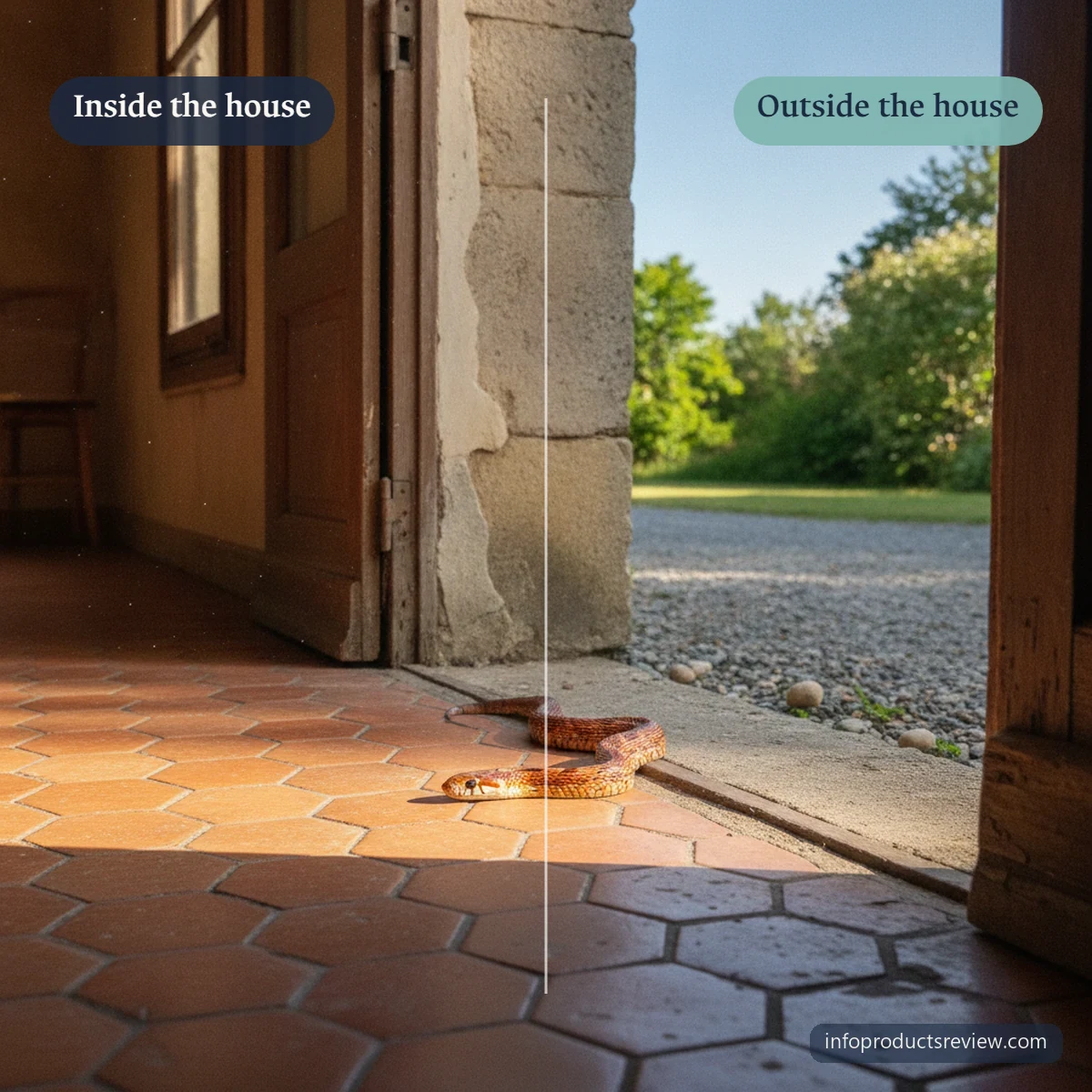
Of everything you can remember, the setting does the most work.
The general rule is straightforward: what is seen inside the house belongs to a close circle — household, family, relatives, the people who come and go. What is seen outside belongs to a wider one — work, study, the street, the people you deal with rather than live with.
Al-Nabulsi sharpens it. Snakes of houses are read as closer to neighbours; snakes of open ground as closer to whoever crosses your path. The distinction is about proximity, not danger. A snake indoors is not worse than a snake outdoors — it is nearer.
So before anything else, place the dream. A snake in your kitchen and a snake at the far end of a field are two different dreams, even if the snake is identical.
What the snake did: more important than what it looked like
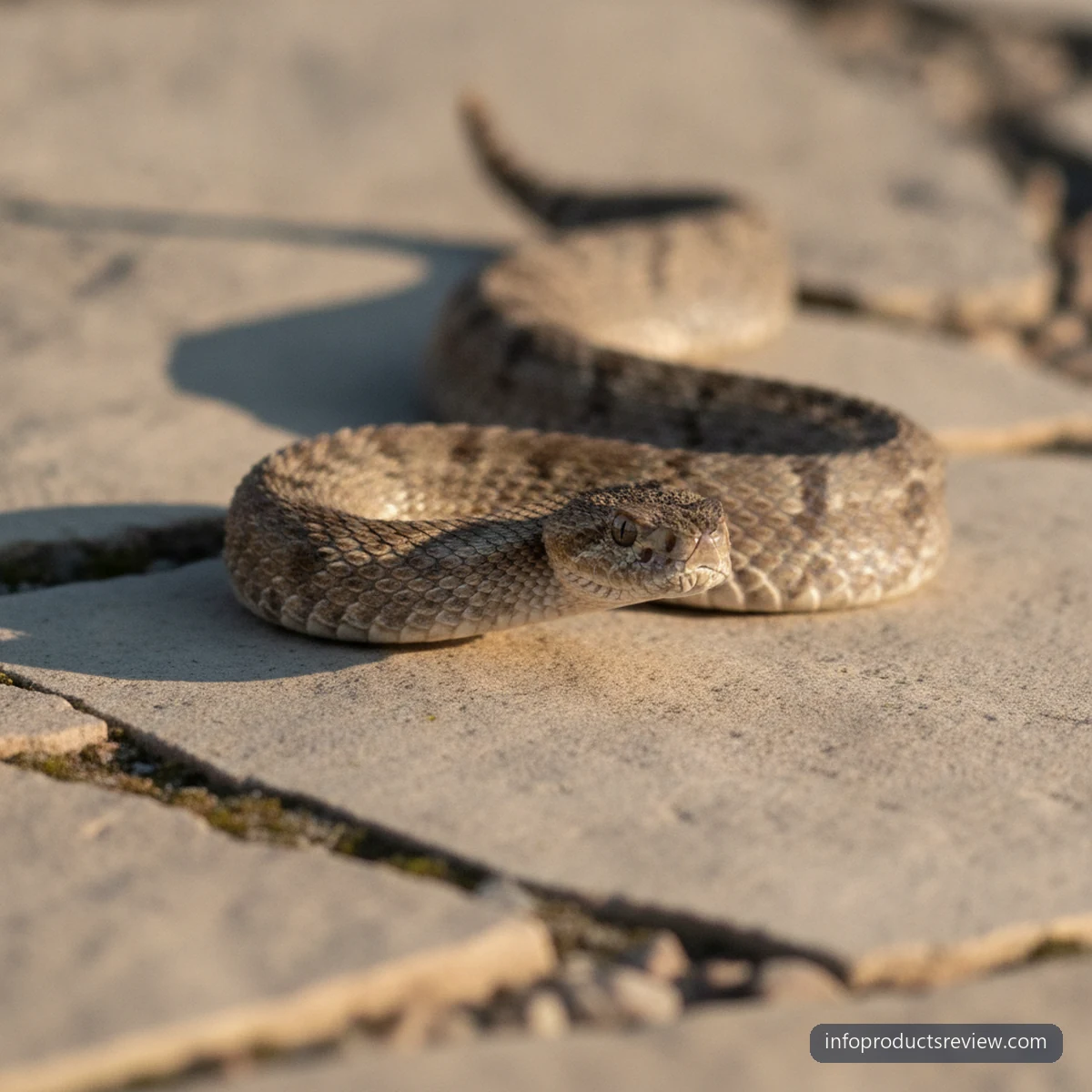
Once you have the setting, look at the action. Behaviour moves the reading more than appearance does, and it is the detail most often lost while people are busy trying to remember the colour.
A snake that passed by, or stayed still. Among the lightest images in the whole subject. Often read as a passing concern, or someone in your circle who doesn’t really trouble you.
A snake that approached without reaching you. Read as pressure, or as the intention of harm rather than harm itself. The distinction is explicit in the sources and worth holding onto: something that did not arrive is not something that happened.
A snake that fled from you. Generally favourable — a difficulty receding, or an opponent backing off.
A snake you handled without fear. One of the clearest images on the favourable side, usually read as control, or as standing over the thing that was worrying you.
Notice that three of those four are not alarming. The popular version of this dream is built almost entirely on the fourth kind of scene, which is why so many people arrive at it more frightened than the material warrants.
Direction: behind you, ahead of you, around you
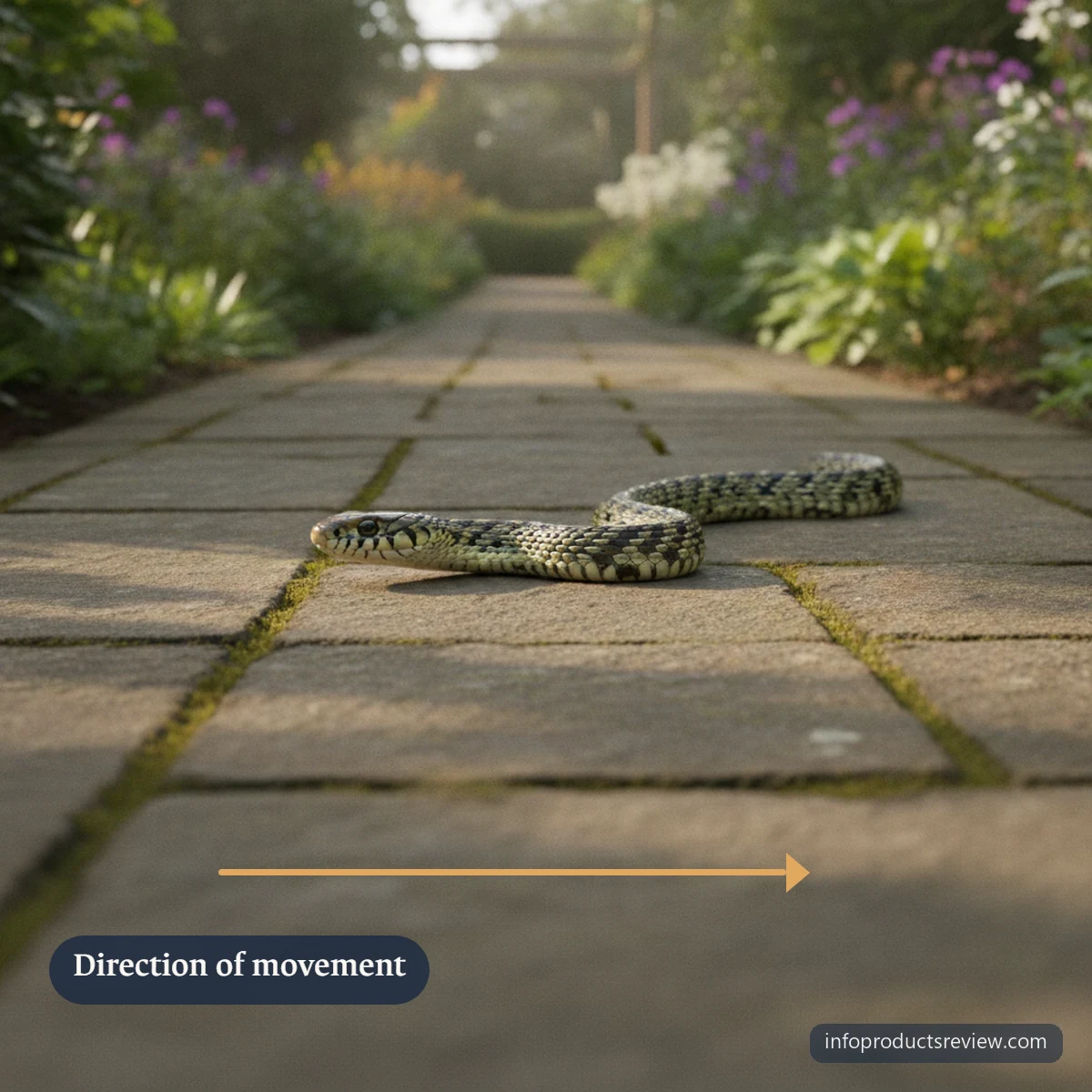
A smaller detail, but a real one, and it costs nothing to check.
A snake coming toward you from in front reads differently from one behind you. What is in front tends to be read as something you can see coming — a dispute you already know about, a difficulty you are aware of. What is behind tends to be read as something out of view.
Movement around you, circling without contact, is generally read as a circle of pressure rather than a single adversary: a situation that surrounds you rather than a person who confronts you.
Treat this as an adjustment, not a verdict. Direction tunes a reading you have already built from place and behaviour. On its own it decides nothing.
The bite, the confrontation, the killing and the cutting
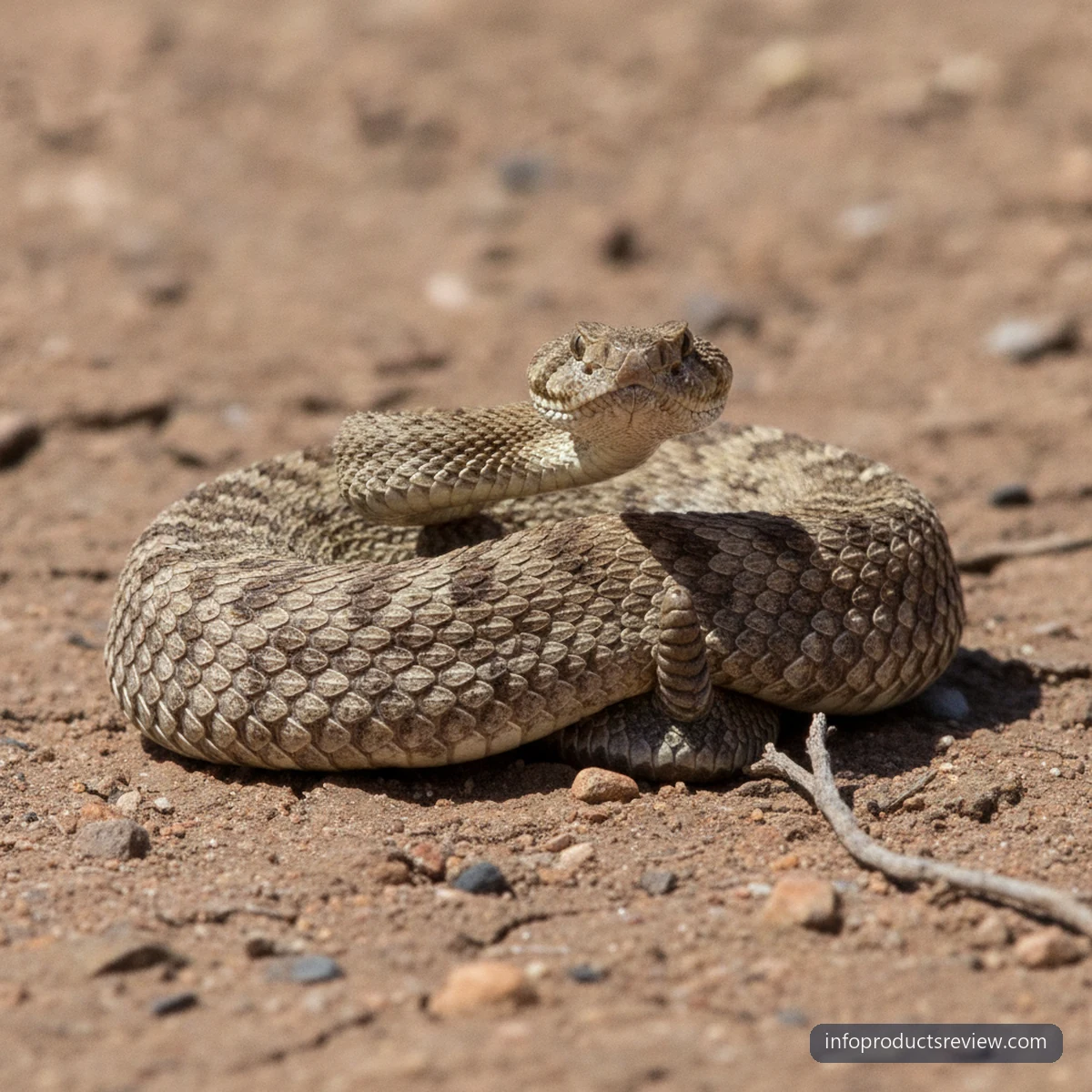
These are the scenes people search for most, so they deserve plain treatment.
The bite. The reading moves toward conflict or difficulty, and the sources scale it: the effect is proportionate to the severity of the bite in the dream. A light bite is not a heavy one. This is a measured reading, not an absolute one — and note that the classical material has no chapter assigning meanings to the part of the body bitten. The tables you’ll find online that give you a different fate for a hand, a leg, a shoulder are additions, not transmissions.
Killing the snake. Among the clearest favourable images: overcoming an adversary, or getting past a problem. Al-Nabulsi records a second reading tied to marriage. Two readings for one image in a single book is itself useful information — it tells you the image does not have one fixed meaning even within the tradition.
Cutting it. Read as decisiveness. There is a specific detail in al-Nabulsi: cutting the snake into three was read as three opponents yielding. It’s a good example of how particular the classical readings could be, and of how little of that particularity survives in the summaries.
One caution, because it comes up constantly. Al-Nabulsi also has a heavier line about difficulty that is hard to avoid. We record it as it stands, with two things attached: it is an interpreter’s judgement, not knowledge of the future, and it names no event, no time, no person and no measure.
The dreamer’s own feeling: the detail everyone forgets

Ask someone what happened in their snake dream and you’ll get the snake. Ask how they felt and you’ll often get a pause — and then the most informative answer of the conversation.
Fear pulls a reading toward pressure and threat. Calm pulls it toward strength and standing. Two people can describe the same events, and if one was terrified and the other unbothered, the readings genuinely differ.
There’s a practical reason this detail is so valuable: it is the part of the dream you’re least likely to have reconstructed afterwards. By the time you’re searching, you’ve already told yourself a story about the snake. The feeling is closer to what actually happened while you were asleep.
So make it one of the first three things you write down, not an afterthought.
The calm snake, and the favourable readings

This section exists because the favourable material is real and rarely quoted.
A still snake that did nothing is one of the commonest dreams people have and one of the lightest images in the sources. A snake that passed and left. A snake seen at a distance that never approached. None of these carries the weight that the search results imply.
Beyond that, there are the openly positive readings: the snake as authority, as standing, as provision, as wealth. Snakes in water read as money. The name itself is linked in places to life and growth. And killing or driving off a snake is read as a difficulty resolved.
We put these in their own section deliberately. If a page only ever shows you the frightening half of a tradition, it is not summarising that tradition — it is selecting from it.
Size, number and colour
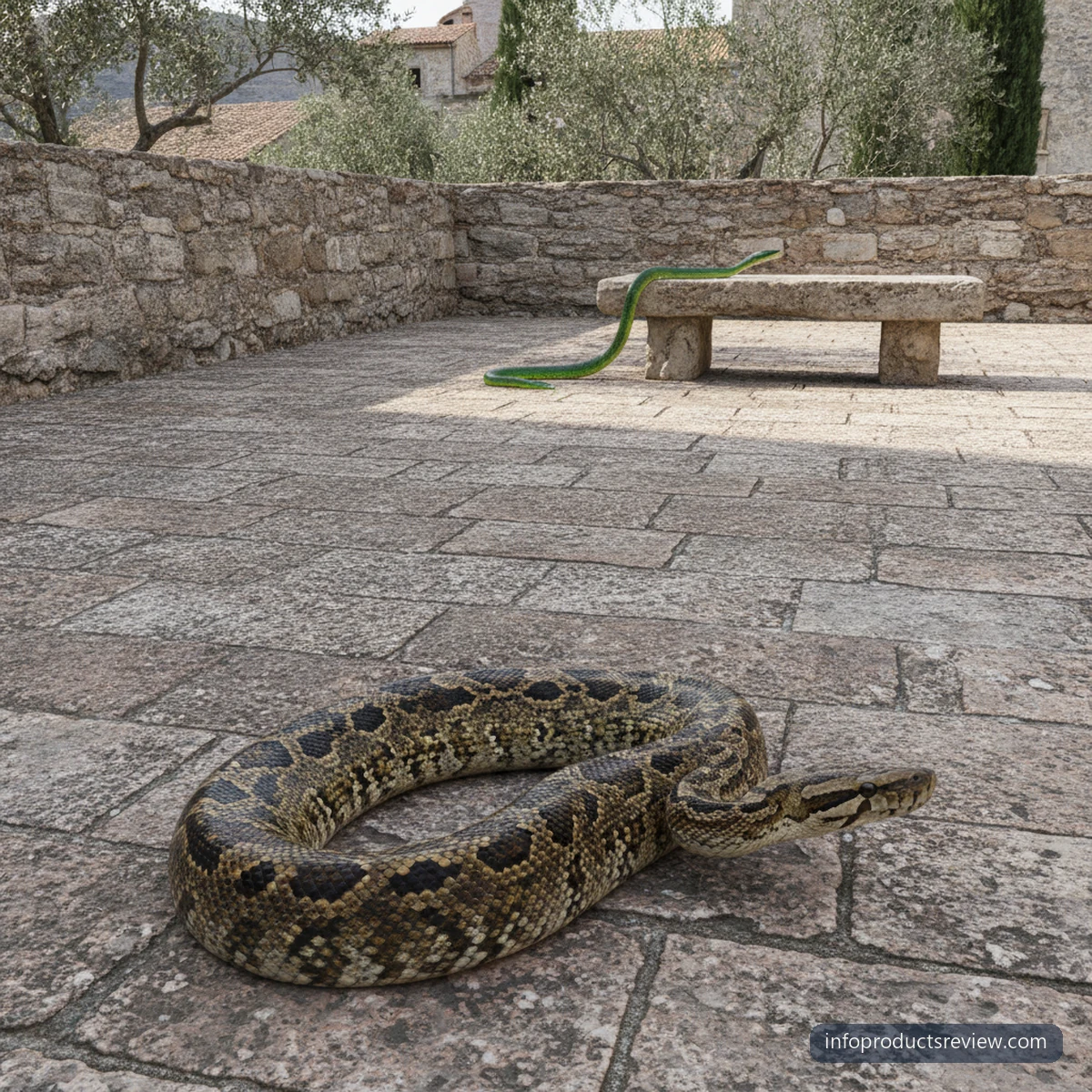
These come last for a reason: they adjust a meaning, they don’t create one.
Size
Size is read as scale. A larger snake suggests a bigger matter, a smaller one a lesser matter. It is a measure of degree, not a change of subject — and a large snake that did nothing is still a snake that did nothing.
Number
Many snakes are generally read as many concerns rather than many enemies, and that difference matters. A crowd of small worries is a recognisable state; a crowd of adversaries is a claim about people, and a dream cannot supply the evidence for it.
Colour
Colour is where the gap between the sources and the internet is widest. What the classical material offers is brief — a note about the intensity of the matter. What circulates online is elaborate: whole tables assigning a distinct fate to each colour, with black reserved for magic and envy.
Those tables have nothing behind them. If you dreamt of a black snake specifically, the situation-focused guides for a single woman and a married woman go through what is and isn’t recorded.
Is there a difference between one kind of snake and another?
People often ask whether a viper, an adder, or a particular species changes the reading. In practice, the classical sources are not working from a naturalist’s taxonomy. They treat the serpent as one symbol with a range of readings, adjusted by scale and by what it did.
What this means for you is simple: don’t spend your effort trying to identify the species. Spend it on the scene. A dream rarely gives you a reliable field identification anyway, and the tradition never asked for one.
True dreams, ordinary dreams, and the mind talking to itself

Before interpreting anything, there is a prior question the tradition asks and the search results skip: is this a dream that calls for interpretation at all?
The classical framework distinguishes between dreams understood as meaningful, dreams that are disturbance, and dreams that are simply the mind continuing its day. That third category is large. It covers what you were worried about before bed, what you watched, what you read, the conversation you couldn’t stop replaying.
This is not a modern hedge added to soften the subject. It is part of the structure, and it comes first in the classical treatments — the question of what is worth interpreting precedes any list of symbols.
Which means the honest first step with any dream is not “what does a snake mean” but “is there anything here to read”. Quite often there isn’t, and that is a perfectly good answer.
The modern psychological reading: a separate layer

Sleep research has things to say about dreams like this, and they’re worth knowing — provided they’re kept in their own column.
Threatening dream content correlates with stress, with disrupted or shortened sleep, and with anxiety. Frightening dreams cluster in the later part of the night, when REM sleep is longest. Recurring distressing dreams are associated with strain rather than with any particular symbol.
None of that confirms or contradicts the classical readings, because the two are not answering the same question. Research describes when frightening dreams occur and what they track. The classical sources offer a possible meaning within a tradition. Presenting either as proof of the other would misrepresent both.
We keep them visibly separate on this page for that reason, and we’d suggest you keep them separate in your own head too.
When is a dream just your mind processing?

A few honest indicators, none of them decisive on its own:
- The dream repeats the shape of something that occupied you that day.
- You’d been reading or watching something with the same imagery.
- You slept badly, late, or in an unfamiliar place.
- The dream is vague and shifting rather than clear and sequential.
- You’d been searching this exact topic before you slept — which happens more often than people expect.
That last one is worth dwelling on. Reading about snake dreams before bed is a reasonably efficient way to dream about snakes. If that’s the sequence, the dream is telling you about your evening, not your future.
When the searching becomes the problem
There’s a pattern we see often enough to name it. A dream unsettles someone. They search. The results are alarming. They search more, looking for reassurance, and find worse. They sleep badly. They dream again.
At that point the dream has stopped being the difficulty. The searching is.
If you recognise this, the useful move is not another page. It’s to stop, write the dream down once, and leave it alone for a few days. A dream that mattered will still be there. One that didn’t will have faded — and that fading is itself informative.
What this dream cannot establish
Stated plainly, because this is where most of the harm gets done:
- It cannot name anyone. No dream identifies a specific person as hostile to you. If a page has you suspecting a named individual, it has gone past the sources.
- It cannot establish magic or envy. There’s no passage tying this symbol to either. That connection was added later and repeated until it sounded traditional.
- It cannot date anything. Not “within days”, not “this month”. Timing claims are the clearest sign that a page has left the material behind.
- It cannot promise or forbid a marriage. Nor a divorce, an engagement, or a pregnancy.
- It cannot diagnose you. Not a medical condition, not a psychological one.
- It cannot decide anything for you. No dream is grounds for ending a relationship, leaving a job, or accusing anyone of anything.
How to tell the transmitted from the added
You can do this yourself, quickly, with four questions:
- Is a source named? Not “the old books” — an actual work, and ideally where in it.
- How certain is the language? The classical material is full of “perhaps” and “it may be”. Flat certainty is a modern addition, not an old one.
- Is there a date or a deadline? If so, it’s an addition. The sources don’t work that way.
- Are magic, envy or the evil eye invoked? That combination, attached to this symbol, is a later graft.
Apply those four to any page on this subject — including this one — and most of what circulates falls away.
Common misconceptions
- “A snake always means an enemy.” It’s the most common reading, not the only one. The same books read it as authority, provision and wealth.
- “Colour decides the meaning.” Colour adjusts degree. Place, behaviour and feeling decide.
- “A bite means something bad is coming.” The bite is read as difficulty, scaled to severity, with no timing attached and no chapter on where you were bitten.
- “A big snake is a disaster.” Size is scale. A large snake that did nothing is still a snake that did nothing.
- “Repetition means it’s a message.” Recurrence wasn’t made a meaning in its own right. From the sleep side it tracks stress more than content.
What to actually do with the dream
Something workable, rather than advice to stop worrying:
- Write it down once, within a few minutes of waking: place, what the snake did, how you felt. Three lines.
- Read it back that evening. Distance changes how a dream looks, reliably.
- Check the day before it. A dispute, a deadline, a difficult message, a documentary — any of these may be the whole explanation.
- Take no decision from it. Not about a person, not about a plan.
- If it recurs and wears you down, look at your sleep and your stress before you look for a symbol.
A habit worth keeping: one line each morning
If dreams unsettle you often, this is the single most useful thing on the page. Keep one line a day, for a fortnight. Date, and the first image you remember.
Two things usually happen. The dreams that felt significant turn out to cluster around identifiable weeks — an exam period, a family strain, a stretch of bad sleep. And the sheer ordinariness of the record takes the weight out of any individual dream. Fourteen lines are much harder to build a story from than one.
What you can reasonably take from this
If you came here worried, here is what the material actually supports.
The most common snake dreams — passing, still, distant, doing nothing — are the lightest images in the tradition. A snake that never reached you is explicitly distinguished from one that did. If you weren’t frightened, or felt in control, the reading leans toward strength rather than danger. And the readings that would genuinely alarm you — a named enemy, magic, a dated event — are the ones the sources don’t support.
That isn’t reassurance for its own sake. It’s what’s left when the additions are removed.
How to describe your dream so it can be read
If you ask anyone about a dream — a person or a page — you’ll get a better answer by giving these five things:
- Where it happened: inside, outside, a specific place.
- What the snake did: passed, approached, chased, bit, fled, stayed still.
- Whether it reached you, and if so, how it felt.
- How you felt: frightened, calm, in control, resigned.
- What was happening in your life the day before.
Any reading given without those is a reading of the word “snake”, not of your dream.
Situations and examples
Worked through in the order the details matter, so you can see the method rather than just the conclusions.
I saw a snake in the distance and it never came near
Outside circle, no contact, no approach. Among the lightest readings available: a concern that stayed at a distance, or someone in your wider circle who doesn’t really affect you. If you weren’t afraid, lighter still.
A snake came into the house and then left
Close circle, but the action is entry and departure rather than confrontation. Usually read as something that touched the household and passed. What it did — nothing — matters more than where it was.
A snake chased me until I woke up
Pressure without arrival. The sources separate the intention of harm from harm itself, and this scene sits on the first side. The fear is real; what it points to is strain rather than an event.
A snake bit me
The reading moves toward difficulty, scaled to how severe the bite felt. Note what isn’t there: no timing, and no meaning attached to the part of the body. If you’re reading a page that assigns you a different fate for a hand than for a foot, that’s an addition.
I killed the snake
One of the clearest favourable images: an adversary overcome, a problem passed. Al-Nabulsi records a second reading tied to marriage, which is a useful reminder that even a clear image carries more than one line in the tradition.
I held the snake and felt no fear at all
Feeling is doing the work here. Handling without fear is read on the side of control and standing. This is a good example of a scene that sounds alarming described in one sentence and reads favourably once the feeling is included.
I saw many snakes
Generally read as many concerns rather than many enemies. Ask what the crowd was doing: a crowd that did nothing is still nothing happening.
A large snake, but it did nothing
Size scales a meaning; it doesn’t supply one. A large snake that neither approached nor threatened is a large image of a small event.
A snake in my workplace
Outside circle, and specific. Read against what’s actually happening at work — a dispute, a review, a difficult colleague. This is one of the cases where the setting alone gives you most of the answer.
The dream repeated several nights
Recurrence isn’t a meaning in its own right. The nearest classical image is a snake that comes and goes repeatedly, read as a recurring worry rather than a fixed adversary. From the sleep side, recurrence tracks stress and short sleep.
Two similar dreams, two different readings
Worth setting side by side, because it shows how much the small details carry.
Dream one: a snake in the hallway of your home. You saw it, froze, and woke.
Dream two: a snake in the hallway of your home. You saw it, picked up something to move it, and it left.
Same symbol, same setting. But the first is a scene of fear without action, read toward pressure in a close circle. The second is a scene of handling, read toward control. Anyone who gives you one answer for “a snake in the house” is answering a question you didn’t ask.
Where you were in the scene
A detail that repays attention. Were you watching from a distance, or in the middle of it? Standing, or unable to move? Alone, or with other people?
Watching from outside a scene reads differently from being inside it — the first suggests something observed, the second something involved in. Being unable to move is common in frightening dreams generally and is more informative about sleep than about symbolism.
None of these overrides place, behaviour and feeling. They refine a reading that those three have already established.
Rarer images people ask about
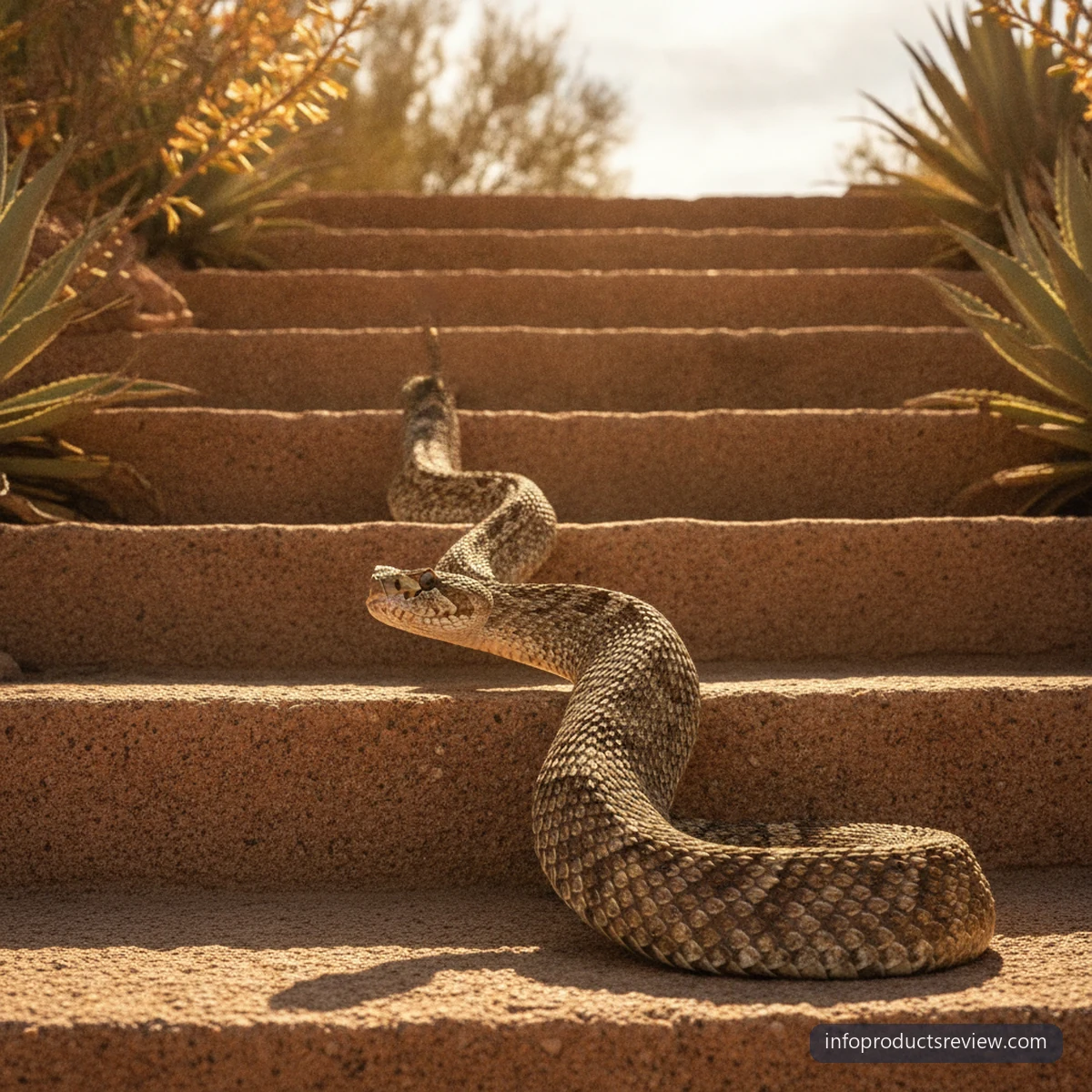
A few that come up often enough in questions to be worth answering, with the honest note that the classical material on them is thin.
A shed skin, with no snake. There’s no dedicated chapter for this. What can reasonably be said is that the object is an absence — something departed rather than present. That’s an observation about the image, not a transmitted reading, and we mark it as such.
A snake that spoke. Speaking animals appear in dream literature broadly rather than in a specific chapter for this symbol. Attend to what was said and how you felt, rather than looking for a fixed meaning.
A snake in water. Here there is material: al-Nabulsi reads snakes in water as money, and snakes in fields or under trees in connection with flowing water. One of the clearer favourable passages.
A snake that didn’t move at all. Stillness is the lightest image in the whole subject, and one of the most common. It’s worth saying plainly, because it’s rarely what people find first.
If another symbol appeared alongside the snake
Dreams rarely arrive as single symbols. If your dream also contained a house, water, a person you know, or an animal, resist the urge to look each one up separately and add the answers together.
A symbol is read inside its scene. A snake in a flooded room is not “snake plus water”; it’s one scene, and the scene is what gets read. The classical method — ask about the whole dream, then answer — exists precisely because symbol-by-symbol addition produces nonsense.
A quick reference: detail and nearest reading
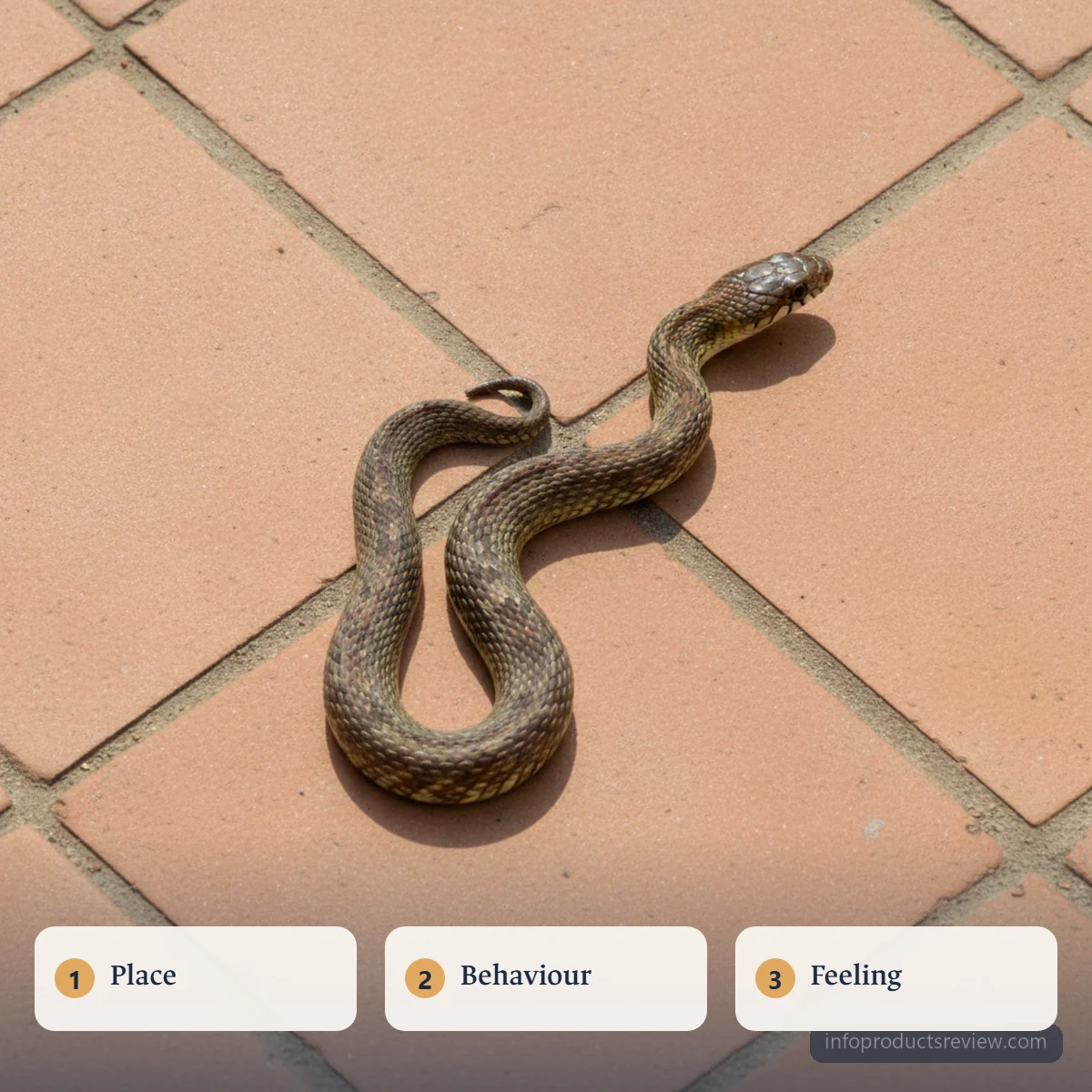
A summary, not a substitute for the sections above. Every line here assumes the rest of the scene is neutral.
- Inside the house — a close circle: household, family, whoever comes and goes.
- Outside the house — a wider circle: work, study, the street.
- Passed by or stayed still — among the lightest images; a passing concern.
- Approached but didn’t reach you — pressure or fear that didn’t become an event.
- Chased you — strain; the sources separate intent from arrival.
- Bit you — difficulty, scaled to severity; no timing, no body-part chapter.
- You killed it — an adversary overcome or a problem passed.
- You cut it — decisiveness; al-Nabulsi records cutting into three as three opponents yielding.
- It fled from you — a difficulty receding.
- You held it without fear — control and standing.
- Large — a bigger matter, not a different one.
- Many — many concerns rather than many people.
- In water — read by al-Nabulsi in connection with money.
- You felt calm — leans toward strength rather than threat.
- You felt afraid — leans toward pressure; ask what is pressing in waking life.
How we check what we publish
Since this page asks you to be sceptical of others, here is our own standard.
We don’t attribute a reading to Ibn Sirin or al-Nabulsi unless we can point to where it appears. Where an attribution is widely repeated but not established, we say so — which is why you’ll see the manual attributed to Ibn Sirin described that way rather than presented as unquestionably his. Al-Nabulsi’s authorship is not in the same position; it’s settled, and we treat it as settled.
Where we’re offering an observation rather than a transmitted reading, we mark it. Where the sources are silent, we say they’re silent instead of filling the gap. And we keep the classical material and the sleep research in separate blocks, because merging them would misrepresent both.
Frequently asked questions
What is the most common meaning of a snake dream?
Conflict, rivalry, or someone whose presence you find difficult — that’s the commonest reading in the classical sources. It isn’t the only one: the same books also read the snake as authority, standing, benefit and wealth. Which applies depends on where the dream happened, what the snake did, and how you felt.
Does the snake’s colour change the meaning?
Only in degree. What the sources offer on colour is brief — a note about the intensity of the matter. The detailed colour tables in circulation, assigning a separate fate to each shade, have nothing behind them.
Does a black snake mean magic or envy?
No. There’s no passage in the classical material linking this symbol to magic or to the evil eye. That connection was added later. Our guides for a single woman and a married woman go through what is actually recorded.
A snake chased me but never caught me. What does that mean?
The sources distinguish the intention of harm from harm itself, and this scene sits on the first side. It’s usually read as pressure or fear that hasn’t turned into an event. The fear you woke with is real; it doesn’t establish that anything happened.
A snake bit me. Should I be worried?
The reading moves toward difficulty, scaled to how severe the bite felt in the dream. There’s no timing attached to it, and no chapter in the classical material assigning meanings to the part of the body bitten. It doesn’t predict an event.
I killed the snake. Is that good?
It’s one of the clearest favourable images: an adversary overcome, or a difficulty passed. Al-Nabulsi records a second reading connected with marriage, so even here the tradition offers more than one line.
Does it matter whether the dream was at home or elsewhere?
Considerably. Inside the house points to a close circle; outside points to a wider one. Al-Nabulsi is more specific still, reading snakes of houses closer to neighbours and snakes of open ground closer to whoever crosses your path. Setting is the strongest single detail you have.
Does the size or the number of snakes matter?
Size is read as scale — a bigger matter, not a different one. Many snakes are generally read as many concerns rather than many enemies. Both adjust a meaning; neither creates one.
The dream repeated for several nights. Is that significant?
Recurrence wasn’t made a meaning in its own right. The nearest classical image is a snake that comes and goes repeatedly, read as a recurring worry rather than a specific adversary. From the sleep side, recurrence tracks stress and short sleep more closely than it tracks content.
Is there anything I should do after a dream like this?
A dream obliges you to nothing. The response recorded in the hadith literature is simple and costs nothing: seeking refuge from its harm, spitting lightly to the left three times, turning onto the other side, and not retelling the dream. Anything beyond that — paying someone, making a vow, consulting anyone who claims access to hidden things — has no basis.
Where do I find the reading for my own situation?
The dream interpretation guides apply these same principles in detail for a single woman, a married woman, pregnancy and men.
Can a dream tell me who my enemy is?
No. No dream identifies a particular person, and no classical reading claims otherwise. A page that leaves you suspecting someone by name has gone well past its sources.
In summary
Compressed into lines you can actually use:
- Read the scene, not the symbol. Place first, then what the snake did, then how you felt. Colour last.
- The commonest images — passing, still, distant — are the lightest ones in the tradition.
- The snake is not only a figure of harm. The same books read it as authority, standing, provision and wealth.
- A dream can’t name a person, establish magic or envy, or put a date on anything.
- Take no decision from it, and accuse no one because of it.
- If it recurs and wears you down, start with your sleep and your stress, not with a symbol.
And if one thing is worth carrying away: a possible meaning stays possible, no matter how confidently it’s repeated.
Written and reviewed by: the ATHAR editorial team — classical material checked and attributions verified before publication.
Last reviewed: 6 September 2026.
Note: what appears on this page is a possible meaning rather than a confirmed fact, and it changes with the details of the dream and the dreamer’s circumstances. Nothing here predicts the future, diagnoses a medical or psychological condition, or establishes magic, envy, or hostility from any particular person.