


You wake with a wet face, or with the weight of crying still sitting in your chest, and the questions arrive at once: is sadness on its way? Is it good news? Why was I crying at all? Here is the short answer: crying in a dream isn’t a bad omen in itself, and it announces nobody’s death, illness or disaster.
Quiet tears are read as something good in the old books of dream interpretation; crying with loud wailing is read differently, and both are human judgements rather than news about what is coming. Very often, crying in a dream simply echoes tiredness, grief or pressure you’re carrying while awake.
The bottom line
- The closest meaning: quiet tears that fall without a sound are read in the books of dream interpretation as joy and as something good, not as sorrow. If you cried quietly and woke up at ease, the picture is a reassuring one.
- The detail that changes it: wailing, meaning a loud lament on top of the tears. When that is added, the reading shifts from joy to calamity. It is an interpreter’s judgement that can be right or wrong, not news that anything will happen.
- Common cases: crying over someone you’ve lost is closest to grief and longing. Crying during a stressful stretch is often an echo of what you’re carrying by day. Tears of joy are a gentle picture of hope or relief.
- The limits: these are possible meanings that shift with the details. They promise no relief by a certain date, and they warn of no disaster, death, magic or envy. A dream tells you nothing about anyone dying or falling ill.
- Where the books give no fixed meaning: crying over someone alive whom you saw die, a crying child or spouse, floods of tears, crying in public. Read these through how you felt in the dream and what’s on your mind these days.
If you woke up relieved, thank God. If you woke up heavy, seek refuge in God, don’t retell the dream to everyone, and gently ask yourself what’s been wearing you down lately.
What this page covers
- The bottom line
- Why do we cry in dreams?
- Which details change what crying in a dream may mean?
- What do silent crying and quiet tears mean in a dream?
- What does crying out loud, screaming or wailing mean in a dream?
- Crying over someone who has died: does it announce a death?
- What do tears of joy mean in a dream?
- What does crying from fear, injustice or regret mean in a dream?
- What does crying for no clear reason mean in a dream?
- What does it mean to see someone else crying in your dream?
- What does crying in prayer or while hearing the Qur’an mean in a dream?
- What does crying in someone’s arms or in a parent’s embrace mean?
- What does crying in front of people or in a public place mean?
- What does a husband or wife crying in a dream mean?
- What do floods of tears or crying for a long time mean in a dream?
- Why do I wake up actually crying?
- What does crying and then laughing in the same dream mean?
- Crying and laughter: how does reading by opposites work?
- Does it mean something different for single women, married women, pregnancy or men?
- What do the books of dream interpretation actually say about crying?
- What about the books of dream interpretation?
- What is actually established about dreams?
- What does sleep research say about crying in dreams?
- When is crying in a dream more likely your mind processing?
- Common claims about crying in dreams that need correcting
- What crying in a dream cannot establish
- What to do after crying in a dream
- How to describe your dream so it can actually be read
- What have interpreters said in recorded interviews?
- A few typical scenes from readers’ questions
- Quick reference: detail and nearest reading
- Related guides
- Frequently asked questions
- Is crying in a dream good or bad?
- What does crying without sound mean in a dream?
- What does crying hard and screaming in a dream mean?
- Does crying over someone alive mean they’ll die?
- What does crying over someone who has died mean?
- Why do I wake up actually crying?
- What does laughing in a dream mean?
- What should I do after a disturbing dream where I cried?
- Is a child crying in a dream a warning?
- I keep crying in my dreams. Is it a message?
- Does crying in a dream mean a relationship will fail?
- Is any of this certain?
- In summary
Why do we cry in dreams?
Before any interpretation, it helps to know that crying in dreams is something a great many people experience. It may come after an exhausting day, during a period of grief, or when you’re carrying feelings you haven’t had the time or the space to put into words.
Many of us hold back tears during the day: in front of the children, at work, or because we want to seem strong. Night is when that control loosens, so some of those feelings may surface as crying in a dream. Some people wake up feeling lighter afterwards and some don’t; there’s no rule either way.
The books of dream interpretation draw a useful distinction between the kinds of things a sleeper sees: a true dream, a disturbing dream, and the self talking — the mind going back over the day’s worries and its own guilty conscience. That third kind carries no interpretation at all. Part of it comes from the self-reproaching soul: someone does something they regret while awake, and in sleep it brings a troubled conscience and tears.
That’s a useful reminder: not every tear in a dream is asking to be decoded. Some of it is conscience, some of it is the day’s fatigue, and some of it is an old sadness that found its way out while you slept.
For the general approach first, our guide to dream interpretation explains how every symbol on this site is read: the meaning first, then its limits.
Which details change what crying in a dream may mean?
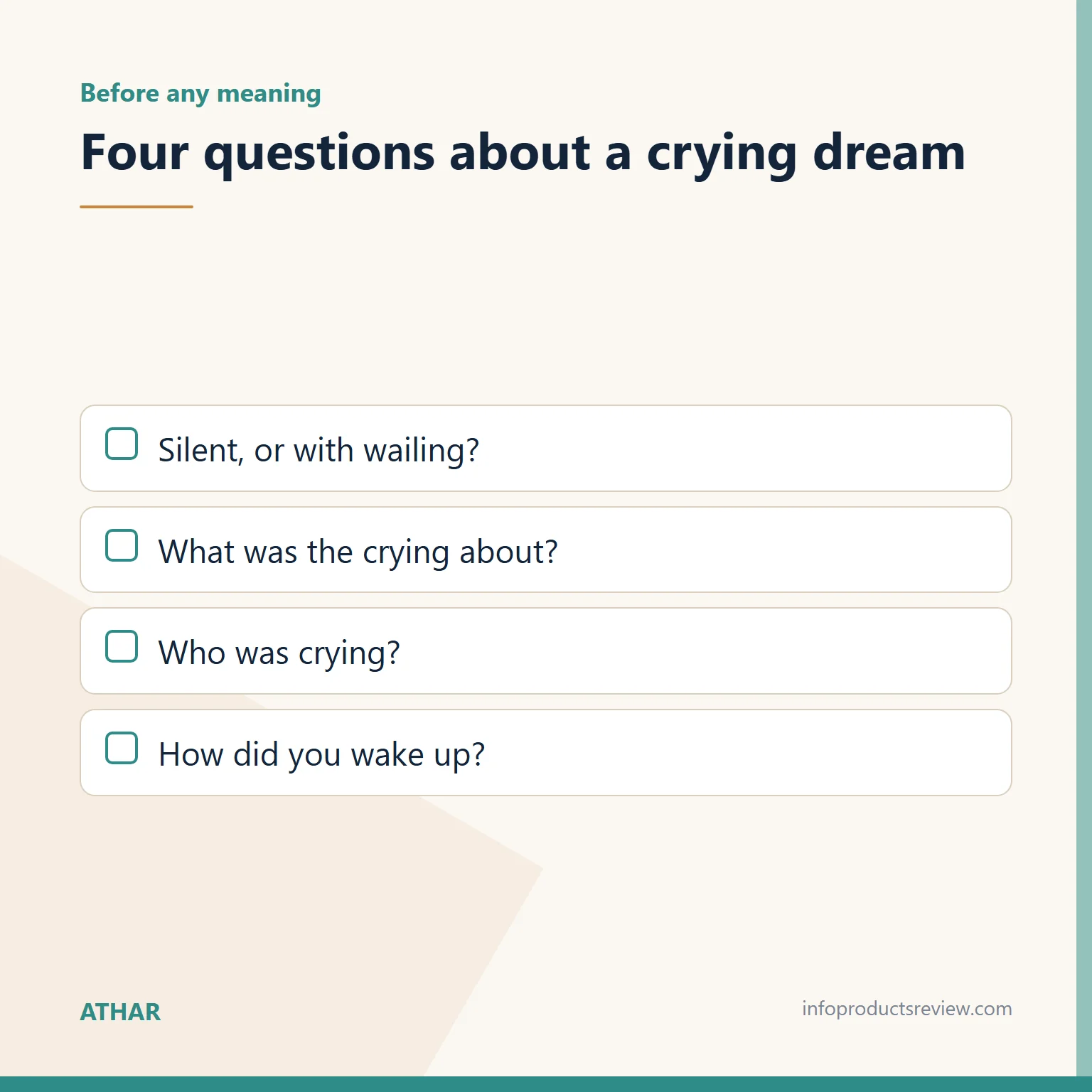
Here are the details, from most to least important:
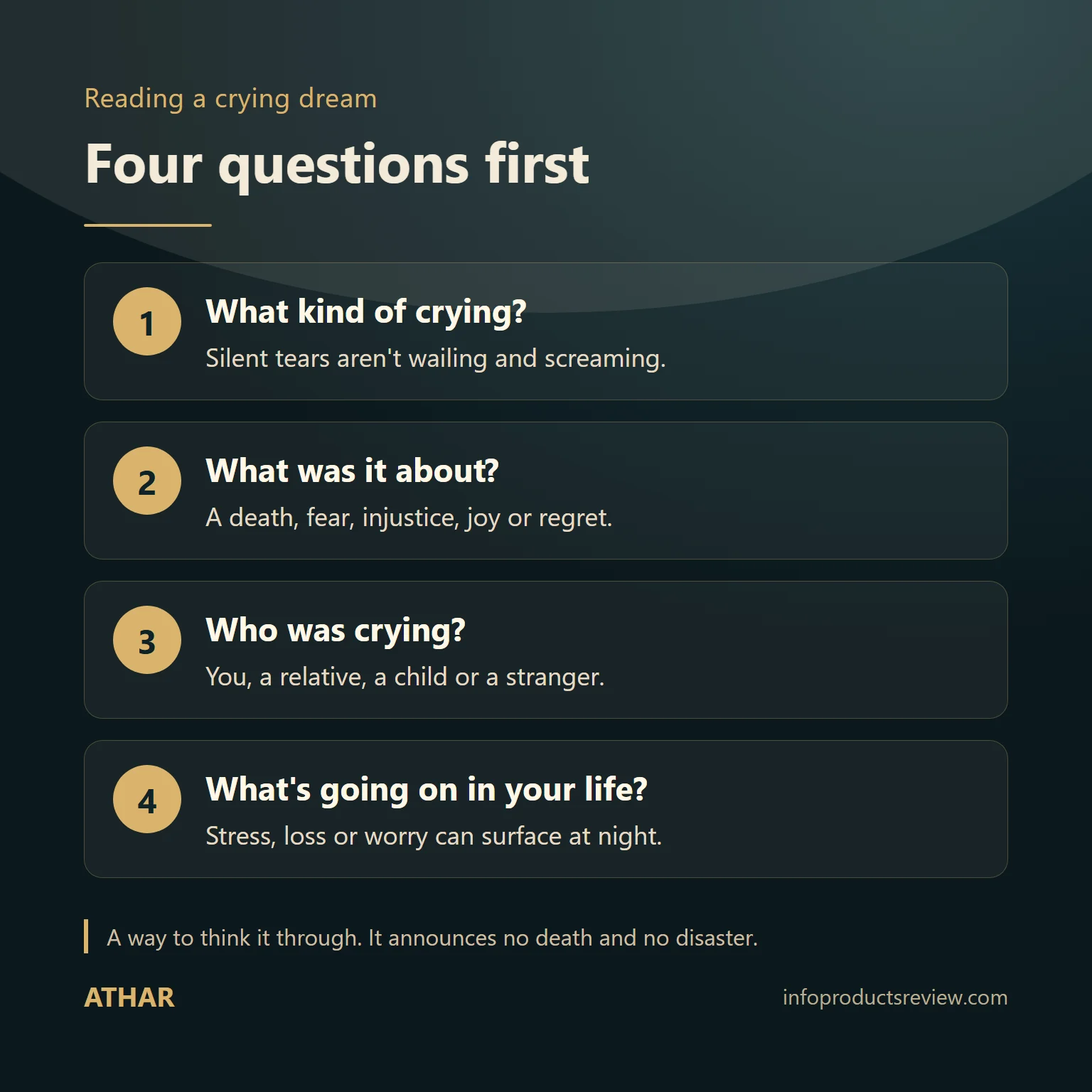
First: the kind of crying. Silent tears, crying out loud, or screaming and wailing? This is the clearest distinction the old books draw.
Second: why you were crying in the dream. Over someone who died, from fear, from injustice, from joy, or for no clear reason?
Third: who was crying. You, someone you know, a child, a stranger?
Fourth: how you felt on waking, and your real situation. Relieved or weighed down? Are you going through pressure, loss or worry?
Last: the setting, the people and the other details. They adjust the degree; they don’t create a new meaning.
An example makes the difference clear. Two women each dream that they’re crying. The first sheds quiet tears and wakes up at ease. The second screams and wails and wakes up frightened. The symbol is the same, but the readings differ, because the kind of crying and the feeling on waking differ.
What do silent crying and quiet tears mean in a dream?

Quiet tears are among the gentlest crying images there are. The old books of dream interpretation read crying as joy, so long as there is no wailing and no sound with it. The condition matters: the crying read as joy is the quiet kind, not screaming and wailing.
The scene itself is familiar: tears falling quietly without a sound, soft crying somewhere alone, eyes welling up in a moving moment, sometimes with no reason you can name on waking.
Behind that reading lies a method the early interpreters used, in which a symbol is read against its surface. Quiet crying is joy; laughter, in return, is sorrow. It’s simpler than it sounds: the symbol alone isn’t enough, and the way you cried is what tips the meaning.
This is an interpreter’s reading, not a promise. What it offers is reassurance to anyone who woke up frightened by their own tears, because in these books quiet crying sits closer to joy than to anything bad. Some people also say they feel at ease after quiet crying, though that can’t be made into a rule.
The practical response is simple. If you woke up relieved, be grateful and take heart. If you woke up sad, ask yourself what’s really weighing on you, and give it some attention during the day: a conversation, some rest, or a prayer.
A question worth asking here: when did you last cry while awake? If you can’t remember, and you’ve been going through a heavy stretch, the dream may simply have been the one place where what you’d been holding back could come out.
What does crying out loud, screaming or wailing mean in a dream?
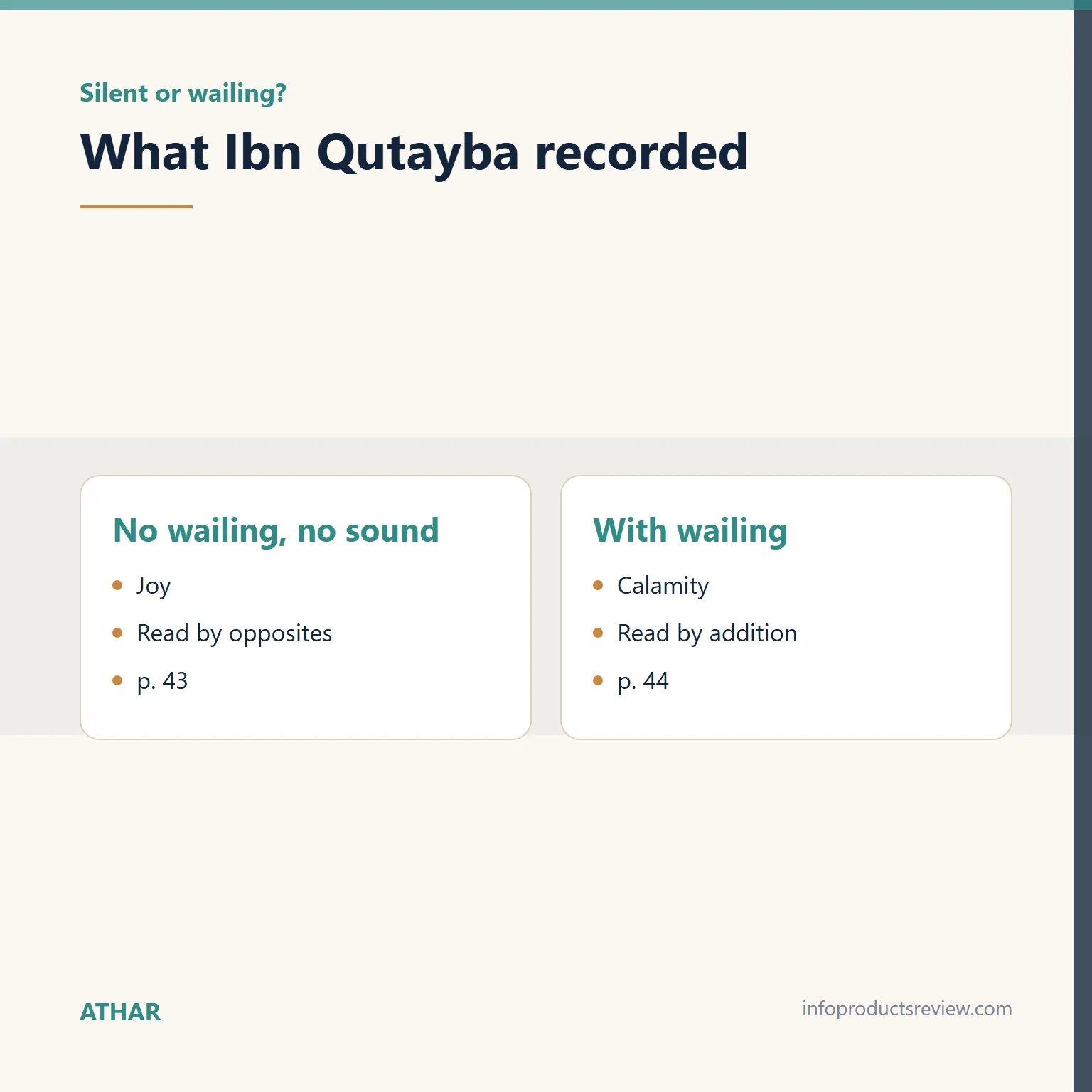
Here the meaning shifts a little. When a loud lament is added to the tears, the reading in the old books moves from joy to calamity. Laughter changes the same way: it reads as sorrow, unless it’s only a smile, in which case it’s good.
The scene is a heavier one: crying loudly, screaming, wailing and beating your chest, breaking down in a painful moment, or sobbing hard enough to wake you.
But hold on to this point, because it matters: that reading is the judgement of an interpreter writing in the ninth century, and it isn’t news that a disaster is coming. Wailing in a dream may reflect intense stress, an old grief that never came out, or a painful scene you saw or heard about.
If you dreamed you were screaming and wailing and woke up shaken, the guidance on a dream you dislike is clear and comforting. Sahih al-Bukhari (7045) teaches seeking refuge in God from its harm and not mentioning it to anyone; Sahih Muslim (2262) adds spitting lightly to the left three times and turning over.
Then look at how you’re doing: do you need rest, or someone to talk to? And don’t rush to tie the dream to a particular person or event. A disturbing dream gives you no name and no date, and hunting for them only feeds the fear.
Crying over someone who has died: does it announce a death?
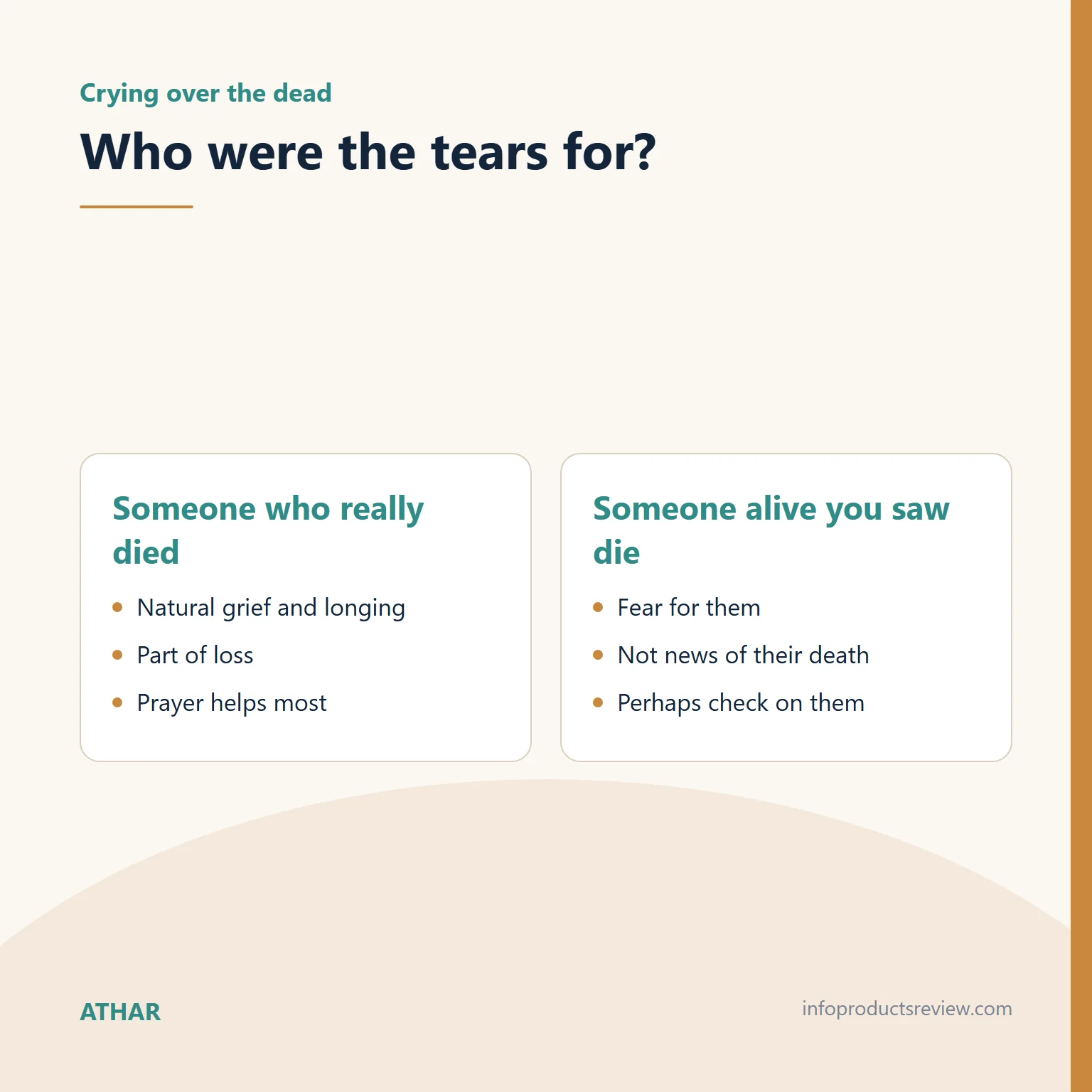
A dream announces nobody’s death, however bitterly you wept in it. What crying over someone who died mostly reflects is grief and longing, or fear for someone you love.
It’s one of the most common crying scenes. Sometimes the person really has died; sometimes they’re alive and you saw them die in the dream.
Crying over someone who really died: most naturally a picture of grief and longing. Loss doesn’t stop at the edge of sleep, and people who’ve lost someone may cry for them in dreams, especially in the first months or around meaningful dates. That crying carries no warning. We’ve written more about dreaming of someone who has died.
Crying over someone alive whom you saw die in the dream: many people are terrified by this and fear it announces that person’s death. Nothing of the kind appears in the books of dream interpretation. The dream more likely reflects your fear for them, worry about their health, or how deeply you’re attached to them.
Crying quietly over the dead: one of the images that isn’t read as bad, because it belongs with quiet crying.
Wailing and screaming over the dead: reads differently, as described a moment ago. In waking terms it may reflect a heavy grief that hasn’t found an outlet yet.
If your loss is recent, don’t be surprised if these dreams keep coming. For many people they’re part of grieving, and they usually ease with time. What helps afterwards is praying for the person you lost, giving charity on their behalf if you can, and talking about them with someone who shares your grief.
What do tears of joy mean in a dream?

Tears of joy are among the gentlest crying images in a dream. The tears here aren’t sorrow at all; they’re an overflow of happiness or gratitude.
The scenes are familiar ones: good news, a reunion after a long absence, a long-awaited success, someone coming home. The dream may reflect something you’re hoping for, joy you’re waiting on, or relief after a long stretch of worry.
The books of interpretation give tears of joy no separate meaning. The closest fit is their reading of quiet crying as joy. But the dream promises nothing about what you saw actually happening, let alone on a particular date.
What does crying from fear, injustice or regret mean in a dream?
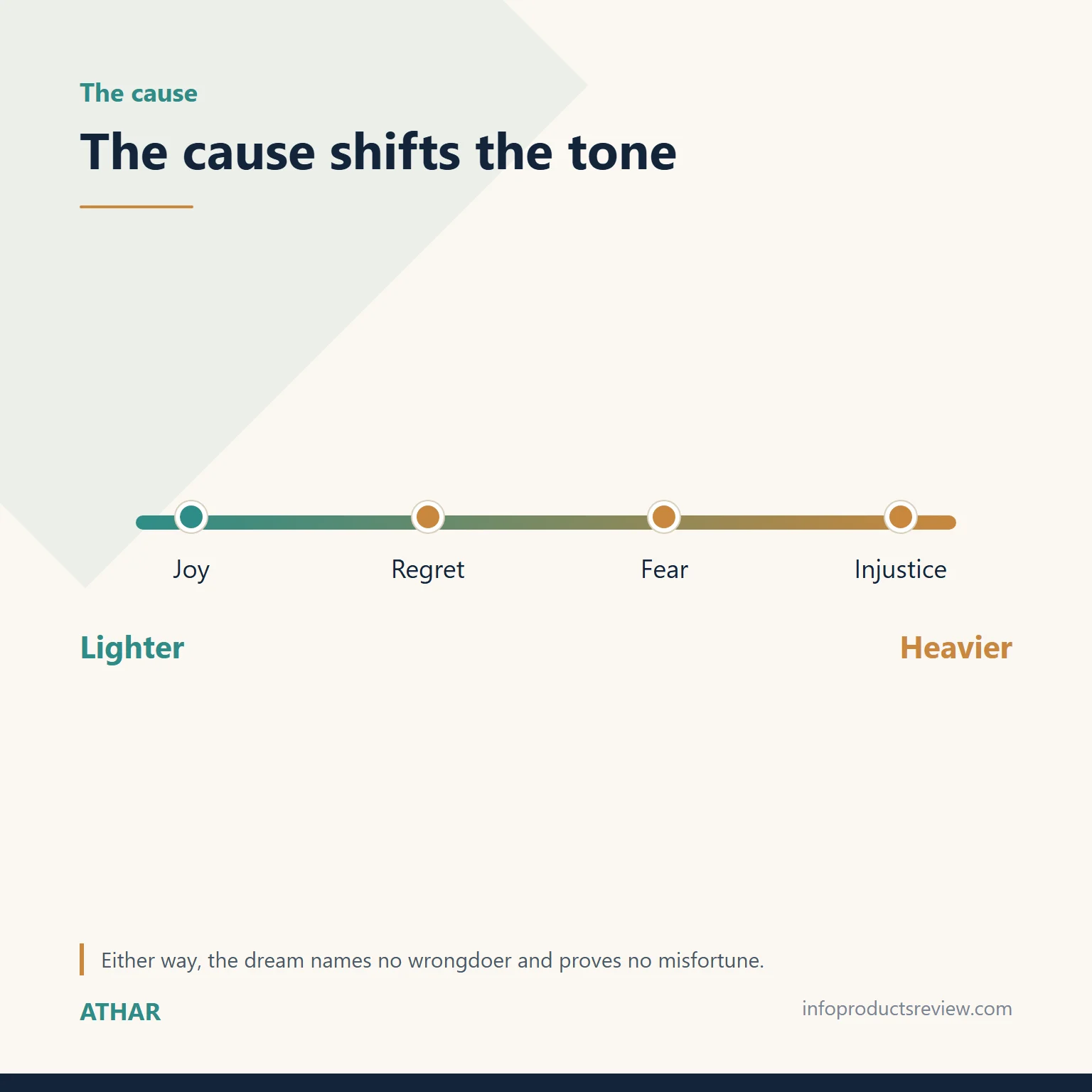
Crying from fear: if you cried in the dream because something was chasing you, or you were somewhere frightening (a common thread in snake dreams too), the scene most likely reflects a real worry in your life: an exam, a hard decision, fear for someone. The Sleep Foundation notes in its guide to nightmares that stressful and worrying situations can provoke bad dreams. That’s about dreams in general, not crying in particular.
Crying from injustice: if you cried because someone wronged you, accused you or treated you harshly, the dream may reflect a sense of injustice you’re living with, or an old wound that never healed. There’s nothing in it to show that a particular person is wronging you or plotting against you.
Crying from regret: this sits closest to the self talking described near the top of this page. Someone who regrets something they did may see themselves crying in a dream as their conscience works on them. The remedy is in waking life, not in interpretation: repentance, an apology, repairing what can be repaired.
What does crying for no clear reason mean in a dream?
Many people wake up crying, or remember crying in a dream, without knowing why. No death, no fear, no sad news. Just tears.
One plausible reading is that it echoes feelings that have piled up, tiredness that was never voiced, or a run of small pressures. The Sleep Foundation’s guide to dreams describes a theory that dreaming helps us manage emotions, while making clear that experts still don’t agree on why we dream.
Interpreters interviewed about this make a similar point: someone whose pressures have grown and who’s close to tears in daily life may see themselves crying in dreams, and that’s a reflection of their reality. You’ll find the clip in the interviews section below; it’s a personal view rather than a rule.
If this keeps happening, the more useful question isn’t what the dream means, but how you’re really doing. Are you sleeping properly? Are you carrying a worry you don’t talk about? Do you need someone to listen?
What does it mean to see someone else crying in your dream?

Sometimes you’re not the one crying. You see someone else in tears: your mother, a friend, your child, a stranger. The scene is most likely about your relationship with that person and what occupies you about them.
A parent crying: often reflects worry about them, a sense of having fallen short towards them, or awareness of what they’re going through. If the parent has died, the dream may reflect how much you miss them, and the most useful response is to pray for them.
A child crying: one of the most upsetting scenes for parents. It most likely reflects how preoccupied you are with your child and how much you worry for them. How the scene unfolds can tell you something about your own feelings: did the child cry and then settle in your arms, or keep crying while you couldn’t comfort them? The first is a picture of care; the second, of worry or exhaustion. Neither says anything is wrong with the child.
A friend or relative crying: may reflect awareness of a crisis they’re in, or a sense that they need you. It may simply be a nudge to check in on them.
A stranger crying: may reflect part of your own feelings, showing up in the dream on someone else’s face.
Someone crying in your dream is no news that misfortune will reach them. The dream speaks about what occupies you regarding them, not about their future. If it’s left you uneasy, a quick call or a visit will reassure you more than any interpretation.
What does crying in prayer or while hearing the Qur’an mean in a dream?
This is one of the more reassuring images: you see yourself weeping as you pray or prostrate, as you listen to verses of the Qur’an, or as you make a heartfelt prayer somewhere pure. People often wake from this dream with a deep sense of calm.
The image is close to the weeping out of reverence that is praised in the lives of the pious. The books of dream interpretation carry an edifying report from Malik ibn Dinar, who saw al-Hasan al-Basri in a dream after his death; al-Hasan told him that God had raised them through their grief and weeping in this world. It’s a story told for encouragement, not a rule of interpretation, but it shows that early writers didn’t speak of reverent weeping as something bad.
This dream is most naturally read as longing to be closer to God, a need to repent and return, or a search for peace amid a crowded life. It may be a gentle reminder of worship you’ve drifted from, or an echo of worship you love and keep up. The books give this scene no separate meaning, so this is a reading of the scene rather than a quotation from an interpreter.
The dream is no certificate of the dreamer’s standing with God, and it’s no reason for self-praise. It’s an image to take heart from, and a push towards good deeds while awake.
What does crying in someone’s arms or in a parent’s embrace mean?
It’s a moving scene: you see yourself crying in your mother’s or father’s arms, on a friend’s shoulder, or in front of someone you feel safe with. What these images mostly reflect is a need for support and safety.
Crying in a parent’s embrace: most naturally a picture of needing support and tenderness. It often comes in times of pressure or loneliness, or after losing a parent. If the parent is alive, the dream may be an invitation to draw closer and talk. If they’ve passed away, it’s a picture of longing, and praying for them is the most useful thing to do afterwards.
Crying on a friend’s or partner’s shoulder: may reflect trust in that person, or a need to be heard. The dream may be a reminder that you don’t have to carry your worries alone.
Crying in front of someone who doesn’t notice: may reflect a feeling that the person you need doesn’t see how tired you are, or that what you feel isn’t understood. That feeling deserves a calm conversation while you’re awake, rather than being left to build up.
The books of dream interpretation give these scenes no separate meaning. So we offer them as a reading of the scene by the same logic, not as the words of an interpreter.
What does crying in front of people or in a public place mean?
Some people dream they’re crying somewhere crowded: at the market, at work, at a family gathering, with people watching. They wake up more embarrassed than sad.
This scene most likely reflects a fear of showing weakness in front of others, or a feeling that what you’ve been trying to hide can’t be hidden any longer. It often comes to people who expect themselves to look strong all the time, at home or at work.
If people in the dream were comforting you, the scene is gentler: it may reflect a wish for your tiredness to be understood and accepted. If they were mocking or ignoring you, it may reflect a fear of being judged.
The dream foretells no scandal, and no one is going to expose a secret because of it. It’s a picture of how you feel about other people’s eyes, worth reflecting on while you’re awake. It may be enough to choose one person you trust and let yourself not be strong in front of them all the time.
What does a husband or wife crying in a dream mean?
People often ask about dreaming that their wife is crying, or their husband, whether there was a clear reason in the dream or none at all. What the scene most likely reflects is how much your partner is on your mind.
It may be a sense that they’re going through something they don’t talk about, worry over an unresolved disagreement, or a feeling that you’ve fallen short towards them. The dream may be an invitation to ask gently how they are, or to have a conversation you’ve been putting off.
The claim that a crying spouse in a dream means betrayal, an approaching divorce or magic appears nowhere in the books of dream interpretation. No accusation or decision should rest on a dream, and it’s no reason to think badly of your partner.
A simple question may help: when did you last ask your partner how they are, and wait for the answer without doing anything else? Sometimes that question is all the dream needs.
What do floods of tears or crying for a long time mean in a dream?
The sheer quantity of tears is no sign of anything bad on its own. The books of interpretation separate quiet crying from crying with wailing, and they never treat how much you wept as a warning in itself.
In some dreams the crying goes on and on: tears that won’t stop, crying that lasts the whole scene, a sense that your eyes won’t dry however hard you try. You wake up drained, as if you’d really been crying for hours.
Many pages link a flood of tears to a flood of misfortune, and that link has no basis in the books of dream interpretation. Long crying in a dream most likely reflects feelings that have been building for a while: grief that never came out, a long stretch of exhaustion, or a hard period you got through while holding it together in front of others. When control loosens in sleep, what has built up can come out all at once.
If the tears were heavy but quiet, with no screaming: this is closer to the image read as joy, and it’s often followed by relief on waking.
If wailing and deep distress came with them: follow the guidance for a dream you dislike, as recorded in Sahih al-Bukhari (7045) and Sahih Muslim (2262), then ask what’s weighing on you in real life, and look for a genuine outlet.
If this dream keeps returning: it’s more a reason to look after your emotional wellbeing than to search for an interpretation. Talking to someone you trust, or to a professional if it goes on, is a helpful step.
Why do I wake up actually crying?
One experience that unsettles people is waking up really crying: tears on your face, sobs in your chest, sometimes without remembering the whole dream.
Plenty of people describe this. It’s most likely the after-effect of a moving dream, in the way some people wake from a frightening dream with their heart racing. We don’t present it here as an established scientific fact.
If you remember the dream, read it as described above: the kind of crying, its cause, and how you felt. If you don’t remember it, there’s no need to hunt for the meaning of something you can’t recall. It’s enough to settle yourself, seek refuge in God if the feeling is heavy, and gently ask what’s been on your mind lately.
If you keep waking up in tears over a long period, along with persistent sadness during the day or disturbed sleep, that deserves a conversation with a doctor or a professional. The point here is taking care of you, not interpreting a dream.
What does crying and then laughing in the same dream mean?
Sometimes a dream turns around: you cry and then laugh, or laugh and then cry, in one continuous scene. What matters in it is how the scene ended, not any single moment.
Crying, then laughing or smiling: a picture of moving from distress to ease, and one of the gentler scenes. On the reading of the old books, quiet crying is joy and a smile is good.
Laughing, then crying: the reverse movement. It may reflect worry that a happiness you’re living won’t last, or a sense that good times never stay. That’s a familiar human feeling, and there’s nothing in it to foretell sadness.
What matters in these shifting scenes is not to read one moment in isolation. Look at how the scene ended and how you felt when you woke.
Crying and laughter: how does reading by opposites work?
One of the most interesting points in the old accounts of interpretation is that crying and laughter are read by opposites: quiet crying is joy, and laughter is sorrow. The reading is then adjusted by addition: crying with wailing is calamity, and laughter that’s only a smile is good.
That leaves nobody who laughs in a dream destined to grieve, and nobody who cries destined to rejoice. It means early interpreters didn’t read symbols literally. They paid attention to degree and detail: a smile isn’t a roar of laughter, and silent tears aren’t wailing.
Everyday life has something similar. Crying can be followed by deep relief, and loud laughter can hide sadness. So an honest reading doesn’t stop at the symbol; it asks how, and in what context.
Does it mean something different for single women, married women, pregnancy or men?
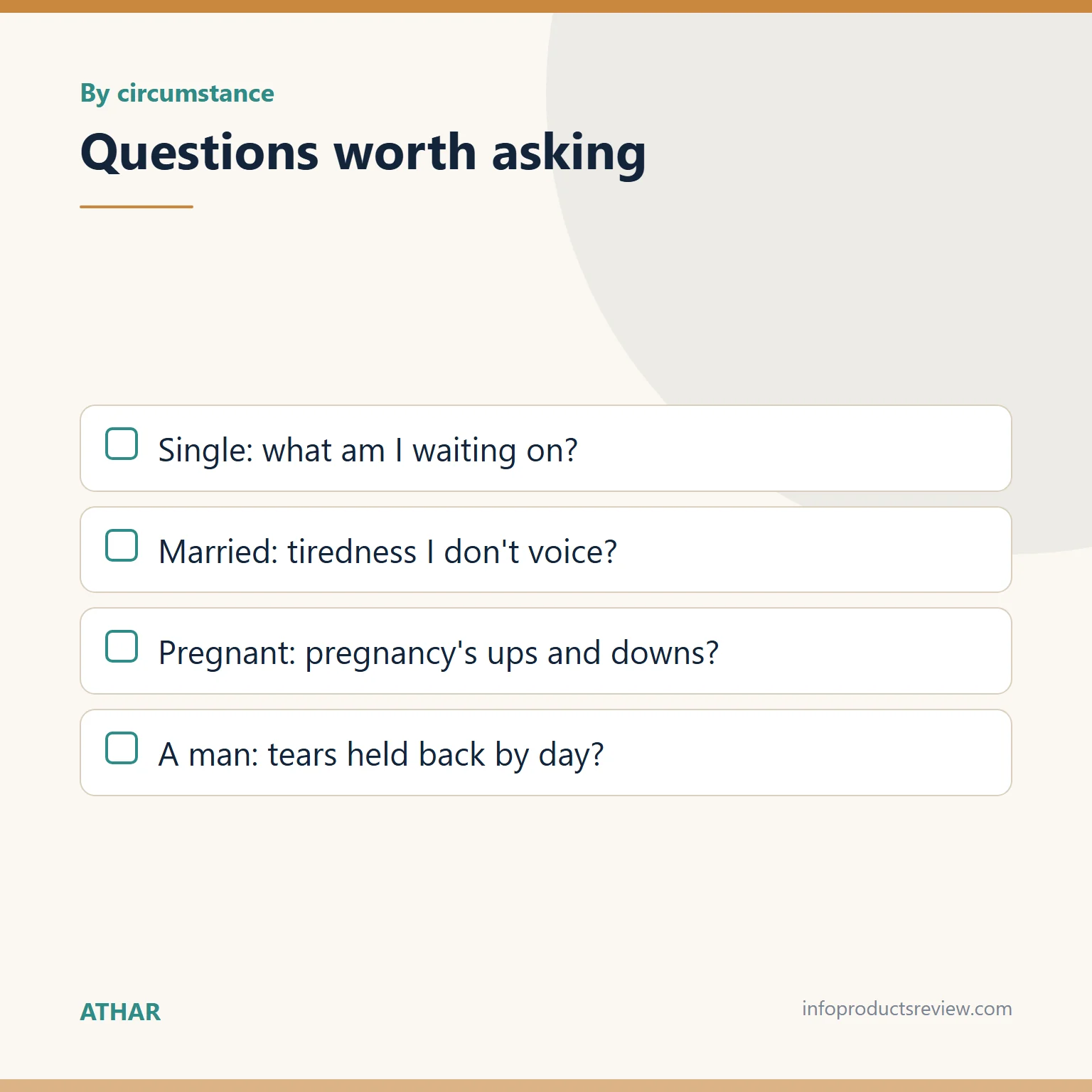
People often ask what crying dreams mean depending on the dreamer. The core reading is the same, but your circumstances change which questions are worth asking. The old books make no distinction between men and women, or between single and married, in what they say about crying.
If you’re single: crying in dreams often comes during periods of waiting or decision: study, work, a proposal, a disagreement with family. Some pages link crying to an imminent marriage or a failed relationship, and nothing of the kind appears in the books of dream interpretation. The dream is better read through what’s really on your mind.
If you’re married: as with lice dreams for a married woman, crying in a dream may reflect the strain of daily responsibilities, a marital disagreement, or missing your own family. A dream can prove no betrayal and predict no divorce, and it’s no basis for an accusation.
If you’re pregnant: many women notice their emotions shifting in pregnancy, and some report more vivid dreams; our guide to dreaming about lice during pregnancy reads pregnancy dreams the same careful way. Crying in dreams during pregnancy often reflects those changes, or worry about the birth. The dream says nothing about the baby or the birth. If the dreams come with persistent sadness during the day, it’s worth mentioning to the doctor or midwife looking after your pregnancy.
If you’re a man: many men hold back tears while awake, and they may surface in dreams, much as pressure at work shows up in lice dreams for men. Crying may reflect pressure at work, responsibility, or a loss you’ve been through. It shows no weakness in the dreamer and predicts no loss.
What do the books of dream interpretation actually say about crying?
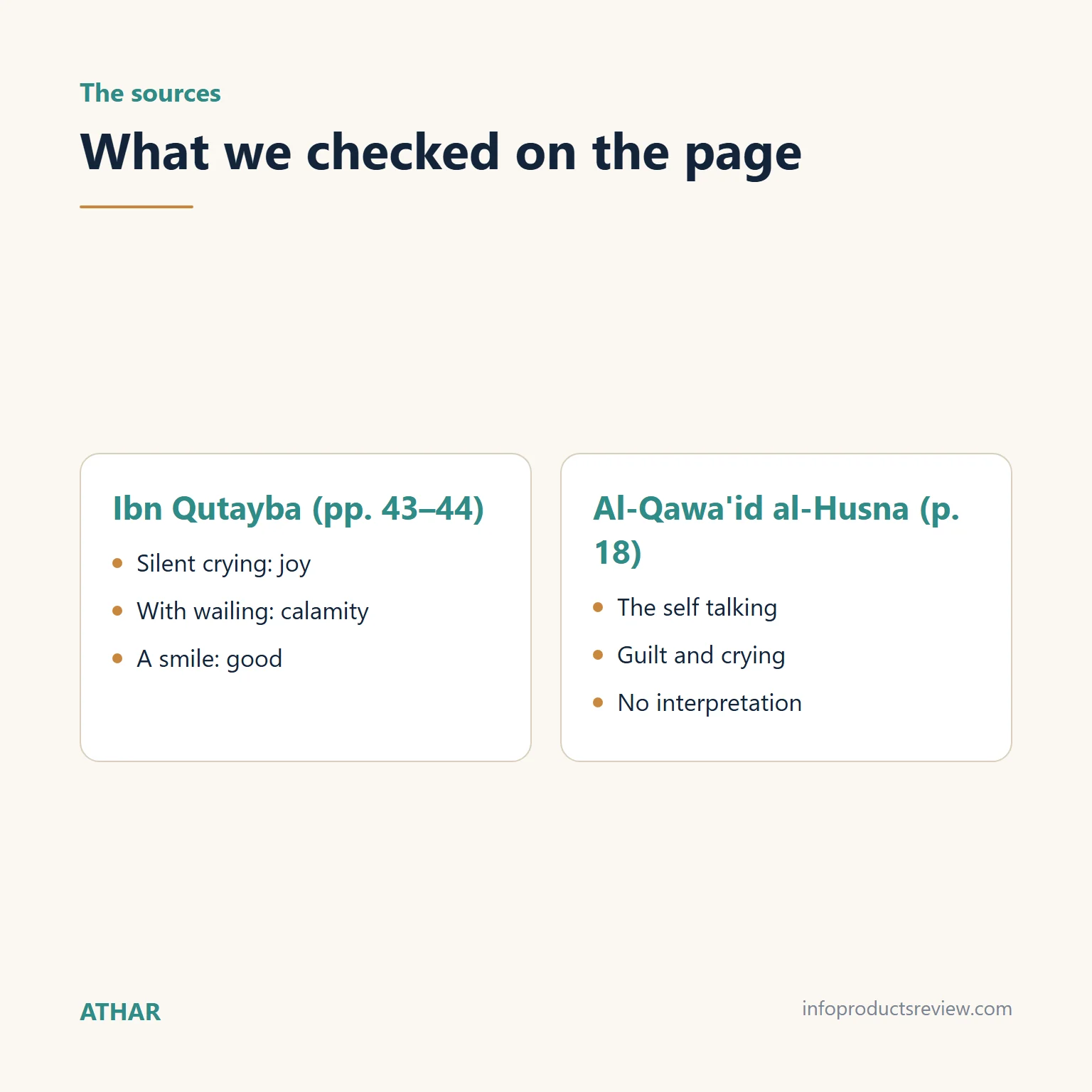
What the books of dream interpretation say about crying is short, clear and not frightening. It comes in two consecutive passages of the earliest surviving work in this field, where the author explains the different ways dreams are interpreted:
- On interpretation by opposites: crying is joy, so long as there’s no wailing and no sound; joy and laughter are sorrow.
- On interpretation by addition and reduction: crying is joy, but with wailing it’s calamity; laughter is sorrow, but a smile is good.
The same book carries a report from Malik ibn Dinar that he saw al-Hasan al-Basri in a dream after his death, his face very bright, the tracks of his tears shining. Malik asked what had become of him after so much grief and weeping in this world, and al-Hasan answered with a smile that through that grief and weeping God had raised for them the banner of guidance to the path of the righteous.
It’s an edifying report about weeping out of reverence in the lives of the pious, not a rule for interpreting crying in dreams.
What stands out in the classical text is that crying isn’t a frightening symbol there. It’s an example used to show that interpreters sometimes read by opposites, and that small details like sound and wailing change a reading.
The modern books of interpretation mention crying in the context of the self talking: the self-reproaching soul is affected by wrongdoing, producing a troubled conscience and tears, and that kind of dream carries no interpretation.
What you won’t find in these books matters just as much: no link between crying in a dream and anyone’s death, no specific misfortune, no magic or envy. Anyone offering “seven serious meanings” of crying without a source is adding, not transmitting.
What about the books of dream interpretation?
Plenty of pages are titled “crying in a dream according to Ibn Sirin” and then list meaning after meaning with no book or source. he was an early Muslim scholar who died in 110 AH (728 CE). The well-known dream book circulating under his name is attributed to him, and scholars who have examined it don’t accept that attribution as established.
So we put it precisely, in line with how ATHAR handles attributions: the books of dream interpretation does contain material about crying, but we don’t rely on it on this page, and we don’t pass on any of its meanings as settled statements. What appears here about crying comes from an early work whose authorship is secure and which exists in a scholarly edition.
What is actually established about dreams?
Two things often get blurred together. One is interpreting crying in a dream, which is human judgement that can be right or wrong. The other is the prophetic guidance on dreams, which is recorded in the two most authoritative hadith collections.
What’s established is that a good dream comes from God, so you thank God and may speak of it, and a dream you dislike is met by seeking refuge in God from its harm and not mentioning it to anyone. Sahih al-Bukhari, Book of Dream Interpretation, hadith 7045, narrated by Abu Sa’id al-Khudri:
If one of you sees a dream he likes, it is from God, so let him praise God for it and speak of it; if he sees otherwise, something he dislikes, it is from Satan, so let him seek refuge from its harm and mention it to no one, for it will not harm him.
In practice: if you cried in a dream and woke up distressed, seek refuge in God from its harm, and don’t retell it to everyone. The hadith says plainly that it will not harm you. And if you woke up relieved after quiet tears, thank God; you’re free to talk about it.
A separate hadith in Sahih Muslim (2262), narrated by Jabir, adds more etiquette for a dream you dislike: spit to your left three times, seek refuge in God from Satan three times, and turn away from the side you were sleeping on.
If one of you sees a dream he dislikes, let him spit to his left three times, seek refuge in God from Satan three times, and turn over from the side he was lying on
Both hadiths are about dreams in general, not crying in particular. They teach you how to handle a dream; they don’t give crying a fixed meaning.
Nothing makes crying in a dream a warning of death or disaster. No decision or accusation should rest on a dream. And no religious text gives crying in a dream a fixed meaning; every meaning mentioned here is human interpretation.
What does sleep research say about crying in dreams?
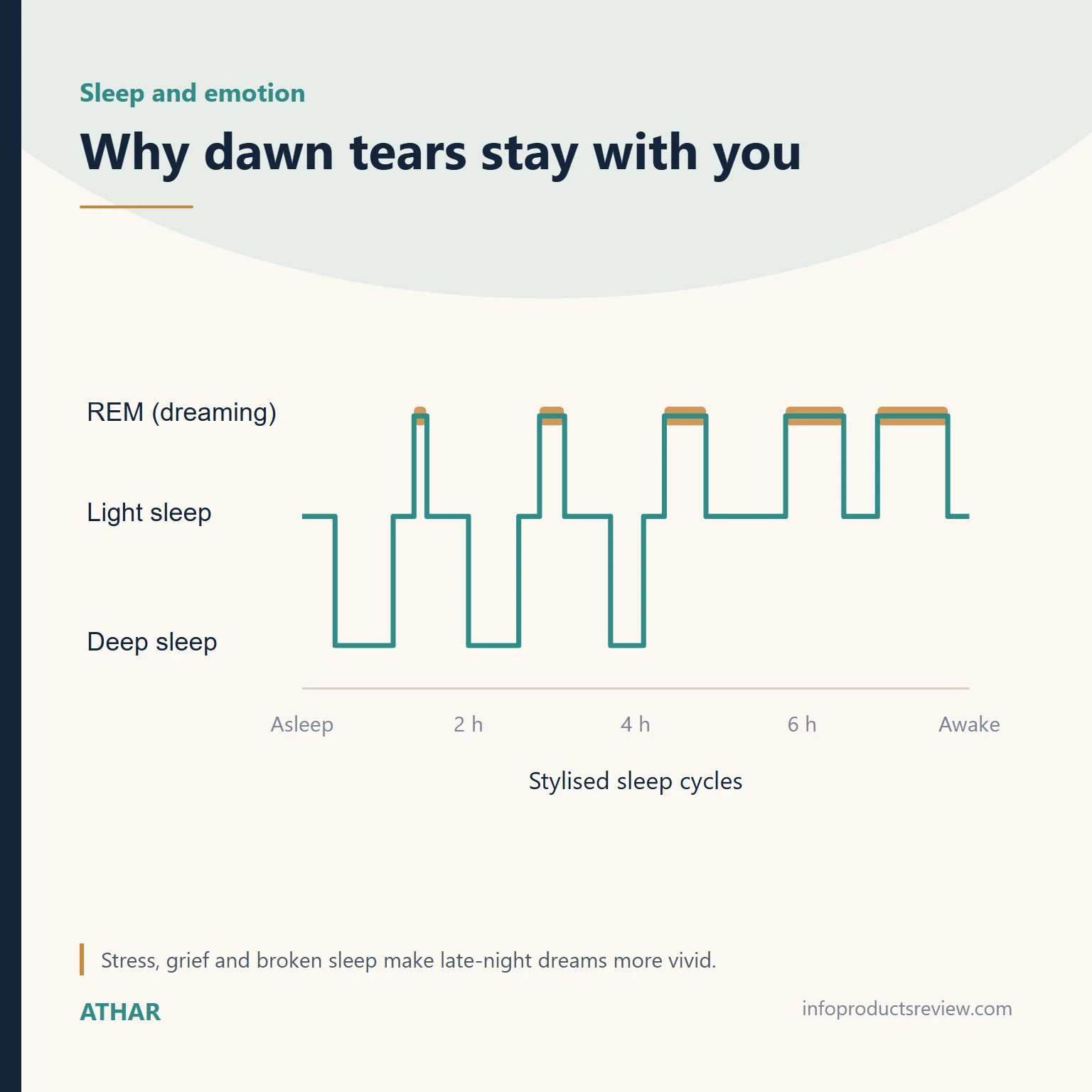
This section answers a different question: not what crying means, but why it happens in sleep at all.
The US National Institute of Neurological Disorders and Stroke explains in its guide to sleep that we cycle through the stages of sleep several times a night, with the dreaming (REM) periods growing longer towards morning. The Sleep Foundation links stress, worry and too little sleep to more disturbing and more vivid dreams. So it’s plausible that crying dreams cluster around loss, tension and exhaustion, though that varies from person to person.
Some people say they sometimes wake with tears on their face after a dream in which they cried. These general health guides offer no definitive explanation for that. The most sensible reading is that it’s the after-effect of a moving dream, not a sign that anything is wrong.
This overlap between inner life and dreams is an observation about human experience. It shows neither that every crying dream is just the mind processing, nor that it’s a message. Nor does a dream diagnose depression or any disorder; that’s work for a professional.
When is crying in a dream more likely your mind processing?
No single sign settles it, but several together make it more likely:
- You’re going through a period of pressure, grief or loss.
- You held back tears in front of people during the day.
- You watched something moving or heard sad news before bed.
- You went to bed exhausted, or woke many times in the night.
- You regret something you did or said.
If several apply, the dream is most likely an echo of what you’re living through, not a message about your future. That doesn’t make your feelings less real; it points you towards looking after yourself while you’re awake.
Common claims about crying in dreams that need correcting
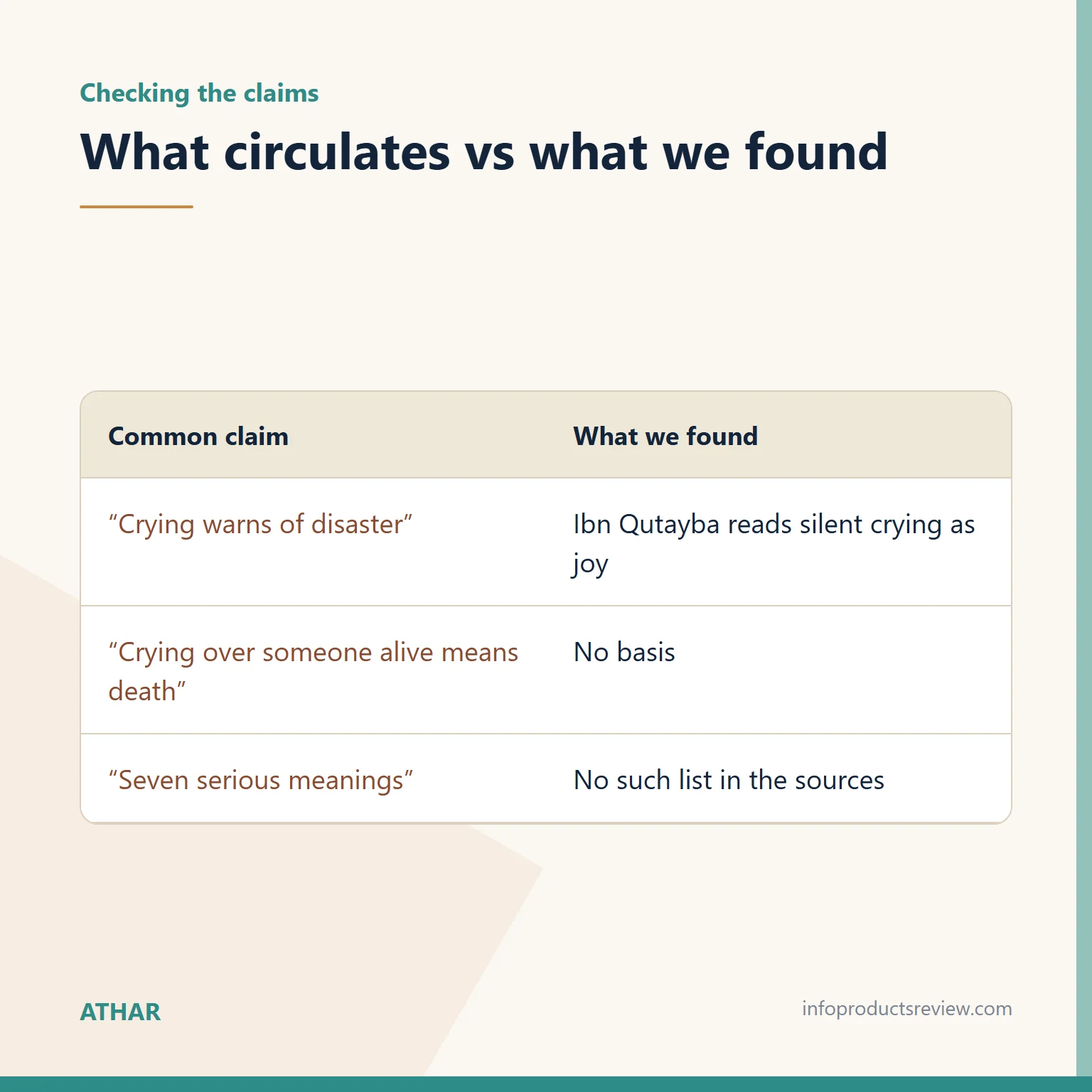
- “Crying in a dream warns of coming disaster.” The old books read quiet crying as joy, and even their reading of wailing is interpretation, not news.
- “Crying over someone alive means their death.” No such thing appears in the books of dream interpretation, and no dream tells anyone when a person will die.
- “Laughing in a dream is always good.” The books read laughter as sorrow, except a smile, which is good; the whole reading depends on detail, not the symbol alone.
- “A child crying in a dream means something is wrong with them.” It most likely reflects your preoccupation with and worry for your child.
- “Crying in a dream has seven serious meanings.” That list has no basis in the books of dream interpretation.
- Attributing fixed meanings for crying to Ibn Sirin as settled fact. The popular book is only attributed to him, and that attribution isn’t established.
What crying in a dream cannot establish

- It can’t establish anyone’s death, even someone you cried over in the dream.
- It can’t name a misfortune or set a date for one.
- It can’t prove magic or envy, and it names no one.
- It shows no weakness and no flaw in the dreamer.
- It isn’t a basis for a decision about marriage, divorce or work.
- It can’t diagnose a mental-health condition; that’s for a professional.
What to do after crying in a dream

- Settle first. If the dream disturbed you, seek refuge in God and turn over, as in Sahih Muslim (2262). If it left you relieved, thank God.
- Don’t retell a dream you disliked to everyone, as in Sahih al-Bukhari (7045), and don’t go looking for a frightening interpretation.
- Ask how you’re really doing: are you carrying grief or pressure you haven’t told anyone about?
- Give yourself an outlet while awake: a conversation with someone you trust, rest, or prayer.
- If the tears were regret, repair what you can, and turn back to God.
- Don’t base a decision or an accusation on the dream.
How to describe your dream so it can actually be read
- The kind of crying: silent tears, crying aloud, or wailing and screaming?
- The reason in the dream: a death, fear, injustice, joy, or none?
- Who was crying: you, a relative, a child, a stranger?
- How it ended: with relief, or did you wake suddenly?
- Your real situation: pressure, loss, worry, or regret?
What have interpreters said in recorded interviews?
Here are two short clips from published interviews, because hearing how someone reasons can be clearer than reading about it. Take them for what they are: personal views, not religious rulings and not a reading of your dream.
In the first, an interpreter talks about dreams that mirror the dreamer’s own state. Someone whose pressures have grown and who’s close to tears all the time, he says, may see himself crying in dreams, and that’s a reflection of his reality rather than a dream needing interpretation.
The speaker says someone under heavy pressure who is close to tears may see himself crying in his dreams, and calls that a reflection of his real life. Summarised from the Arabic interview; an opinion, not a religious ruling or a definitive interpretation.
In the second, a different interpreter reminds viewers that dreams can gladden you but cannot harm you. It’s a comforting thought for anyone who woke up frightened by their own tears.
A practising interpreter's own view, paraphrased: dreams can gladden but cannot harm. An opinion from an interview, not a religious ruling or a definitive interpretation.
That fits the prophetic guidance in Sahih al-Bukhari (7045): a dream you dislike is met by seeking refuge in God and cannot harm you, and a good one is met with gratitude.
A few typical scenes from readers’ questions
A woman dreams she’s crying silently in a quiet room and wakes up relieved. This is the kind of image the books read as joy. In waking terms, it may be long tiredness finally finding an outlet.
A young man dreams he’s screaming and wailing over a friend he saw die, though the friend is alive. The dream announces no death for his friend. It most likely reflects fear for him, or a falling-out between them. He can seek refuge in God, not pass it on as a warning, and perhaps call his friend.
A mother dreams her child is crying after a day when the child was ill. Most likely a direct echo of her worry; it says nothing about the child’s health.
A man under serious financial pressure dreams he’s crying a lot. Most likely a reflection of his reality. What helps is looking for support and practical solutions, not an interpretation.
A student dreams she’s crying with joy at passing before her results come out. A picture of her hope, and no promise about the date or the outcome.
A man who lost his father a few months ago dreams he’s crying in his father’s arms. Most likely natural longing and grief. What helps afterwards is praying for his father and talking about him with the family.
Quick reference: detail and nearest reading
| Detail in the dream | Nearest possible reading |
|---|---|
| Silent tears, no sound | Joy, in the books of interpretation |
| Crying with wailing and screaming | Calamity in those books; a reading, not news |
| Laughing | Sorrow in those books, except a smile, which is good |
| Crying over someone who really died | Natural grief and longing |
| Crying over someone alive you saw die | Fear for them, not news of their death |
| Tears of joy | Hope or relief |
| Crying from regret | A troubled conscience, answered by making amends |
| Crying for no reason, under real pressure | Possibly an echo of pressure, not a message |
| Someone else crying | Your concern for them, not their future |
Related guides
- All English dream guides by topic — every guide reads a symbol by its details first, then its limits.
- Dreaming of someone who has died — crying often appears in dreams of people we’ve lost.
- Dreaming about lice as a single woman — another dream that reflects small, recurring worries and is read through feeling.
- Sleep Foundation — Dreams and how they form
- Sleep Foundation — Nightmares, stress and too little sleep
- National Institute of Neurological Disorders and Stroke — Understanding Sleep
Frequently asked questions
Is crying in a dream good or bad?
It depends on the kind. The old books read quiet crying without sound as joy, and crying with wailing reads differently for them. The context and how you felt on waking fill in the rest.
What does crying without sound mean in a dream?
The books of interpretation read crying as joy so long as there’s no wailing and no sound with it. That’s an interpreter’s reading, and it promises nothing.
What does crying hard and screaming in a dream mean?
Crying with wailing is read as a calamity, which is a reading rather than news that something will happen. In waking terms it often reflects intense stress or grief.
Does crying over someone alive mean they’ll die?
No. Nothing of the kind appears in the books of dream interpretation, and a dream announces nobody’s death. It most likely reflects your fear for them.
What does crying over someone who has died mean?
Most naturally, grief and longing. Quiet crying over them isn’t read as bad, and the most useful response is to pray for them.
Why do I wake up actually crying?
General health guides offer no definitive explanation. It’s most likely the after-effect of a moving dream, and on its own it points to nothing being wrong.
What does laughing in a dream mean?
Laughter is read as sorrow by opposites, unless it’s a smile, which is good. The reading rests on detail, not the symbol alone.
What should I do after a disturbing dream where I cried?
You don’t need to interpret it. The established guidance is to seek refuge in God from its harm and not mention it to anyone, as recorded in Sahih al-Bukhari (7045), and the hadith says it will not harm you.
Is a child crying in a dream a warning?
No. It most likely reflects how preoccupied you are with your child and how much you worry for them.
I keep crying in my dreams. Is it a message?
Recurrence is closely tied to stress, grief and poor sleep. It’s more useful to ask how you’re doing in real life, and to talk to someone you trust.
Does crying in a dream mean a relationship will fail?
Nothing of the kind appears in the books of dream interpretation. The dream is better read through what’s really on your mind.
Is any of this certain?
No, and that’s deliberate. What we offer are possible meanings that shift with the details, and none of it predicts the future.
In summary
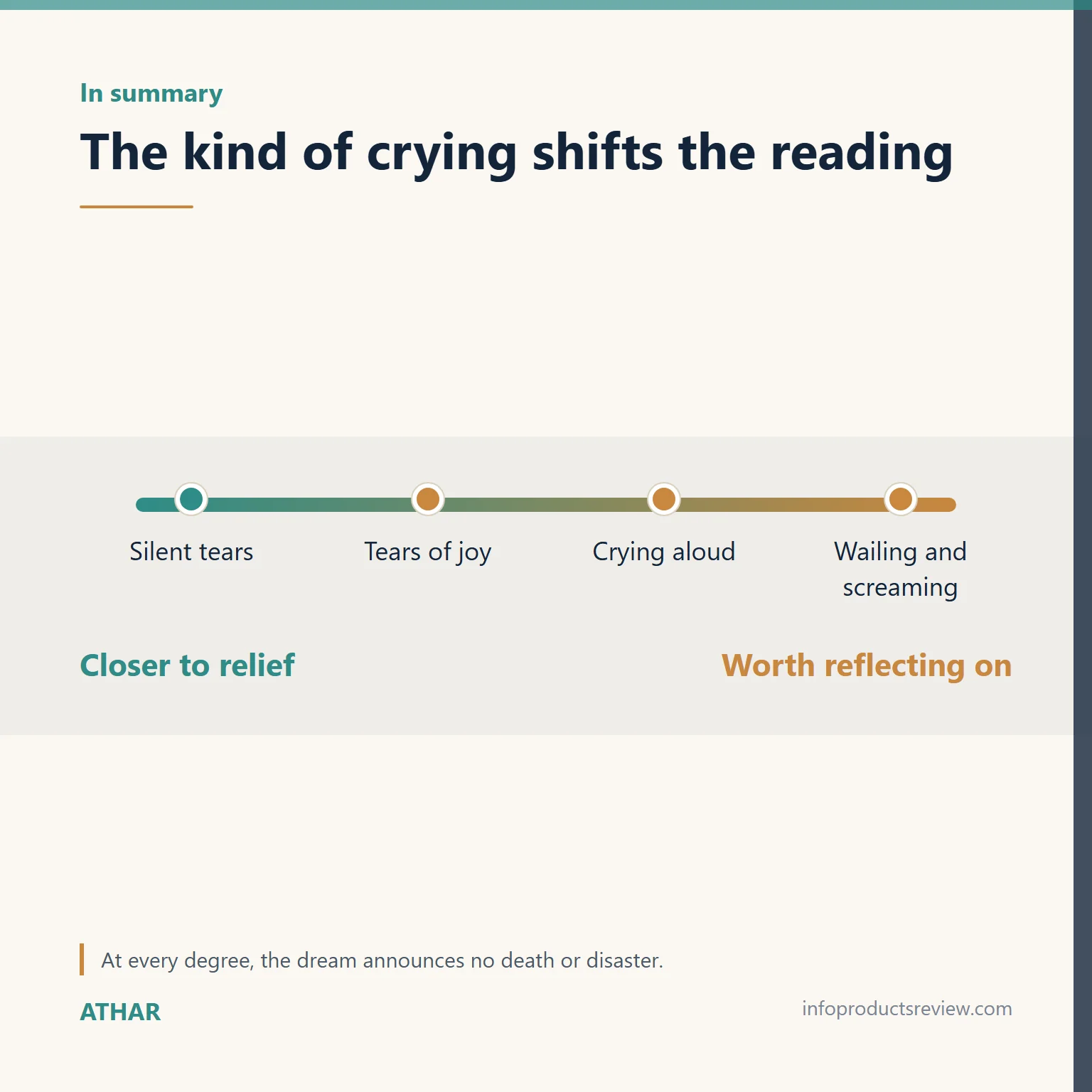
- Crying in a dream isn’t a bad omen in itself.
- Quiet crying without sound is read as joy; wailing changes the reading.
- Crying over the dead is natural grief; crying over someone alive announces no death.
- Crying in dreams may echo pressure, grief or regret from waking life.
- The dream can’t establish disaster, death or magic, and no decision should rest on it.
- After a disturbing dream: seek refuge in God, turn over, and look after yourself.
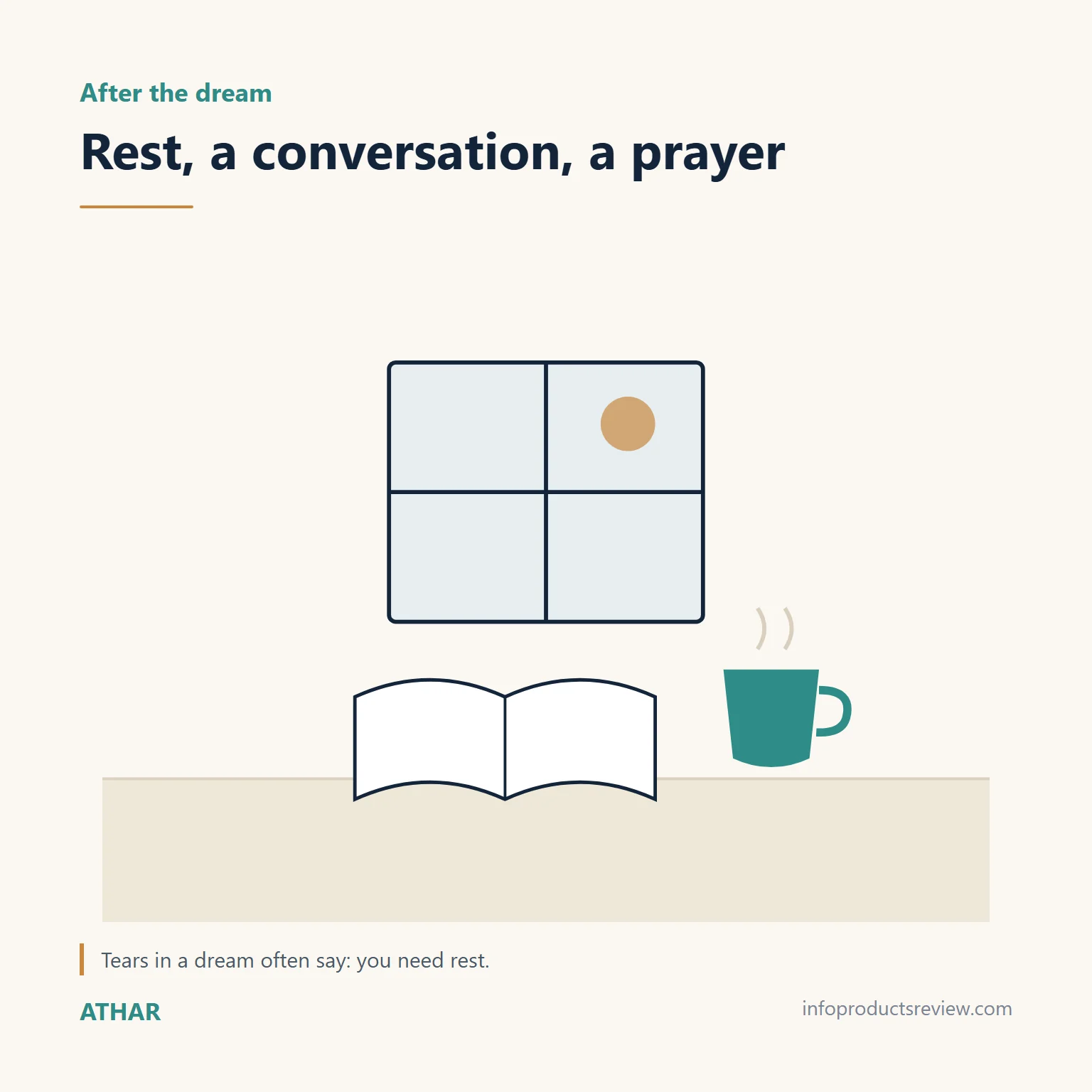
If you take one thing from this page, let it be this: tears in a dream are often a message from you to yourself that you need rest, a conversation, or a prayer, not a warning of something that hasn’t happened.
If sadness feels heavy: if you find that crying, in dreams or awake, keeps happening over a long period and is getting in the way of sleep, work or looking after yourself, talking to a doctor or a mental-health professional is a genuinely useful step. It isn’t weakness, and it isn’t a lack of faith.
Written and reviewed by: the ATHAR editorial team. Quoted passages are taken from the editions listed in the sources. Translations from Arabic are our own.
Last reviewed: 15 September 2026.
Note: what appears here is a possible meaning, not a confirmed fact, and it changes with the details of the dream and the dreamer’s circumstances. Nothing here predicts the future, announces a death or misfortune, or offers a religious ruling or medical advice.