


If you are looking for the meaning of a snake dream, the oldest and best-attested answer is short. Ibn Qutayba, in his classical manual Ta’bir al-Ru’ya, opens the chapter on scorpions and snakes with a single line: the snake is an adversary who keeps his enmity hidden.
That is the closest reading. It is not the only one, and it is not a verdict on you or on anyone you know.
Most pages about the meaning of a snake dream stop at that one word — enemy. The books themselves do not stop there. The same symbol is read as authority, as a realm, as buried treasure, as a wife, as a child, as money. In some passages it is read as ease and gladness, and in others as growth and increase.
The reason for that range is simple. In these books a symbol is never read on its own. It is read inside its scene. Where did it happen? What did the snake actually do? What did you do? How did you feel while it was happening? Those four questions are what tip one meaning over another.
This is the general page for the symbol. It starts with the closest reading, walks through each detail that changes it, and points you to the guide written for your own situation.
The Bottom Line
- The closest reading: Ibn Qutayba says the snake is an adversary who conceals his enmity. That is the oldest source here and the strongest.
- The detail that changes it: what the snake did. Stillness and passing by are the lightest images. A bite is read in proportion to how severe it was, and no further. Killing and cutting are read favourably.
- Two common cases: a snake inside the house is read in a close circle — household and relatives. A snake walking behind you is read as the intention of harm, not harm that happened.
- Money and good are in these books too: eating the flesh is recorded as money from an adversary, with joy and gladness. An obedient, harmless snake is recorded as treasure. Climbing upward is recorded as ease and gladness.
- And this is a possibility, not a promise: everything here is a possible meaning offered by an interpreter, not news about your future. A dream does not establish that anyone is your enemy, and it does not establish magic, envy, betrayal or illness.
- Where the books are silent: some of the most-asked images have no reading of their own — fleeing from a snake, or a green or yellow snake. We say so plainly rather than inventing an answer.
The most useful thing to take from that list is this: the worry carried by the frightening pages is far larger than the worry carried by the sources. The sources speak in “perhaps” and “it may be”, and they tie every reading to its scene.
What this page covers
- The Bottom Line
- Find the reading closest to your situation
- What does the snake stand for?
- Method before meaning: how the interpreters answered
- Where the dream happened: the strongest single detail
- What the snake did: more important than what it looked like
- Direction: behind you, ahead of you, around you
- The bite, the confrontation, the killing and the cutting
- The dreamer’s own feeling: the detail everyone forgets
- The calm snake, and the favourable readings
- Size, number and colour
- Size and fangs
- Number
- Colour
- Is there a difference between one kind of snake and another?
- True dreams, ordinary dreams, and the mind talking to itself
- The modern psychological reading: a separate layer
- When is a dream just your mind processing?
- When the searching becomes the problem
- What this dream cannot establish
- How to tell the transmitted from the added
- Common misconceptions
- What to actually do with the dream
- A habit worth keeping: one line each morning
- What you can reasonably take from this
- How to describe your dream so it can be read
- Situations and examples
- I saw a snake in the distance and it never came near
- A snake came into the house and then left
- A snake chased me until I woke up
- A snake bit me
- I killed the snake
- I held the snake and felt no fear at all
- I saw many snakes
- A large snake, but it did nothing
- A snake in my workplace
- The dream repeated several nights
- Two similar dreams, two different readings
- Where you were in the scene
- Rarer images people ask about
- If another symbol appeared alongside the snake
- A quick reference: detail and nearest reading
- How we check what we publish
- Frequently asked questions
- What is the most common meaning of a snake dream?
- Does the snake’s colour change the meaning?
- Does a black snake mean magic or envy?
- A snake chased me but never caught me. What does that mean?
- A snake bit me. Should I be worried?
- I killed the snake. Is that good?
- Does it matter whether the dream was at home or elsewhere?
- Does the size or the number of snakes matter?
- The dream repeated for several nights. Is that significant?
- Is there anything I should do after a dream like this?
- Where do I find the reading for my own situation?
- Can a dream tell me who my enemy is?
- In summary
- Sources and references
Find the reading closest to your situation

This page covers the general principles. If your circumstances are part of the question, these guides apply the same principles in more detail:
- Snake dream meaning for a single woman
- Snake dream meaning for a married woman
- Snake dreams during pregnancy
- Snake dream meaning for a man
- Black snake dream meaning for a single woman
- Black snake dream meaning for a married woman
Each of those starts from the principles on this page. None of them invents a separate set of meanings for its own situation. What differs is the circle the symbol is read in, not the symbol.
Start here even if your case is specific. The situation page will serve you better once you know the four details that actually decide a reading.
What does the snake stand for?

Most people arrive with one association: snake equals enemy. That association is incomplete.
The oldest material available to us is Ibn Qutayba’s, in the edition prepared by Ibrahim Salih. His chapter on scorpions and snakes opens with one short sentence: the snake is an adversary who conceals his enmity. Note the qualifier — concealed. The line is about a hidden dispute, not an approaching danger.
The snake is an adversary who conceals his enmity.
Alongside Ibn Qutayba there is a modern printed compilation, arranged alphabetically by Basil al-Buraydi. It is widely attributed to Ibn Sirin, and that attribution is not established. So we never write that Ibn Sirin held a view; we write that a book attributed to Ibn Sirin records it. What is actually established from Ibn Sirin, and what is only printed under his name, is set out on its own page.
In that compilation the symbol widens considerably. The snake in a dream is recorded as an enemy, or a realm, or buried treasure, or a woman, or a child. And there is a striking qualifier attached: a serpent that a man does not fear is read as his own strength and his own standing. The absence of fear reverses the direction of the reading.
In a dream the snake is an enemy, or a realm, or buried treasure, or a woman, or a child; and a serpent a man does not fear is his own strength and standing.
The same compilation also records that the snake may be a ruler, and may be a spouse or a child, supporting that with a verse from Surat al-Taghabun, verse 14, about enmity that can come from spouses and children. We name where the image comes from rather than quoting scripture here, because the point is the origin of the image and not a ruling about anyone’s dream.
The snake may be a ruler, and may be a wife, and a child.
The compilation’s entry for the large serpent adds more possibilities still: a man of the valley, enmity from the direction of family, spouses and children, and a bad neighbour. Those are options listed in a single line. Not one of them is a verdict. We will come back to this, because a book mentioning a neighbour or a relative does not mean your dream points at a particular neighbour or relative.
The serpent points, for whoever sees it in a dream, to a man of the valley; and it may point to enmity from family, spouses and children; and it may be a bad and envious neighbour.
So anyone who hands you one fixed meaning for this symbol has picked one item from a long list and presented it as the whole list.
There is also a general principle stated outright in the compilation: the enmity of each snake is in proportion to its harmfulness, its size and its venom. The reading is a sliding scale, not a fixed judgement. The stronger the scene, the stronger the reading; the milder the scene, the milder the reading.
The enmity of each snake is according to its harmfulness, its size and its venom.
Method before meaning: how the interpreters answered
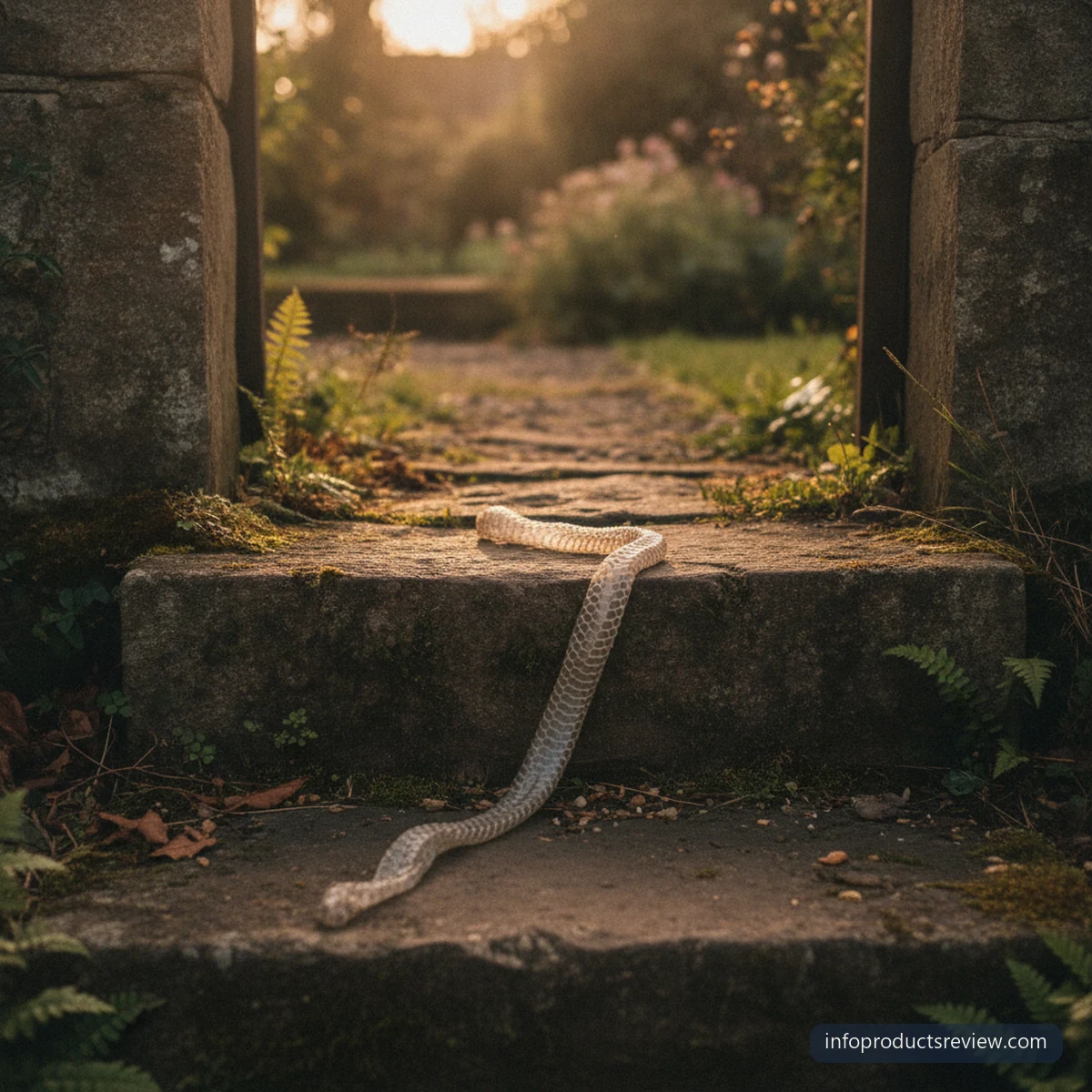
This is the most useful idea on the page, and it is the part that summaries leave out: the classical interpreters did not answer immediately.
They asked first. Who saw it. What was happening in the dreamer’s life. What exactly took place. Where. How the dreamer felt. Only then did they offer a reading, and the reading was usually hedged — “perhaps”, “it may be”, “this can point to”.
That is why a single book gives one symbol several readings, and sometimes contradictory ones. It is not confusion. It is the method: a symbol is not read apart from its scene.
The order of attention, visible in how the chapters are built, runs from place, to action, to where the dreamer stood, to size, and last of all to colour.
Most of what circulates today inverts that order completely. It starts from colour and builds on colour what colour cannot carry. That is why two pages give wildly different answers to what looks like the same question.
There is an immediate practical use in this. If someone answers your dream before asking about the place, the action and the feeling, they have not read your dream. They have read the word “snake”.
Where the dream happened: the strongest single detail
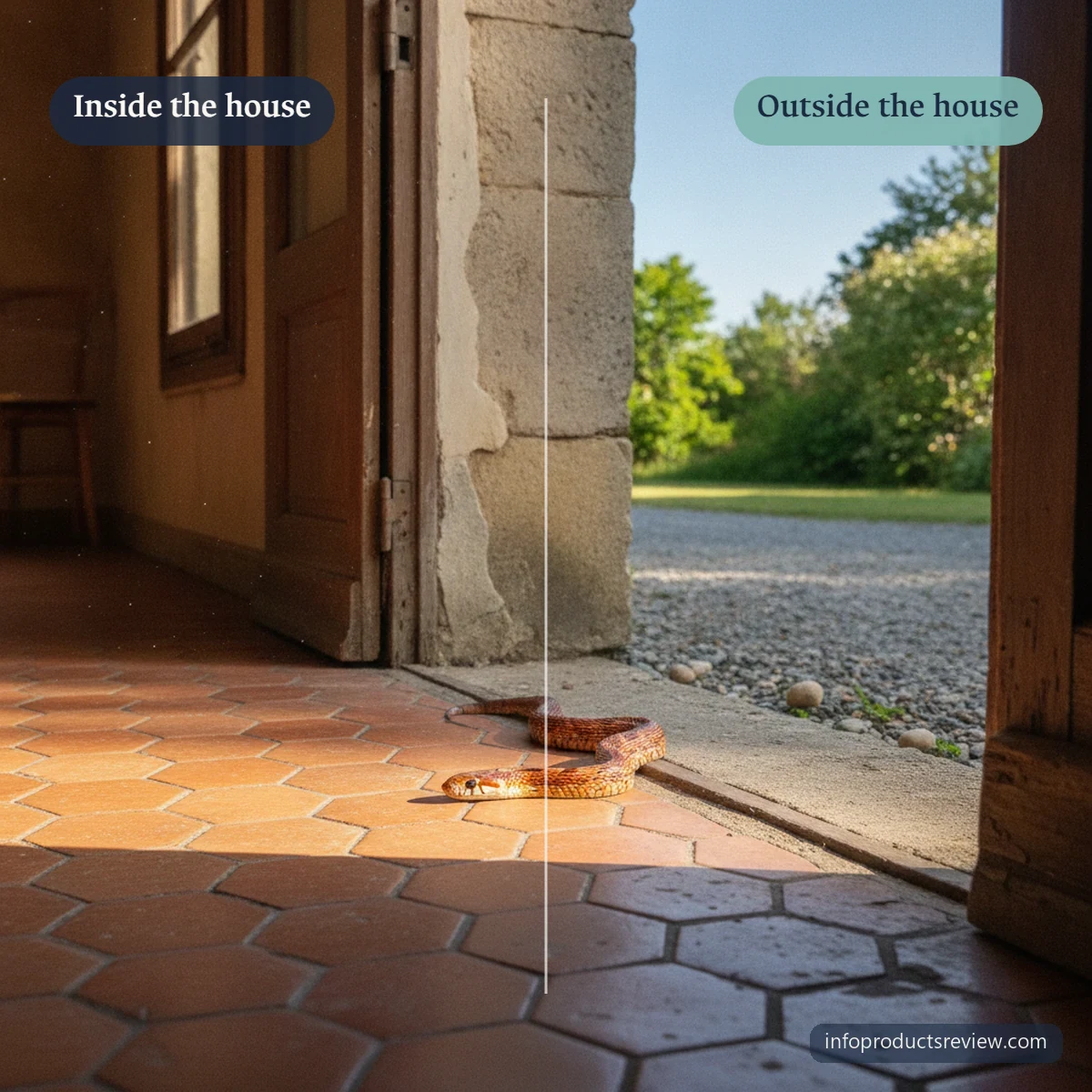
Of everything you can remember, the setting does the most work. It comes before colour, size and number — and it is the first thing people leave out when they describe a dream.
The plainest statement is Ibn Qutayba’s, and it is one line: whoever sees a snake in his house, there is an adversary in his house. Two qualifiers belong with it immediately. It is a possible meaning rather than news, and it names nobody in the household.
If he sees a snake in his house, then there is an adversary in his house.
The compilation attributed to Ibn Sirin develops the image usefully. It records that snakes entering the house and leaving again without causing harm are adversaries from among the household and relatives, and that if the same thing is seen elsewhere, the adversaries are strangers.
If he sees snakes entering his house and leaving without causing harm, they are adversaries from his household and his relatives; and if he sees them elsewhere, the adversaries are strangers.
That qualifier — without causing harm — is the part that drops out of most retellings. The recorded scene is a passage through, not a break-in. Yet the line gets quoted as a warning about your own family.
In the same compilation there is a second entry for the snake with no printed section heading above it. It records that snakes of houses are neighbours, and snakes of open country are highway robbers. The distinction there is nearness and distance, not good and evil.
Snakes of houses are neighbours, and snakes of open country are highway robbers.
Three cautions follow.
First: a reading points to a circle, never to a named person. A circle holds dozens of possibilities. Anyone who turns your dream into a name has left interpretation and started accusing.
Second: nearness is not severity. What is seen inside the house is a closer circle, not a worse meaning. Many readers treat “the house” as an alarm; the sources treat it as a location.
Third: some settings carry a favourable meaning of their own. The garden is the clearest. The compilation records that whoever sees his garden full of snakes will find the garden growing, its plants increasing and thriving. The same passage records a hard opposite: a snake emerging from the ground is a torment in that place. We qualify that at once — it is a statement about a place, not about a person, and it is one of the severe images, so we do not load it onto everyone who dreams.
If he sees a snake that has come out of the ground, it is a torment in that place. And if he sees his garden filled with snakes, the garden grows and the plants in it increase and thrive.
Water has a quiet corner of its own that is rarely quoted. The compilation records that water snakes are money, and that a snake seen in the fields or sliding under trees stands for waters and floods. The meaning turns away from conflict altogether and becomes provision and growth.
Water snakes are money.
As when it is seen in the fields, or slides under the trees: then it is waters and floods.
That alone shows how much a reader loses when a symbol is handed over without its setting.
What the snake did: more important than what it looked like
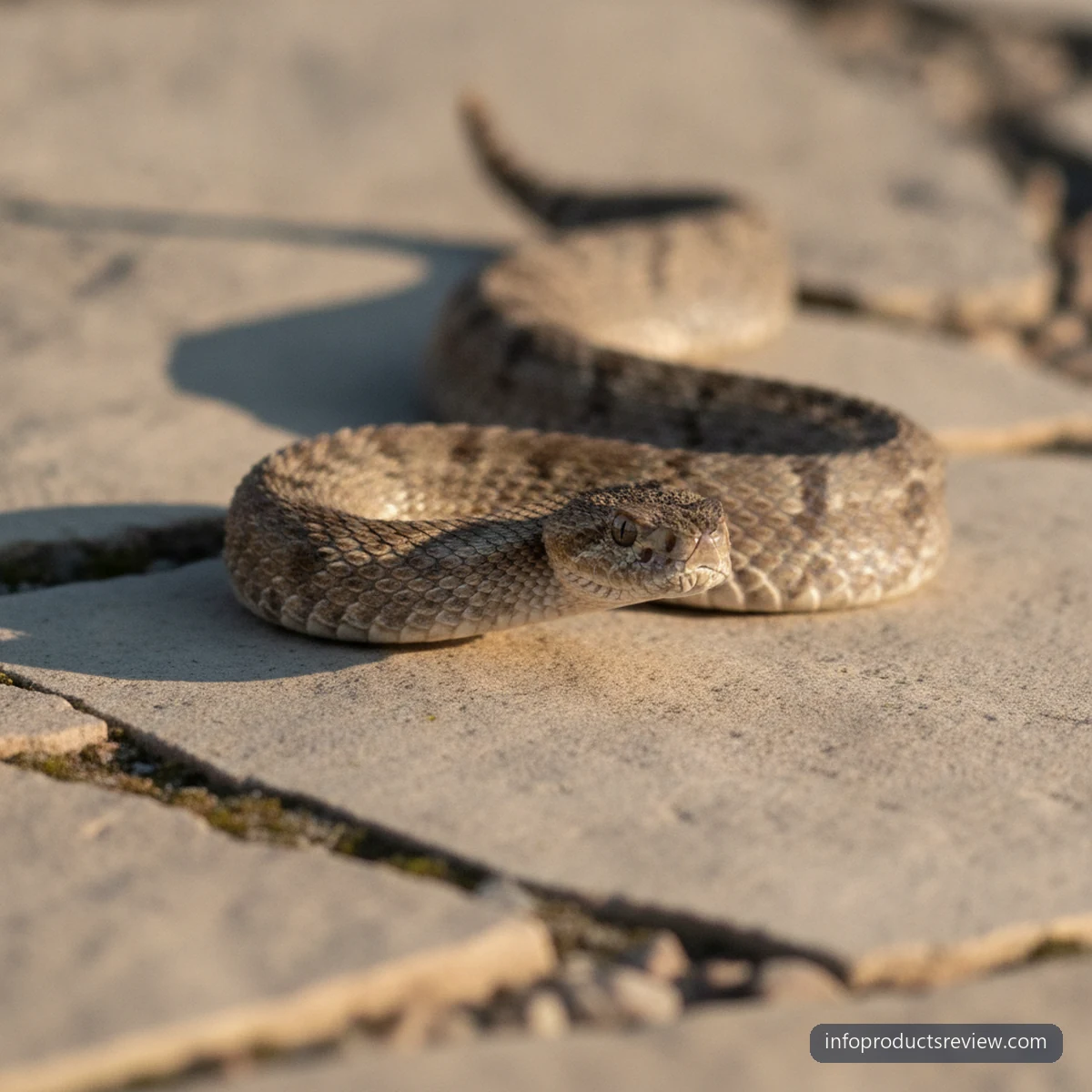
If you keep only one idea from this page, keep this one: what the snake did matters more than how it looked.
| What the snake did | Nearest reading | Where from |
|---|---|---|
| Stayed still, or passed without approaching | Presence without action — the lightest image, and no reading of its own | No specific text |
| Entered the house and left without harm | Adversaries in a close circle; a passage through, not a break-in | Book attributed to Ibn Sirin |
| Walked behind the dreamer | An intention to plot, not an act | Book attributed to Ibn Sirin |
| Walked in front of him, or circled him | Nearness without the power to harm | Book attributed to Ibn Sirin |
| Bit him | Harm in proportion to the bite, and no further | Ibn Qutayba |
| Was fought by the dreamer | Contending with such an adversary; the outcome is left open | Ibn Qutayba |
| Was killed | Prevailing over the adversary | Ibn Qutayba |
| Was cut in two | Getting his due from the adversary | Ibn Qutayba |
| Was already dead | An adversary whose harm is spared him, with no effort of his own | Ibn Qutayba |
| Obeyed him and did not harm him | Treasure from the treasure of kings | Ibn Qutayba |
| Spoke to him gently | Good that makes people marvel | Ibn Qutayba |
| Climbed upward | Ease, gladness and joy | Book attributed to Ibn Sirin |
| Its flesh was eaten | Money from an adversary, with joy and gladness | Ibn Qutayba |
Colour does not appear once in the middle column. Seven of the thirteen rows are not alarming at all, and six are openly favourable.
Four favourable images deserve their own paragraphs, because they are asked about often and quoted rarely.
A dead snake. Ibn Qutayba records that whoever sees a dead snake, it is an adversary whose harm God spares him, without any strength or power of his own. Relief that arrived without effort.
If he sees a dead snake, it is an adversary whose harm God spares him, without any strength or power of his own.
Gentle speech. He records that whoever is addressed by a snake with gentle, kindly words receives good that makes people marvel, and that the same applies to the speech of anything that does not normally speak. It is one of the most explicitly favourable lines in the whole chapter.
If a snake speaks to him with gentle, kindly words, good comes to him at which people marvel. And the same applies to the speech of everything that does not speak.
An obedient snake. He records that whoever obtains a smooth snake that obeys him, with no malice in it and no weapon that harms, has obtained treasure from the treasure of kings — and that it may be his good fortune when it has that description. Note the three conditions: obedience, no malice, no harm.
If he obtains a smooth snake that obeys him, with no malice and no weapon that harms, he obtains treasure from the treasure of kings; and it may be his good fortune when it has that description.
Climbing upward. The compilation attributed to Ibn Sirin records that when the snake climbs to a height, the dreamer gains ease, gladness and joy. This is among the clearest contradictions of the popular version of the symbol.
If the snake climbs to a height, he gains ease, gladness and joy.
Direction: behind you, ahead of you, around you
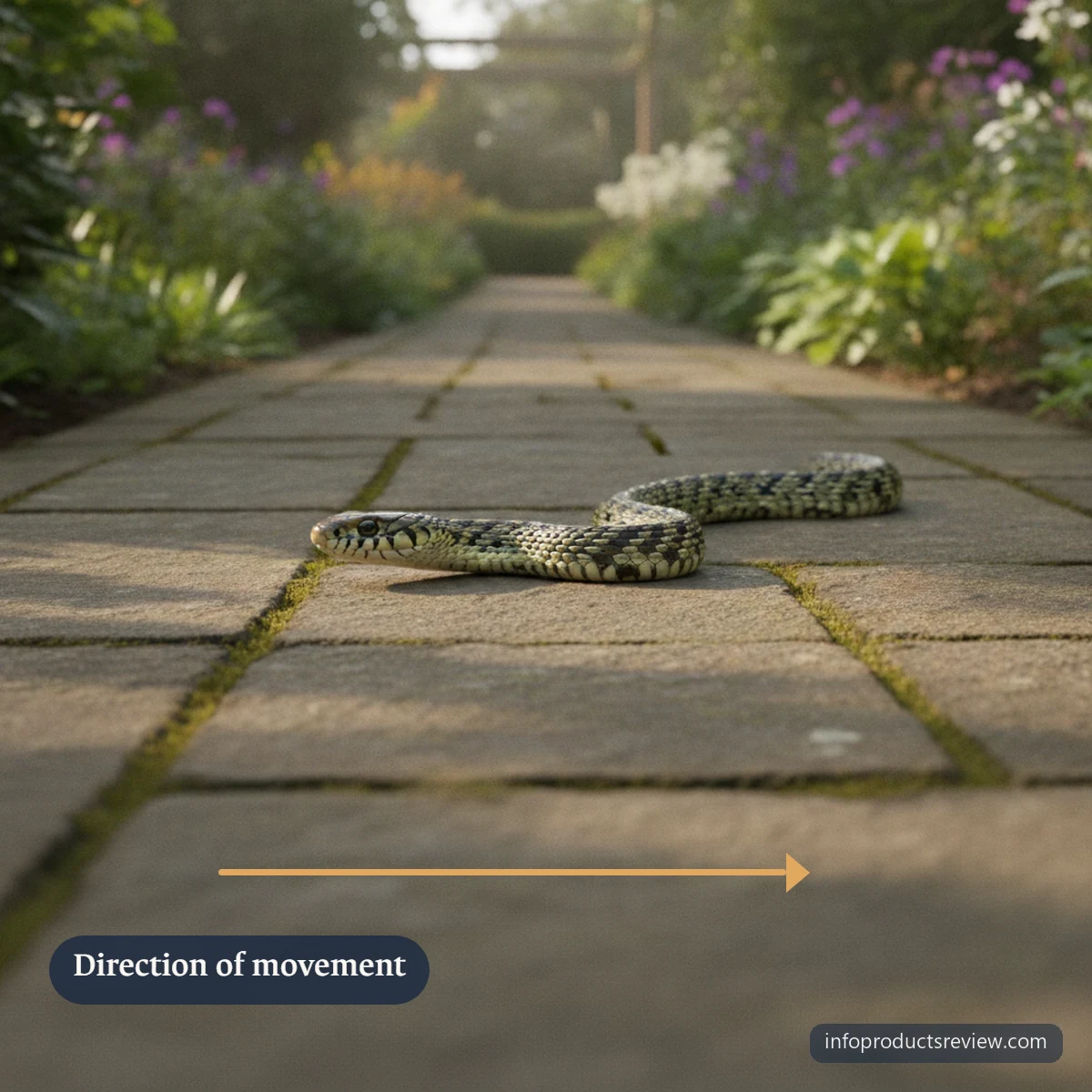
This is one of the finer distinctions in the material, and the wording is explicit.
The compilation attributed to Ibn Sirin records that whoever sees a snake walking behind him, his adversary wants to plot against him — and that if it walks in front of him or circles around him, they are adversaries who mix with him and cannot harm him.
If he sees a snake walking behind him, his adversary wants to plot against him; and if it walks in front of him or circles around him, they are adversaries who mix with him and cannot harm him.
Three things come out of that one sentence.
- Behind you: the recorded word is “wants”. An intention, not an act. The difference between the two is the difference between a possibility and an event.
- In front of you, or around you: the text puts both in the same clause, and it explicitly denies the power to harm.
- Mixing is not danger: the text says they mix with him, then rules out their ability to harm him in the very same breath.
The second case is the most frightening to live through and the most reassuring to read. It is a complete inversion between the feeling and the reading, and it is worth saying to anyone who woke with a racing heart.
A common error is worth flagging. Many pages read “in front of me” as a confrontation coming, and “around me” as being surrounded by ill will. The text says the opposite in both cases.
There is a fourth image that gets asked about a lot: a snake that comes out and returns, again and again. It appears in the compilation in the entry with no printed section heading, read as a devil that grieves him. We report it as it stands: it is about a recurring distress, and it is not a meaning assigned to a dream repeating.
If he sees a snake coming out of a district once and returning once, it is a devil that grieves him.
The bite, the confrontation, the killing and the cutting
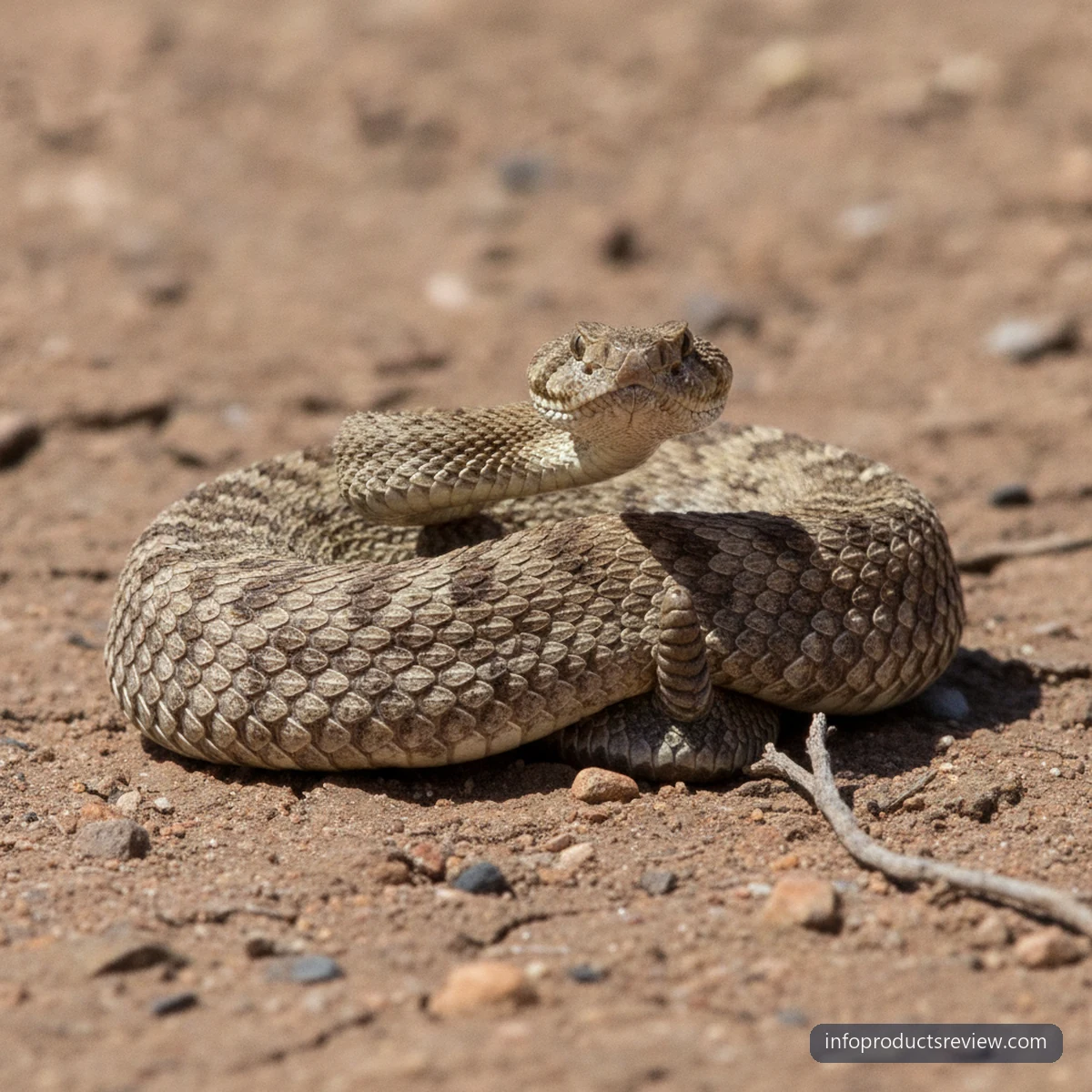
The bite. Ibn Qutayba records that if the snake bites him, his adversary gets at him to the extent of the bite. Note the limit — to the extent of the bite. The effect is measured rather than absolute, and a light bite has a light effect. That limit is exactly what goes missing from pages that treat every bite as a catastrophe.
And if it bites him, his adversary gets at him to the extent of the bite.
There is no chapter in this material assigning a separate meaning to each part of the body. Tables that give you one fate for a bitten hand, another for a foot and another for the neck are a later addition, not a transmission.
The confrontation. Ibn Qutayba records that whoever fights the snake is contending with such an adversary, and that if he kills it he prevails over him. Fighting, in itself, is not a judgement of defeat.
Whoever fights it is contending with such an adversary; and if he kills it, he prevails over his adversary.
The compilation, in the entry with no printed section heading, is more explicit still: whoever wrestles with a snake is fighting a strong adversary, and remains in fear and unease until the two of them part — and victory belongs to whichever of them prevails. The outcome is left open in so many words. Nobody is judged in advance.
If he wrestles with a snake, he is fighting a strong adversary, in fear and unease of him until the two of them part, and victory belongs to whichever of them prevails.
That same passage carries a heavier line about being bitten. We report it as it stands, with three qualifiers. It is an interpreter’s judgement rather than knowledge of the future. It sits in an entry whose author cannot be established. And it names no event, no time, no person and no measure. The older and better-attested wording is Ibn Qutayba’s, limited to the extent of the bite.
Killing it. Among the clearest favourable images: prevailing over the adversary, as above. The compilation records a second reading tying the killing of a snake to marrying a woman. Two readings for one image rule out being definite about either, and neither should be handed to anyone as good news.
The snake points to a flood, and to a realm and to life; and whoever sees that he has killed a snake marries a woman.
Cutting it. Ibn Qutayba records that whoever cuts it in two gets his due from his adversary. The image is read as decisiveness and redress.
If he cuts it in two, he gets his due from his adversary.
The compilation has a finer detail, again in the entry with no printed heading: whoever cuts it into three contends with his adversary and prevails, and three of his adversaries yield to him. It is a good illustration of how particular these readings could be before the summaries flattened them.
If he cuts it into three pieces, he contends with his adversary and prevails over him, and three of his adversaries yield to him: a leading man, a wealthy man, and a man with followers and children.
Eating the flesh. Ibn Qutayba records that whoever eats of its flesh obtains money from his adversary, and joy and gladness come to him. It is one of the plainly favourable images, and almost never quoted.
And if he eats of its flesh, he obtains money from his adversary, and joy and gladness come to him.
Fleeing. We find no reading of its own for this, and we say so rather than invent one. The most that follows is that the outcome hangs on a confrontation, so where there was no confrontation there is no outcome to expect.
The dreamer’s own feeling: the detail everyone forgets

Ask someone what happened in their snake dream and you get the snake. Ask how they felt and you often get a pause — and then the most informative answer of the conversation.
The classical material leans on feeling explicitly. The most comprehensive line is Ibn Qutayba’s: whoever fears a snake without actually seeing it, that is safety for him from his adversary; and if he sees it and fears it, then it is fear. He adds that the same applies to anything feared and seen.
Whoever fears a snake without actually seeing it, that is safety for him from his adversary; and if he sees it and fears it, then it is fear. And the same applies to everything that is feared and seen.
That last clause repays attention. Fear is read as fear. It is not converted into a coming event, and it is not converted into a particular person. The text stops at that line and does not go past it.
It helps to separate three kinds of fear:
- Fear inside the dream: you felt in danger while the scene was happening. This is the kind that enters a reading.
- Fear after waking: the scene was ordinary, then you woke, realised it was a snake, and were unsettled. This is not part of the dream.
- Fear after reading: you woke calm, then read a page that alarmed you, and the worry started there. This has nothing to do with the dream.
Most of the questions we receive blur all three. The distinction matters, because the absence of fear is an explicitly favourable indicator in the sources rather than a piece of reassurance we added.
The clearest evidence is the line quoted earlier: a serpent a man does not fear is read as his strength and his standing. The absence of fear on its own moved the reading from enmity to strength.
The calm snake, and the favourable readings
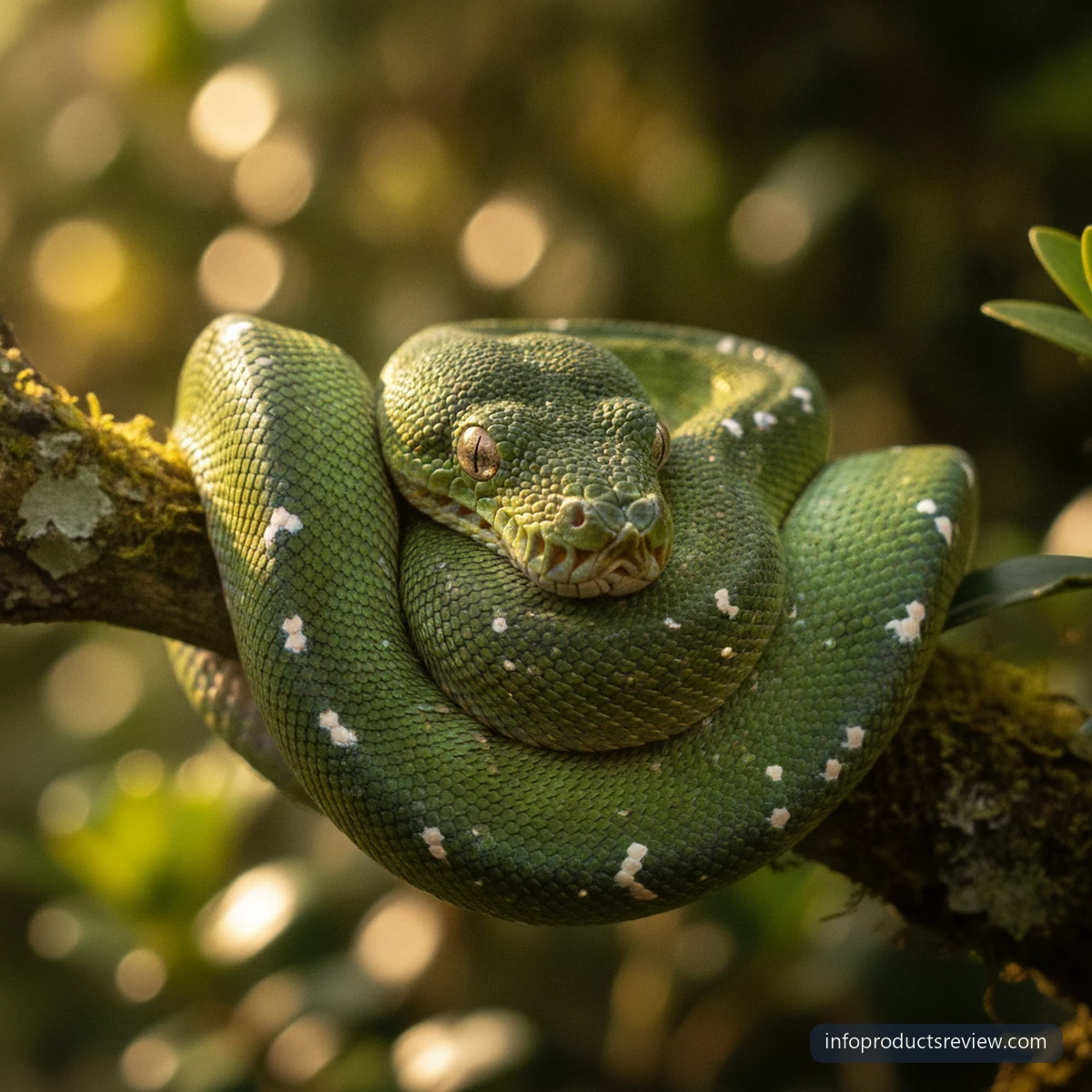
These are gathered in one place because they are real, they are scattered, and a worried reader deserves to see the whole picture.
- A dead snake: an adversary whose harm is spared him with no effort — Ibn Qutayba.
- Gentle speech: good that makes people marvel — Ibn Qutayba.
- An obedient, harmless snake: treasure from the treasure of kings — Ibn Qutayba.
- Eating the flesh: money, joy and gladness — Ibn Qutayba.
- Killing and cutting: prevailing and redress — Ibn Qutayba.
- Fear without sight: safety from the adversary — Ibn Qutayba.
- Owning many great black snakes: leading armies and great authority — Ibn Qutayba.
- Owning a serpent: great authority — book attributed to Ibn Sirin.
- Climbing upward: ease, gladness and joy — book attributed to Ibn Sirin.
- A garden full of snakes: growth and increase — book attributed to Ibn Sirin.
- Water snakes: money — book attributed to Ibn Sirin.
- Snakes fighting in the market: recorded alongside prevailing, not defeat — book attributed to Ibn Sirin.
On owning black snakes, Ibn Qutayba records that whoever sees that he has come to own a group of the great black snakes leads armies and attains great authority. That line matters a great deal for the colour question, and we come back to it below.
Whoever sees that he has come to own a group of the great black snakes leads armies and attains great authority.
The compilation’s entry for the large serpent records that whoever sees that he owns one attains great authority. It was the mastery that turned the reading, not the kind of animal.
Whoever sees that he has come to own a serpent attains great authority.
On the market: the compilation records that a small snake is a child, and that whoever sees snakes fighting one another in the market, war breaks out and he prevails over his adversaries. Note that the dreamer in that scene is a witness rather than a party.
A small snake is a child; and if he sees snakes fighting one another in the market, war breaks out and he prevails over the adversaries.
Twelve favourable or reassuring images, nine of them from Ibn Qutayba alone, who is the oldest and strongest source here. If the symbol were pure ill, none of them would exist.
Most of them share one feature: the absence of fear, and mastery. What flips the reading is not the animal or its colour. It is the dreamer’s own position in the scene.
We will say this honestly too: these are not guaranteed good tidings. They are recorded possibilities like any others. The point of collecting them is to show the whole picture, not to swap fear-mongering for an equally overstated optimism.
Size, number and colour
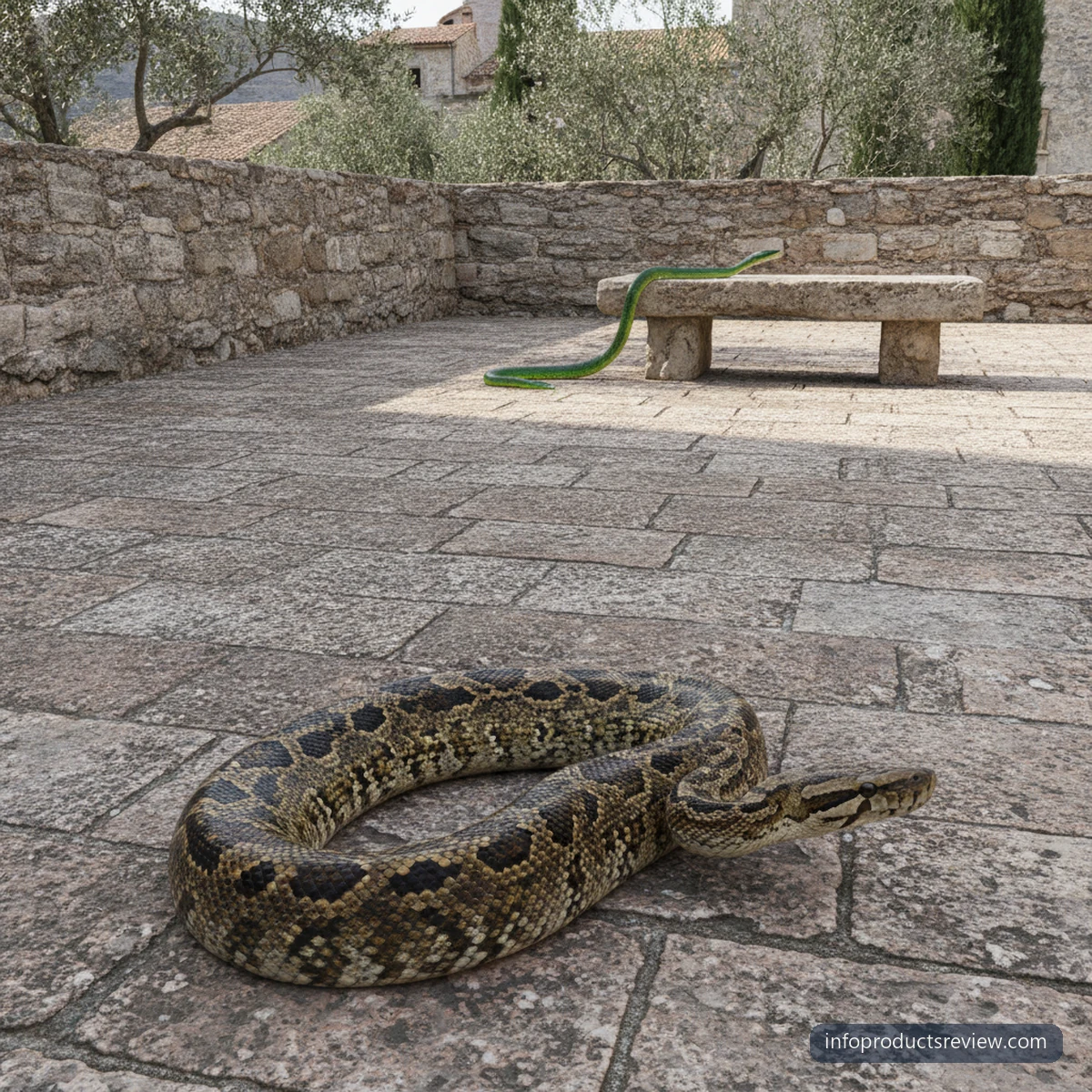
These come last for one reason: they adjust a meaning, they do not create one.
Size and fangs
The stated principle is explicit: the enmity of each snake is in proportion to its harmfulness, its size and its venom. A stronger scene gives a stronger reading; a smaller one gives a milder reading.
Fangs carry a fine distinction that many get wrong. The compilation attributed to Ibn Sirin records that the snake’s limbs and fangs are the adversary’s strength and the force of his scheming. That describes the other party’s capacity; it says nothing about the outcome. There is a wide gap between “the other side is strong” and “you will lose”.
The snake's limbs and fangs are the adversary's strength and the force of his scheming.
As for a small snake, the compilation records that it is a child — a complete turn away from enmity. Note that this is a context of several possibilities, not good news and not a warning. It does not announce a pregnancy, a baby’s sex, or a date.
Number
Many readers assume that more snakes mean more trouble. In the sources, number is read through place:
- In a garden: many is explicitly favourable — the garden grows, its plants increase and thrive.
- In the market: snakes fighting is recorded alongside prevailing over adversaries.
- In the house: what is recorded is entering and leaving without harm — a passage through a close circle, not an alarm.
So number alone produced three different directions in three settings, two of them favourable or neutral. There is no principle in this material making a crowd of snakes bad in itself.
Colour
Colour is where the gap between the sources and the internet is widest. Tables circulate assigning a fixed fate to every shade: black for magic, white for good, green for provision, yellow for illness. Those tables have nothing behind them.
What is actually recorded about colour is one line in each book — and the two lines disagree.
Ibn Qutayba writes that white snakes are the weakest of snakes, and black ones the most severe. For him white is the weakest.
The white of snakes are the weakest of snakes, and the black of them the most severe.
The compilation attributed to Ibn Sirin writes that the white ones are the hardest of enemies, and the black ones the most severe of them. There white is the hardest.
The white of them are the hardest of enemies, and the black of them the most severe of them.
The two contradict each other outright on white: weakest in Ibn Qutayba, hardest in the compilation. So we say plainly that the colour question is unsettled and nothing should be built on it. Where we have to choose, we prefer Ibn Qutayba as the older and better-attested text — but we do not hide the disagreement.
One point deserves emphasis. Neither line mentions magic, envy or illness. Both are talking about degree of severity and nothing else. Anyone who builds a claim about magic or envy on a colour has added what the text does not contain.
Two consequences surprise most readers. The first is that white is not good news in either text: it is either the weakest or the hardest. The second is that black appears in the very same passage in a thoroughly favourable context — owning a group of the great black snakes is read as leading armies and attaining great authority.
As for the other colours — green, yellow, red — we find no mention of them in either source. Anyone handing you a meaning for each shade has built a table on nothing. If your dream was of a black snake specifically, our guides for a single woman and a married woman go through what is and is not recorded.
Is there a difference between one kind of snake and another?
People often ask whether a viper, an adder or a particular species changes the reading. In practice the classical sources are not working from a naturalist’s taxonomy. They treat the serpent as one symbol with a range of readings, adjusted by scale and by what it did.
The Arabic words themselves overlap. The two main terms are used in each other’s place across the material, and a single entry moves between them — the entry headed with one word discusses the other in its second line and reads it as strength and standing when the dreamer felt no fear.
What follows for you is simple: do not spend effort identifying the species. Spend it on the scene. A dream rarely gives a reliable field identification anyway, and the tradition never asked for one. The most that can be said is that the larger term tends to describe a bigger animal, which puts it under the principle of size rather than under a new principle.
True dreams, ordinary dreams, and the mind talking to itself

Before interpreting anything there is a prior question the tradition asks and the search results skip: is this the kind of dream that calls for interpretation at all?
The hadith literature divides what a sleeper sees into three: a good dream, which is glad tidings; a distressing dream, from Satan; and a dream from what a person tells himself. That wording is in Sahih Muslim, hadith 2263. The division alone is a relief, because it means the first question is not “what does it mean” but “is this something that gets interpreted”.
Dreams are of three kinds: a good dream, which is glad tidings from God; a distressing dream, from Satan; and a dream from what a person tells himself
The third category is the largest in ordinary experience. Someone who spends a day in a dispute, or waiting on a result, or under financial pressure, gets some of it back at night in a different shape. If you read about snake dreams before bed, dreaming about snakes is not mysterious.
There is also a recorded response for someone who sees what he dislikes. Sahih al-Bukhari, hadith 7044, records that he should seek refuge in God from its harm and from the harm of Satan, spit lightly three times, and tell nobody about it, and that it will not harm him. Sahih Muslim, hadith 2262, adds detail to the manner: spitting to his left three times, seeking refuge in God from Satan three times, and turning over from the side he was lying on.
A good dream is from God. If one of you sees something he likes, let him tell it only to someone he loves. And if he sees something he dislikes, let him seek refuge in God from its harm and from the harm of Satan, spit lightly three times, and not tell anyone about it, for it will not harm him
If one of you sees a dream he dislikes, let him spit to his left three times, seek refuge in God from Satan three times, and turn over from the side he was lying on
So the response has four parts: seeking refuge, spitting three times, turning over, and not retelling the dream. None of it costs anything and none of it needs an intermediary.
That last part carries an obvious practical benefit. Retelling a dream and its interpretation within earshot of the person you suspect is usually the source of the harm, rather than the dream. Relationships are damaged by the conversation, not by the sleep.
Anything beyond those four — paying someone, making a vow, consulting anyone who claims access to hidden things — has no basis.
The modern psychological reading: a separate layer

Sleep research has things to say about dreams like this, and they are worth knowing, provided they stay in their own column. We offer them as general description rather than as a diagnosis or as a substitute for a reading.
Psychologically, the mind may use a frightening image — a snake will do — to express a sense of danger or unease, particularly during stressful stretches. That does not indicate a disorder.
Distressing dreams track stress and short sleep more closely than they track their own content, according to reviews published by the Sleep Foundation. The National Institute of Neurological Disorders and Stroke notes that most of the dreaming we remember falls in a stage that lengthens across the later part of the night, and that people who wake repeatedly remember more.
That has a practical consequence. A run of unsettling dreams may not mean anything changed in your life. It may mean something changed in your sleep. It explains the common feeling that dreams “went strange suddenly” during a period of travel, pressure or late nights.
We keep the two layers visibly apart. The classical reading offers a possible meaning within a tradition. Sleep research describes when frightening dreams occur and what they track. Neither is evidence for the other, and presenting one as confirmation of the other would misrepresent both.
If distressing dreams become frequent and start affecting your sleep or your day, that is a sleep question rather than an interpretation question, and it belongs with a clinician.
When is a dream just your mind processing?

Some honest indicators, none decisive on its own:
- You saw the image before bed — a clip, a conversation, or even a page about dream meanings.
- The dream follows an existing worry — a recent argument, a result you are waiting on, money pressure, a decision you keep postponing.
- The scene has no structure — disconnected images you cannot put in order.
- Your sleep changed — travel, late nights, shift work, broken sleep.
- You forgot the scene quickly and only the unease stayed.
On the other side, a dream is more likely to be worth pausing over when several things hold together: a clear scene with a beginning, an event and an end that you can recall in detail; a real action from the snake rather than mere presence; a setting you recognise; and a single clear feeling throughout.
Most of the questions that reach us belong in the first list. That is not dismissiveness. It is saving your energy. Ruling out what does not get read leaves time to look properly at what does.
When the searching becomes the problem
This section describes readers’ experience rather than the content of the books, and we say so plainly.
The pattern after an unsettling dream is almost always the same. Someone wakes late, opens their phone, and reads ten contradictory pages in half an hour. One warns of an enemy. Another ties a colour to magic. A third promises good news.
Then they go back to sleep, if they do, carrying more frightening possibilities than the dream ever contained.
Then the worse part. They start the day looking at the people around them differently. At that point the symbol has stopped being the problem. The loop is.
That is why the answer on this page sits in the first line and in the bottom line, ahead of all the detail. If you are in that loop right now, the most useful move is to stop, write the dream down once, and leave it for a few days.
What this dream cannot establish
Stated plainly, because this is where most of the harm gets done.
It names nobody. The texts speak in circles — household, relatives, neighbours, strangers. A circle holds dozens of possibilities, so it cannot be narrowed to whoever came to mind.
It does not establish magic. We find no mention of magic in either of the two sources behind this page — not with colour, not with size, not with the bite.
And it does not establish envy. Here we want to be exact. The word envy does appear once in the compilation, in the entry with no printed section heading, inside a long general list of possibilities. That does not make it a meaning for a colour, and it is not evidence that anyone envies you. A dream cannot establish envy, and an accusation cannot rest on sleep.
It does not announce a marriage, a divorce or a pregnancy. The compilation does record that killing a snake is marrying a woman, and that a small snake is a child. Those are possibilities in a book rather than news about a person, and these books are arranged by symbol rather than by people’s circumstances.
It does not diagnose an illness. We find no link between any colour or image and a medical or psychological condition.
It fixes no time and no amount. “Within days”, “a financial loss” — those come from the writers, not the sources.
It obliges you to nothing. No payment, no vow, no visit to anyone claiming access to hidden things.
How to tell the transmitted from the added
This is the most transferable skill on the page, because it works on any symbol rather than only on this one.
- Flat certainty. The classical wording is full of “perhaps” and “it may be”. An answer that admits no alternative is usually not from the sources.
- Naming a person. The texts speak in circles, never in names.
- Magic invoked. We find no mention of it in either source behind this page.
- A tidy colour table. The classical chapters are continuous prose, and on colour they offer one line each — two lines that disagree.
- A date or an amount. “Within days”, “a financial loss” — none of this exists in the material.
- An instant answer. Anyone who answers without asking about place, action and feeling is handing you something written for somebody else.
- A source with no location. “The old books say” is not a source. A source is a named work you can go and check.
Apply those seven to any page on this subject, including this one, and most of what circulates falls away.
Common misconceptions
- “A snake means an enemy and nothing else.” The symbol is wider. It is recorded as authority, a realm, treasure, a woman, a child and money, and in places as ease, gladness and growth.
- “Black means magic.” Nothing supports that. What is recorded is “most severe”, a word about degree. And black appears favourably in the very same passage.
- “White is good news.” Neither text says so. It is the weakest in Ibn Qutayba and the hardest in the compilation.
- “Many snakes are a warning.” In a garden, many is explicitly favourable. In the market it is recorded alongside prevailing.
- “A bite is a catastrophe.” The effect is measured by the extent of the bite, and no chapter distinguishes parts of the body.
- “The dream reveals who is plotting.” The texts name nobody and speak in circles.
- “The dream obliges an action.” It obliges no payment, no vow, and no visit to anyone claiming hidden knowledge.
- “Repetition is a message.” Recurrence was never made a meaning of its own. The nearest image is a snake that comes and goes, read as a recurring distress.
What to actually do with the dream
Something workable, rather than advice to stop worrying.
- Write down four things, within a few minutes of waking: where the scene was, what the snake did, what you did, and how you felt inside the scene. Most questions that reach us cannot be answered because they lack all four.
- Do not start from colour. Start from place, then action, then your own position, and look at size and colour last. Try rereading your dream in that order; the picture usually changes.
- Take no decision from it — not about money, not about a relationship, not about your health.
- Do not retell the interpretation to anyone you suspect. This is part of the recorded response, and it protects real relationships.
- If it recurs, keep one line each morning: place, action, feeling, and the time you woke. After a fortnight the link between broken nights and unsettling dreams usually shows itself, and you will have seen it rather than been told it.
- Ask yourself one question: what was occupying me yesterday? In many cases the answer replaces the whole search.
A habit worth keeping: one line each morning
There is a simple habit that helps more than people expect. On any morning after a dream that unsettled you, write one line: the place, what the snake did, how you felt, and the time you woke.
After a fortnight, one of two things usually appears. Either a clear link between disturbed nights and unsettling dreams, or one meaning recurring in several different shapes.
In the first case it is a question of sleep and pressure, and the remedy is well known. In the second you have real material to look at, instead of a single isolated image read in a hurry at two in the morning.
Either way you come out with something you observed yourself rather than something you were persuaded of. That alone separates a reader who is investigating from a reader who is being led.
What you can reasonably take from this
If you came here worried, here is what the material actually supports.
First: the commonest images are the lightest. A snake that passed, or lay still, or did nothing has no reading of its own in these books — and it is what most people actually see. Most pages write about the bite and the chase, which come up less often in real questions than you would think.
Second: fear is read as fear. The text is explicit, and it does not go past that into news of an event.
Third: the favourable readings are more numerous than they look. Twelve at least, including the garden, the water, the climb, the dead snake, the gentle speech and mastery.
Fourth: the outcome is open wherever there is a confrontation. There is no advance judgement of defeat. The wording is “victory belongs to whichever of them prevails”.
Fifth: the symbol is wide, not narrow. In these books it is authority, money, treasure, a woman and a child, not enmity alone.
Sixth: frequent distressing dreams have a known explanation that tracks sleep and stress more closely than content.
And if worry remains after all of that, it is worry that deserves to be treated as worry rather than as the interpretation of a dream.
How to describe your dream so it can be read
Most questions that reach us cannot be answered usefully, because they say: “I saw a snake, what does it mean?” That is a question without a scene, and the answer is necessarily general.
A question that can be answered gives four things:
- Where was the scene? A house, a workplace, a road, a garden, near water, or somewhere you did not recognise.
- What did the snake do? Approached, circled, passed, bit, climbed, or stayed still.
- What did you do? Moved away, confronted it, picked it up, or stood where you were.
- What was the feeling inside the scene? Fear, calm, mastery, or indifference.
Notice that colour and size are not on the list. That is deliberate: they adjust the degree of a meaning rather than creating one. What creates it is place, action and position.
Write those four in one line the next morning and it will serve you better than ten pages read at midnight.
Situations and examples
Worked through in the order the details matter, so you can see the method rather than only the conclusions.
I saw a snake in the distance and it never came near
One of the lightest images: no action, no approach, no harm. We find no reading of its own for this scene in either source, and that in itself is reassuring. If you were not frightened either, lighter still, because the absence of fear is an explicitly favourable indicator.
A snake came into the house and then left
This is close to the recorded image: entering and leaving without harm. It is read as adversaries in a close circle, with the scene being a passage through rather than a break-in. And it names nobody in the household.
A snake chased me until I woke up
What is recorded for a snake walking behind the dreamer is that someone “wants” to plot. That is an intention rather than an act, particularly if it never reached you. And the panic after waking is not part of the dream.
A snake bit me
The effect is to the extent of the bite, as Ibn Qutayba limits it. We find no separate chapter for the part of the body bitten, so any table distinguishing a hand from a foot is an addition.
I killed the snake
One of the clearest favourable images: prevailing over the adversary, in Ibn Qutayba. The compilation records a second reading tying it to marrying a woman, and the disagreement rules out being definite about either.
I held the snake and felt no fear at all
Two elements are working together here: mastery, and the absence of fear. What is recorded is that a smooth, obedient, harmless snake is treasure; that whoever owns a serpent attains great authority; and that a serpent a man does not fear is read as his strength and standing.
I saw many snakes
Number is read through place. In a garden it is recorded as growth and increase, in the market alongside prevailing, and in the house as a passage through without harm. We find no principle making a crowd bad in itself.
A large snake, but it did nothing
Size scales a meaning; it does not supply one. The stated principle ties the reading to how severe the scene was, and there was no severity here. A large snake that neither approached nor threatened is a large image of a small event.
A snake in my workplace
An outer circle, and a specific one. Read it against what is actually happening at work — a dispute, a review, a difficult colleague. This is one of the cases where the setting alone gives you most of the answer.
The dream repeated several nights
Recurrence is not a meaning in its own right. The nearest classical image is a snake that comes out and returns, recorded as a devil that grieves him — a recurring distress rather than a fixed adversary. From the sleep side, recurrence tracks stress and short sleep.
Two similar dreams, two different readings
Worth setting side by side, because it shows how much the small details carry.
Dream one: a large snake in the street that passed close by you. Dream two: a small snake inside your house that followed you.
The expected ranking inverts. The first is large but distant and did nothing; the second is small but sits in a close circle and has an action. The nearest reading for the second is the stronger one, despite the size. Size weighs a reading; it does not decide one.
Dream three: a snake seen while you were terrified and helpless. Dream four: the same scene, seen while you were calm and unafraid. The animal is identical, and the whole difference is your own position. The second leans toward strength and standing by the wording of the entry itself; in the first, the fear is read as fear.
Dream five: you confronted the snake and nothing was settled. Dream six: you killed it. The first has an open outcome in the words of the book — victory belongs to whichever of them prevails. The second was settled in your favour.
Dream seven: a snake in a closed room. Dream eight: a snake in a garden. One symbol, two settings, and in the second the reading is growth and increase rather than conflict. The setting did all of that on its own.
Where you were in the scene
A detail that repays attention. Were you watching from a distance, or in the middle of it? Standing, or unable to move? Did you feel you had the situation in hand?
The sources distinguish clearly between someone who confronted and someone who did not, someone who killed and someone who only watched, someone who handled the snake and someone who feared it, and someone who feared without seeing from someone who saw and feared.
This is practically useful. Many people wake with the picture of the snake stuck in mind and forget that in the scene they were standing calmly, or never went near it, or that the snake never turned toward them. Those forgotten details are among the strongest indicators available.
So when you try to recall a dream, start from yourself rather than from the animal. Where were you standing? Did you move? Did you feel in command of the situation, or without any options?
That is why the phrase “where the dreamer stood” keeps returning on this page. It is not padding. It is the key that flips the reading in several places.
Rarer images people ask about
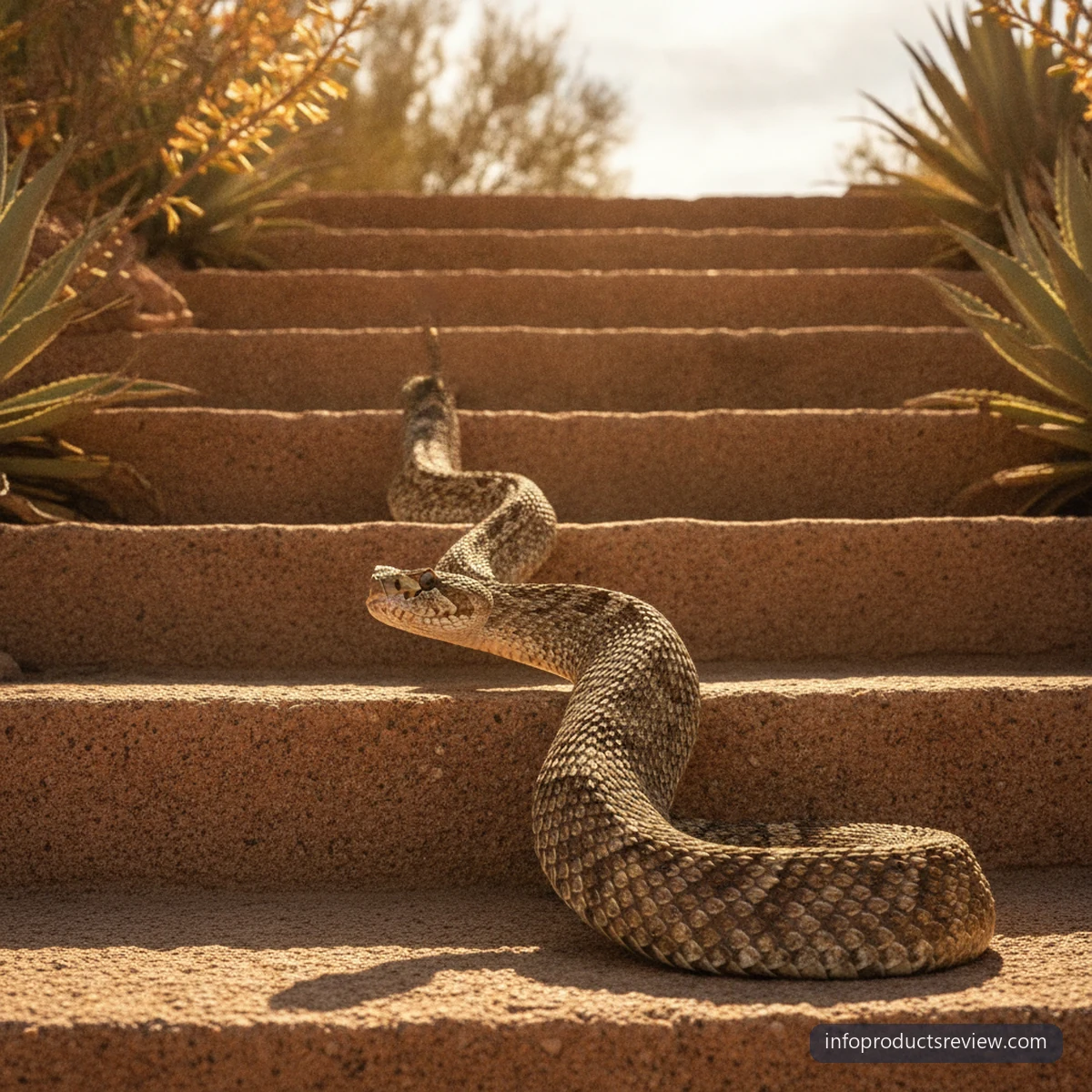
A few images come up often in questions. Some have a place in the books and some do not, and we separate the two plainly.
A snake on the head, and a snake that swallowed the dreamer. The compilation records, in the entry with no printed section heading, that whoever sees that a snake swallowed him attains authority, and that whoever sees a snake on his head rises in standing with rulers. Both are clear illustrations of a frightening picture reading favourably.
Whoever sees that a snake swallowed him attains authority, and whoever sees a snake on his head rises in standing with rulers.
Walking among snakes. The same entry records that whoever sees himself stepping over snakes and walking between them, his dream points to heavy rain that fills the valleys. The meaning turns toward water and abundance rather than danger.
Whoever sees himself stepping over snakes and walking between them, his dream points to heavy rain from which the valleys flow.
A shed skin with no snake. We find no reading of its own for this image. The nearest recorded line is a different scene: whoever finds its skin made of gold has found treasure. The condition there is the gold rather than the skin, so it cannot be generalised to every discarded skin.
If he sees that he has found its skin made of gold, he has found a treasure from the treasures of King Khosrow.
A snake that spoke. Gentle speech is recorded by Ibn Qutayba as good that makes people marvel, and he extends the rule to anything that does not normally speak. If the speech was gentle, the reading is clear. If it was something else, we find no specific reading for it.
A snake emerging from the ground. This is recorded as a torment in that place. Two qualifiers belong with it: it is a statement about a location rather than a person, and it is among the severest lines here, so we do not load it onto everyone who dreams it.
Look at the ratio in this group alone: three favourable images, one severe and qualified, and two with no reading of their own. That is not a ratio you see on pages that select for what frightens.
If another symbol appeared alongside the snake
Dreams rarely arrive as single symbols. If yours also contained a house, water, someone you know, or a place you recognised, resist the urge to look each one up separately and add the answers together.
A symbol is read inside its scene. That is visible in the texts themselves: setting alone moved the reading from conflict to money in water, to growth in a garden, and to prevailing in the market. A symbol carrying one fixed meaning would not have moved at all.
So a snake in a flooded room is not “snake plus water”. It is one scene, and the scene is what gets read. The classical method — ask about the whole dream, then answer — exists precisely because symbol-by-symbol addition produces nonsense.
And if the scene was confused and cannot be put in order, that is itself an indication that it sits closer to the mind talking to itself than to a symbol awaiting a reading.
A quick reference: detail and nearest reading
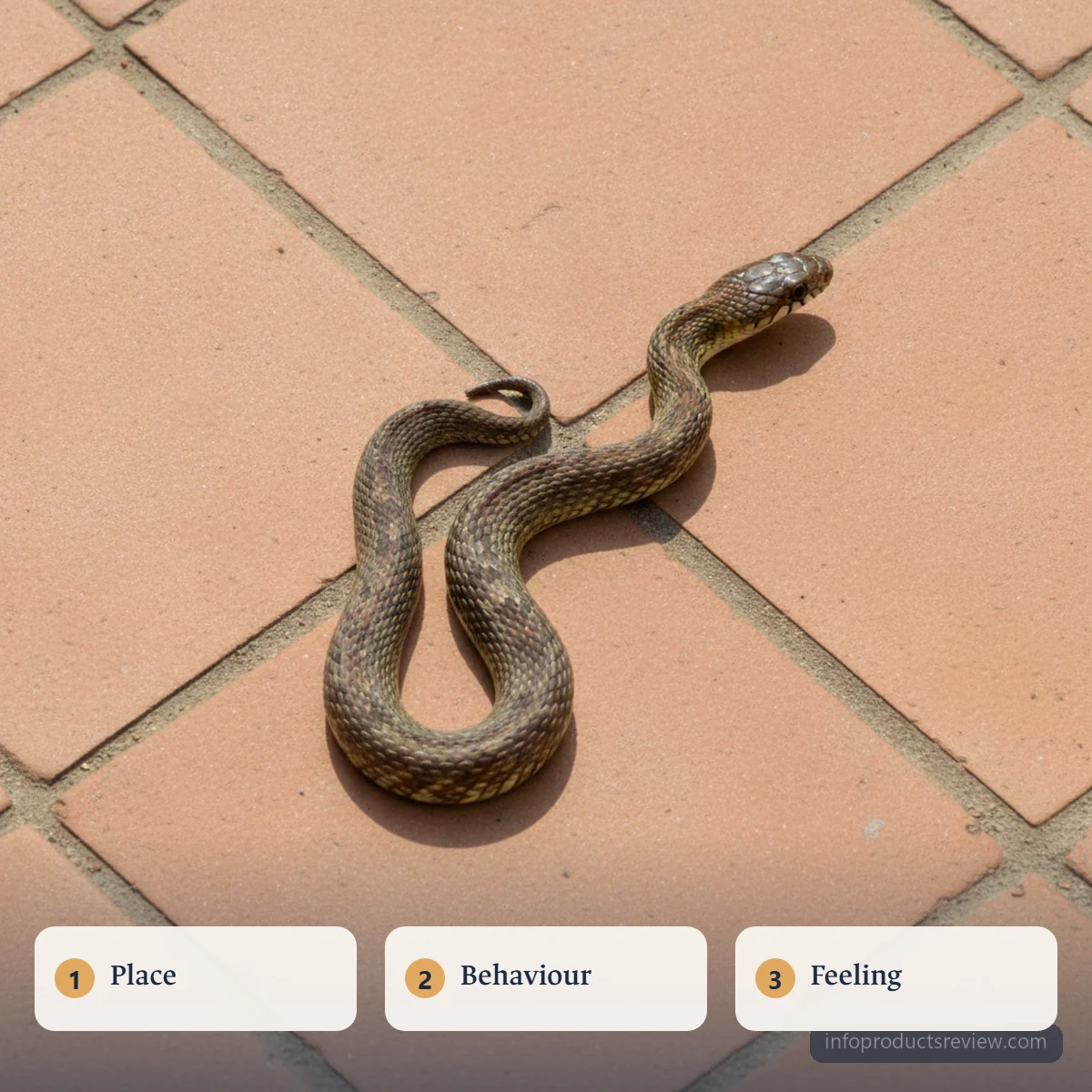
A summary, not a substitute for the sections above. Every line assumes the rest of the scene is neutral.
- Inside the house — a close circle: household and relatives.
- Outside the house — a wider circle: strangers.
- Snakes of houses — neighbours.
- Snakes of open country — highway robbers.
- In a garden — growth and increase.
- Near water, or in the fields — money, waters and floods; not conflict.
- Fighting in the market — prevailing over adversaries.
- Climbing upward — ease, gladness and joy.
- On the head — a rise in standing.
- It swallowed the dreamer — attaining authority.
- Still, doing nothing — no specific text; the lightest image.
- Walking in front of you or circling you — nearness without the power to harm.
- Walking behind you — an intention of harm, not harm itself.
- A light bite — a light effect, in proportion.
- A severe bite — a stronger effect, in proportion.
- A confrontation left unsettled — an open outcome; victory to whichever prevails.
- You killed it — prevailing over the adversary.
- You cut it in two — getting your due from the adversary.
- You cut it into three — three adversaries yielding.
- It obeyed you without harm — treasure from the treasure of kings.
- You owned it — great authority.
- It spoke to you gently — good that makes people marvel.
- You ate its flesh — money from an adversary, with joy and gladness.
- It was dead — an adversary whose harm is spared you, with no effort.
- Large, or heavily venomous — raises the degree of the meaning.
- Small — lowers it; also recorded as a child.
- Black — more severe in degree; not magic, and recorded favourably for whoever owned it.
- White — weakest in Ibn Qutayba, hardest in the compilation; the question is unsettled.
- Green, yellow or red — no mention in either source.
- You fled — no reading of its own.
Read the list downward rather than picking one line. A reading comes together out of several details and is never built on one.
How we check what we publish
Since this page asks you to be sceptical of others, here is our own standard. It is short, because it concerns our method rather than your dream.
This page rests on two places. The first is Ibn Qutayba’s Ta’bir al-Ru’ya in Ibrahim Salih’s critical edition; it is the older and stronger of the two, and its chapter on scorpions and snakes is the backbone of what we present. The second is a modern printed dream-interpretation compilation, gathered and alphabetised by Basil al-Buraydi, attributed to Ibn Sirin and to Abd al-Ghani al-Nabulsi.
The attribution in that second book needs stating clearly. Headings such as “Ibn Sirin said” and “Abd al-Ghani al-Nabulsi said” are section titles inside a modern compilation, not continuous chains of transmission. So we write that a book attributed to Ibn Sirin records something, and we never present it as established speech of his.
One detail matters especially. The second body of snake material in that compilation has no printed section heading above it. Assigning it to al-Nabulsi is an inference from the arrangement rather than a printed fact. So on this page we say that it appears in the compilation in an entry with no printed section heading, and we do not state that it is certainly his. Al-Nabulsi is a well-known author with a famous dream-interpretation manual, but that does not make every unheaded passage his words.
One more note. The reference copy we work from has no section under the name of Ibn Shaheen, although the name recurs constantly in what gets published. So we have attributed nothing to him on this page or on the pages branching from it. What is not written, we do not write.
Where the two places disagree — as they do on colour — we report the disagreement rather than picking a side for you and staying quiet about the other. And where the material is silent, we say it is silent instead of filling the gap.
Frequently asked questions
What is the most common meaning of a snake dream?
An adversary who conceals his enmity, as Ibn Qutayba records it. Alongside that the books carry other readings: authority, a realm, treasure, a woman, a child and money. Narrowing it to enmity is a selection rather than a transmission, and every reading is a possibility rather than news.
Does the snake’s colour change the meaning?
What is recorded on colour is one line in each book, and the two disagree. Ibn Qutayba writes that white snakes are the weakest and black ones the most severe; the compilation writes that the white are the hardest of enemies and the black the most severe of them. So the question is unsettled. Neither line mentions magic, envy or illness, and neither mentions any other colour.
Does a black snake mean magic or envy?
No. We find no mention of magic in either source. What is recorded about black is “most severe”, a word about degree. Black even appears favourably in the same passage: whoever comes to own a group of the great black snakes leads armies and attains great authority. Our guides for a single woman and a married woman go through what is actually recorded.
A snake chased me but never caught me. What does that mean?
What is recorded for a snake behind the dreamer is that an adversary “wants” to plot against him — an intention rather than an act. The text names nobody, so no suspicion of a particular person can be built on it. And if it walked in front of you or circled you, the text explicitly rules out the power to harm.
A snake bit me. Should I be worried?
Ibn Qutayba records that the adversary gets at him to the extent of the bite, so the effect is measured rather than absolute. The compilation carries a heavier wording, but it sits in an entry whose author cannot be established, it is an interpreter’s judgement rather than knowledge of the future, and it names no event, no time and no person.
I killed the snake. Is that good?
Killing is among the favourable readings: prevailing over the adversary, in Ibn Qutayba. The compilation records a second reading tying it to marrying a woman, and the disagreement rules out being definite. A dream should not be treated as a promise of marriage.
Does it matter whether the dream was at home or elsewhere?
Considerably. Ibn Qutayba records that a snake in the house means there is an adversary in the house — a circle, not a name. The compilation adds that snakes entering and leaving without harm are from the household and relatives, and that the same scene elsewhere points to strangers. In its unheaded entry, snakes of houses are neighbours and snakes of open country are highway robbers. Setting is the strongest single detail you have.
Does the size or the number of snakes matter?
Size is a degree: the enmity of each snake is recorded as proportionate to its harmfulness, its size and its venom. Number is read through place — favourable in a garden, alongside prevailing in the market, and a passage through without harm in the house. Both adjust a meaning; neither creates one.
The dream repeated for several nights. Is that significant?
Recurrence was never made a meaning of its own. The nearest image is a snake that comes out and returns, recorded in the compilation as a devil that grieves him — a recurring distress rather than a fixed adversary. From the sleep side, recurrence tracks stress and short sleep more closely than content.
Is there anything I should do after a dream like this?
A dream obliges you to nothing. The recorded response is simple and costs nothing: Sahih al-Bukhari, hadith 7044, has seeking refuge in God from its harm, spitting lightly three times, and not retelling it; Sahih Muslim, hadith 2262, adds spitting to the left three times and turning over from the side you were lying on. Anything beyond that — paying someone, making a vow, consulting anyone who claims access to hidden things — has no basis.
Where do I find the reading for my own situation?
The dream interpretation guides apply these same principles in detail for a single woman, a married woman, pregnancy and men.
Can a dream tell me who my enemy is?
No. No dream identifies a particular person, and no classical reading claims otherwise. The texts speak in circles — household, neighbours, strangers — and a circle holds dozens of possibilities. A page that leaves you suspecting someone by name has gone well past its sources.
In summary
Compressed into lines you can actually use:
- The first reading in Ibn Qutayba is an adversary who conceals his enmity. That is a possibility, not a verdict.
- Read the scene, not the symbol. Place first, then what the snake did, then how you felt. Colour last.
- The commonest images — passing, still, distant — are the lightest ones here.
- Do not assume the worst possibility: there are at least twelve favourable or reassuring readings.
- A dream is not enough to establish magic, envy, betrayal, illness, or anyone’s intent, and it fixes no dates.
- Take no decision from it, and accuse no one because of it.
- If it recurs and wears you down, start with your sleep and your stress, not with a symbol.
And if one thing is worth carrying away: a possible meaning stays possible, no matter how confidently it is repeated.
Written and reviewed by: the ATHAR editorial team — classical material checked and attributions stated before publication.
Last reviewed: 24 September 2026.
Note: what appears on this page is a possible meaning rather than a confirmed fact, and it changes with the details of the dream and the dreamer’s circumstances. Nothing here predicts the future, diagnoses a medical or psychological condition, or establishes magic, envy, betrayal, or hostility from any particular person.