
Almost everything written about the snake dream meaning for a man jumps straight to one conclusion: a lurking enemy, a conspiracy at work, someone close who is hiding something. That conclusion is not entirely wrong — enmity genuinely is one of the meanings in the classical books — but it is a fragment cut out of a much wider text, and a possibility converted into a certainty.
The very passage those claims are drawn from says, on the same page, that a serpent may be an authority, a wife, a child, a treasure, wealth, a whole state. It says the strength of the meaning follows the strength of the detail rather than the mere appearance of a snake. It says that when a serpent circles a man, his adversaries “cannot harm him”. All of that is written, and all of it is usually left out.
What follows reads the chapter as it stands, citing the section and page at the point of use. The same rules are read for a single woman, a married woman and pregnancy on their own pages. Interpretation here is a matter of informed opinion that shifts with the dreamer’s circumstances and the details of the dream. It settles no religious question, no decision about work or money, and no suspicion of any particular person.
The Bottom Line
In short: the snake dream meaning for a man is read from four details rather than from the symbol alone — where it was, what it did, what you did, and how you felt. The classical text itself is what makes those four decisive.
What is worth knowing immediately:
- Severity is graduated, not absolute. The section headed “Ibn Sirin said” in the reference copy: “the enmity of each serpent is according to its harm, its size and its venom” (p. 329).
- The absence of fear inverts the meaning. Al-Nabulsi: “the serpent, if a man does not fear it, is his strength and his standing” (p. 331). A snake you are not afraid of is read in the text as your power, not as a danger to you.
- Mastery is explicitly favourable. “Whoever sees that he possessed a serpent attains a great authority” (p. 208); and “if he obtained a smooth serpent that obeys him … he obtains a treasure from the treasures of kings” (p. 330).
- What frightens you in the dream may be the most reassuring line in the chapter. “If it walked in front of him or circled around him, they are enemies who mix with him, and they cannot harm him” (p. 331).
As for what the source does not say: it identifies no person for you, it establishes no conspiracy, and it tells you nothing about what will happen to your work or your money. When the text reads a serpent as enmity, it is describing a possible symbolic sense — not a man you know by name. Anyone who turns your dream into a list of suspects among colleagues, partners or relatives has added to the book what is not in it, and pushed you toward a certain harm in exchange for a guess.
And finally: a dream discloses nothing of the future, and it is no basis for a decision about a partnership, a job or a relationship.
What this page covers
- The Bottom Line
- The road and the workplace: a man’s widest circle
- Reading the dream before reading the symbol
- Responsibility and boundaries
- When the dream happens inside the house
- A man’s circles: home, work, the road between
- Single or married: a difference of context, not of symbol
- Your own position in the scene
- Colour: one sentence in the whole chapter
- Size and fangs
- How many
- The marketplace: a passage that belongs to this circle
- Enclosed spaces: an office, a room
- Being followed and chased
- Killing, contending and cutting
- Being bitten
- The calm snake, and the one you command
- Unusual images men ask about
- Escape and withdrawal
- The passages, with their locations
- “A man of the valley”: the strangest line in the entry
- How a reading is assembled
- The modern reading: a supporting layer
- What to do after a distressing dream
- When the dream is an echo of your day
- Common misconceptions
- Frequently asked questions
- Does a snake dream mean a man has an enemy at work?
- The snake did not frighten me. What does that mean?
- I killed the snake in the dream. Is that good?
- A snake was walking behind me. Is someone actually scheming against me?
- A snake bit me in a dream. Will I suffer a loss?
- Is there a difference between seeing it at home and at work?
- Does the reading differ for a single man and a married one?
- I saw many snakes. Is that worse?
- Does the snake’s colour change the reading?
- I ran away from the snake. Is that weakness?
- The dream repeated over several nights. Does that mean something?
- Where can I read about the other symbols in the same dream?
- A practical summary
- Sources
The road and the workplace: a man’s widest circle
Most of the dreams men bring to this subject happen outside the home: on a road, at work, on open ground, or somewhere the dreamer does not recognise. That detail is the first thing to notice, because the source builds more on it than on anything else.
From the “Ibn Sirin said” section: if he saw serpents entering his house and leaving without harm, “they are enemies from among his household and his relatives; and if he saw them somewhere other than his house, the enemies are strangers” (p. 331). Al-Nabulsi: “the serpents of houses are neighbours, and the serpents of the wilderness are highway robbers” (p. 333).
Place fixes the circle: home, neighbours, strangers, or those further out still. Applied to a man, what he sees at his workplace or on his road is read in the circle of his profession, his dealings and his rivalries — not in the circle of his family. Anyone who reads you a dream that happened in an office and then steers you toward suspecting your brother has contradicted the very text they claim to be quoting.
One distinction goes missing almost everywhere: competition is not enmity. A man early or mid-career lives with ordinary professional friction — a contested promotion, a disagreement over a share, pressure from management. These are unremarkable features of working life, and the text itself grades severity, so the appearance of the symbol does not oblige you to apply its harshest reading.
Reading the dream before reading the symbol
The most common failure is a page that starts at the symbol and ends there: “snake”, then a verdict. In the stories the book itself preserves, the interpreter asks before he answers.
In one story inside the serpent chapter, a man related a dream involving a serpent, a burrow and a spade. What he received first was a question, not an answer: “Are you seeking a woman in marriage?” (p. 330). The symbol was not ruled on alone; it was tied to the dreamer’s own circumstances.
This page follows the same order, and separates three things in every section:
- A quoted line, with its section and page, which a reader can check.
- A declared application to a man’s circumstances, stated as ours rather than as an interpreter’s text.
- A modern psychological reading, with sources, offered as a supporting layer rather than a ruling or a diagnosis.
A page that blends the three leaves a reader believing everything came from a great interpreter, when most of it is recent writing with no chain of transmission at all.
Responsibility and boundaries
One of the more defensible readings of a snake dream for a man concerns the boundary rather than the person: where your responsibility ends and someone else’s begins; what pressure you let into your circle, and what you would rather keep out.
This is not invented. It applies the structure of the text directly. The whole chapter is built on limits and distances: inside the house and outside it, behind the dreamer and in front, entering and leaving, approaching without harming. Every one of those is a distinction of distance rather than a description of the animal.
And the most reassuring line in the chapter sits exactly here: “if it walked in front of him or circled around him, they are enemies who mix with him, and they cannot harm him” (p. 331). Contact is stated; harm is denied outright. A man who dreams of something that approaches and never arrives is looking, in the text, at a picture of an adversary’s powerlessness rather than of his strength.
When the dream happens inside the house
If the dream happened indoors, the circle moves from outside to inside: “they are enemies from among his household and his relatives” (p. 331). This deserves a pause, because that sentence is the single most abused line in the chapter.
First: the text identifies a circle, never a person. A circle holds dozens of possibilities; it is not a finger pointed at anyone.
Second: the same sentence carries a qualifier that drops out of most retellings — “and leaving without harm”. What is described is a passage that does no damage, not an intrusion and not an injury. Removing that clause is what turns a calm line into a threat.
Third: the same book reads a serpent as “a wife” and “a child” elsewhere (p. 330), citing the verse “Indeed, among your spouses and your children are enemies to you, so beware of them” (al-Taghabun 64:14). The verse’s setting in the exegetical tradition is well known: preoccupation with family can distract from religious duty — not that one’s family are adversaries. Loading personal enmity onto it asks the verse to carry what it does not carry.
The practical conclusion: leaving a dream suspicious of a wife, a brother or a partner is a real harm built on a guess. Islamic teaching warns against conjecture and calls it the falsest of speech, and nothing in this chapter exempts a dream from that.
A man’s circles: home, work, the road between

Most men live between three circles: a home, a workplace, and a road connecting them. Each has its own logic, and the text distinguishes them explicitly.
So the first practical question after a snake dream is not “what does it mean?” but “which circle was I in?”. If the scene was at home, the reading is close. If it was at work, the reading is professional. If it was on a road or open ground, the reading is more distant and less attached to you.
There is a fourth case that gets overlooked: a place you did not recognise. The chapter has no passage on an unknown location, and we say so rather than invent one. The most that can be said is that the absence of a known place weakens the whole basis for a judgement, leaving the matter in the range of broad possibility.
Single or married: a difference of context, not of symbol
A common question: does the reading differ for a single man and a married one?
From the text: no. The chapter draws no distinction between dreamers on the basis of marital status, because the classical books are organised by symbol rather than by the dreamer’s situation.
From the application: yes, but only in context. A single man’s circles usually lean toward work, study and movement; a married man’s include a household and family responsibilities. Since the symbol is read inside the circle where it appeared, the weighting differs even though the symbol does not.
We state plainly that this is our application and not an interpreter’s text. Anyone offering you “the snake for a single man” as a saying of Ibn Sirin has attributed to him something he did not say.
Your own position in the scene
Among the details most writers ignore, though it is one of the strongest in the chapter: what were you doing when you saw the snake?
The text builds on this constantly. It distinguishes the man who contended from the man who did not; the one who killed from the one who only watched; the one who mastered the serpent from the one who feared it; the one who feared without seeing from the one who saw and feared. Every one of those is a distinction in the dreamer’s action, not in the creature’s description.
The clearest example puts both cases in one line: whoever feared a serpent without seeing it “is safe from his enemy, and if he saw it and feared it, that is fear” (p. 330). The serpent is identical in both halves. The entire difference lies in the dreamer’s position relative to it.
This is genuinely useful. Many men wake with only the image of the snake stuck in mind, and forget that in the scene they were standing calmly, or never went near it, or that the snake never turned toward them. Those forgotten details are, in the source, among the strongest indicators available.
So when you try to recall the dream, start with yourself rather than with the animal: where were you standing, did you move, and did you feel in command of the situation or without options? Then read everything above in that light.
Colour: one sentence in the whole chapter
The colour tables in circulation suggest a source exists. This chapter contains exactly one sentence on colour: “the white of them are the most difficult of enemies, and the black of them the strongest” (p. 330).
It says three things, and none of what is attributed to it:
- It describes degree of intensity: black is “strongest”, not “a different kind of evil”.
- It places white in the same register of difficulty, demolishing any table that makes white uniformly good.
- It mentions no magic, no envy, no illness and no spirits.
Then the same page inverts the picture: whoever saw that he possessed a group of great black serpents “led armies and attained a great kingdom” (p. 330). Blackness itself is favourable when the dreamer is in command. What changed the meaning was command, not colour.
Add to that al-Nabulsi’s line, which names a man explicitly: “the serpent, if a man does not fear it, is his strength and his standing” (p. 331). The absence of fear is treated as a sign of power, not of exposure.
Size and fangs

Size is stated at the opening of the chapter: “the enmity of each serpent is according to its harm, its size and its venom” (p. 329). Three measures, all graduated.
Elsewhere: “the small serpent is a child … and the serpent’s limbs and fangs are the strength of the enemy and the severity of his scheming” (p. 331).
Notice how the text reads fangs: “the strength of the enemy and the severity of his scheming” — that is, as a description of an adversary’s capability, not as a threat to the dreamer. The distinction is fine and important: the text is describing a balance of forces, not issuing a verdict of defeat.
And a small serpent turns the reading in an entirely different direction, so what applies to a great one cannot be applied to something the dreamer saw as small and unthreatening.
How many

Number is its own variable, read through place rather than count alone.
In a house, two passages appear that are tied to their setting: a man saw his house full of serpents and was told, “Fear God, and do not shelter an enemy of the Muslims!” (p. 330), with a comparable line at p. 331. Both address a householder in a specific historical moment; neither is a rule for every man who dreamt of more than one snake.
In a garden, a large number is explicitly favourable: “the garden grows, and the plants in it increase and thrive” (p. 331).
And in a third place the fighting of serpents appears in a context of victory: “if he saw serpents fighting one another in the marketplace, war broke out, and he prevailed over the enemies” (p. 331). Note that the location is the marketplace — the circle of dealings — and that the ending is victory rather than defeat.
The marketplace: a passage that belongs to this circle
One location that belongs squarely to a man’s circle is rarely mentioned: the marketplace.
From the “Ibn Sirin said” section: “if he saw serpents fighting one another in the marketplace, war broke out, and he prevailed over the enemies” (p. 331). And in the same passage: “if he saw serpents fighting on every side, and he killed a great one among them, he comes to rule that town.”
Three things in those two lines deserve attention:
- The location is a marketplace — the circle of trade, exchange and competition, which is as close as the text comes to a modern workplace.
- The scene is a conflict among the serpents themselves, not between a serpent and the dreamer. The dreamer is a witness rather than a party.
- The ending is victory, not defeat: “he prevailed over the enemies”; “he comes to rule that town”.
So a dream of conflict or upheaval in the place of dealings is not, in the text, a warning to the dreamer; it appears paired with prevailing. This is among the clearest cases where the meaning gets inverted online: “war broke out” is quoted and “he prevailed over the enemies” is dropped.
A qualification is owed here: these lines sit in a historical setting of rulers, towns and armies, and cannot be read today as a report about a promotion or a contract. All that follows from them is that the direction of meaning at this location is favourable, and that quoting half of it is a misuse.
Enclosed spaces: an office, a room
Many people ask about a snake seen in an office, a closed room, or a car. Start with the truth: those places are not named in the text, which contains no sentence about an office or a vehicle.
The rule that can be drawn is that the circle narrows as the space narrows. So what is seen in a tight, enclosed place is closest to a tight circle: your immediate work, the people you share a space with daily, whatever you cannot easily step away from.
We say it plainly: that is reasoning from a rule, not a text. We keep the two separate in every section, because conflating them is the origin of most of what gets written here.
Being followed and chased

The chase is the most distressing version of this dream and the most precisely described passage in the chapter:
“If he saw a serpent walking behind him, his enemy wants to scheme against him; and if it walked in front of him or circled around him, they are enemies who mix with him, and they cannot harm him” (p. 331).
- Behind you: the text chose the word “wants” and did not say “does”. It is an intention to scheme, not a scheme carried out. That gap is the gap between a possibility and an event.
- In front of you: open contact with nothing concealed.
- Circling you: contact with an explicit denial of the capacity to harm.
Elsewhere the text adds detail: “if he saw a serpent leaving a district once and returning once, it is a devil that grieves him” (p. 332). That is an image of repetition and coming-and-going, and al-Nabulsi reads it as a recurring worry rather than a specific adversary.
One further possibility should not be dismissed: that the chase is a psychological image rather than a symbol at all, particularly after pressure at work, poor sleep or a tense confrontation. That is covered below.
Killing, contending and cutting
These are the images men ask about most, and the chapter has clear passages with more than one face.
Contending. “Whoever fought a serpent or contended with it fought an enemy” (p. 330). Al-Nabulsi gives it more detail: whoever contends with a serpent “is fighting a strong enemy, and he is in fear and apprehension of him until they separate, and the victory belongs to whichever of them prevailed” (p. 332). Note that the outcome is open; the text does not decide it. There is no advance verdict of defeat in this chapter.
Killing. “If he killed it, he prevailed over his enemy” (p. 330) — one of the clearest favourable passages here.
Cutting. “If he cut it in two, he got the better of an enemy” (p. 330). Al-Nabulsi: “if he cut it into three pieces, he contends with his enemy and prevails over him, and three of his adversaries submit to him: a chief, a rich man, and a man with followers and children” (p. 332).
And a second face of killing appears in al-Nabulsi: “whoever sees that he killed a serpent, he marries a woman” (p. 333). We quote it because it is in the source, and because it demolishes the claim that killing has one meaning. Two faces in one book rule out certainty about either.
Being bitten
The bite is the most carefully measured passage in the chapter and the one most often quoted with a piece missing.
From the Ibn Sirin section: “and if it bit him, harm reaches him from his enemy to the extent of the bite” (p. 330). That final clause is the sentence: the effect is measured by the bite, not asserted absolutely. A slight bite has a slight effect, by the book’s own words.
Al-Nabulsi’s wording is heavier: “if it bit him, he meets with an adversity he does not escape” (p. 332). We quote it as it stands, and say what must be said with it: it is an interpreter’s judgement rather than a report about the unseen, and it specifies no event, no time, no person and no magnitude.
Also, a bite is one form of contention, and contention is left open as we saw. So a verdict of loss cannot be built on a bite alone.
A direct caution: if you dreamt of a bite and then noticed a physical symptom while awake, the destination is a doctor, not an interpreter. A dream diagnoses nothing and rules out nothing.
The calm snake, and the one you command
This section belongs to men more than to anyone else, because it holds the clearest favourable passages in the whole chapter.
- “The serpent, if a man does not fear it, is his strength and his standing” (p. 331) — a line that names a man explicitly.
- “Whoever sees that he possessed a serpent attains a great authority” (p. 208).
- “If he obtained a smooth serpent that obeys him, with no malice and no weapon that harms, he obtains a treasure from the treasures of kings” (p. 330).
- Al-Nabulsi in the same sense: a man who commands smooth serpents that obey and go where he directs “obtains ingots of silver or gold” (p. 332).
- “Whoever is addressed by a serpent with gentle, kind speech attains good that people marvel at” (p. 330).
- “Whoever sees a dead serpent — that is an enemy whose harm God spares him without any effort of his own” (p. 330).
- “If the serpent climbs to a height, he attained ease, gladness and joy” (p. 331).
Seven favourable passages, sharing one feature: the absence of fear, and command. What turns the meaning in this chapter is not the animal but the dreamer’s state with it. Which is why the interpreter’s first question was always about how the dreamer felt.
Unusual images men ask about
A few images recur in questions and do have passages, so we gather them rather than leave a question unanswered.
A serpent on the head. “Whoever sees a serpent on his head — his standing rises with kings” (p. 332, al-Nabulsi). Favourable, contrary to what the image suggests.
Being swallowed. “Whoever sees that a serpent swallowed him attains an authority” (p. 332). We include it as one of the clearest examples of a frightening dream image reading as entirely favourable in the text.
Walking among serpents. “Whoever sees that he steps over serpents and walks among them — his dream indicates great rain from which the valleys flow” (p. 332). The image is turned toward water and abundance rather than danger.
A serpent emerging from the ground. “If he saw a serpent come out of the ground, that is a torment in that place” (p. 331) — and we qualify it at once: it concerns a location rather than a person, and cannot be read as a warning to the dreamer.
Look at the proportion: four favourable images against one unfavourable, in this small group alone. That proportion never appears on pages that mine the chapter for what frightens.
Escape and withdrawal
There is no passage in this chapter under the heading of escape. We say so rather than invent one. But the source illuminates it from two directions.
First, the outcome hangs on contention rather than on sight. Where there was no contest, there is no outcome awaiting you — neither victory nor defeat.
Second, fear is a meaning in its own right: whoever feared a serpent without seeing it “is safe from his enemy, and if he saw it and feared it, that is fear” (p. 330).
That modest reading — fear read as fear — is far more honest than being told that fleeing in a dream is “a sign of weakness” or “a coming defeat”. Neither claim is in the text.
The passages, with their locations

Here are the passages used above with their locations, and a note on the copy.
The reference copy is a printed book of dream interpretation attributed to Muhammad ibn Sirin, and it is in fact a compilation placing its material under explicit headings: “Ibn Sirin said” and “Abd al-Ghani al-Nabulsi said”. We keep that separation and never blur it.
And a caution we do not soften: the attribution of the widely circulated Tafsir al-Ahlam to Ibn Sirin is famous, but it is not established by a continuous chain of transmission in the judgement of specialists. This is why we never open a sentence with “Ibn Sirin said” and instead write “the section headed ‘Ibn Sirin said’ in the reference copy”, with the page.
- p. 329 (Ibn Sirin section): “Serpents are enemies … and the enmity of each serpent is according to its harm, its size and its venom.”
- p. 330 (Ibn Sirin section): the range of possibilities; killing, cutting, biting and contending; fear and sight; the dead serpent; gentle speech; the smooth serpent; the colour line.
- p. 331 (Ibn Sirin section): direction of movement; the house and outside it; size and fangs; ascent; the garden; serpents fighting in the marketplace; a serpent emerging from the ground.
- p. 331 (al-Nabulsi section): “an enemy, or a state, or a treasure, or a woman, or a child”; and “the serpent, if a man does not fear it, is his strength and his standing”.
- p. 332 (al-Nabulsi section): contending and biting; cutting into three; smooth serpents; a serpent on the head; being swallowed; walking among serpents.
- p. 333 (al-Nabulsi section): killing and marriage; “the serpents of houses are neighbours, and the serpents of the wilderness are highway robbers”.
- p. 208 (al-Nabulsi section, the thu’ban entry): “a man of the valley”; and “whoever sees that he possessed a serpent attains a great authority”.
“A man of the valley”: the strangest line in the entry
The standalone entry for thu’ban under the letter tha opens with a phrase that stops everyone who reads it: “A serpent indicates, for whoever sees it in a dream, a man of the valley” (p. 208, al-Nabulsi section).
It is worth pausing on, because it reveals the nature of this discipline better than a dozen clearer sentences. “A man of the valley” describes someone with a place and standing in it — a person whose word carries weight where he is. There is no verdict of good or evil in it at all. It is a description of position.
The text then continues: “and perhaps it indicates enmity from family, spouses and children, and perhaps he was an envious, malicious neighbour” (p. 208).
Notice “perhaps” twice in a single line. That word is the most honest thing in the chapter. The interpreter does not settle the matter; he lays out possibilities ordered from stronger to weaker. Anyone who quotes “a snake is an envious neighbour” and deletes “perhaps” has converted a considered opinion into a confirmed report.
And the same short entry balances it: “a water serpent is an aid to an oppressor, or a proclamation to a ruler. And whoever sees that he possessed a serpent attains a great authority” (p. 208).
Four meanings in one brief entry: a figure of standing, a possible enmity, an aid, an authority. That is a single entry — so what should be made of anyone who offers you one certain meaning drawn from the whole chapter?
How a reading is assembled
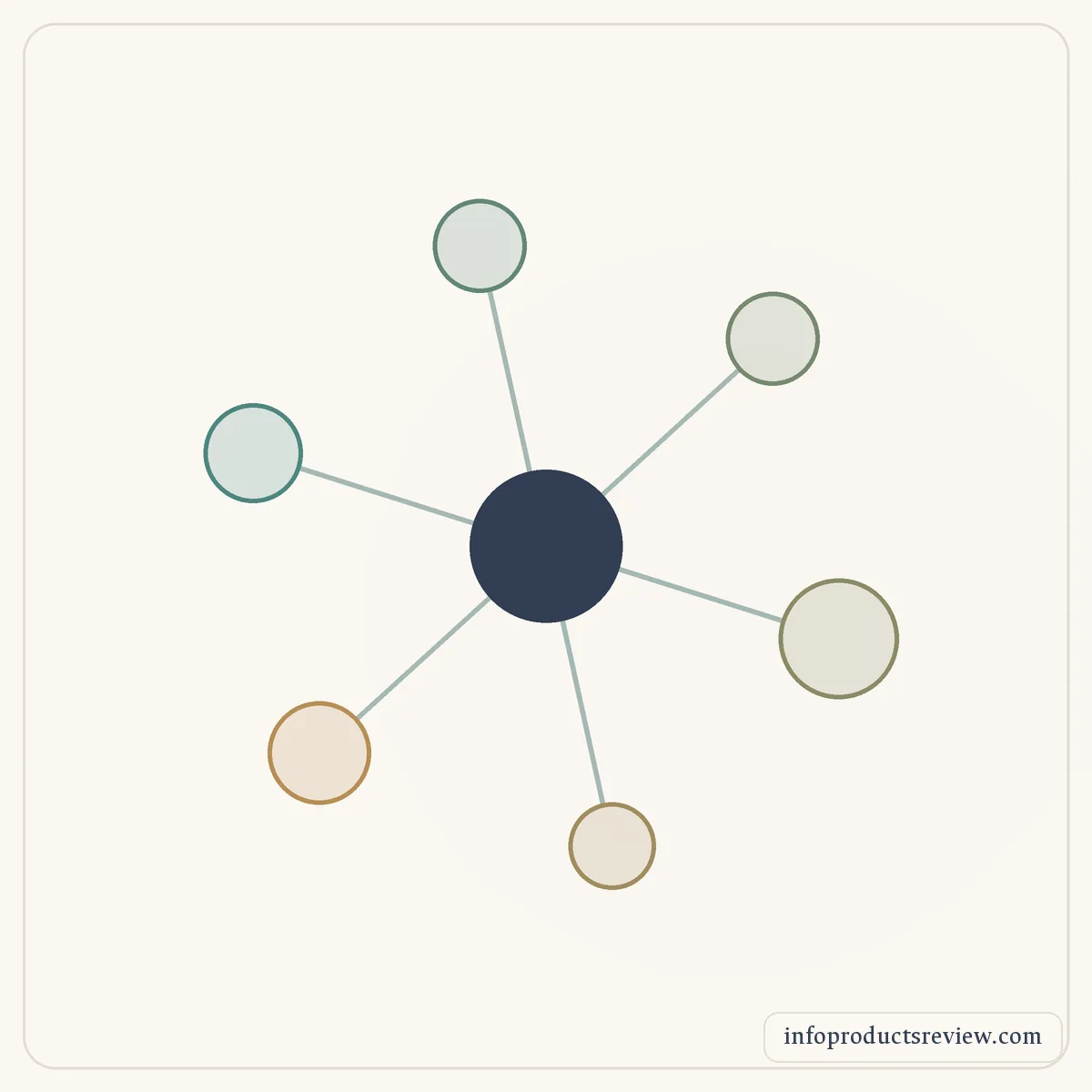
No interpretation rests on a single detail. The passages above give five elements that combine:
- Place: a house, work, a road, a marketplace, a garden, a height.
- Direction: behind, in front, circling, entering and leaving.
- Intensity: size, venom, capacity to harm, fangs.
- Action: contending, a bite, a killing, a cutting, stillness.
- Feeling: fear, safety, command.
When the five point one way, a judgement becomes reasonable. When they scatter, only possibility remains. Anyone who hands you one meaning without asking about all five is not interpreting your dream.
The modern reading: a supporting layer

Alongside the classical reading, sleep research has something to say about distressing dreams. It is offered here as a supporting layer, never as a ruling and never as a diagnosis.
First, nightmares are common and do not in themselves indicate illness. The National Institute of Neurological Disorders and Stroke notes that brain activity in REM sleep approaches waking levels, and that most remembered dreaming occurs in that stage — which lengthens through the last third of the night.
Second, diagnosis rests neither on a single dream nor on its content. The American Academy of Sleep Medicine classifies nightmare disorder in its international classification of sleep disorders, with a criterion of recurrence causing real distress or impairment in daily life.
Third, stress and short sleep are among the factors most consistently linked with distressing dreams, as reviewed by the Sleep Foundation. A man working shifts, sleeping late, or under financial or professional pressure has several known factors stacked together — and none of them requires a symbol to explain.
A note on classical psychoanalytic readings: what Freud or Jung wrote about dream symbols belongs to the history of ideas, not to modern scientific consensus, and it is not a diagnostic tool.
What to do after a distressing dream
Islamic practice offers a known response to seeing something one dislikes in sleep: seeking refuge in God from its harm, spitting lightly to the left three times, turning onto the other side, and not relating the dream to anyone. These are reported in Sahih al-Bukhari and Sahih Muslim.
“Do not relate it to anyone” carries an obvious practical value in a working environment: retelling a dream and interpreting it within earshot of whoever is being suspected is usually the source of the harm rather than the dream itself. Plenty of professional relationships and partnerships have fractured — not because of a dream, but because of an interpretation said out loud.
When the dream is an echo of your day
Before hunting for a symbol, rule out what is not one. This is not belittling dreams; it is part of the discipline. Not everything a sleeper sees is a dream to be interpreted.
Signs that make “the mind talking to itself” the likelier reading:
- The image was already in your day: a clip, a conversation, something seen before bed.
- The dream tracks an existing worry: a difficult meeting, an outstanding payment, a recent disagreement, a deferred decision.
- There is no structure: the dreams interpreters worked with had a scene, an action and an ending; fragmentary imagery is a different category.
- Your sleep changed: travel, shift work or late nights all raise dream recall and make dreams feel worse.
If a real question survives that, ask it in full: where the scene was, what the snake did, what you did, and how you felt. Those four elements are what this entire chapter is built on.
Common misconceptions

- “A snake definitely means an enemy.” The text names authority, a wife, a child, a state, a treasure and wealth. Confining it to enmity is selection, not quotation.
- “The dream reveals who is scheming against you at work.” The text names nobody and points at nobody. Turning your dream into a list of names crosses from interpretation into accusation.
- “Black means magic.” Absent from the chapter. What is present is “strongest” — a word of degree, not of kind.
- “A bite means financial loss.” The text measures the effect “to the extent of the bite” and mentions neither money nor any specific loss.
- “Fleeing in a dream proves weakness.” There is no passage on fleeing at all; the most the chapter says is that fear is read as fear.
- “Killing a snake always means victory.” The same book gives it two meanings: prevailing over an enemy (p. 330) and marriage (p. 333).
- “The dream tells you what will happen.” The book of interpretation does not claim this; most of its sentences open with “perhaps” and “it is said”.
Frequently asked questions
Does a snake dream mean a man has an enemy at work?
Enmity is one possibility, alongside authority, a state, a treasure, wealth, a wife and a child in the same text. The text names no one and does not permit building a suspicion on a dream. Ordinary professional competition is not enmity, and the text grades severity.
The snake did not frighten me. What does that mean?
That is among the clearest favourable passages, and one names a man explicitly: “the serpent, if a man does not fear it, is his strength and his standing” (p. 331). In the same sense: “whoever sees that he possessed a serpent attains a great authority” (p. 208).
I killed the snake in the dream. Is that good?
Killing is favourable: “if he killed it, he prevailed over his enemy” (p. 330), and “if he cut it in two, he got the better of an enemy”. Al-Nabulsi gives it another face: “whoever sees that he killed a serpent, he marries a woman” (p. 333). Two faces in one book rule out certainty about either.
A snake was walking behind me. Is someone actually scheming against me?
The text says “his enemy wants to scheme against him” (p. 331). Note the word “wants”: an intention, not an act carried out. That gap is the gap between a possibility and an event, and no suspicion of a named person should be built on it.
A snake bit me in a dream. Will I suffer a loss?
The text says harm reaches the dreamer “to the extent of the bite” (p. 330) — the qualifier is essential. Al-Nabulsi’s wording is heavier (p. 332), but it is an interpreter’s judgement rather than a report about the unseen, and it mentions neither money nor any specific loss. If you have a physical symptom while awake, see a doctor.
Is there a difference between seeing it at home and at work?
One of the clearest distinctions in the chapter. What is seen inside the house is read in the circle of family and relatives; what is seen outside it — “the enemies are strangers” (p. 331). Al-Nabulsi adds: “the serpents of houses are neighbours, and the serpents of the wilderness are highway robbers” (p. 333). A workplace is a wider circle than a home.
Does the reading differ for a single man and a married one?
Not in the text — the chapter draws no distinction by marital status. In context, yes, because the symbol is read inside the circle where it appeared, and those circles differ. We state that this is our application rather than an interpreter’s text.
I saw many snakes. Is that worse?
Number is read through place rather than count alone. In a house, two passages are tied to their setting (pp. 330 and 331); in a garden, a large number is explicitly favourable (p. 331); and in the marketplace, serpents fighting appear paired with prevailing over enemies (p. 331).
Does the snake’s colour change the reading?
The only colour sentence is “the white of them are the most difficult of enemies, and the black of them the strongest” (p. 330). It concerns degree, not kind; it mentions no magic and no envy; and it places white in the same register. Blackness appears favourably on the same page when the dreamer is in command.
I ran away from the snake. Is that weakness?
There is no passage on fleeing under that name. The most the chapter says is that fear is read as fear: “if he saw it and feared it, that is fear” (p. 330). And the outcome hangs on contention, so where there was none, there is no outcome to await.
The dream repeated over several nights. Does that mean something?
No passage makes repetition a meaning in itself. The nearest thing is al-Nabulsi’s image of coming and going (p. 332), which he reads as a recurring worry rather than a specific adversary. From the sleep side, recurrence is associated with stress and short sleep more than with content.
Where can I read about the other symbols in the same dream?
A single dream often gathers several symbols, and a symbol should not be cut out of its setting. You can browse the rest of ATHAR in English, where every entry names the book, the section and the page it came from.
A practical summary
Compressing the snake dream meaning for a man into usable lines:
- Start with place — home, work, or road. It is the strongest determinant in this chapter.
- Then with your relationship to what you saw: were you afraid, or in command? The text treats the absence of fear as a sign of strength.
- Do not apply the harshest possibility to yourself. There are at least seven favourable passages here.
- Do not leave a dream suspicious of a partner, a colleague or a relative. The text names nobody, and suspicion is a certain loss set against a guess.
- Build no decision about money, partnership or work on a dream.
- If the dream recurs and wears you down, look first at your sleep and your pressures.
We add entries to this reference one symbol at a time, after reading its page in the source and recording the number. What we cannot cite, we do not publish.
Editorial note: dream interpretation in this tradition is a matter of informed opinion. It changes with the dreamer’s circumstances and the details of the dream, it establishes no religious ruling, and it never justifies accusing anyone. Nothing on this page predicts the future, diagnoses a medical or psychological condition, or establishes magic, envy or betrayal.