

Most men who search for this dream are already carrying a name in their head. A scorpion turned up in the night, and they woke up asking who’s working against them — a colleague, a partner, someone in the family.
This guide starts somewhere else: with the short, surprisingly quiet line the classical sources actually give for this symbol, why jumping to “enemy” is the first mistake, and what to do if something still sits with you afterward.
The short answer
- The closest meaning. Ibn Qutayba described the scorpion as a weak enemy whose harm goes no further than his tongue, and who treats friend and enemy exactly alike. The symbol describes a habit of talk — not an opponent plotting against you.
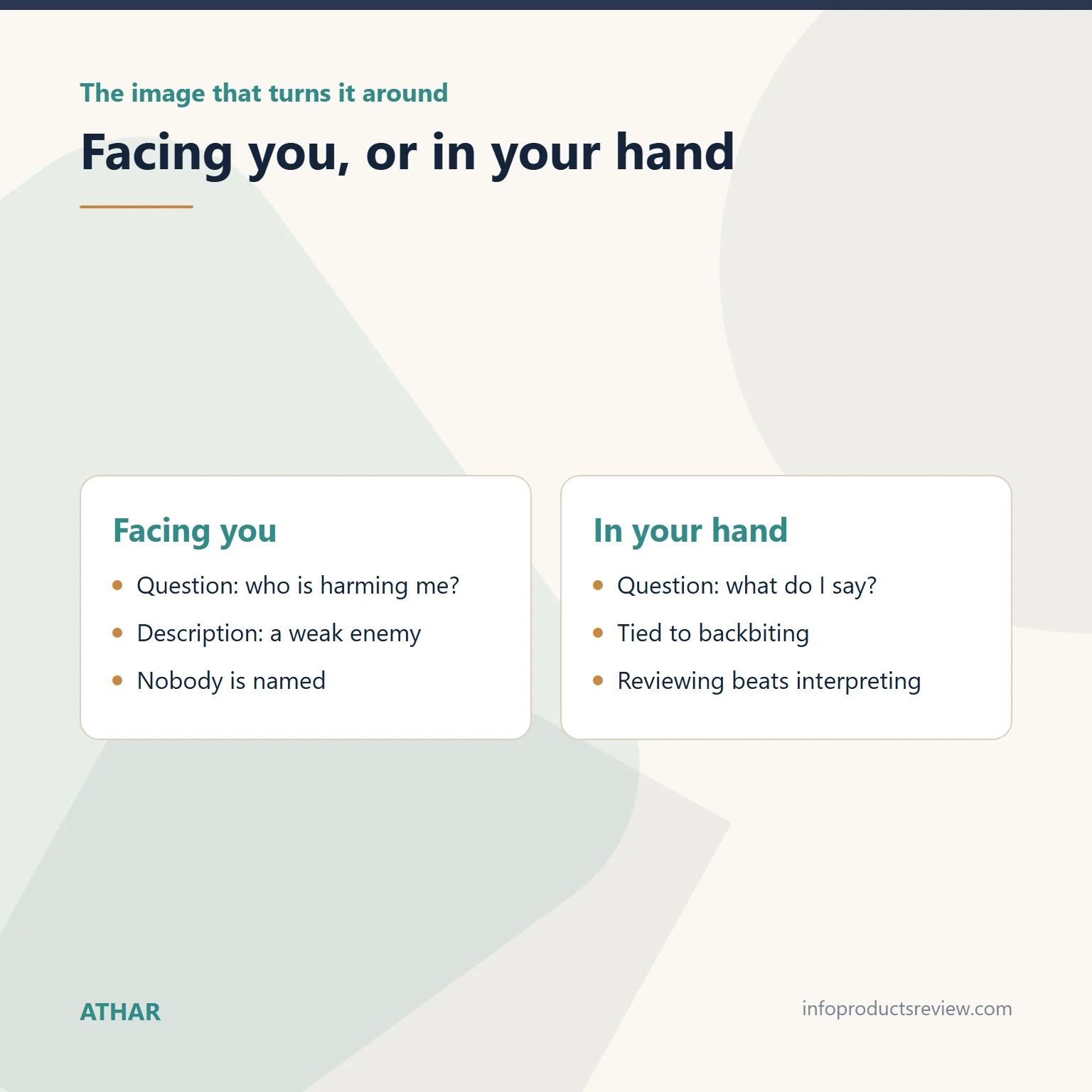
- What flips the reading. A scorpion in your own hand, stinging people. Ibn Qutayba wrote that this is a man who backbites people. The question turns around: from “who is harming me?” to “what do I say about people?”
- What can’t be claimed. It points to no specific person, no conspiracy, no job or money loss, no illness, no sorcery or envy. It promises no promotion, no windfall, and no victory over anyone.
- What to do. Settle yourself first, then ask one practical question: did anything actually reach me this week that bothered me? If so, the fix belongs to waking life, not to interpreting the dream.
What this page covers
- The short answer
- What Ibn Qutayba wrote
- Why jumping to “enemy” is the first mistake
- The tongue, not the hand
- Where talk actually circulates in a man’s week
- Work
- The road and travel
- The gathering you sit in
- Home
- The versions men ask about
- A scorpion at work
- In the car or on the road
- In your clothes or your bed
- One stinging someone else while you watch
- Several scorpions
- The sting itself
- Killing the scorpion
- When the scorpion is in your hand
- What it can’t put a name to
- What to do first
- Say something, or let it go?
- When the dream is really about your standing
- Why these dreams turn up in heavy weeks
- Responsibility and short nights
- Why it sits heavier on men who don’t complain
- If you manage people or run a business
- Why this symbol isn’t read as money
- Caution and suspicion aren’t the same thing
- Should you tell your wife or your family?
- When the dream was someone else’s
- Why work talk follows you home
- Three mistakes in handling someone who talked about you
- Questions worth answering before you ask anyone
- When the worry outgrows the dream
- What about the calm versions?
- Why a scorpion, for harm done by talk?
- Common questions
- Does a scorpion dream mean there’s an enemy at my workplace?
- Does it mean someone is plotting against me?
- What does killing a scorpion mean for a man?
- I was stung on the hand. Does that mean a loss at work?
- Is it a warning about a trip or a deal?
- There were several scorpions. Is it more serious?
- Does it indicate sorcery or envy?
- I saw it in my house. Does someone in my family resent me?
- It was in my hand. What should I do?
- Should I tell anyone about it?
- It recurs during busy periods at work. What does that mean?
- Does it indicate illness or death?
- Should I change something at work because of it?
- Does it differ for a single man versus a married one?
- What should I do right now?
- The bottom line
What Ibn Qutayba wrote
There is very little classical material here, and three words in it are enough to keep the whole reading straight.

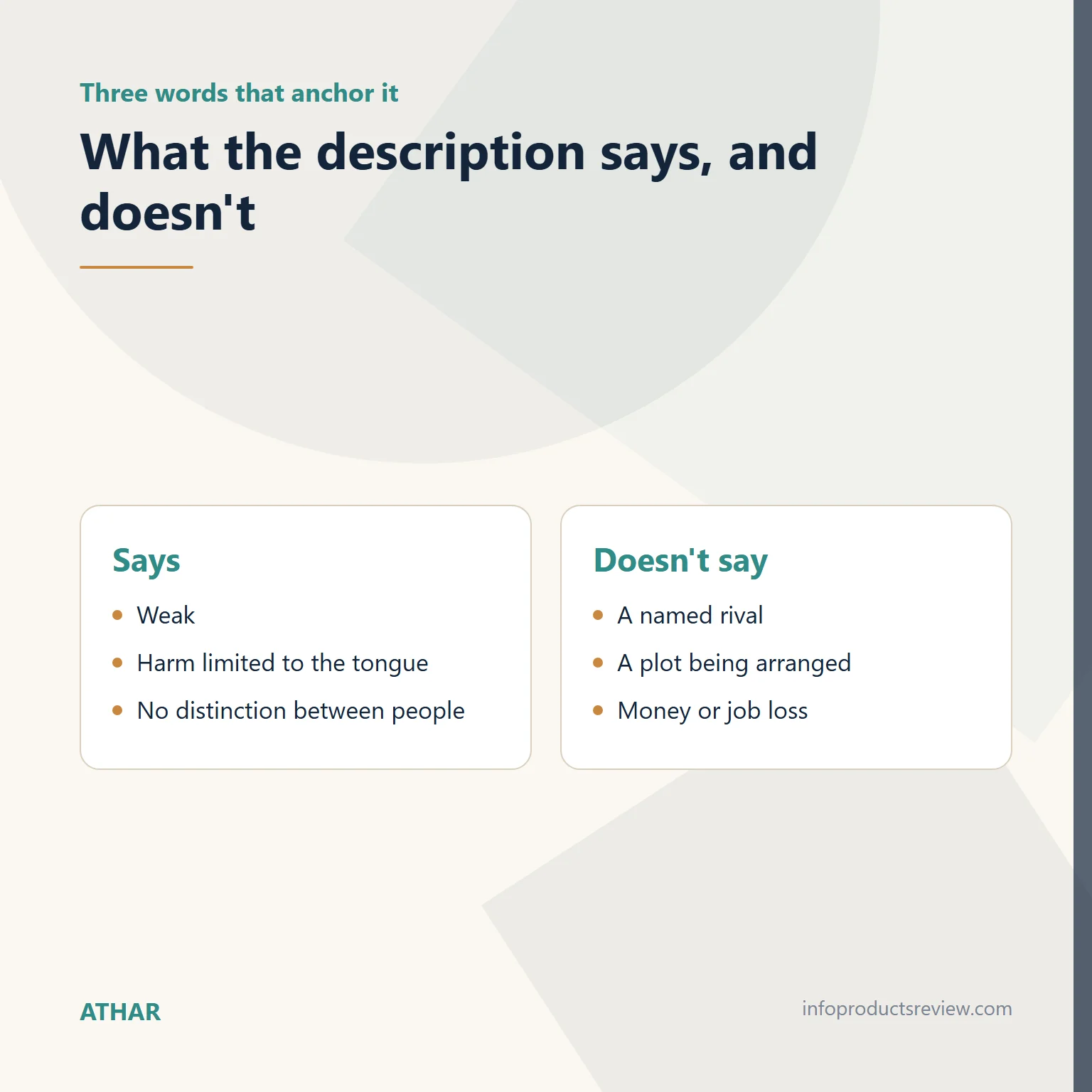
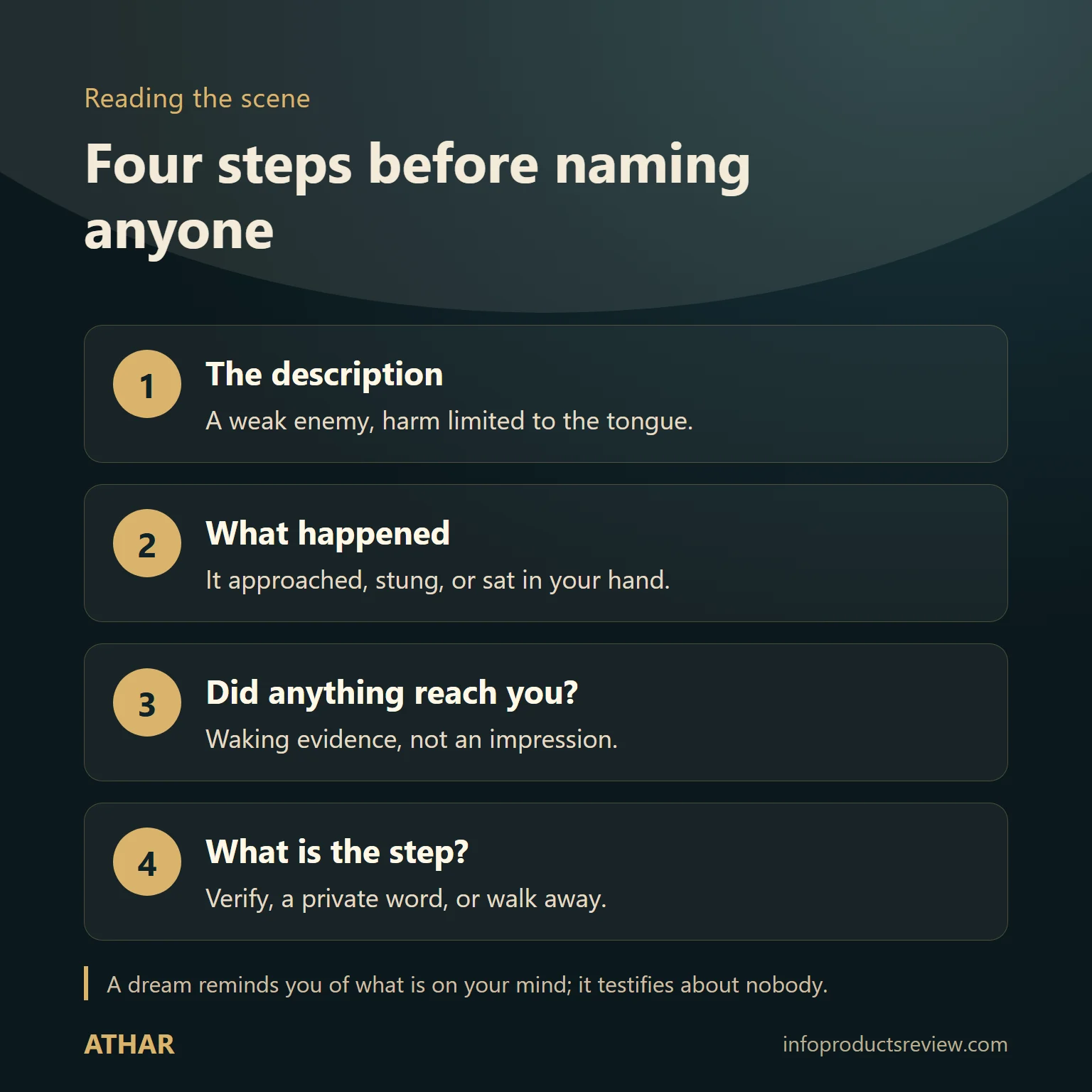
He described the scorpion as a weak enemy, whose scheming goes no further than his tongue, and to whom friend and enemy are one and the same.
The first word fixes the scale: this was never about serious danger or a force to be feared. The second fixes the kind of harm: talk — not your hands, your money, or your work. The third fixes the direction: not someone targeting you personally, but a habit that doesn’t discriminate, saying the same thing about the close and the distant.
He also recorded one image where the meaning turns: a man who sees a scorpion in his hand stinging people is a man who backbites people.
It is the same description used in our guide for married women and our guide for pregnancy, because the symbol is one and only the reader differs. That’s the whole of the transmitted material. Everything after it here is either a question to help you read your own week, a limit on what interpretation can do, or general health information about sleep, kept in its own section.
Why jumping to “enemy” is the first mistake
This is the part that matters most for you.
A man reads the word “enemy” in the description and his mind supplies a face within seconds — the colleague who wants his role, the partner he fell out with, the relative there’s history with. Then the evidence-gathering starts: an old exchange, a look, something someone mentioned.
But the description itself blocks that. Saying friend and enemy are identical to this character means precisely that he isn’t defined by a relationship and isn’t a specific person. Turning the symbol into a name adds something that was never in it.
And the mistake has a real price: a man cools toward a colleague who did nothing, strains a working partnership, or lets a family tie go quiet — all on a suspicion that started in his sleep. None of that is evidence, and none of it would stand up if you were on the other side of it.
The rule that takes the weight off: a dream may point at something already in you, but it testifies about nobody. If you have evidence of harm in waking life, handle it with waking tools. If you don’t, the dream didn’t hand you any.
The tongue, not the hand
Most of what circulates treats the scorpion as a symbol of danger — a loss, a sudden blow, something plotted quietly. The transmitted description says none of that.

The harm named is verbal: gossip, talk passed around, a remark that cuts. That’s a different category entirely from damage to your work, your money, or your body.
And that distinction is practically useful. If the symbol is about speech, you are not being called to guard your finances or re-read your contracts because of a dream. The most it could ever flag is something of its own kind: a conversation going on, or a gathering where things are said that shouldn’t be.
Note the word “weak,” too. Even within the territory of talk, the description isn’t about someone with real influence — it’s about someone with nothing but a tongue.
Where talk actually circulates in a man’s week
The dream books attach no fixed meaning to the room a scorpion appears in. But the setting does tell you which part of your life your mind has been working on, and that’s worth something.
Work
The most common setting in the questions that arrive. Workplaces run on talk: reviews, competition for an opening, things repeated between colleagues.
We look at the same work circle in lice dreams for men. The practical question: did anything said about me get back to me this week? Or did I say something I wouldn’t want repeated? Both are useful. “Which colleague is the scorpion?” is not — there’s no correct answer to it.
The road and travel
For many men the road means commuting, traffic, and dealing with strangers. A scene set there carries no fixed meaning, though it often shows up during stretches of heavy travel and fatigue.
Nothing in it warns you off a trip or tells you to postpone anything. Dreams don’t issue instructions or set dates.
The gathering you sit in
This circle is the closest fit to the description itself, because gatherings are where talk happens.
And the question here isn’t only about other people: how are absent people spoken about in the rooms I sit in — and do I join in, stay quiet, or leave?
Home
The closest circle, where the talk is daily, small and repetitive. A scene set at home doesn’t mean someone in your family wishes you harm, and it isn’t grounds for a conversation that starts with an accusation.
Worth noticing: these four circles overlap rather than sit apart. Work talk follows you home, road fatigue shows up in the gathering, and something said in a gathering can return to you at work. So don’t hunt for the one circle that “must be meant” — the question isn’t where the scene took place, it’s what’s occupying you right now.
The versions men ask about
A scorpion at work
No fixed meaning in the dream books. The useful question is what’s occupying you there right now — workload, a review, something said about you.
Nobody should tell you that someone at your office is working against you, and no employment decision should rest on the scene.
In the car or on the road
Common among people who drive a lot, and without a fixed meaning. The most that can be observed is that it tends to cluster in exhausting, high-travel stretches.
In your clothes or your bed
It lands harder, because clothing and bedding are about as close to a person as objects get. There’s no fixed meaning for it, and it’s read in the context of the dream and the dreamer.
A warning specific to this one: plenty of pages jump from it straight to talk about a wife or a household. That’s an accusation a dream can’t carry, and it has no basis.
One stinging someone else while you watch
Here you’re a bystander rather than a party. No fixed meaning — though the difference between watching and being stung is real in terms of what you wake up carrying.
It should never be read as a sign that something is coming for that person. A dream reports on nobody.
Several scorpions
More of them raises the feeling of being surrounded, and the number carries no fixed meaning. The description speaks of weakness; a higher count doesn’t convert that into strength.
The sting itself
The sting is what stays with you after waking, and it belongs inside this guide because it’s part of the symbol, not a topic of its own.


The transmitted description confines the harm to the tongue. There’s no bodily or financial damage in it at all.
As for the location — hand, foot, back — the dream books assign it nothing, so it reads in context. The elaborate charts giving each spot its own precise sense are inventions.
Many men describing this dream say the pain registered emotionally rather than physically: they woke up irritated or embarrassed rather than hurt. That’s a description of a common experience, not an extra layer of meaning.
A frequent follow-up: does the feeling linger? Some describe tightness in the chest for an hour or more. That’s what a frightening scene does to you — it doesn’t make the symbol stronger or bring anything closer.
Killing the scorpion
Heavily asked, and heavily loaded online: victory over a rival, trouble lifting, a problem ending.

Accurately: there’s no separate fixed meaning for killing a scorpion in the dream books. What’s observable is that men who kill it usually wake differently from those who flee it, and that feeling is part of their state.
Nobody should tell you it means you’ll come out on top against a particular person, or that a problem resolves on a schedule. That’s a claim about the future no one owns.
When the scorpion is in your hand
Of everything in this guide, this is the one scene Ibn Qutayba attached a named meaning to — and the meaning he attached was backbiting.
It’s the hardest part of this page, because it reverses the question: instead of looking for who’s harming you, you look at your own speech. That doesn’t make every scorpion dreamer guilty of gossip — the line describes one particular scene: a scorpion in the hand, stinging others.
If that was your scene, reviewing beats interpreting: what do I say about people when they’re not in the room, and is anything said in my gatherings that I wouldn’t want said about me?
What it can’t put a name to
- No specific person, even if you saw a face you know.
- No conspiracy and no scheme being arranged against you.
- No job loss and no financial trouble.
- No sorcery or envy.
- No diagnosis and nothing about anyone’s lifespan.
- No promotion, no windfall, no victory.
- No timeline for anything happening.
What to do first
Before any interpretation there’s short, practical guidance for someone who saw a dream they disliked: seek refuge in God from Satan, spit lightly to your left three times, turn onto your other side, tell no one about it — and it will not harm you.


It treats the effect on you directly, which is why it comes before the search for a meaning.
إذا رأى أحدكم الرؤيا يكرهها، فليبصق على يساره ثلاثًا، وليستعذ بالله من الشيطان ثلاثًا، وليتحوّل عن جنبه الذي كان عليه
Not retelling it has an extra benefit in your situation: repeat this dream in a work conversation and what comes back will almost certainly name someone. That’s the worst thing you could walk away with.
Say something, or let it go?
If something genuinely did reach you in waking life, the practical question isn’t what the dream means — it’s how to handle it. Four routes, chosen by the situation rather than by a dream:
- Verify first. Most of what gets passed along arrives distorted or half-told, and positions built on unverified accounts usually end in regret.
- Let it go if it’s trivial. Answering every remark widens it and pulls you away from your actual work.
- Speak directly if it’s worth it. Best done one-on-one, and opened as a question rather than an accusation.
- Step back from the room where it keeps happening. More effective than trying to fix how other people talk.
All four are waking tools. The dream did nothing more than remind you of something already on your mind.
When the dream is really about your standing
Many men describe this dream during a stretch when their name is in play: a review cycle, a dispute that got around, a project people are watching.
For most men reputation is tied to livelihood, which is why anything touching it sits heavily — and why the scene can stay with you a day or two.
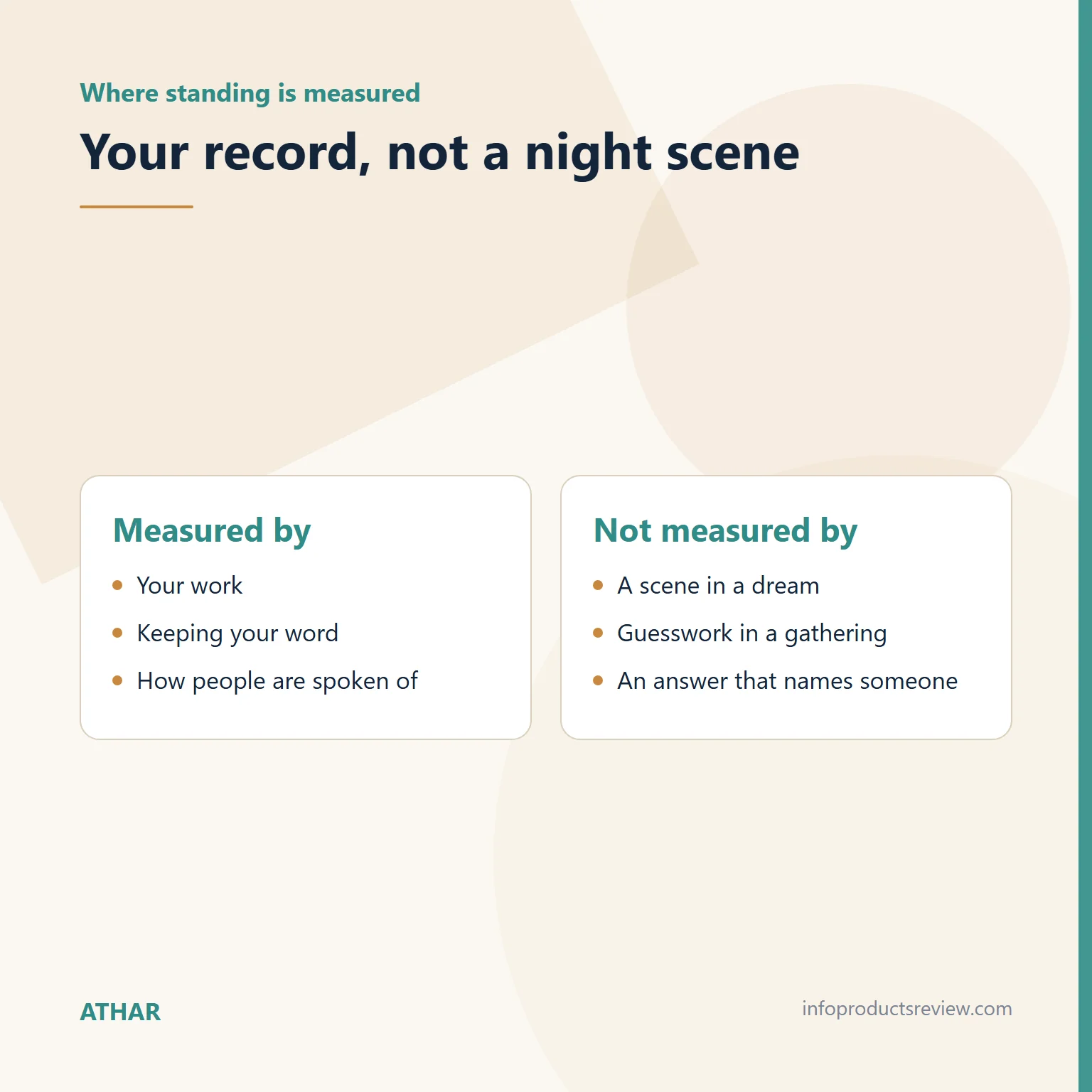
But the dream doesn’t report what people say about you, and it doesn’t count your opponents. The honest measure of where you stand is your record while awake: your work, whether you keep your word, and whether people can be spoken about safely in your presence.
In practice, men who put their energy into the record stop tracking the talk, and men who track the talk improve neither.
Why these dreams turn up in heavy weeks
This section isn’t interpretation. It comes from general health references about sleep, kept separate so it never blurs into what the interpreters wrote.
Those references note that events from the day often work their way into your thoughts during sleep, and that people dealing with stress or anxiety are more likely to have frightening dreams.
They also note that sad, traumatic or worrying situations may provoke nightmares, and that after a stretch of insufficient sleep a person often experiences a REM rebound that can bring vivid dreams and nightmares.
That’s a general description of sleep — not a verdict on your dream, and no bar to it having meaning. Our dream interpretation guides all work this way. If distressing dreams keep recurring and they’re affecting your days, a doctor or sleep specialist is a better use of your time than another interpretation page.
Sources cited on this page
- Primary religious source Muslim ibn al-Hajjaj, Sahih Muslim, p. 1003
- Primary religious source Muhammad ibn Isma'il al-Bukhari, Sahih al-Bukhari, vol. 9, p. 43
- Classical interpretive opinion Ibn Qutayba al-Dinawari, Ta'bir al-Ru'ya, ed. Ibrahim Salih, p. 198
- General health reference — does not interpret the dream symbol National Institute of Neurological Disorders and Stroke (NINDS), Brain Basics: Understanding Sleep
- General health reference — does not interpret the dream symbol Sleep Foundation — Eric Suni; medically reviewed by Abhinav Singh, MD, Why We Have Nightmares (And How to Prevent Them)
Responsibility and short nights
Plenty of men sleep badly during demanding periods: extra work, debt, a new family responsibility. Then the unsettling dreams arrive and get read as a warning.
The likelier reading is that they’re part of how sleep behaves in that period, as the section above describes. If your sleep improves and the dreams ease off, you’ve found your answer.
That’s an observation, not a rule — a man can have a meaningful dream in his calmest week, and the reverse is just as true.
Why it sits heavier on men who don’t complain
A lot of men don’t talk about what’s bothering them. You carry a dispute at work, a debt, or a letdown from someone close, and you get on with the day as if none of it happened.
The same pattern runs through snake dreams for men. What doesn’t get said doesn’t disappear. Sleep is where the guard comes down, and what was held back during the day shows up there.
Which is why men are often surprised the dream arrived in a week they thought they’d handled calmly. They handled it with silence, not with ease — and those aren’t the same thing.
That doesn’t mean everyone who dreams of a scorpion is bottling something up. It means the question “what am I carrying and not saying?” is more useful than “who is the scorpion?”, because the first one leads to something you can actually change.
Practically, it helps to have someone you trust to talk to — a brother, an old friend, someone older. Said once, a thing gets lighter. Held for a year, it gets heavy.
If you manage people or run a business
Anyone responsible for others lives in a wider circle of talk. Things get said that never reach you, you get quoted saying what you didn’t, and your decisions get read several ways.
That’s normal for the position — not a conspiracy and not a campaign. Anyone who makes decisions about people gets talked about; it’s the cost of the seat, not a sign that something’s wrong.
And here’s where a common error creeps in: a manager has a frightening dream, reads it as someone on the team working against him, and starts being guarded with everyone. The relationship sours — and the guardedness itself becomes the thing people talk about.
Keep the two separate: fair management runs on performance and evidence, while the aftertaste of a dream gets settled and then left alone.
If there is a genuine problem on your team, it’s visible in the work itself — missed deadlines, sloppiness, someone setting colleagues against each other. Those get handled with the tools they’ve always been handled with, dream or no dream.
Why this symbol isn’t read as money
Many pages tie the scorpion to financial loss or a squeeze on income. The transmitted description contains nothing of the kind.
The harm in it is confined to the tongue, and it describes weakness rather than any capacity to damage. Turning it into a financial warning moves the symbol into a different category with nothing to support the move.
That has a practical edge: don’t delay a deal, back out of a commitment, or start looking sideways at a partner because of something you saw while asleep.
If you have a real financial worry, it existed before the dream, and it gets resolved with waking arithmetic — reviewing the numbers, asking someone who knows, and sorting your priorities.
Caution and suspicion aren’t the same thing
Caution is a virtue: verify, don’t sign what you haven’t read, don’t trust money to people you don’t know. All waking tools, none of them connected to dreams.
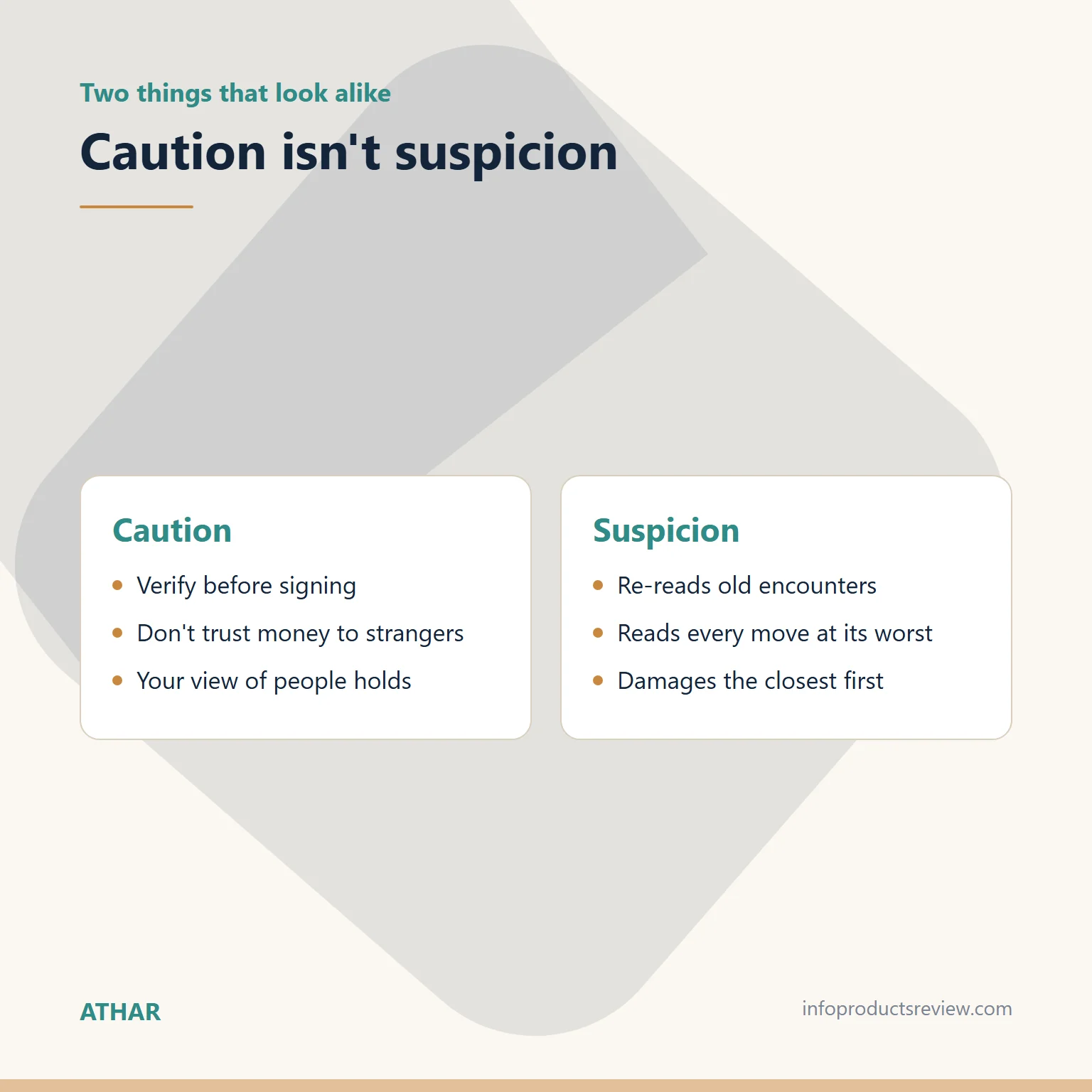
Suspicion is assigning people things they haven’t done and reading every move in the worst light. It starts small and grows until it damages the closest relationships before the distant ones.
A frightening dream is one of the fastest ways to convert caution into suspicion, because it leaves you feeling you now “know something.” That feeling is misleading — a dream gives you no knowledge about people.
The sign you’ve crossed over: you start re-reading old encounters looking for evidence, or your view of someone shifts with nothing new having happened.
When that happens, good faith is the default until something real shows up. That isn’t naivety — it’s what keeps both your relationships and your peace of mind intact.
Should you tell your wife or your family?
The guidance for a dream you disliked is not to retell it. In your case there’s an extra reason: repeating a frightening dream about work or people carries the worry home, and the people around you may start guessing at names with you.
If you need to talk — a legitimate need — talk about what’s occupying you in waking life rather than about the dream: the pressure, the disagreement, the tiredness. That opens the door to help that actually helps.
If you do want to ask about the dream itself, ask privately, choose someone whose knowledge and character you trust, and stop at one steady answer. A fair answer asks about your circumstances first, says “possibly,” names nobody, and fixes no dates.
When the dream was someone else’s
Questions often start with “my brother saw a scorpion sting me” or “my wife saw scorpions in our house.”
A dream is read against the circumstances of the person who had it. Someone dreaming something frightening about a relative is most plausibly showing their own concern — an understandable thing between family.
What shouldn’t happen is one person’s dream becoming a circulating warning: “watch out for so-and-so.” That plants something between people with nothing behind it.
Why work talk follows you home
Many men describe this dream on a night that followed a heavy day. That makes sense: you leave the office, but what happened in it leaves with you.
Unfinished things stay open in the mind — a reply you didn’t give, a meeting that ended without a decision, a moment you felt you weren’t dealt with fairly. The mind keeps reopening whatever hasn’t been closed.
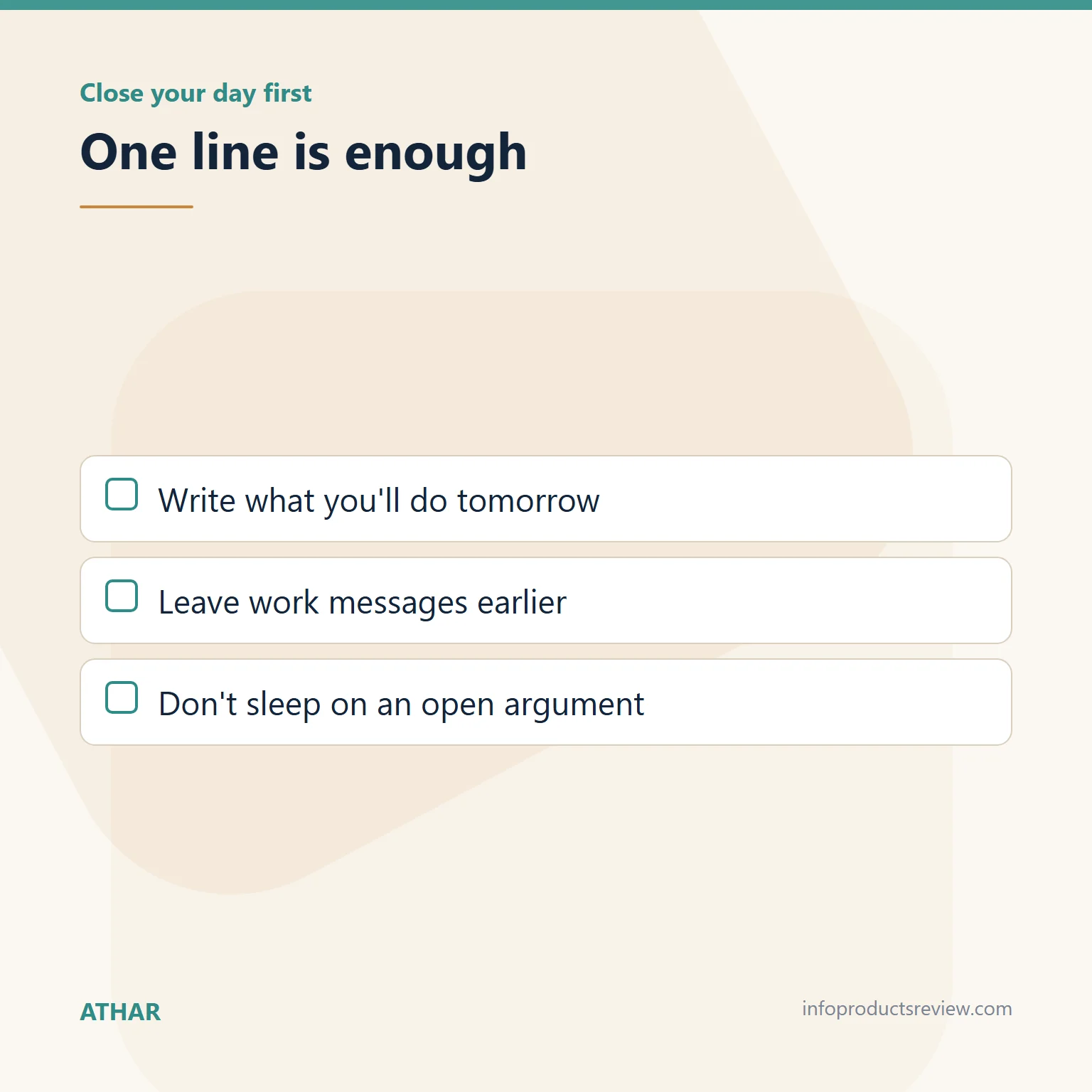
So close the day before you sleep. Closing it doesn’t mean solving everything; it means writing one line about what you’ll do tomorrow regarding the thing that’s nagging. Minds settle once something has a time attached to it.
It also helps if your last few minutes before sleep aren’t spent in work messages — sleep references note that the day’s events tend to work their way into your thoughts overnight.
Three mistakes in handling someone who talked about you
If it’s established — from waking life, not from a dream — that someone spoke about you, these are the traps:
One: confronting them in front of others. A public confrontation pushes the other person to defend themselves even when they’re in the wrong, and turns a small matter into a visible feud everyone present will repeat.
Two: answering in kind. Talking about him the way he talked about you moves you from the position of the wronged party to the position of his equal, and then it’s just an exchange with no end. Note that the image Ibn Qutayba connected to backbiting describes the man holding the scorpion — not the one who was stung.
Three: generalizing. Withdrawing from everyone because of one person costs you useful relationships for no reason. People are judged by what they themselves did.
The alternative to all three is the same: verify, then a quiet word in private if it’s worth one, then back to your work.
Questions worth answering before you ask anyone
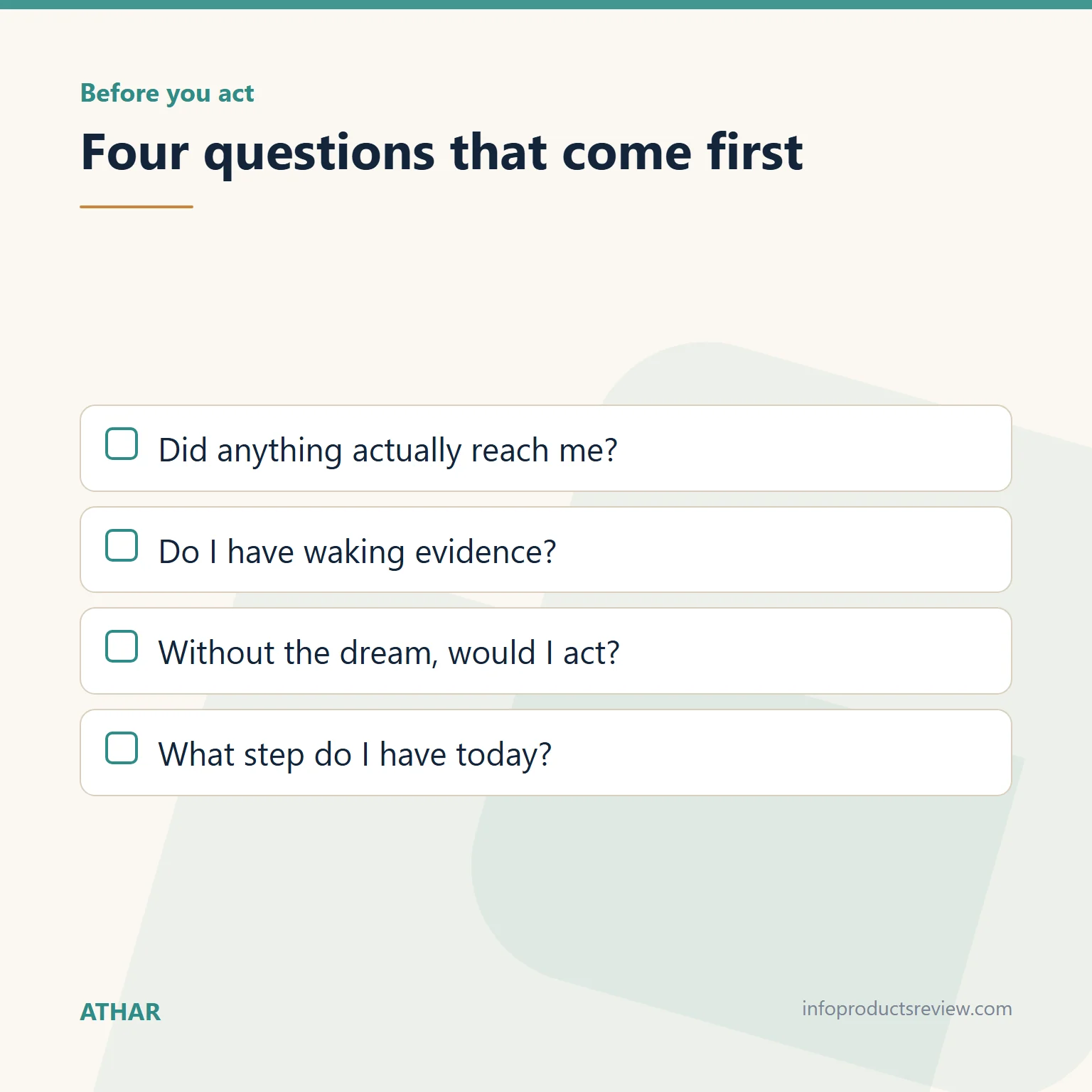
- Did something actually reach me this week, or is this all anticipation?
- Do I have waking evidence of harm, or only an impression?
- If I hadn’t had this dream, would I be doing anything about this person?
- Am I looking for a meaning, or for confirmation of a suspicion I already had?
- How has my sleep been, and how heavy was the week?
- What’s the one step actually available to me today?
The third is the sharpest. If the honest answer is that you’d be doing nothing without the dream, then the dream is steering you rather than reality — and that alone is reason to slow down.
When the worry outgrows the dream
Sometimes the problem isn’t the dream but what it keeps doing afterward.
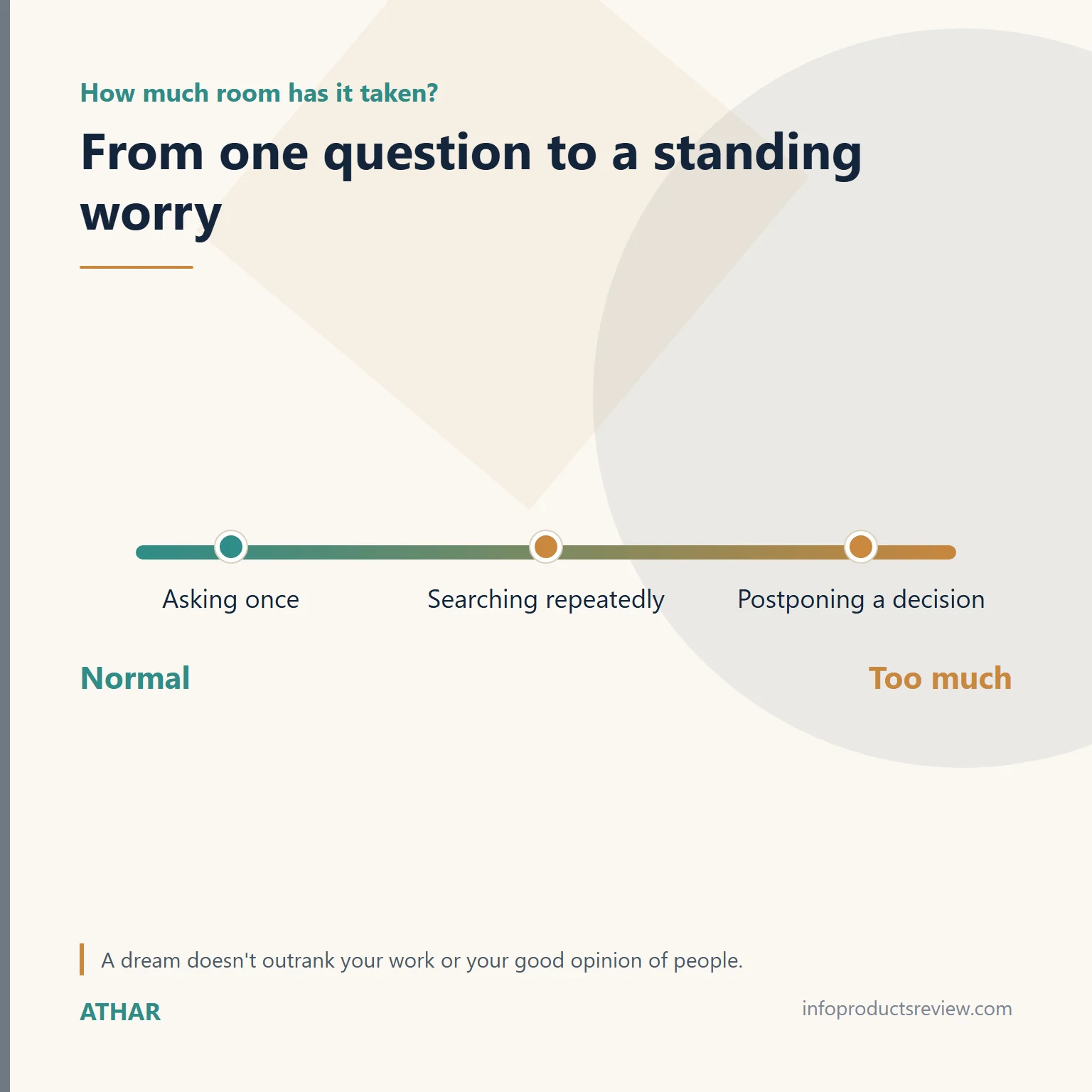
If you’re reading page after page on the same symbol, asking several people hoping for a comfortable answer, postponing a decision to see what the next dream reveals, or finding your view of people shifting with nothing new to justify it — it has taken more room than it should.
And if the distress is heavy and persistent, or bad dreams are affecting your sleep and your days, that belongs with a doctor or a specialist. It’s a sleep and wellbeing question, not a symbol question.
What about the calm versions?
Not every scene is frightening. Some men describe seeing a scorpion and simply moving away from it, or waking with barely any reaction at all.

Fair is fair: just as a frightening scene establishes nothing bad, a calm one guarantees nothing good. Both are read against your circumstances, and both are possibilities rather than news.
The hadith collections record that someone who sees a dream they like should praise God and may tell it to someone they love — a clear distinction in etiquette between what you dislike, which you leave alone, and what you like, for which you give thanks.
Why a scorpion, for harm done by talk?
There is more on attribution in what is actually established from Ibn Sirin. You might reasonably ask what a scorpion has to do with speech, and why it wasn’t made a symbol of power or serious danger, as so many pages treat it today.
The description answers that itself by stacking three things in one line: weakness, harm limited to a single instrument, and no distinction between close and distant. Together they describe someone who has nothing but his tongue: incapable of real damage, harmful in what he says, and sparing nobody.
That’s why reading the symbol as financial loss or as a plot doesn’t fit. A plot requires capability, planning and a target — and the description says the opposite on all three counts.
It also explains why the symbol stays small no matter how large the fear it leaves behind. The scene is frightening; what it describes in waking life is far lighter than it feels.
Knowing that takes care of half the worry, because what exhausts most men after this dream isn’t the meaning — it’s the assumption that some hidden force is circling them. The description rules that out in its first word.
Common questions
Does a scorpion dream mean there’s an enemy at my workplace?
No. The transmitted description describes a habit of speech and identifies nobody — it says friend and enemy are the same to this character. It isn’t evidence about a colleague or a partner.
Does it mean someone is plotting against me?
No. There’s no scheme in the description — only harm through talk from someone described as weak.
What does killing a scorpion mean for a man?
There’s no separate fixed meaning for it in the dream books. Men who kill it tend to wake differently than those who flee, and that feeling is part of their state — not a promise of victory.
I was stung on the hand. Does that mean a loss at work?
No. The harm in the description is confined to the tongue, there’s no fixed meaning for where a sting lands, and the scene is read in context.
Is it a warning about a trip or a deal?
No. Dreams don’t issue instructions or set dates, and business or travel decisions don’t get built on them.
There were several scorpions. Is it more serious?
The number carries no fixed meaning, and the description speaks of weakness. A higher count doesn’t convert that into strength.
Does it indicate sorcery or envy?
No. That connection rests on nothing and occupies people for no benefit.
I saw it in my house. Does someone in my family resent me?
No. The setting tells you which part of your life your mind is circling, not who is involved — and it’s no grounds for confronting anyone.
It was in my hand. What should I do?
That’s the image connected to backbiting. Reviewing how you speak about people when they aren’t present is more useful than looking for whoever might be harming you.
Should I tell anyone about it?
For a dream you disliked, the guidance is not to retell it — and in a work setting especially, retelling it invites guesswork and names.
It recurs during busy periods at work. What does that mean?
Health references note that the day’s events enter your thoughts during sleep and that stress and short sleep both raise distressing dreams. That’s a general description of sleep, not a verdict on your dream.
Does it indicate illness or death?
No. A dream doesn’t diagnose anyone and says nothing about a lifespan. Health worries belong with a doctor.
Should I change something at work because of it?
Decisions don’t get built on dreams. If you have a real reason from waking life, use waking tools: verify, speak directly, or step back from where the talk happens.
Does it differ for a single man versus a married one?
Nothing in the dream books changes the description by marital status. What differs is what’s occupying you — and that’s what a reading is measured against.
What should I do right now?
Settle yourself, don’t retell the dream in a gathering, and write the scene in three lines. Then ask whether anything actually reached you. If it did, handle it awake. If it didn’t, there’s nothing here that calls for worry.
The bottom line
Ibn Qutayba described the scorpion as a weak enemy whose harm doesn’t pass his tongue and who treats friend and enemy alike, and said that a man holding a scorpion that stings others is a man who backbites people. Those are the two transmitted meanings.
Everything else is read from what happened in the dream and what’s occupying you awake. The dream names no rival, reveals no plot, and promises no victory. The most it could ever flag is something of its own kind — talk — and that gets handled in waking life, not in the interpretation of a dream.