


You dreamed about gold: two bangles on your wrists, a chain around your neck, a gold ring on your finger, a bar in your hands, or coins being counted in front of you. And you woke up with a question that belongs to you specifically. Gold is forbidden for men to wear in waking life, so what does it mean to see it on myself in a dream?
It’s a fair question, and it points to the clearest real distinction we found in this whole subject. The sources we checked page by page don’t separate single men from married ones, but they do separate men from women: Ibn Qutayba writes that no jewellery is good for a man in a dream except a necklace, an earring and a ring, and that all jewellery is good for women.
This page keeps two things apart that are constantly conflated: the religious ruling on wearing gold while awake, and how gold is read in a dream. The first is a question of Islamic law with its own scholars. The second is interpretive reasoning. Neither turns into the other.
The bottom line
- The real distinction is by sex, not marital status: for Ibn Qutayba, only a necklace, an earring and a ring suit a man.
- Bracelets and anklets: the unfavourable readings in the chapter are written about a man, and they’re the source of most of what circulates today about “gold for men”.
- The Prophet’s ﷺ dream of two gold bracelets: established in Bukhari and Muslim, and the commentaries explain why he read it as he did. It’s commentary on one dream, not a rule for every man.
- A ruling is not an interpretation: gold being forbidden for men to wear is the reason commentators gave for that dream. It doesn’t make gold in your dream a sin or a warning.
- Worked versus unworked gold: unworked gold is read as loss, taken from its name; worked gold is weaker in harm.
- What it can’t do: it can’t judge your faith, promise money, expose unlawful earnings, or accuse anyone.
What this page covers
- The bottom line
- Why a man dreams about gold
- The passage that concerns men
- A note: the waking ruling is not a dream interpretation
- The Prophet’s ﷺ dream of the two gold bracelets
- Bracelets, armlets and anklets on a man
- Necklace, earring and ring: the exceptions
- An earring on a man
- A gold ring in a dream
- A belt decorated with gold
- Silver for a man: what the text says
- Worked gold, unworked gold and bars
- Coins, dinars and small change
- A crown
- Being given gold
- Buying gold for your wife, or giving it as a gift
- If you’re preparing for a wedding
- Gold, your children and your household
- Gold too heavy or too much to carry
- Gold, your work and your income
- If you work with gold or money
- Selling gold or pawning it
- Gold lost or stolen
- Finding gold or treasure
- Taking the gold off in the dream
- Seeing gold on another man
- When someone tells you your dream proves something unlawful
- If the dream worries you more than it should
- If the dream keeps coming back
- The method that will actually help you
- How the dream felt
- How this chapter is read at all
- What if you don’t remember the details?
- Common claims that need correcting
- What this dream can’t tell you
- What to do after the dream
- How to describe your dream so it can be read
- What you can take away with confidence
- Examples
- He saw two bangles on his wrists and disliked them
- A gold necklace before an expected promotion
- A gold ring, and he woke worried about his income
- Carrying a gold bar
- Buying gold for his wife
- Sound coins counted in front of him
- The household’s gold stolen
- A crown on his head
- A gold dream after a day following prices
- An anklet he couldn’t remove
- A belt decorated with gold
- He saw a friend wearing gold and disapproved
- Quick table: the detail and the closest reading
- Related dreams
- Frequently asked questions
- What does seeing gold in a dream mean for a man?
- Is wearing gold in a dream forbidden for a man?
- Does a gold ring in a dream mean unlawful money?
- What do two gold bracelets mean?
- Is gold in a man’s dream good news about income?
- What’s the difference between worked and unworked gold?
- I saw a gold necklace on myself. Is that unfavourable?
- What does losing gold mean for a man?
- Is gold read differently for men and women?
- Does the dream indicate envy or magic?
- I dreamed of gold after following its price all day. Does it mean anything?
- Is this interpretation definitive?
- In summary
- Sources and references
Why a man dreams about gold
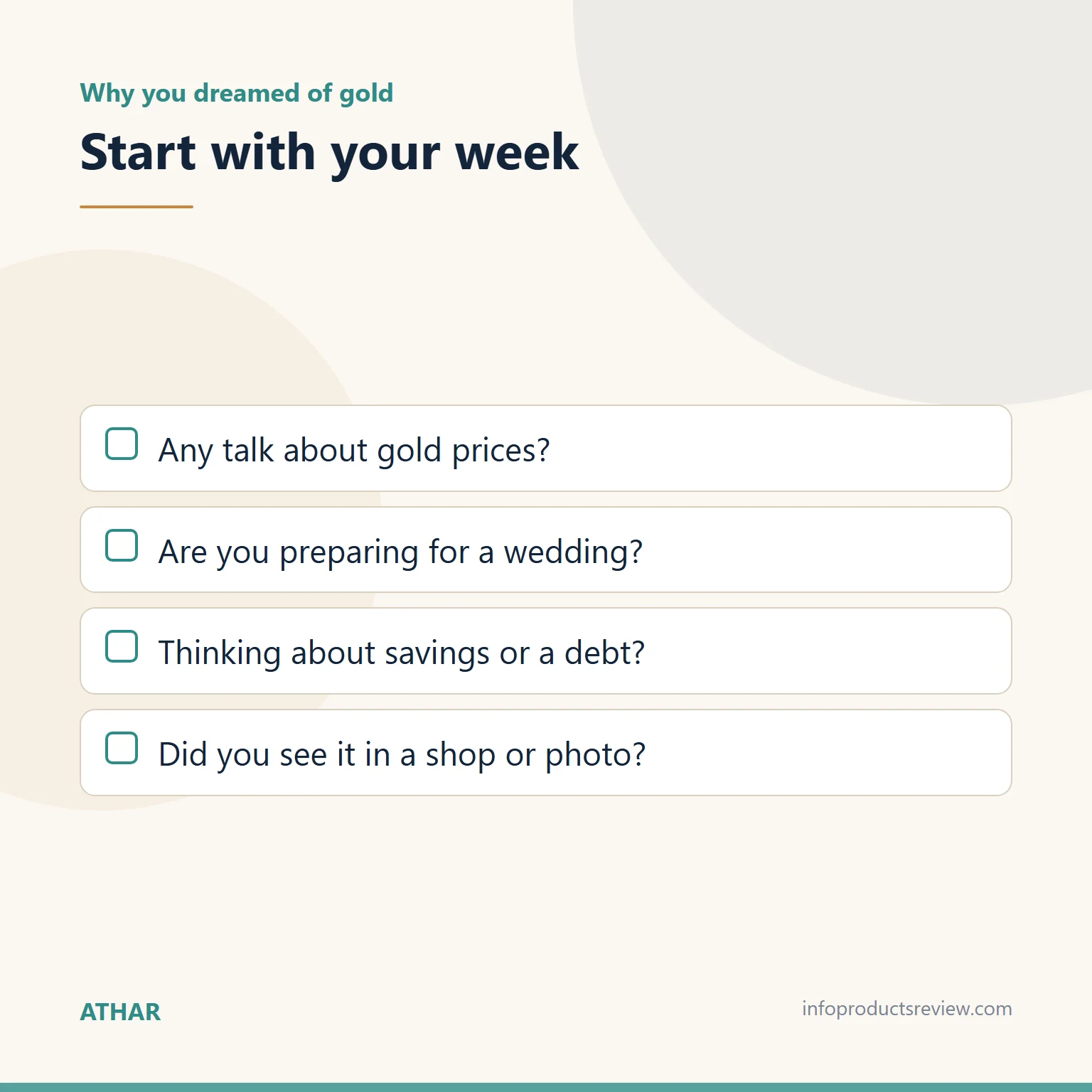
Before the symbol, ask about your week. Gold is more present in men’s lives than it first appears: a price followed by anyone thinking about savings, a gift being planned, a bridal set or dowry being calculated before a wedding, talk of selling a piece to meet a commitment, or a wife’s or mother’s jewellery kept at home.
General health references on sleep note that the day’s events often find their way into our thoughts at night:
So start here:
- Has there been talk about the price of gold, or about buying a piece?
- Are you preparing for a wedding or an occasion where jewellery features?
- Have you been thinking about savings, a sale, or a debt?
- Did you see gold in a shop, a photo or a gathering?
If the answer is yes, the dream is most likely an echo of your day.
The passage that concerns men
The clearest thing in the chapter is the line Ibn Qutayba closes with in Ta’bir al-Ru’ya, in the edition by Ibrahim Salih, printed page 162:
No jewellery is good for a man in a dream except a necklace, an earring and a ring. And all jewellery is good for women.
That sentence gives you three things.
First, jewellery isn’t all the same for you. A necklace, an earring and a ring are the exceptions; bracelets, anklets and armlets are read unfavourably for a man.
Second, this is an interpretive opinion, not a verdict on you. Seeing a bangle on your wrist doesn’t mean you’ve done something forbidden, or that you will.
Third, this is where the harsh readings come from. Many pages transfer them to women, when the text frames them around a man and then says that all jewellery is good for women.
A note: the waking ruling is not a dream interpretation
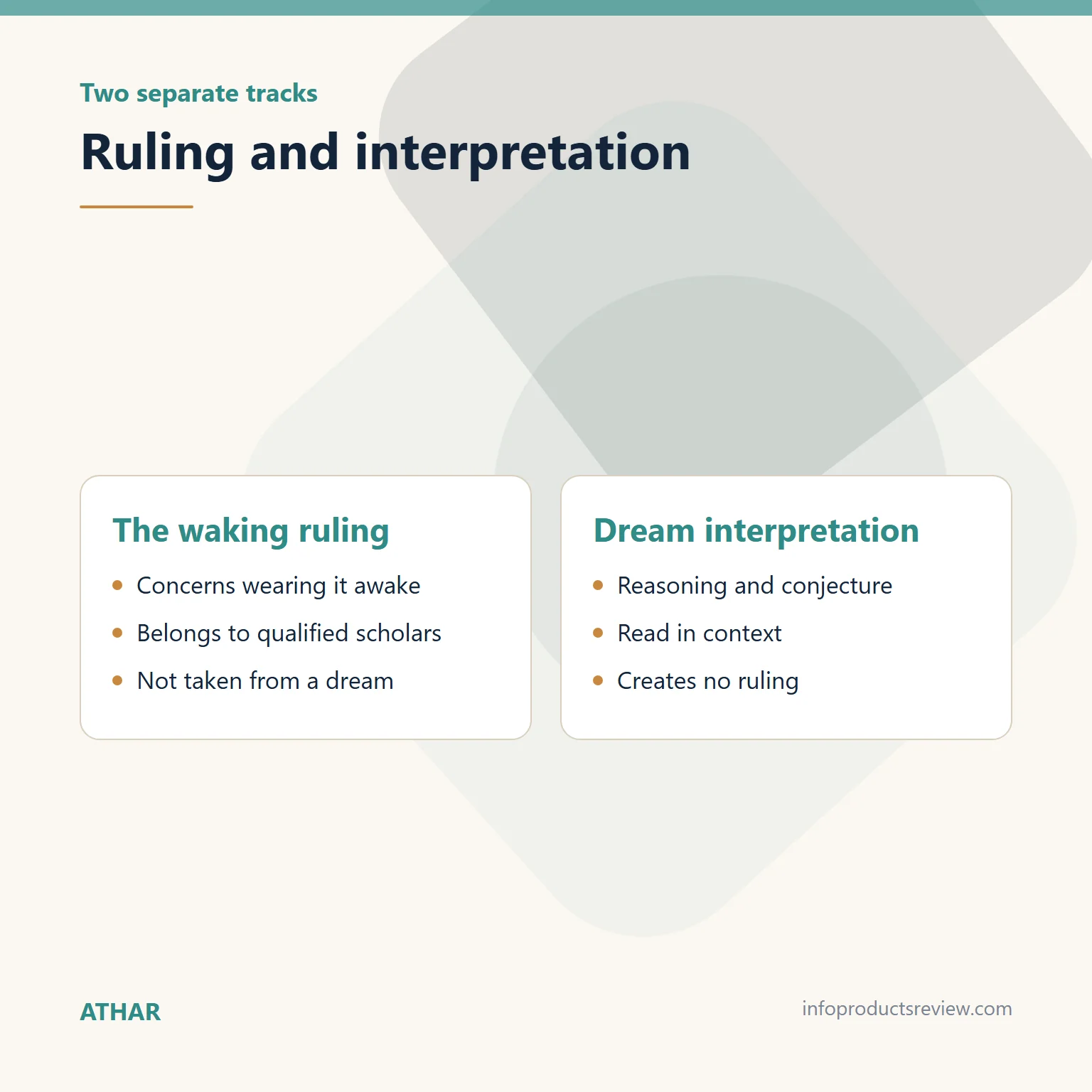
This is the fork in the road on this page, so let’s mark it clearly.
Wearing gold is forbidden for men in waking life, and commentators mention this while explaining the Prophet’s ﷺ dream of the two bracelets. Al-Qurtubi says, as Ibn Hajar quotes him in Fath al-Bari, printed page 442:
Al-Qurtubi said: it weighed on him only because gold is among women's ornament and among what is forbidden to men.
That’s a statement of a ruling, brought in to explain why it weighed on the Prophet ﷺ to see two gold bracelets on his arms. It explains one particular dream. It doesn’t say that any man who sees gold has fallen into something unlawful.
So this page holds to three limits:
- We don’t turn a ruling into a dream meaning. That wearing it is forbidden while awake doesn’t make seeing it a sin or a warning.
- We don’t issue religious rulings. Questions about wearing or trading gold belong with qualified scholars, not an interpretation page.
- We don’t let a dream judge anyone’s faith, yours or anyone else’s.
This isn’t a theoretical nicety. Plenty of men wake from a dream like this with a religious worry, then read pages telling them it proves their income is unlawful. The texts don’t say that, and interpretation itself is conjecture that can’t be treated as certain.
Perhaps the clearest way to see the difference is that a sleeping person is under no religious obligation at all. Seeing something isn’t an act you’re accountable for, and no scholar has held that a man who dreams of wearing gold owes anything as a result. The prohibition appears in the commentaries as a clue that explains why the Prophet ﷺ disliked what he saw on his arms, not as a verdict on the dreamer. At most, then, the clue tells us that gold on a man’s arm is an image of something out of place, and that’s read in context and differs from one man to the next.
The Prophet’s ﷺ dream of the two gold bracelets
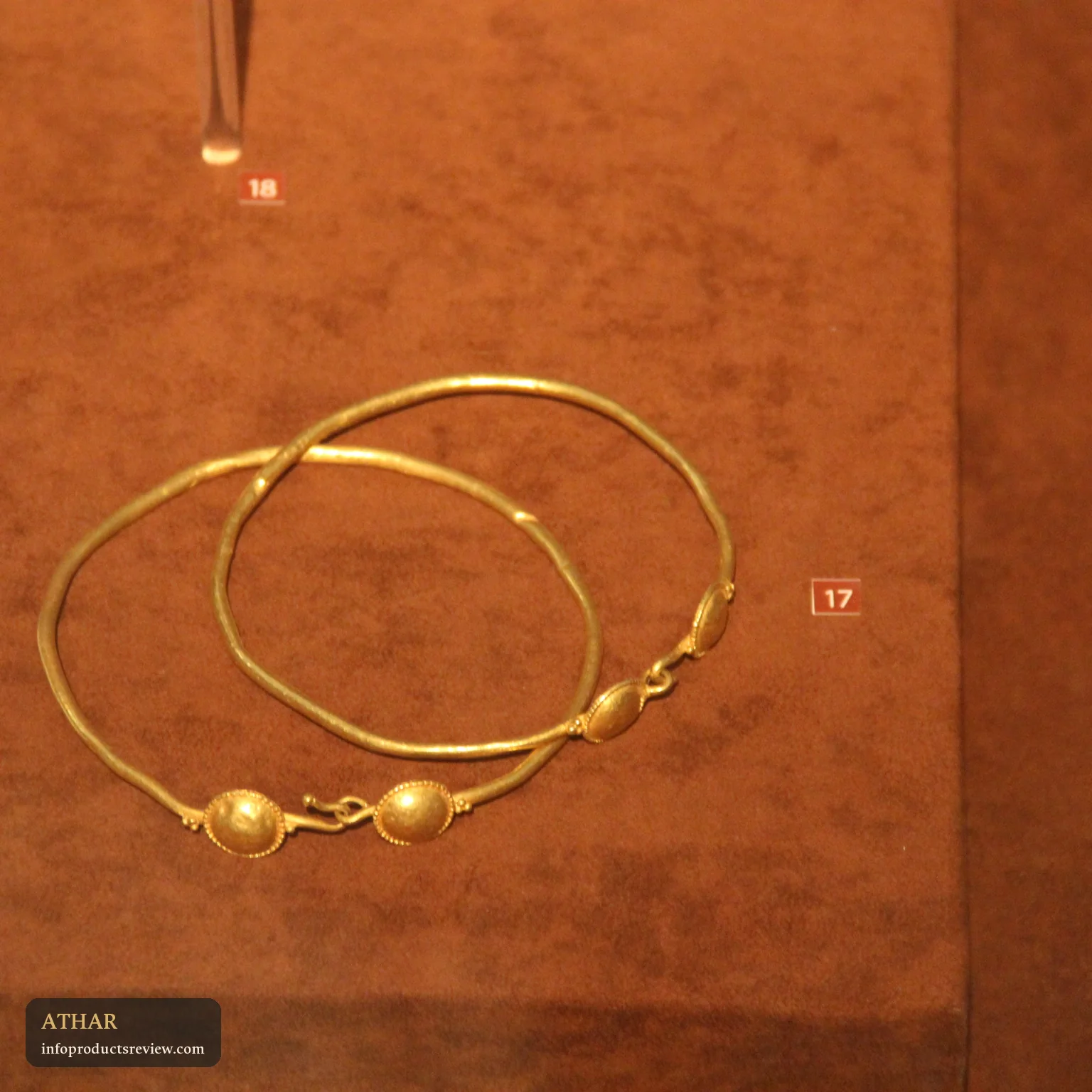
This is the best-known dream in the subject, and it’s established in both Sahih collections. In Bukhari:
While I was asleep I saw two gold bracelets placed on my hands. I was alarmed by them and disliked them, then I was permitted to blow on them and they flew away, and I interpreted them as two liars who would appear.
And in another narration there:
While I was asleep I was given the treasures of the earth, and two gold bracelets were placed on my hands. They weighed on me and troubled me, and it was revealed to me that I should blow on them; I blew and they flew away, and I interpreted them as the two liars between whom I stand.
Scholars explained why he ﷺ read it as two liars. Al-Muhallab says, as Ibn Hajar quotes on page 439:
Al-Muhallab said: this dream is not to be taken literally; it is a kind of parable. The Prophet ﷺ interpreted the bracelets as two liars because lying is putting something where it does not belong … and gold (dhahab) is derived from going away (dhahab), so he knew it was something that would leave him.
So the explanation gathers three reasons: bracelets aren’t men’s wear, so they were something placed where it didn’t belong, just as lying puts speech where it doesn’t belong; gold is forbidden for men to wear; and the word for gold, dhahab, shares its root with “going away”, which suited their flying off.
What does that mean for your dream? Two things:
- This was a particular dream interpreted by the one who saw it ﷺ, in a known historical setting: two false claimants in his own time. It isn’t a rule that everyone who sees bracelets has seen liars.
- The method itself is useful: look at where a thing sits, at its name, and at what fits the dreamer’s situation. That will serve you better than memorising a stock meaning.
Bracelets, armlets and anklets on a man
The reading in the text is plain and unfavourable, and it’s framed around a man, as we’ve seen:
Whoever sees two bracelets of gold or silver on himself meets with something unpleasant in what his hands own. If the bracelet is coloured, it is harsher and more difficult. If it is silver, that is better than gold. There is no good in a bracelet or an armlet. … Whoever sees an anklet of gold or silver on himself meets with fear, imprisonment or restraint.
Two bracelets are “something unpleasant in what his hands own”; coloured ones are worse; silver is better than gold; an anklet is “fear, imprisonment or restraint”. These are one interpreter’s opinions, of the grade we treat as a possible reading, not as a report of what will happen.
The calmer approach: if you saw this on yourself, ask what resembles it in your waking life. A commitment that restricts you, a position where you feel out of place, work that weighs on you. Don’t jump straight to expecting a calamity.
Necklace, earring and ring: the exceptions
Ibn Qutayba exempts three things for a man. The clearest is the necklace; on page 160 he writes:
Whoever sees a necklace on himself, of gold, silver, gems or beads, takes charge of an office and is entrusted with something.
Taking charge of an office and being entrusted with something is close to many men’s lives: responsibility at work, oversight of money, a family to provide for. If you saw a necklace and felt at ease, the closest reading is a trust you’re carrying. If it choked you, ask what’s beyond your capacity at the moment.
An earring on a man
An earring is one of the three exceptions, yet many men find it strange to see in a dream, because it isn’t part of how they dress today.
The chapter carries a report, with the author’s chain back to Muhammad ibn Sirin, that earrings seen on oneself are adornment and beauty among people. That’s a reading about how you appear and how you’re spoken of, not about wearing jewellery as such.
So we don’t read an earring on a man unfavourably; the text exempts it. The better question is what’s on your mind about your standing among people: at work, in a gathering, in a role you hold.
A gold ring in a dream
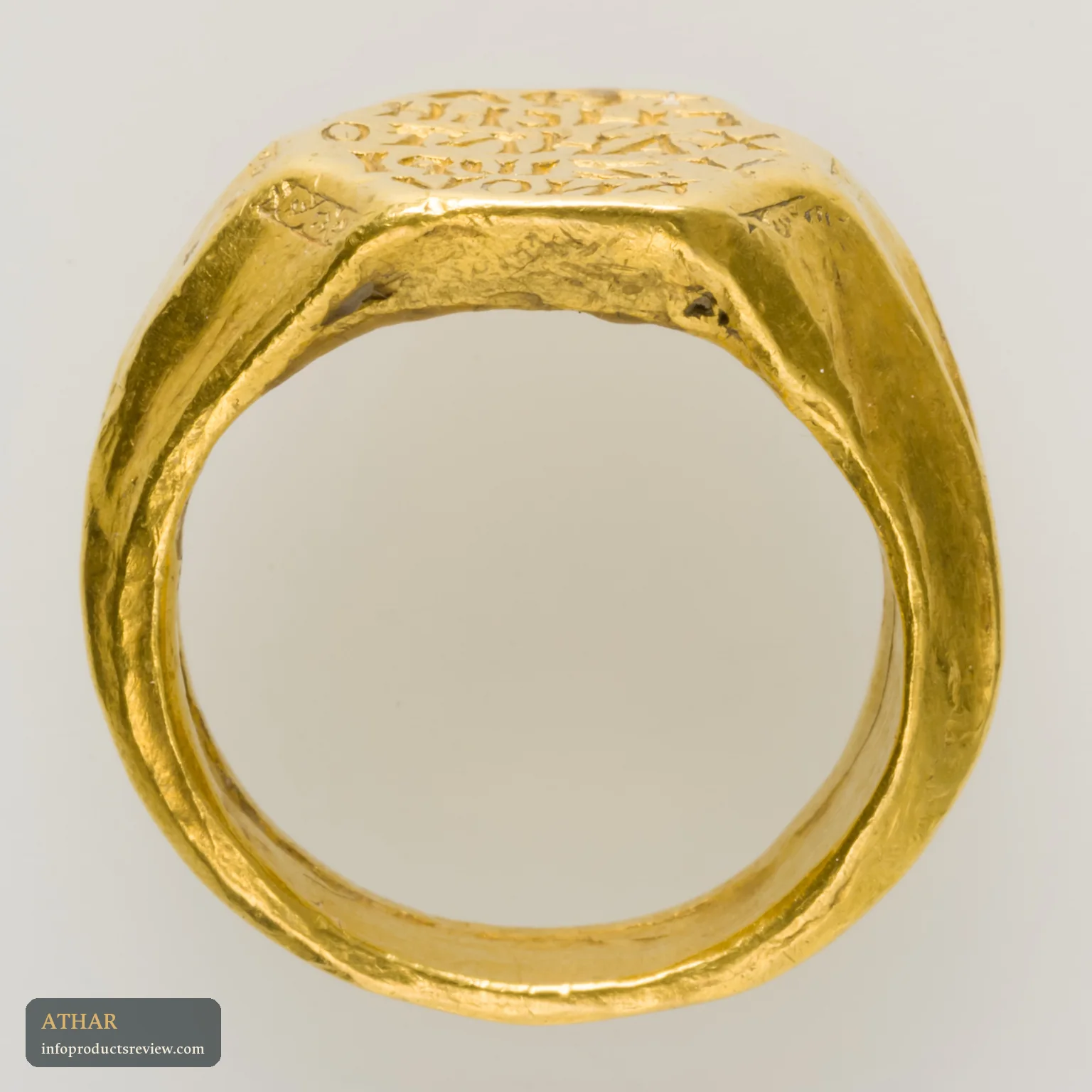
On page 161 Ibn Qutayba gives several readings of a ring, among them:
If the ring is of gold, what is attributed to him is unlawful. If it is of iron, brass or lead, he is of low standing.
That sentence needs careful reading.
It sits in the chapter on rings, not in a passage about men. The text doesn’t say “if a man sees it”, though the chapter’s dreamer is usually male.
It speaks of “what is attributed to him”. That means something ascribed to the ring’s owner, an affair or an authority or a possession, not the whole of his earnings or his wealth.
It’s a possibility within interpretation. Don’t read it as an accusation that your income is unlawful. If you genuinely have doubts about a transaction, take that question to people of religious knowledge while awake, rather than building it on a dream.
If the ring was a wedding band, that belongs to wedding scenes, covered in Dreaming of Your Own Wedding.
A belt decorated with gold
Ibn Qutayba opens the chapter with an image that belongs to men more than any other: the belt worn around the waist, on page 159:
A plain belt is a man's back, which he leans on and is strengthened by when it is around his waist.
It’s one of the few images in which gold on a man isn’t read unfavourably, because it isn’t jewellery being worn but decoration on something he uses. The lesson: where the gold sits in the image changes how it reads, which is exactly the logic behind the commentary on the bracelets.
Silver for a man: what the text says
In the same bracelet passage, Ibn Qutayba says a silver bangle is better than a gold one, and on the next page that dirhams are better than dinars.
That’s an explicit comparison between the metals in a man’s case, consistent with the chapter’s general reading. Even so, the text doesn’t call silver good in the absolute, or a good omen. Its point is that silver is the lighter of the two.
Worked gold, unworked gold and bars
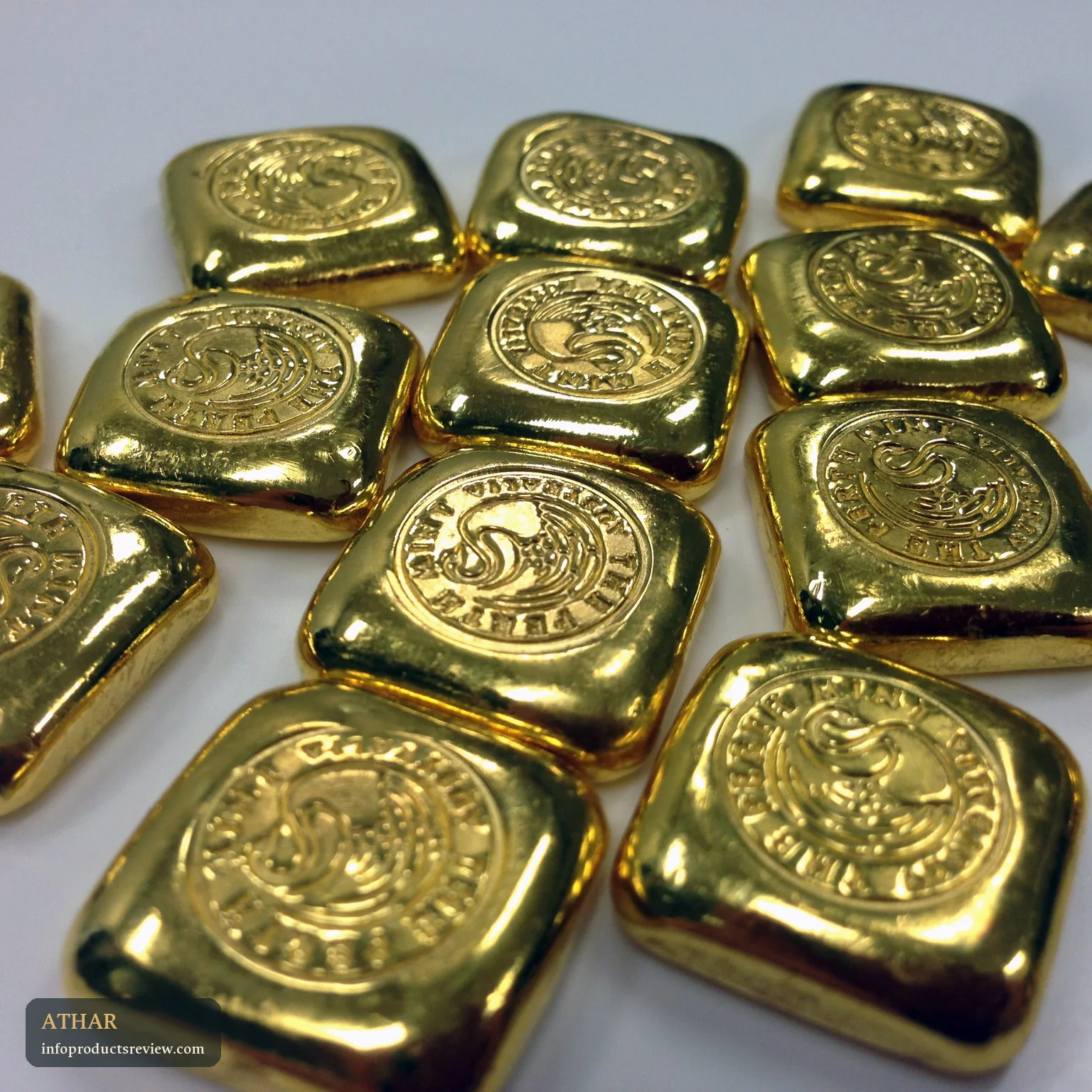
One of the most precise distinctions in the chapter is on page 163:
Gold that has not been worked is a loss, which is taken from its name; if it has been worked, it is weaker in harm, because crafting gives it another name. And dirhams are better than dinars.
On the same page he reports, with his chain, that Muhammad ibn Sirin disliked gold unless it had been worked. The reading rests on the name: gold, dhahab, from going away.
Practically: if you saw a bar, nuggets or unworked metal, the classical reading is more cautious than for a finished piece. That’s interpretation, not investment advice and not a forecast of loss. Anyone weighing buying gold as savings should decide on the numbers.
Coins, dinars and small change
If your dream had more cash than jewellery, the same chapter has separate readings, reported with a chain:
He used to say of dirhams: if they are sound, that is good speech; if they are poor, that is bad speech. And of dinars: documents that arrive, or deeds he receives … Small change is poor speech and clamour.
Notice that they’re about speech, trust and disputes far more than wealth: sound coins are good words, poor ones bad words, dinars are documents or deeds, and coins handed over in a purse mean a secret entrusted. Money in a dream isn’t a promise of money awake.
A crown
On page 164 he writes that whoever sees a crown of gold or gems on himself attains great and remarkable authority. A crown is at root an image of standing, which may suit a man waiting on a promotion or occupied with a position at work.
We stop where the text stops: it doesn’t mean a promotion will happen, or a post will come. Interpretation is conjecture, as the author of Al-Qawa’id al-Husna states:
Interpretation is analogy, comparison and conjecture that cannot be treated as certain, though one may take comfort in it; no one may swear to what it foretells unless its truth appears in waking life.
Being given gold
You might dream of someone handing you gold: your father, a man of standing, someone you don’t know. The nearest thing in the chapter is what Ibn Qutayba says about a ring, on page 162:
Whoever sees that a king or ruler gave him his ring and he wore it, and he was fit for what that king holds, attains part of his authority; otherwise it returns to the people of the one who saw it, or his kin, or his namesake among people, or his counterpart among them.
That’s a reading about a ring specifically, not about any gold that changes hands. But it shows the method: a gift is read by who gave it and by the recipient’s fitness, not by the metal alone.
If the giver was a man you know, don’t ask the dream for news about his intentions towards you, and don’t build an expectation about a relationship or a job on it.
Buying gold for your wife, or giving it as a gift
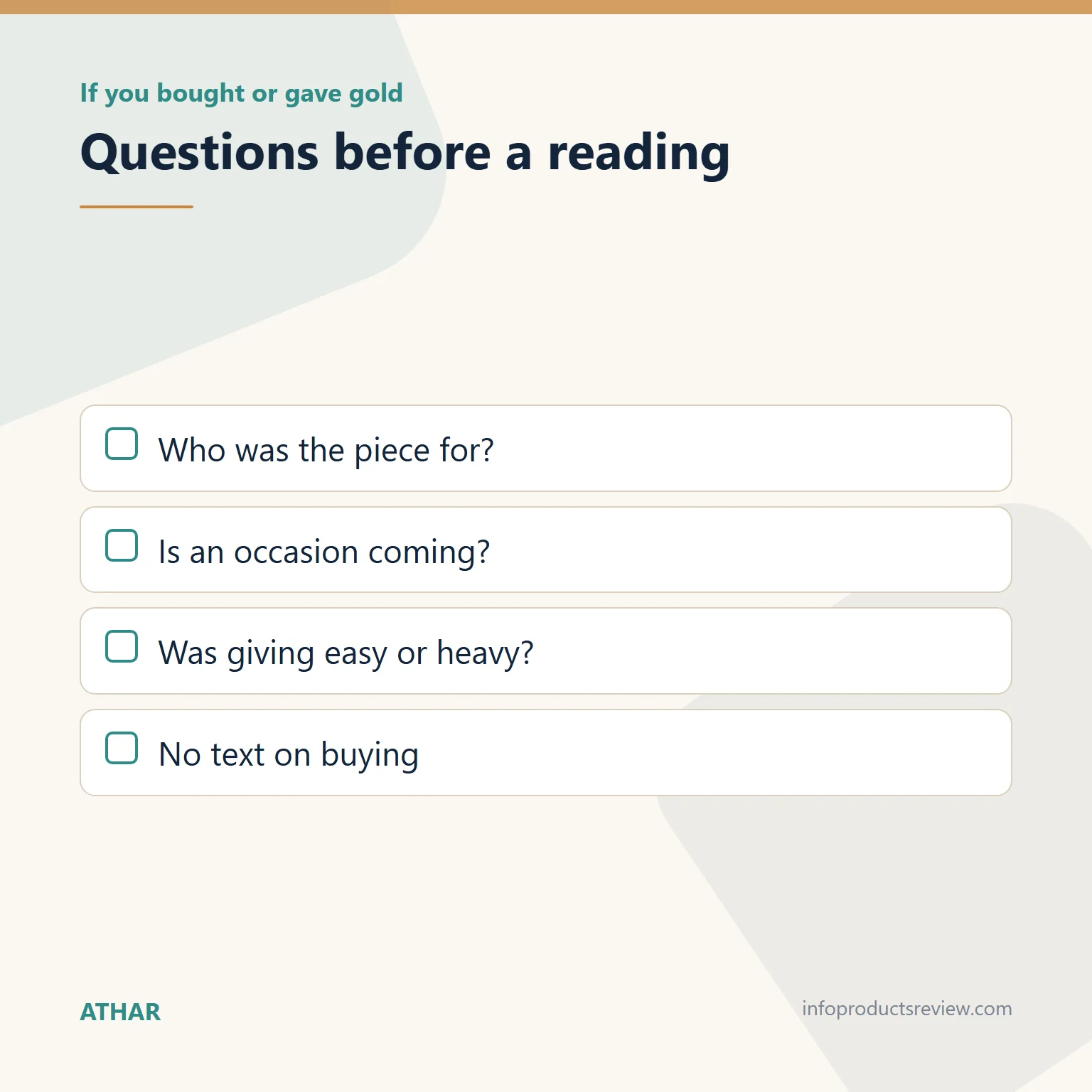
One of the commonest gold scenes for men is buying or presenting a piece: a bridal set before a wedding, a gift for an occasion, something offered after an argument. No verified text covers it.
The closest reading is that it reflects what’s actually on your mind: a decision you’re weighing, a wish to please someone you love, or a financial worry tied to something coming up. Look at the feeling: was the giving easy, or heavy and calculated?
If you’re preparing for a wedding
A man approaching marriage sees gold often, for an obvious reason: the bridal set, the dowry, the list of things to prepare, the question of what’s enough. When your day is arithmetic, your night usually echoes it.
No verified text makes gold in this situation a sign that a marriage is near or that it will falter. What these dreams usually carry are understandable feelings: fear of falling short, pressure from expectations, or a wish to do it well.
Gold, your children and your household
You might see gold you’re keeping for your children, your wife’s jewellery in your hands, or pieces inherited from your parents. These are common scenes for men, who often feel responsible for what’s kept at home.
No verified text covers them. The closest reading is that they picture that responsibility itself, which fits Ibn Qutayba’s reading of a necklace as something entrusted.
If there’s a real family dispute over an inheritance or a right, that’s settled by rights, accounts and qualified scholars. A dream is never evidence in it, and must never be used as an argument against anyone.
Gold too heavy or too much to carry
A recurring image is abundance: chests, bags, jewellery filling both hands, with a sense of not being able to carry it. The chapter says nothing about quantity or weight.
But the hadith itself has something like it: “I was given the treasures of the earth”, then “they weighed on me and troubled me”. In the prophetic dream, abundance wasn’t joy but a burden, because what was placed in his hands was out of place.
So ask whether the abundance in your dream felt like ease or like weight. If weight, look at what you’ve been loaded with: responsibilities, expectations, debts. If ease, don’t turn it into a promise of money.
Gold, your work and your income
Men often ask whether the dream says anything about their income. The chapter doesn’t speak about income directly at all. It speaks about office, trust, speech, disputes and standing.
So if you’re in a demanding stretch at work, waiting on a contract, or thinking about changing jobs, that may show up at night in these images. The most useful thing is to read the image through your situation: a necklace is a trust, a tight bangle is constriction, a crown is standing. Don’t ask the dream to answer your decision.
If you work with gold or money
A goldsmith, a currency dealer, or anyone whose trade involves gold will see these images more often, simply because he lives them. The rule that the dreamer’s situation matters means his dream shouldn’t be read like the dream of a man who has never handled gold.
If that’s you, most of these dreams are likely the mind replaying the day. What deserves attention is what departs from the ordinary: a strange image, a strong feeling, a scene that doesn’t resemble your work.
Selling gold or pawning it
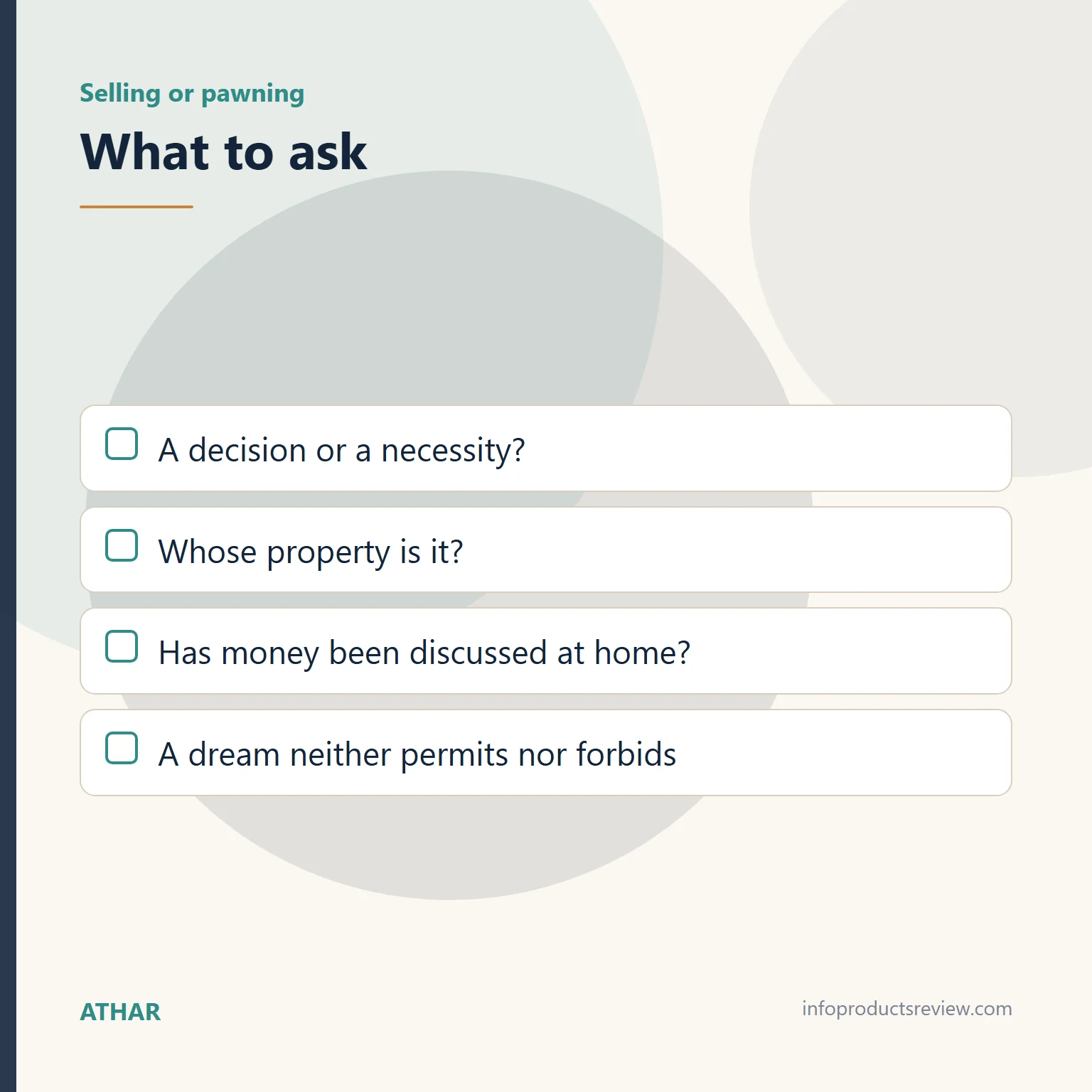
Some men dream of selling gold, pawning it, or carrying it to a goldsmith. No verified text covers these scenes.
They’re usually dreams of a phase: money is tight, a commitment is near, or there’s thinking about what to do with what the family has put aside. Start from the feeling: was selling a comfortable decision, or a heavy necessity?
A dream is neither permission nor prohibition. What concerns a wife’s or a family’s property has its own rules while awake: her consent, her right, and proper consultation. No dream settles that.
Gold lost or stolen

Gold you were keeping going missing, or being stolen from your home, is an unsettling scene. We found no verified text on loss or theft.
Useful questions: what exactly was lost, whose was it, and did you feel responsible for it? Many of these dreams come to men who hold someone else’s property or feel accountable for their family. That sits closer to the necklace-as-trust reading than to any news of loss.
And again: if you saw someone you know taking it, don’t build a suspicion on that. A dream is not evidence about anyone.
Finding gold or treasure
Some men dream of finding gold in the ground, or buried treasure. The chapter has no verified text on finding gold.
In fairness, these dreams are common in times of financial pressure or waiting, and they usually picture a wish for relief. They shouldn’t be read as news of money, and nothing, least of all effort, should be suspended on the strength of them.
Taking the gold off in the dream
Men ask about seeing themselves remove a bangle or a chain, throw away a ring, or refuse to wear what’s offered. No verified text singles this out.
But look at the hadith itself: “they weighed on me and troubled me”, and then they were blown away. At root it’s a scene of being relieved of something that was out of place. That’s close to what a man lives when he leaves a commitment that doesn’t suit him, or steps back from a situation that embarrassed him.
We don’t say that taking gold off is good news of imminent relief. We say the image describes unburdening, and that asking what you want to put down in waking life is more useful than waiting for an event.
Seeing gold on another man
You might see the gold not on yourself but on someone else: a brother, a colleague, a stranger, wearing a chain or a ring or a bangle. We found no text that singles out this scene.
Useful questions: did you know him? Was there anything in the scene that concerned you, or were you only watching? And how did you feel: disapproval, admiration, indifference?
One important limit: seeing gold on a man you know is never a verdict on his faith or his money. A dream doesn’t reveal people’s states, and it mustn’t be passed on to others as though it did. One of the worst things done with interpretation is turning it into backbiting and suspicion.
When someone tells you your dream proves something unlawful
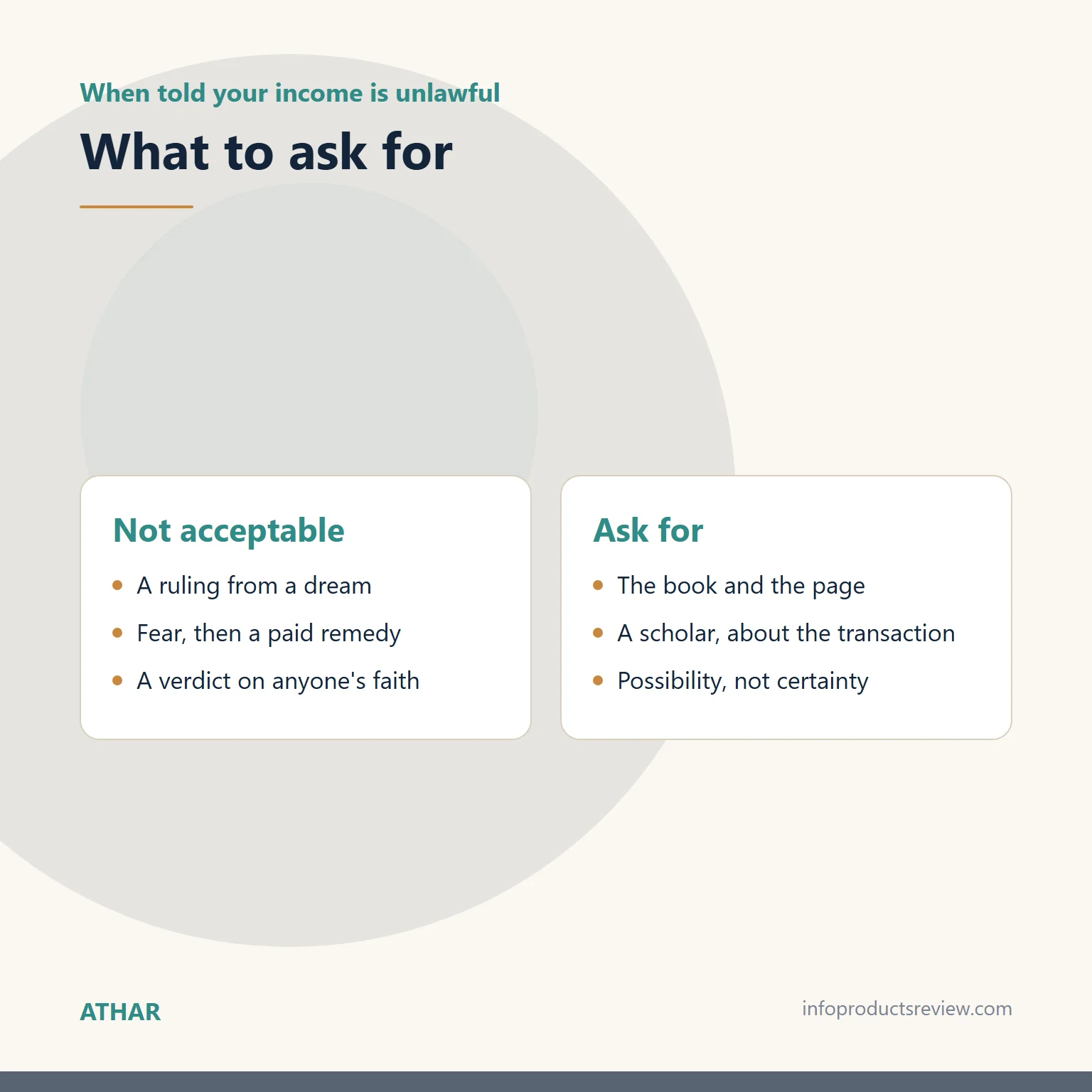
It happens often: a man mentions his dream and gets a flat verdict back. Your money is doubtful, your work is unlawful, you owe expiation. That can sit in the heart of a God-fearing man and trouble him for months.
The calm answer has three parts:
- A dream isn’t legal evidence for a ruling, and it creates neither prohibition nor permission.
- Interpretation itself is conjecture, as its own practitioners state, and can’t be treated as certain.
- If you have a genuine doubt about a transaction, put that transaction to qualified scholars: its form, its conditions, its consideration. That’s the path, not a dream.
If the dream worries you more than it should
Some men wake from a dream like this with a religious or financial anxiety, then spend days reviewing every transaction and rereading every page. That anxiety can do more harm than the dream.
The measure is simple: if something was already on your conscience before the dream, the dream adds nothing to it, and the remedy starts with that matter itself. If nothing was, don’t manufacture an accusation against yourself out of a dream.
If the dream keeps coming back
Repetition doesn’t make a dream truer or bring it closer. Usually it repeats because its cause while awake is still there: waiting, financial pressure, a heavy responsibility.
Sometimes it repeats because the man himself now thinks about the dream every night before sleeping, and so summons it. That’s a familiar loop: searching feeds preoccupation, and preoccupation brings the image back. The way out is practical: treat the cause, search less, and stop making the dream a daily subject.
The method that will actually help you
The most useful thing in the commentary on the bracelets isn’t the meaning; it’s the method. The commentators looked at three things:
- Where the thing sits: bracelets on a man’s arms, which are women’s ornament, so the thing is out of place.
- The name of the thing: gold from “going away”, so it suited them to fly off.
- The dreamer and his time: a prophet in an era when two men claimed prophethood.
Try those three on your own dream. Where was the gold, and was it in its place? What does the thing’s name evoke? And what is your situation these days? You’ll arrive at a reading closer to you than any ready-made sentence, and the result stays conjecture, which is honesty rather than weakness.
How the dream felt
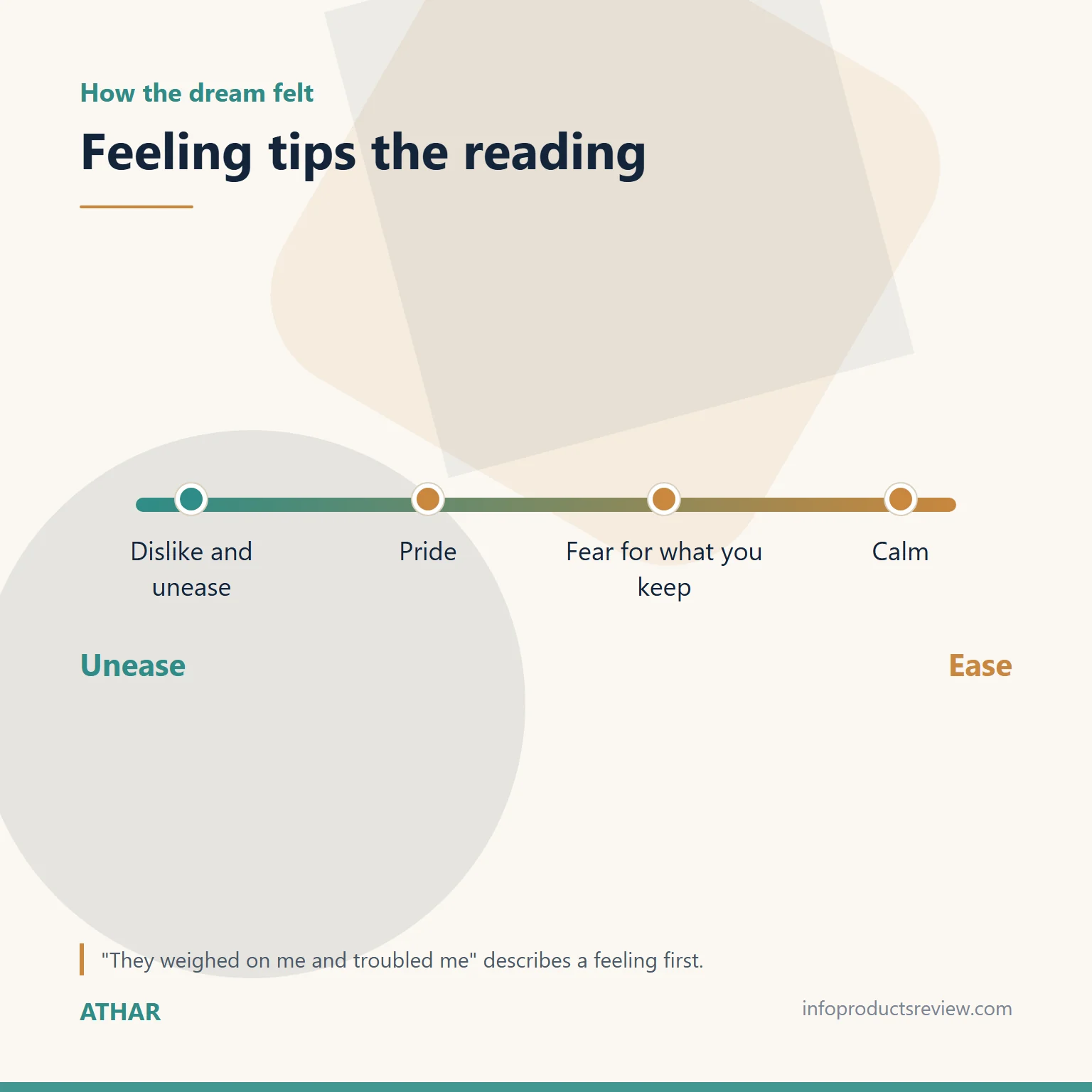
- Dislike and unease: closest to the men’s passage, and to “they weighed on me and troubled me”.
- Pride: ask what’s on your mind about standing or visibility.
- Fear for what you’re keeping: close to a sense of responsibility.
- Calm: don’t load it with more than it carries, and don’t make it a promise.
- Nothing much: the gold may have been a passing detail.
How this chapter is read at all
The rules books say interpretation looks at the dreamer’s situation:
Interpretation differs with people's conditions and standing: one must look at the dreamer's state and standing, and build the fitting interpretation on that.
Which means one image is read two ways for two different men: a gold trader’s dream isn’t a man’s who has never handled it, and a man preparing for marriage isn’t a man paying off a debt. That’s what the dreamer’s state means, not a “man” label with stock meanings attached.
Interpreters also distinguish a dream from the self talking to itself:
As for the self talking to itself, it belongs to the body: desires and feelings held back in the unconscious that wake up in sleep, and they have no interpretation.
So if gold was part of your day in talk, arithmetic or wishes, your dream is most likely this kind, and needs no interpretation.
What if you don’t remember the details?
If all that’s left is a general impression, gold and a feeling, that’s enough. Read the feeling, and don’t add to the dream what you didn’t see. What spoils a reading fastest is a face, a colour or a sentence summoned from memory and then interpreted.
Common claims that need correcting
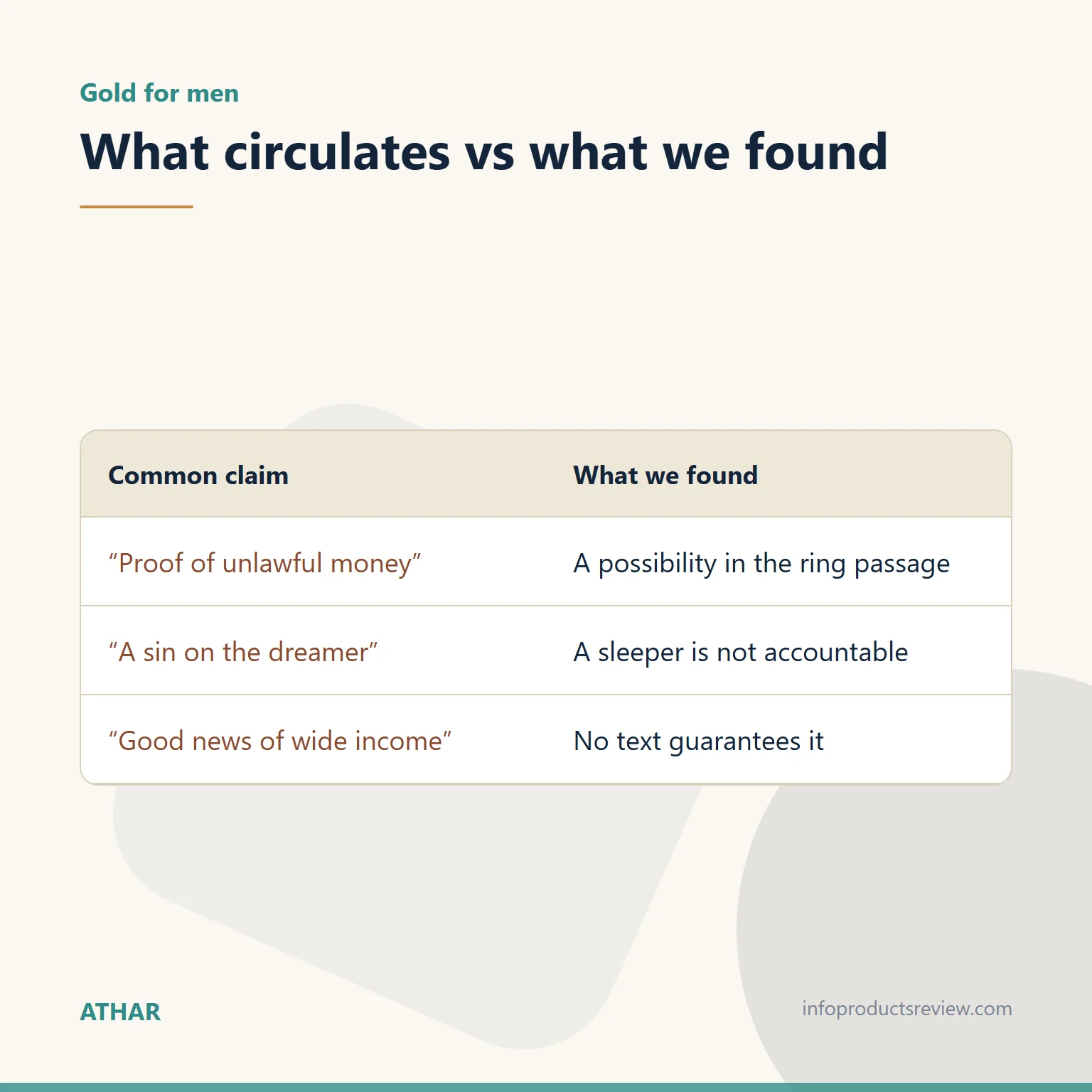
| What you’ll often read | What we found in verified sources |
|---|---|
| Gold in a man’s dream means unlawful money | The text reads a gold ring as “what is attributed to him”; a possibility, not a verdict on your earnings |
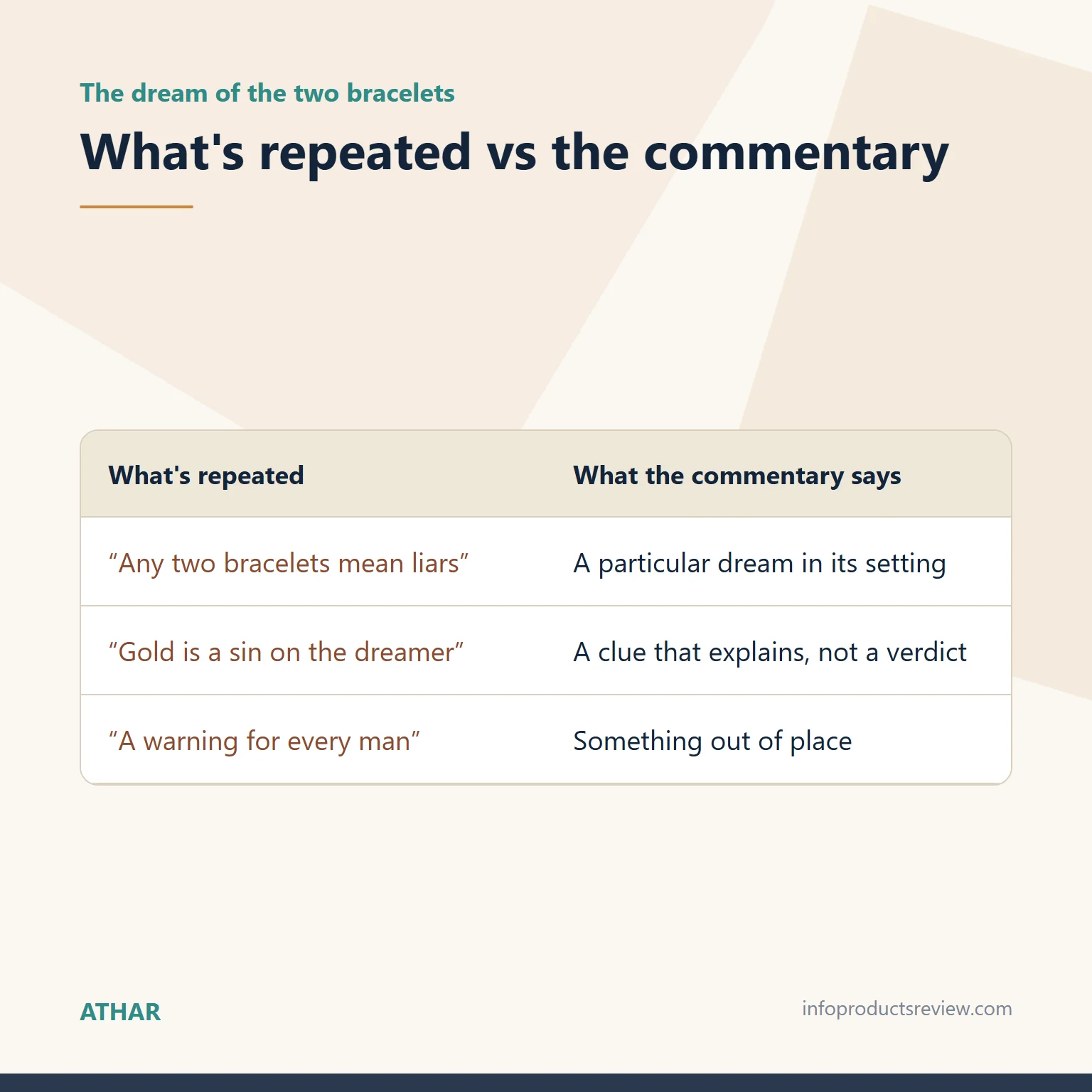
| Two bracelets mean liars, for anyone | That was the Prophet’s ﷺ dream, read in its own setting, not a general rule |
| The dream proves you committed something forbidden | No text says so, and seeing isn’t doing |
| Gold for a man is good news of abundant income | Nothing guarantees that; the readings are about office and speech, not wealth |
| Losing gold means a loss is coming | No verified text on loss |
| The dream reveals who is stealing from you | A dream is not evidence about anyone |
What this dream can’t tell you
- It can’t judge your faith or establish a sin against you.
- It can’t announce money coming or a loss occurring.
- It can’t expose unlawful earnings. A genuine doubt goes to scholars and to your own accounts.
- It can’t accuse anyone of theft, betrayal or envy.
- It isn’t a basis for a decision about work, marriage, or buying and selling.
What to do after the dream
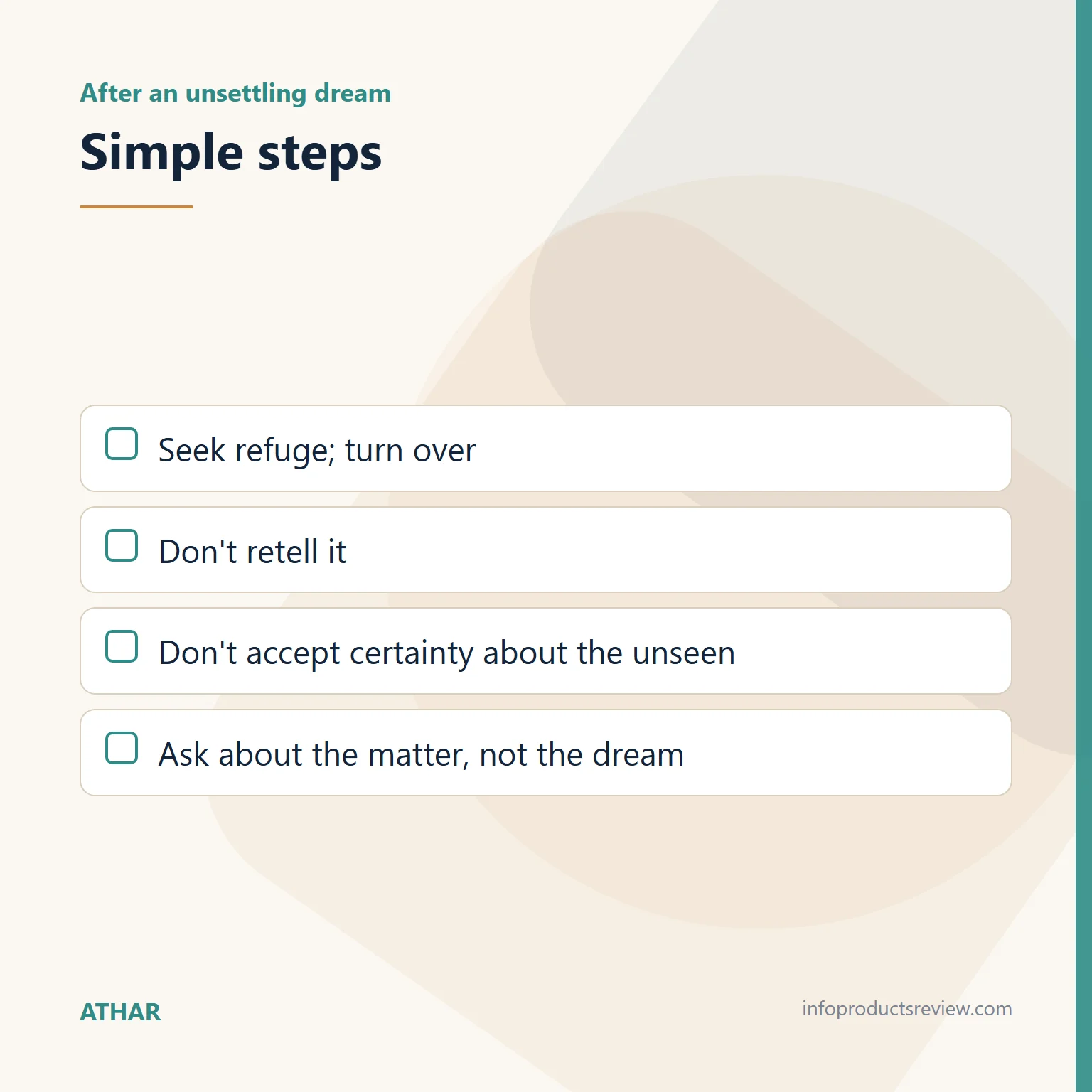
If the dream was good, thank God and don’t turn it into a waiting game. If it was unsettling, the practice is clear. In Bukhari:
And in Muslim, with more detail:
- Seek refuge in God from the harm of what you saw, and turn onto your other side.
- Don’t retell an unsettling dream.
- Don’t hunt for the worst reading, and don’t accept certainty about the unseen.
- If your worry about your income is genuine, ask scholars about that specific matter, not about your dream.
How to describe your dream so it can be read
- What you saw: a bangle, an anklet, a necklace, a ring, a crown, a bar, coins?
- Who was wearing it: you, someone else, or was it in your hand?
- What you did with it: wore it, took it off, gave it away, sold it, lost it?
- How you felt: dislike, pride, fear?
- What’s on your mind: work, marriage, debt, responsibility?
What you can take away with confidence
First: you aren’t held to account for a dream. Seeing isn’t doing, it creates no ruling, and it exposes no sin.
Second: the only clear distinction in the texts is between men and women, and most of the harsh readings in circulation began in the men’s passage. If you read them on a page addressed to women, they’ve been moved out of place.
Third: the most useful thing in the chapter is the method: where the thing sits, what its name evokes, and the dreamer’s situation. It gives you a reading that fits you, and keeps you away from certainty.
Examples
Composite examples built from common scenarios, not readings of any real person’s dream.
He saw two bangles on his wrists and disliked them
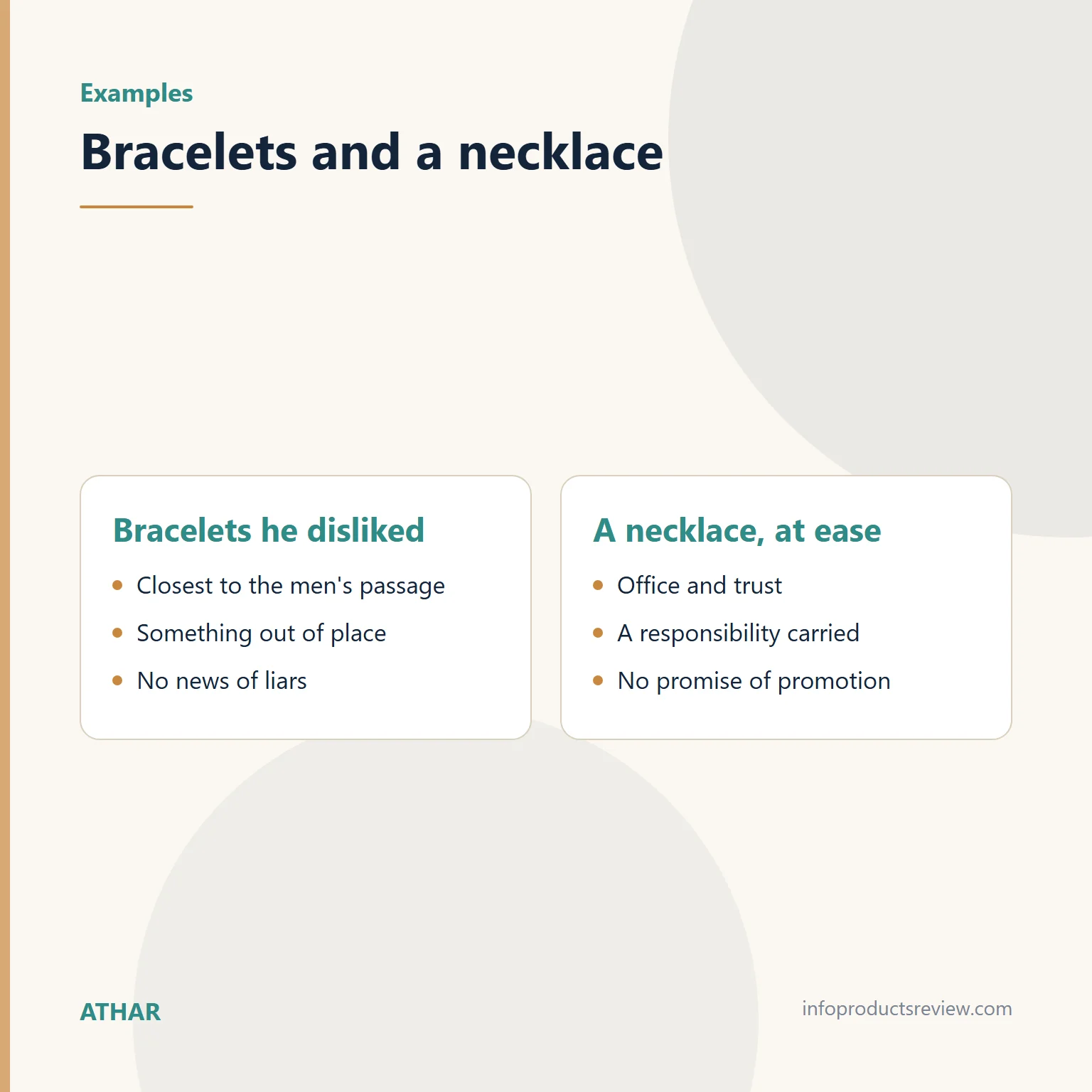
As close as a dream gets to the men’s passage, and to “they weighed on me” in the hadith. The nearest reading is something he feels is out of place in his life, not news of liars.
A gold necklace before an expected promotion
A necklace is office and trust. The closest reading is a responsibility coming or already carried. It doesn’t mean the promotion will happen.
A gold ring, and he woke worried about his income
The text reads a gold ring as what is attributed to him being unlawful: a possibility in interpretation, not a verdict. A genuine doubt about a transaction goes to a scholar while awake.
Carrying a gold bar
Unworked gold is read cautiously by Ibn Qutayba. It doesn’t mean loss, and it’s no signal to buy or sell.
Buying gold for his wife
No text on buying. The context is usually an occasion, a wish to please, or the money worry attached to it.
Sound coins counted in front of him
In the reported saying, sound coins are good speech. Something to take comfort from around an agreement or a conversation, not a promise of money.
The household’s gold stolen
No text on theft. A sense of responsibility for what he keeps explains the scene best. No one is accused over a dream.
A crown on his head
A crown is standing and authority in the text. It may suit a man occupied with his position. It isn’t news of a post.
A gold dream after a day following prices
Most likely the mind replaying the day, needing no symbolic reading.
An anklet he couldn’t remove
For a man the text reads an anklet as fear, imprisonment or restraint. The nearest reading is a commitment that constrains him; asking where it comes from beats waiting for misfortune.
A belt decorated with gold
A belt in the text is a man’s back, which he leans on; decorated, the reading takes on money. Closer to support or strength he feels than to a promise of wealth.
He saw a friend wearing gold and disapproved
No text covers it, and it’s no verdict on his friend’s faith. Retelling a dream like this can turn into backbiting, so it’s better left alone.
Quick table: the detail and the closest reading
| Detail | What verified sources say | How to read it |
|---|---|---|
| Jewellery on a man in general | Only a necklace, an earring and a ring suit him (p. 162) | The distinction is by sex, not marital status |
| Two gold bracelets | Unpleasant in what his hands own (p. 162); the Prophet’s ﷺ dream in Bukhari and Muslim | An interpretive opinion; the dream belongs to its own setting |
| Anklet | Fear, imprisonment or restraint (p. 162) | Constriction or a commitment, not a warning of calamity |
| Necklace | Office and trust (p. 160) | Responsibility, by your situation |
| Gold ring | What is attributed to him is unlawful (p. 161) | A possibility, not a verdict on your earnings |
| Unworked gold | Loss, taken from its name (p. 163) | With caution, not as news of loss |
| Coins | Speech, documents and trust (p. 163) | About words, not wealth |
| Crown | Great authority (p. 164) | Standing, not news of a post |
| Loss, theft or finding | No verified text | Through context and feeling |
Related dreams
- Money in a Dream: Speech, Documents and Trust
- A Gold Ring in a Man’s Dream: Making, Stone and Sealing
- Dreaming of Gold as a Single Woman
- Dreaming of Gold as a Married Woman
- Dreaming of Your Own Wedding
- ATHAR’s guide to dream interpretation
Frequently asked questions
What does seeing gold in a dream mean for a man?
For Ibn Qutayba, only a necklace, an earring and a ring suit a man; bracelets and anklets are read unfavourably. These are interpretive opinions, read through the dream’s details and the dreamer’s situation.
Is wearing gold in a dream forbidden for a man?
Seeing isn’t doing, and no one is held to account for what he sees in his sleep. The ruling concerns wearing gold while awake; commentators mentioned it while explaining the Prophet’s ﷺ dream, and it doesn’t become a fixed meaning for every dream.
Does a gold ring in a dream mean unlawful money?
Ibn Qutayba writes that if the ring is gold, what is attributed to him is unlawful. It’s a possible reading, not a verdict on your income. A genuine doubt should be put to qualified scholars as a question about the transaction itself.
What do two gold bracelets mean?
The Prophet’s ﷺ dream is established in both Sahih collections, and he read it as two liars of his time. Ibn Qutayba reads bracelets on a man as something unpleasant in what his hands own. Neither makes every bangle in every dream a sign of a liar.
Is gold in a man’s dream good news about income?
No text guarantees that. The chapter’s readings turn on office, trust, speech and standing, not on wealth.
What’s the difference between worked and unworked gold?
For Ibn Qutayba, unworked gold is a loss taken from its name, while worked gold is weaker in harm. It’s a reading based on the name, not a forecast.
I saw a gold necklace on myself. Is that unfavourable?
A necklace is one of the exceptions for a man, read as office and trust. So the closest reading is a responsibility you carry, and how it felt tips the balance.
What does losing gold mean for a man?
We found no verified text on loss. Read it through what was lost and your sense of responsibility for it, and don’t accuse anyone over it.
Is gold read differently for men and women?
Yes, and it’s the one clear distinction in the texts: all jewellery is good for women, while only a necklace, an earring and a ring suit a man.
Does the dream indicate envy or magic?
No. Nothing in the verified sources makes a gold dream a sign of either.
I dreamed of gold after following its price all day. Does it mean anything?
Most likely it’s the mind replaying your day, and it needs no symbolic reading.
Is this interpretation definitive?
No. These are possible meanings from texts we checked on the page, and interpretation is conjecture you can take comfort from, not certainty.
In summary
- The distinction in the texts is between men and women, not between single and married.
- For Ibn Qutayba, only a necklace, an earring and a ring suit a man.
- The dream of the two bracelets is established in Bukhari and Muslim, its commentary explains its reasons, and it isn’t a rule for every man.
- A waking ruling doesn’t become a dream interpretation, and no self-accusation should be built on a dream.
- Loss, finding and buying have no text, and are read through context and feeling.
If you take one thing from this page: you aren’t held to account for a dream, and what the interpretation books say about gold on a man is conjecture to take comfort from, not a verdict on your faith or your income.
Written and reviewed by: the ATHAR editorial team. Classical and hadith passages were checked against scans of the original printed pages of the editions cited. Translations from Arabic are our own.
Please note: this page sets out possible meanings, not certainties, and it is not a religious ruling. Questions of Islamic law should be put to qualified scholars.