

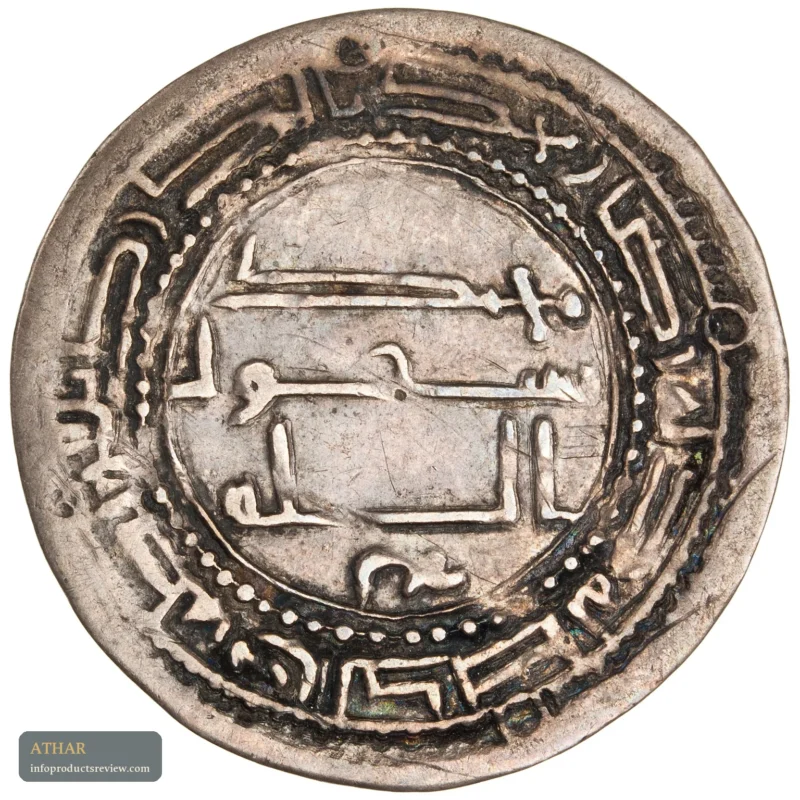
You dreamed about money: coins being counted in front of you, notes in your hand, a wallet you found, cash that went missing and you searched for, or someone handing you a sum. Then you woke up asking what money means in a dream, and whether it points to income on the way.
Here’s the short answer, and it surprises most people. In the classical dream books, money is rarely read as wealth. It’s read as speech. Sound coins are good words, poor ones bad words, dinars are documents that arrive or deeds received, and small change is poor speech and clamour. These readings are carried with chains of narrators in the sources we checked page by page.
This page sets out what the texts actually say about coins, and says plainly where there’s nothing: finding money, counting it, losing it, and modern banknotes. Then it gives you something better than a promise: a way to read your own dream, and the limits it can’t cross.
The bottom line
- Dirhams are speech: sound ones good words, poor ones bad words, coins out in the open words and disputes.
- Dinars are documents or deeds: papers that arrive or rights recorded, not cash received.
- Small change: poor speech and clamour, the lowest reading in the chapter.
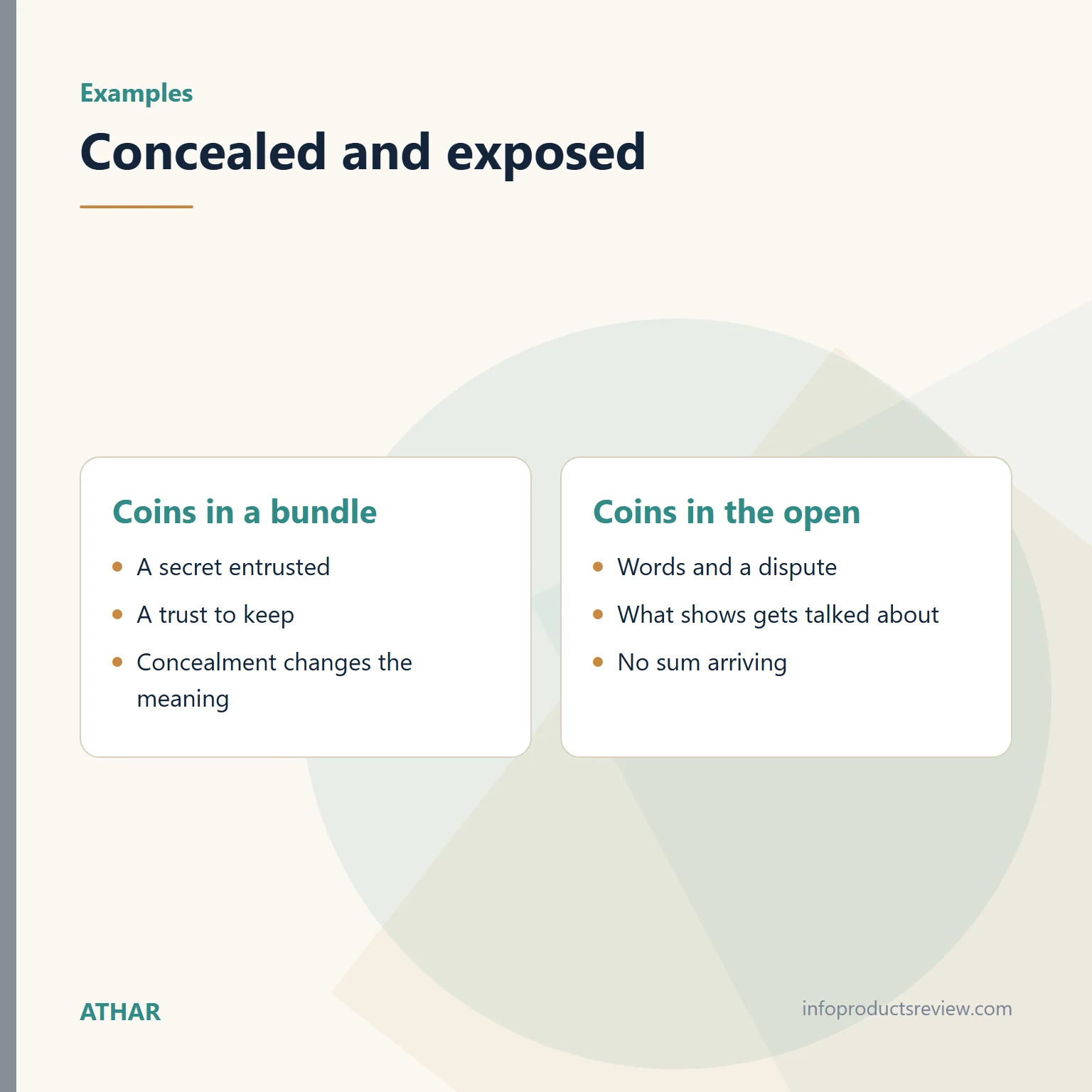
- Coins in a purse: whoever is given coins in a bag or bundle has been entrusted with a secret.
- “Dirhams are better than dinars” in Ibn Qutayba’s text — a preference inside the interpretation, not a promise of money.
- What has no text: counting money, finding it, losing it, and modern paper currency. All read through context and feeling.
What this page covers
- The bottom line
- Why money turns up in dreams so often
- The core text: money as speech, not income
- Sound coins and poor ones
- Dinars: documents and deeds
- A single dinar or a single dirham
- Coins out in the open: words and disputes
- Coins in a purse: a secret entrusted
- Small change: poor speech and clamour
- A dirham is silver and a dinar is gold
- “Dirhams are better than dinars”
- Many ingots: treasures
- Why does the tradition read money as speech?
- Receiving, taking, and being handed something concealed
- Counting money
- Finding money
- Money lost or stolen
- An empty wallet or a hole in your pocket
- Giving money, and charity
- Giving money to children
- Debt: owing, or being asked to pay
- Lending and borrowing
- Money while travelling, or in an unfamiliar place
- Banknotes and modern currency
- Counterfeit money
- Wallets, bundles and safes
- Buying and selling
- Money in someone else’s hands
- Money and work: salary and wages
- Money among relatives
- A great deal of money
- When the dream is about a number, not money
- “Does the dream mean my money is unlawful?”
- When someone tells you it’s glad tidings of money
- Does the reading change with the dreamer?
- Telling what’s reported from what’s been added
- If the dream keeps coming back
- If the dream worried you
- What if you don’t remember the details?
- Getting something practical from it
- How the dream felt
- Rules that govern this reading
- Common claims that need correcting
- What a money dream can’t tell you
- What to do after the dream
- How to describe your dream so it can be read
- What you can take away with confidence
- Examples
- Sound coins counted out for him
- Torn or debased money
- Handed a sealed envelope of cash
- A mass of small change scattering noisily
- Counting money that never finishes
- Finding a wallet in the street
- His money stolen while he watched
- Gold dinars set before him
- A money dream after a day of accounts
- Seeing himself give charity
- A locked safe whose contents he doesn’t know
- Money turning into worthless paper
- A colleague counting money while he watches
- A great deal of money, and he woke uneasy
- His brother demanding money from him
- His salary handed over in a sealed envelope
- Quick table: the detail and the closest reading
- Related dreams
- Frequently asked questions
- What does seeing money in a dream mean?
- Is seeing money glad tidings of income?
- What does finding money in a dream mean?
- What does losing money or having it stolen mean?
- What do sound and poor coins mean?
- What do dinars mean in a dream?
- I was given money in a bag. What does that mean?
- Does a single dirham indicate a child?
- What do banknotes mean in a dream?
- Does the dream mean there’s something unlawful in my income?
- I dreamed of money after a day of accounts. Does it mean anything?
- Is this interpretation definitive?
- In summary
- Sources and references
Why money turns up in dreams so often
Before looking for a symbol, look at your day. Money is on most people’s minds: a salary due, a bill landing, a debt to clear, a price rising, accounts checked before bed. If you fall asleep with a number in your head, it’s no surprise to see a number.
General health references on sleep note that the day’s events often invade our thoughts at night, and that people living with anxiety are more prone to frightening dreams:
So start here:
- Did you go over an account, a bill or a debt yesterday?
- Are you waiting on a sum, a payment or a financial decision?
- Has money been discussed at home?
- Did you actually handle cash during the day?
If the answer is yes, your dream is most likely an echo of that rather than a message to decode.
The core text: money as speech, not income
In Ibn Qutayba’s Ta’bir al-Ru’ya, in the edition by Ibrahim Salih, printed page 163, there’s a report the author carries with his chain of narrators back to Muhammad ibn Sirin, containing the readings of coins:
He used to say of dirhams: if they are sound, that is good speech; if they are poor, that is bad speech. And of dinars: documents that arrive, or deeds he receives. Dinars, if they are five, may be the five prayers, and a single dinar may be a child. Dirhams out in the open are words and a dispute. If he is given dirhams in a bag or a bundle, a secret has been entrusted to him, and a single dirham may be a child. Small change is poor speech and clamour.
This report is the foundation of the chapter, and it holds five distinct readings that we’ll take one at a time. But notice the idea running through them: coinage here is a medium of exchange between people, not a measure of wealth. A coin is given and taken as a word is given and taken, and its soundness or poorness matches the soundness or poorness of speech.
So the first correction this page makes is that a dream about money isn’t necessarily about money.
Sound coins and poor ones
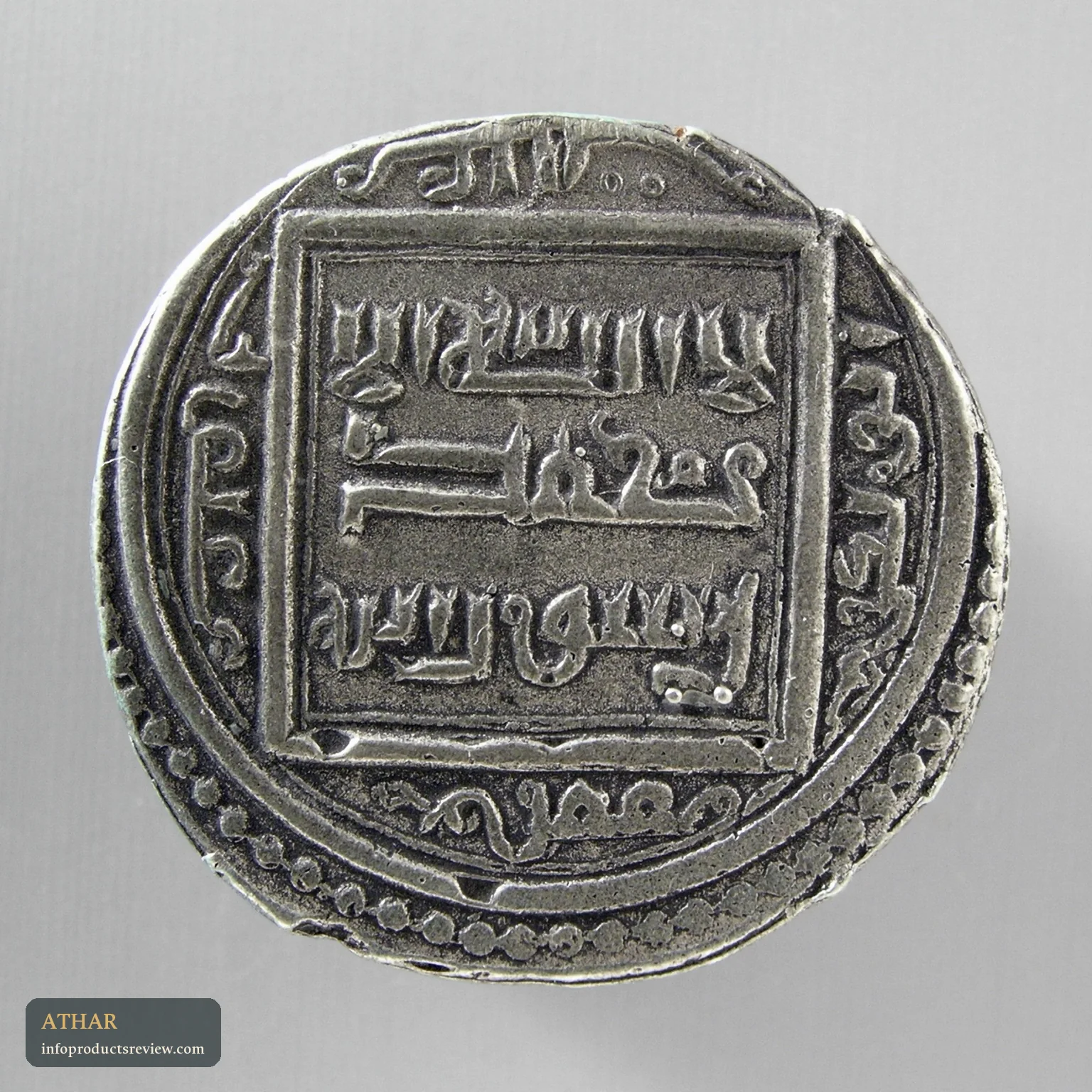
The first reading: if the dirhams are sound, that’s good speech; if they’re poor, that’s bad speech.
“Sound” in the older language means well struck and pure; “poor” means debased or short in weight. So what reaches you in the way of words may be pure and useful, or adulterated and harmful.
That’s practically useful. If you saw fine coins counted out for you, ask about good words said about you or coming your way. If you saw worn or counterfeit money, ask what’s being said around you that you wouldn’t like. And don’t jump to a verdict about a person: a dream names no one.
Dinars: documents and deeds
The second reading: dinars are documents that arrive, or deeds received.
A deed in the book’s language is a record of a right; a document is a letter or a piece of news. So dinars here sit closer to official paperwork than to wealth: a contract, a notification, a right established.
That explains why this dream is common among people waiting on a piece of paper: a result, an approval, a contract, a reply. It doesn’t say the paper will bring good news or bad; the text doesn’t go there.
A single dinar or a single dirham
The report adds that five dinars may be the five daily prayers, that a single dinar may be a child, and that a single dirham may likewise be a child.
Stop at the word “may”: in the text it marks possibility. Anyone who turns it into glad tidings of a baby has gone past what the book says. It shouldn’t be told to a woman hoping for a pregnancy, and nothing should be built on it.
What’s more useful is to notice the method: number counts, and singularity counts. That teaches you to pay attention to quantity in your own dream, not only to the image.
Coins out in the open: words and disputes
The third reading: coins that are out in the open are words and a dispute.
What’s “out in the open” is unconcealed, like cash counted in front of people. The reading is that speech that becomes public can drag a quarrel behind it, which matches a familiar experience: money on show gets people talking.
So if you saw coins counted in a gathering, or money visible to everyone, ask about talk going round or a disagreement nearby, not about a sum on its way.
Coins in a purse: a secret entrusted
The report continues: if he is given coins in a bag or a bundle, a secret has been entrusted to him.
This is one of the most precise readings in the chapter: not the gift alone, but the gift concealed. Hidden money is like hidden speech, and what’s handed over in a bag is like a secret placed in your keeping.
So if someone passed you a bundle or a sealed envelope, the closest reading is a trust or a secret. And that asks of you, while awake, what a trust asks: keeping it, not spreading it.
Small change: poor speech and clamour
The last reading in the report: small change is poor speech and clamour.
In older usage these were low-value copper coins, many in number, changing hands constantly in the markets. So it suited them to be read as plentiful poor talk and noise.
If you saw a mass of low-value coins, or heard metal scattering, ask about noise around you: talkative gatherings, or small quarrels that keep repeating.
A dirham is silver and a dinar is gold
It helps to know that a dirham in these books is a silver coin and a dinar a gold one. So when the text says “dirhams are better than dinars”, it’s comparing two coins and two metals at once.
That fits the rest of the chapter’s reading of gold: page 163 says unworked gold is a loss taken from its name, and worked gold is weaker in harm. Gold is the heavier metal in interpretation; silver is the lighter.
None of that is a ruling about metals while awake, or advice about savings. We set out the reading of gold itself on the gold pages; here it’s enough to know where the two coins sit.
“Dirhams are better than dinars”
On the same page Ibn Qutayba states the preference plainly:
And dirhams are better than dinars.
It’s a preference within the interpretation, consistent with the chapter: good speech is better than a document that binds you.
Many ingots: treasures
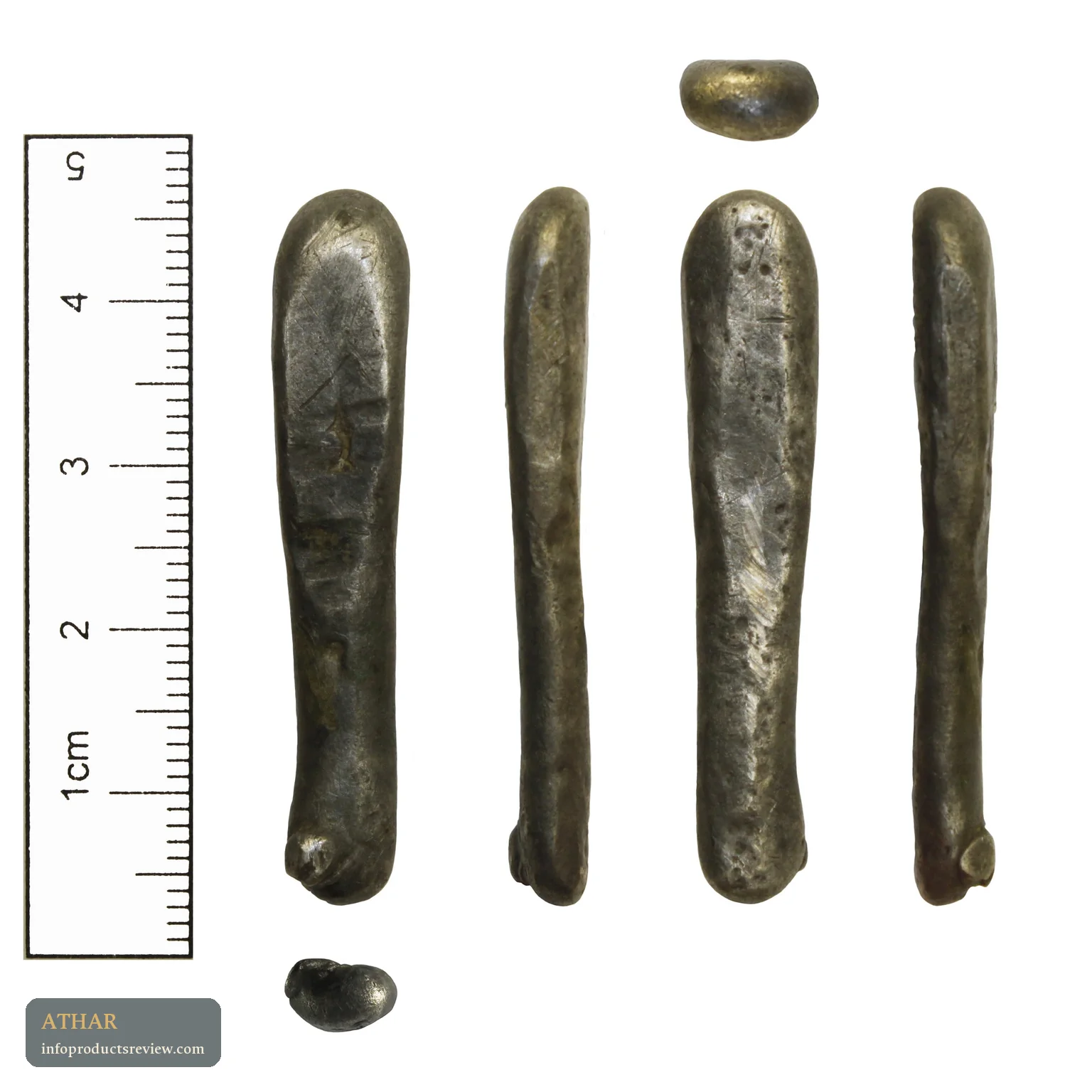
On printed page 164 Ibn Qutayba mentions the nuqra, a cast lump of gold or silver:
Whoever sees that he obtained an ingot of silver has obtained a free woman or a bondwoman, because the substance of silver, when it has not been worked, is the substance of women. And many ingots, if he obtains them, are treasures.
A single ingot is read as a woman; many ingots are read as treasures. Notice that a treasure in the language of interpretation isn’t necessarily liquid money: it’s what is stored and hidden away.
So we don’t read this as glad tidings of wealth. Anyone who dreams of treasure can ask what they’re storing or hiding: money, news, or an ability they haven’t used yet.
Why does the tradition read money as speech?
The link between coinage and speech looks strange at first, but it fits how the interpreters work throughout this chapter:
- Derivation: just as they read gold through “going away”, they read a deed and a document through what their words signify.
- Function: coinage is a medium of exchange, and so is speech. What resembles a thing in function is read through it.
- Quality: as coinage can be sound or debased, speech can be truthful or false.
Knowing the method serves you better than memorising meanings, because you can apply it to details the book never mentions.
That’s also why you won’t find a table here saying “this amount means that”. The book we rely on didn’t do that. It gave principles: quality, number, concealment and action. Anyone producing such a table today has invented it and then attributed it to the ancients.
Receiving, taking, and being handed something concealed
Notice how the wording shifts in the report: dirhams are described, then “dinars: documents that arrive, or deeds he receives”, then “if he is given coins in a bag”. The text distinguishes what comes to you, what you take, and what is handed to you covered.
The distinction isn’t merely verbal. What arrives without any act of yours sits closer to news; what you take with your own hand sits closer to a right you obtain; what is handed to you in a bundle sits closer to a trust.
So ask of your dream: did the money come to you, did you take it, or was it passed to you concealed? That question alone moves you between three different readings, all of them in the text.
Counting money
One of the commonest scenes is counting cash. We found no verified text on counting.
Start with what was in the scene: were you counting for yourself or for someone else? Was the total rising or falling? Did you finish, or start again and again?
Counting that never ends sits close to waking arithmetic anxiety: a review with no conclusion, or a fear of falling short. It’s no news about how much you’ll have.
Finding money
People dream of finding cash in the street, in old clothes, under a pillow. There’s no verified text on finding money in this chapter.
These dreams are common in times of pressure or waiting, and usually picture a wish for relief. They shouldn’t be read as news of money, and no effort or decision should be suspended because of them.
If you want a reading, ask what you did with it: keeping it quietly is not the same as looking for its owner. The difference describes your stance towards something that arrived without effort.
And found property while awake has its own well-known ruling among scholars, which is a separate question that no interpretation page settles. We mention it only so it’s clear that what is seen in sleep creates no right and cancels none.
Money lost or stolen
There’s no verified text on losing money or having it stolen, and it’s one of the most heavily frightened subjects: a loss coming, envy, magic.
The calmer approach is to ask:
- What was lost? Your money or someone else’s? The second sits closer to a sense of responsibility.
- How did it go? Did it fall, was it taken, or was it never there?
- How did it feel? Fear of loss describes your state today.
And we repeat what we say across this subject: if you saw someone you know stealing, don’t build a suspicion on it. A dream is not evidence about anyone.
An empty wallet or a hole in your pocket
Among the more unsettling images: opening your wallet and finding it empty, or putting money in a pocket and finding it gone. No verified text covers these.
They usually describe a feeling rather than announce an event: a fear of not having enough, or a sense that what you gather doesn’t stay. They often turn up at the end of the month, or after an unexpected expense.
They aren’t a warning of poverty, or evidence that money is being taken from you while awake. Building a suspicion of your family or your partner on a dream like this is a wrong done without proof.
Giving money, and charity
You might see yourself giving money: to someone in need, to a relative, or paying for something. Apart from the purse passage above, no verified text covers the act of giving in this chapter.
The same door applies: who did you give it to, and how did it feel? Giving that leaves you content is different from giving that leaves you feeling pressed or taken advantage of.
If you intended a charity while awake, seeing it at night is closest to the mind talking to itself. No vow or obligation follows from a dream.
Giving money to children
A gentler image: giving a child cash, or watching one count what they were given. There’s no verified text for it.
The context is usually familiar: a holiday, a household habit, or talk about pocket money. The scene may describe your relationship with them: giving, preoccupation with raising them, or worry about the future.
It isn’t news about that child’s provision or their future. The text’s “a single dirham may be a child” is a stated possibility and a different image altogether.
Debt: owing, or being asked to pay
Among the most distressing money dreams: seeing yourself in debt, being pressed for payment, or unable to pay. No verified text covers this.
These images sit very close to many people’s waking lives. If you carry a real commitment, the dream is its echo, and the remedy is awake: a schedule, a frank conversation, a request for time.
It isn’t news that the debt will grow, or that relief is near. Both would be claims about the unseen.
Lending and borrowing
You might dream of lending to a friend, asking for a loan, or signing a paper of debt. No verified text covers the act of lending itself here.
But the reading of dinars as deeds and documents sits close to this atmosphere, because a loan is at root a record and an obligation. If something documented is in progress in your waking life, the image describes it.
The difference between lending and borrowing is a difference of position, not of symbol: the first places a trust of yours with someone else; the second places an obligation on you. Which position were you in, and how did it feel?
Money while travelling, or in an unfamiliar place
You might see your money in transit: in a bag, at a checkpoint, in a country you don’t know. No verified text covers it.
The nearest sense is that travel adds exposure: your money is away from its safe place, and so are you. If a real journey, move or change is ahead, the image echoes it.
It isn’t news that you’ll lose something on your trip, and it’s no reason to cancel a plan. The interpreters themselves call all of this conjecture.
Banknotes and modern currency
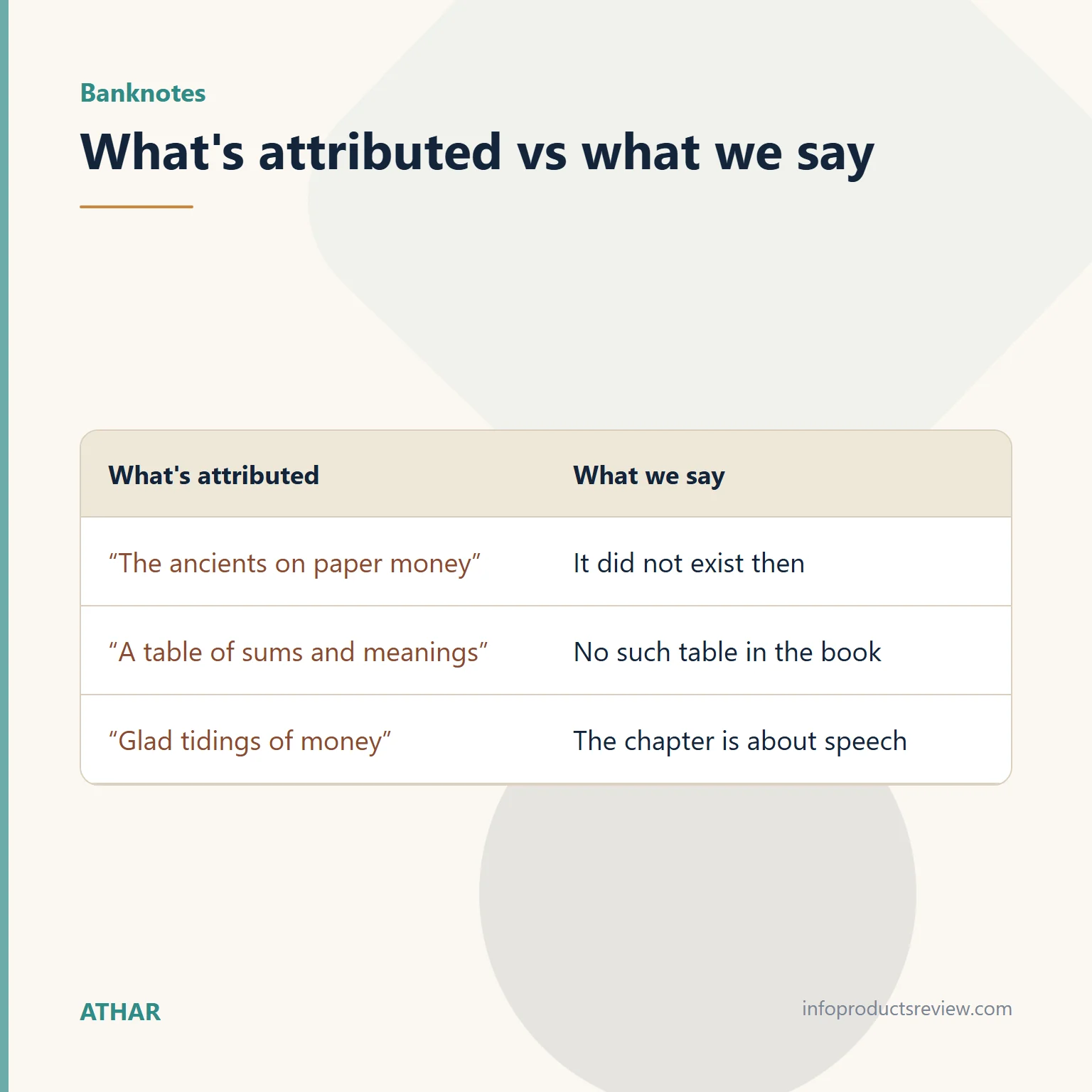
The old texts speak of dirhams, dinars and copper change: metal coins. What about paper money, transfers, and figures on a screen?
There’s no text, obviously. But the method still works: look at quality (crisp or torn), number (single or many), concealment (in an envelope or in the open), and action (giving, taking, counting).
That’s more honest than inventing a meaning and attributing it to a book that never said it. Anyone writing “Ibn Sirin’s interpretation of paper money” is attributing to him something from a world he never saw.
Counterfeit money
Discovering in the dream that the money is fake sits close to the reading of “poor dirhams: bad speech”. It’s one of the few places where the text reaches a modern detail.
The nearest reading: adulterated words, a promise not kept, or news that turned out to be untrue. It isn’t a verdict on a particular person or the exposure of a liar.
Wallets, bundles and safes
The container is part of the image, just as the bundle in the text changed the meaning to a secret entrusted.
A full wallet isn’t an empty one, and a locked safe isn’t cash scattered on the floor. The question: was the money concealed or exposed? Concealment in this chapter moves you towards secrets and trusts; exposure moves you towards words and disputes.
Buying and selling
You might see yourself buying something and paying for it, or selling and being paid. This chapter has no verified text on the act of buying and selling itself.
Start with the context: what did you buy? Did the price feel high? Did you leave the scene content or regretful? Contentment and regret describe your stance towards an exchange you’re making while awake, financial or otherwise.
It’s worth noting that “exchange” is wider than money: it may be time you give, or effort you spend for something.
Money in someone else’s hands
You might see the money not in your hands but in another’s: a relative, a colleague, a stranger counting cash. No text covers this scene.
Useful questions: were you waiting to be given some? Were you only watching? Did he take what you were counting? Those positions describe your relationship to something occupying you: waiting, comparison, or the feeling that a right went elsewhere.
It isn’t news about that person, their money or their intentions. This rule recurs across these pages because it’s where people go wrong most.
Money and work: salary and wages
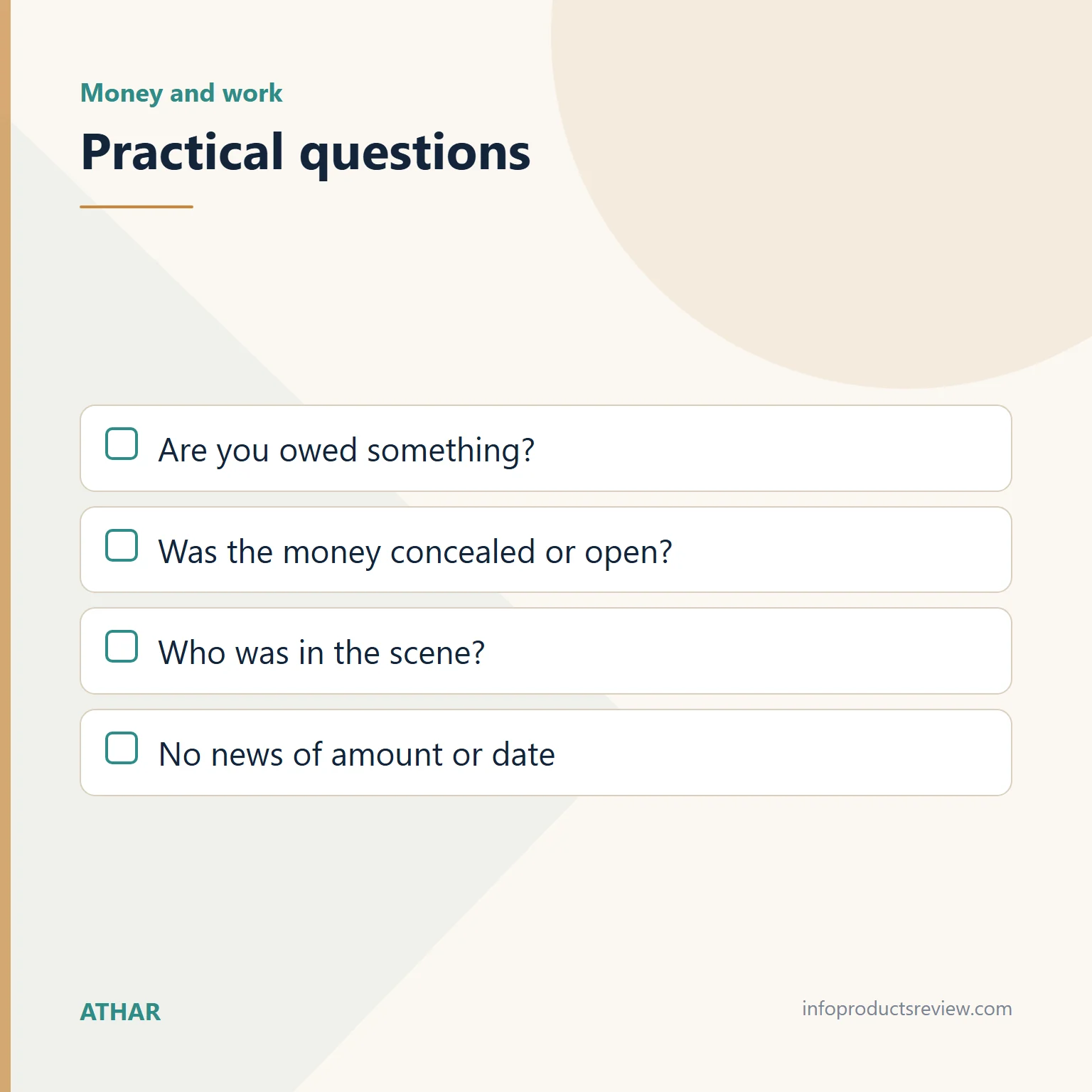
Many money dreams attach to work: a salary paid, wages collected, a bonus distributed. No verified text covers these images specifically.
But the chapter gives you a door: money concealed leans towards trust and secrecy; money counted in the open leans towards words and disputes. That suits a workplace better than it might seem, since pay is discussed, compared, and much talked about.
If you’re genuinely waiting on something owed to you, the dream echoes the waiting. It doesn’t tell you the date or the amount.
Money among relatives
Among the heaviest money dreams are those inside a family: a division, a debt between siblings, an inheritance. No verified text covers them.
The reading of “coins in the open as words and disputes” is close to that atmosphere, because money shown among relatives sets people talking. That describes a reality; it doesn’t predict a quarrel.
And plainly: a dream is never evidence in a dispute over money or an estate, and never an argument against anyone. Rights are established by proof and accounts, with scholars and courts as the reference.
A great deal of money
People ask about seeing uncountable money: sacks, a room full, enormous figures. There’s no verified text on quantity here beyond the many ingots read as treasures.
Notice that abundance in the text wasn’t read as riches but as “treasures”, something stored and hidden. That’s an important difference: a treasure is kept rather than spent, hidden rather than displayed.
The useful question: did the abundance feel like ease or like weight? Some people see great wealth and wake up uneasy, and that describes their sense of responsibility or fear, not a forecast of riches.
When the dream is about a number, not money
Some dreams leave nothing but a number: a particular sum, a count of notes, a written price. Notice that the text itself treated number as meaningful when it said five dinars may be the five prayers, and when it singled out a single coin.
So number is part of the image here, not decoration. Even so, no wager, purchase or choice should be built on a number seen in sleep; that’s fortune-telling, not interpretation.
Better to ask: does the number resemble something in your waking life? A monthly instalment, a date, a sum you’re expecting? Many of these numbers come from your accounts, not from the unseen.
“Does the dream mean my money is unlawful?”
Some people ask this, and we dealt with it on Dreaming of Gold as a Man, in the section on a gold ring.
The rule we hold to: a dream creates no ruling, establishes no accusation, and is no evidence against anyone. If you genuinely doubt a transaction, put that transaction to qualified scholars while awake.
When someone tells you it’s glad tidings of money
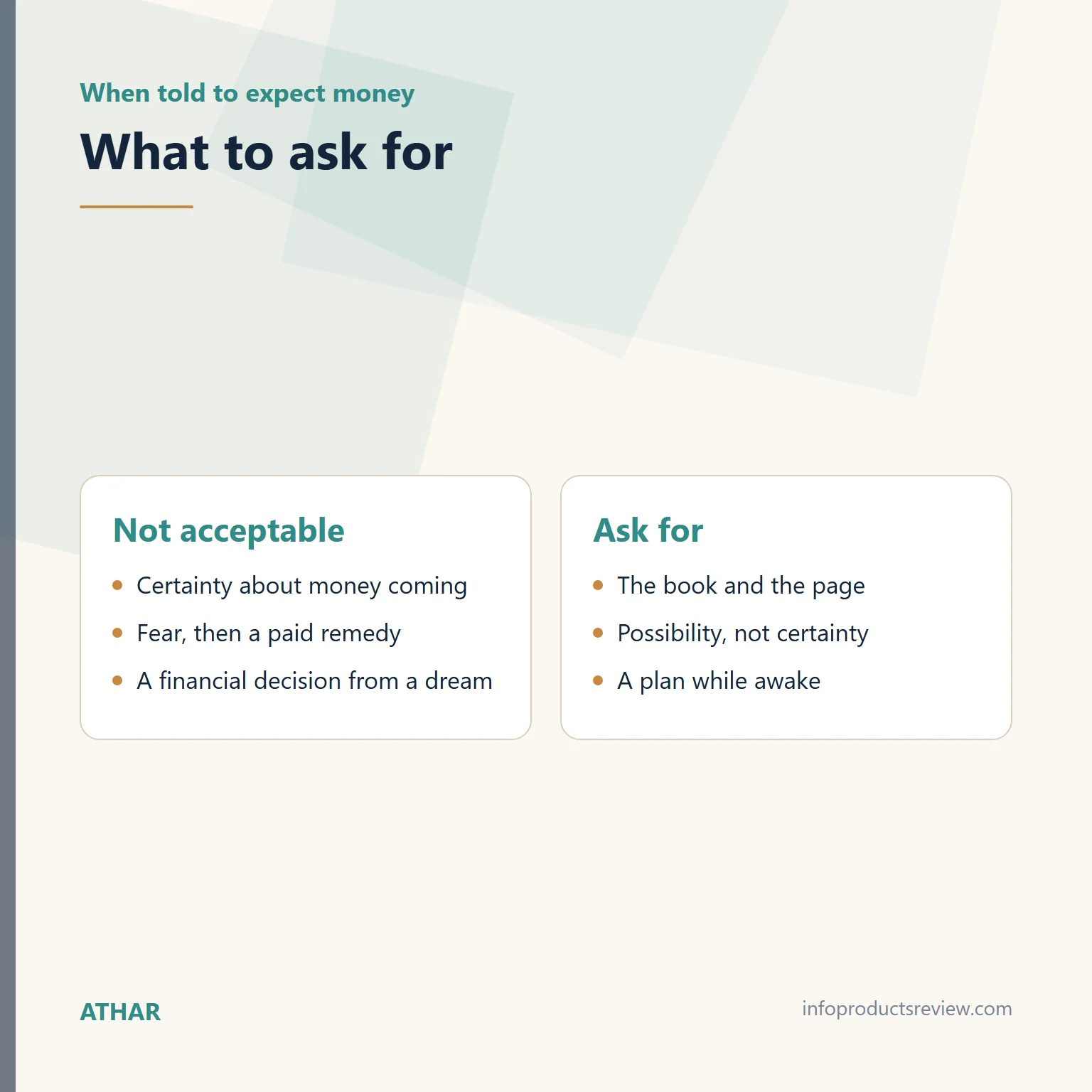
It happens constantly: you mention the dream and someone answers confidently, “expect money”. People then wait, or buy something, or delay a payment on the strength of it.
The calm answer is that this claim rests on no text in this chapter, and that interpretation itself is analogy and conjecture, as its own practitioners say. Anyone who promises you money from a dream is speaking about what they don’t know.
The worst version of this pairs the promise with a request: someone frightens you and then offers a remedy for a fee, or congratulates you and then asks you to pay. That’s trading on anxiety, not interpretation.
Does the reading change with the dreamer?
Yes, and the rules books say so. The application is clearer than the theory:
- A trader handles cash daily, so seeing it at night is closest to the mind talking to itself.
- An employee waiting on a payment sees money in the season of waiting, and the image echoes it.
- A student may associate papers and documents with a result or a grant, and the reading of dinars as documents fits.
- Someone under pressure tends to dream of both losing and finding, because the mind swings between fear and hope.
Telling what’s reported from what’s been added
This subject attracts additions more than most, because people like hearing good news about money. Three questions are enough:
- Where’s the text? Ask for the book and the page.
- Is it about this image? Much of what circulates about “money” began in dirhams and dinars, not in banknotes or transfers.
- Has a possibility become a certainty? Between “may be a child” in the book and “glad tidings of pregnancy” on a page lies a wide gap.
If the dream keeps coming back
Recurring money dreams are common under financial pressure, and repetition makes them no truer and no nearer.
Usually the cause is still there: a monthly commitment, a payment awaited, a fear of falling short. Sometimes it repeats because you now think about the dream every night, and so summon it.
The way out is practical, not symbolic: treat the cause while awake, search less, and settle what can be settled in your accounts and your sleep.
If the dream worried you
Money dreams leave a mark on the day more than most, because they touch a live concern. Someone can wake and spend the day rechecking accounts or expecting news.
The measure is simple: if you had a money worry before the dream, the dream added nothing to it, and the remedy starts with that worry: a plan, a conversation, a tighter budget. If you had none, don’t manufacture one from a dream.
And if financial anxiety is constant and affecting your sleep, that deserves attention while awake rather than more searching for interpretations.
What if you don’t remember the details?
If all that’s left is money and a feeling, read the feeling. Don’t add a number you didn’t see, a person who didn’t appear, or a kind of money you couldn’t make out.
Most of the frightening readings in this subject are built on details summoned after waking, not on what the dreamer saw.
Getting something practical from it
Because the chapter turns on speech, documents and trusts, the most useful thing to take away is a set of questions:
- What speech is on my mind? News I’m waiting for, something said about me, a promise I heard.
- What paper am I waiting on? A contract, an approval, a right to be recorded.
- What trust is in my hands? Someone else’s money, a secret I was given.
- And what am I actually afraid of losing?
How the dream felt
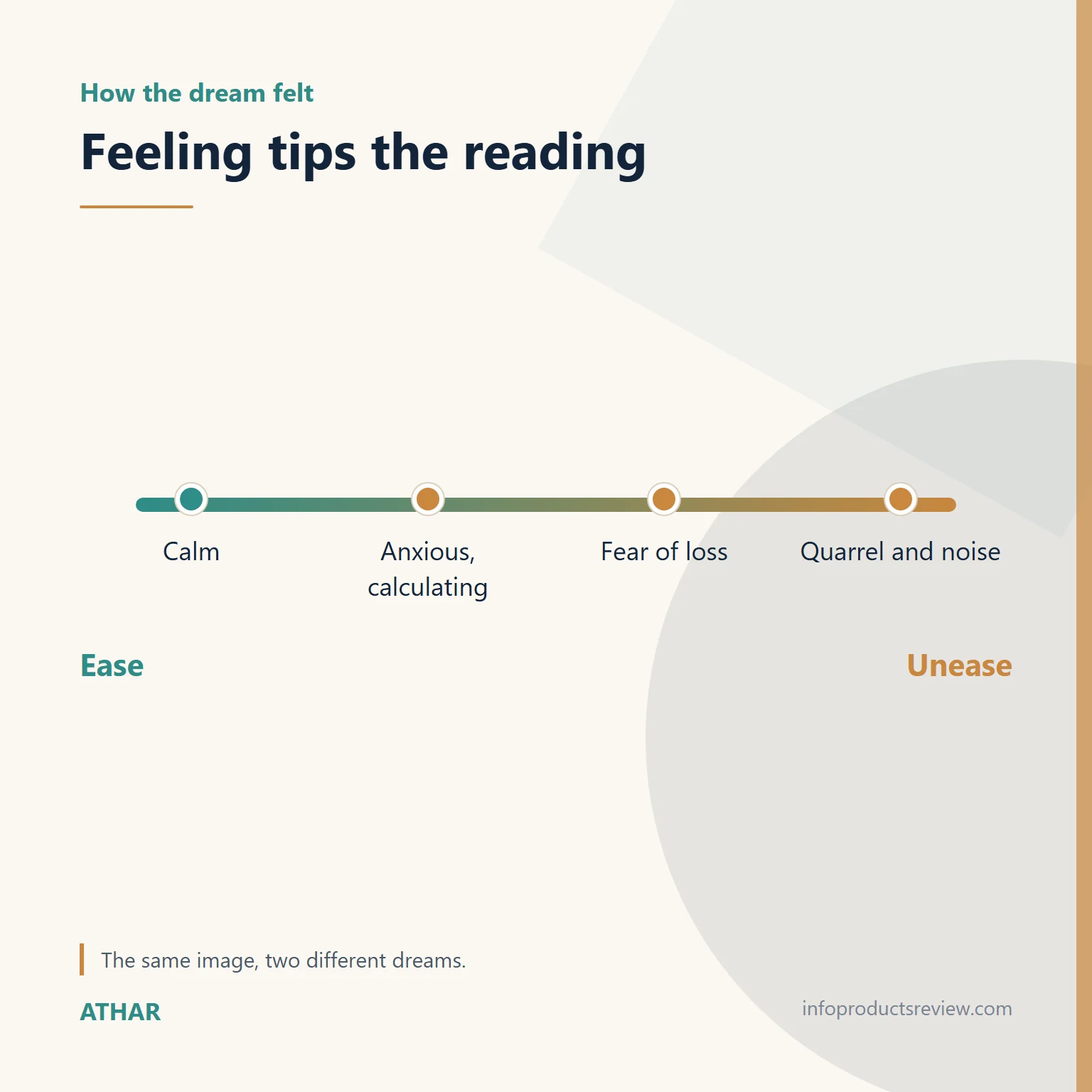
- Calm and content: closest to the reading of good speech.
- Anxious and calculating: close to a live money worry.
- Afraid of losing it: describes what you fear losing, not what will be lost.
- Quarrelsome and noisy: close to the readings of small change and coins in the open.
- Indifferent: the money may have been a passing detail in a dream about something else.
Rules that govern this reading
The rules books say interpretation looks at the dreamer’s situation:
Interpretation differs with people's conditions and standing: one must look at the dreamer's state and standing, and build the fitting interpretation on that.
They also say interpretation is conjecture that can’t be treated as certain:
Interpretation is analogy, comparison and conjecture that cannot be treated as certain, though one may take comfort in it; no one may swear to what it foretells unless its truth appears in waking life.
And that some dreams are the self talking to itself, with no interpretation:
As for the self talking to itself, it belongs to the body: desires and feelings held back in the unconscious that wake up in sleep, and they have no interpretation.
Common claims that need correcting
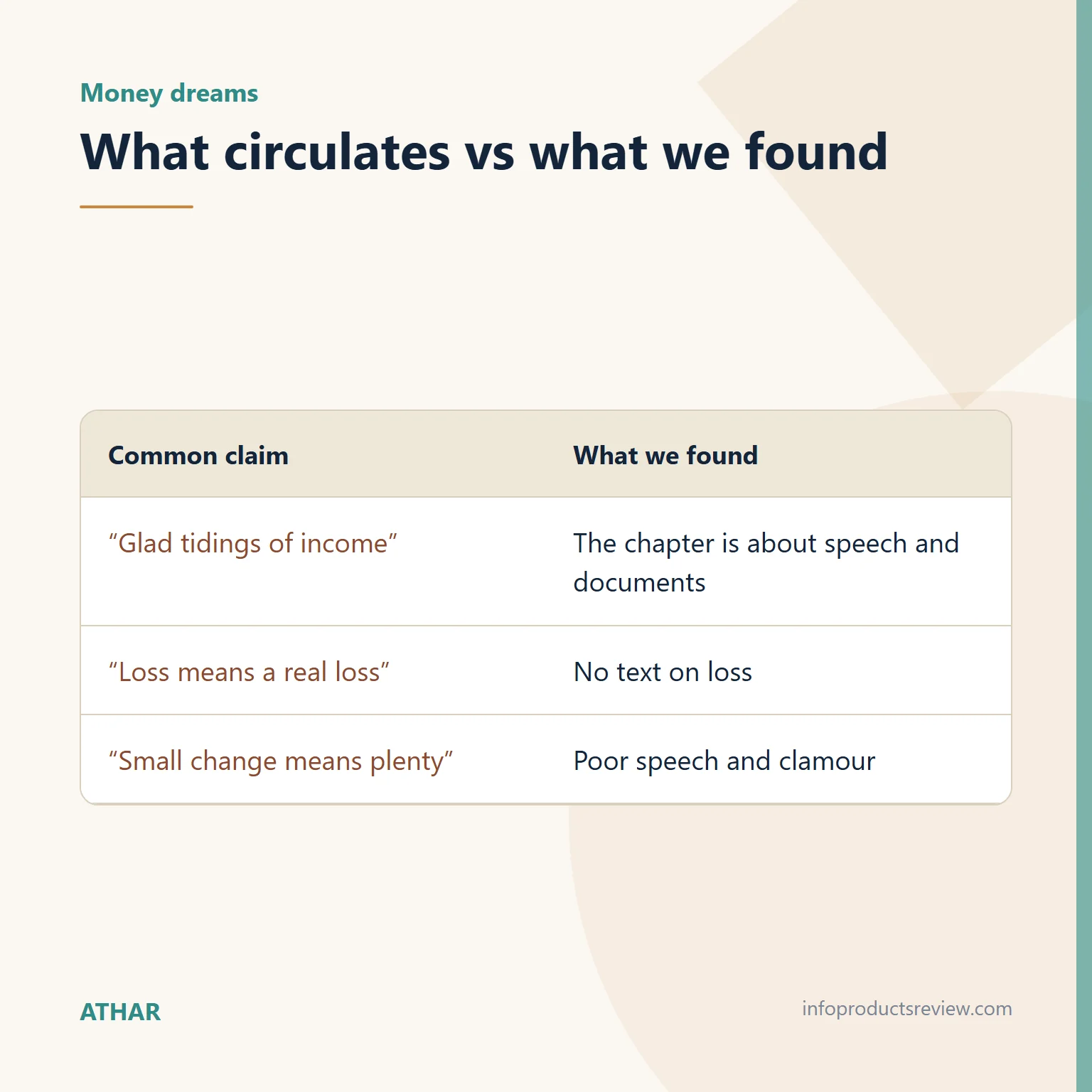
| What you’ll often read | What we found in verified sources |
|---|---|
| Seeing money is glad tidings of income | The chapter’s readings turn on speech, documents and trusts, not wealth |
| Losing money means a loss has occurred | No verified text on loss |
| Finding money means a windfall | No verified text on finding |
| A single dirham announces a pregnancy | The text says “may be a child” — a possibility, not glad tidings |
| Lots of small change means abundant good | The text reads it as poor speech and clamour |
| The classical books interpreted banknotes | They didn’t exist then; anyone attributing that has added it |
What a money dream can’t tell you
- It can’t announce a sum coming or a loss occurring.
- It can’t judge your earnings or establish anything against you.
- It can’t expose a thief, an envier or a magician.
- It can’t announce a pregnancy or a baby’s sex.
- It isn’t a basis for a decision about buying, selling, debt or partnership.
What to do after the dream
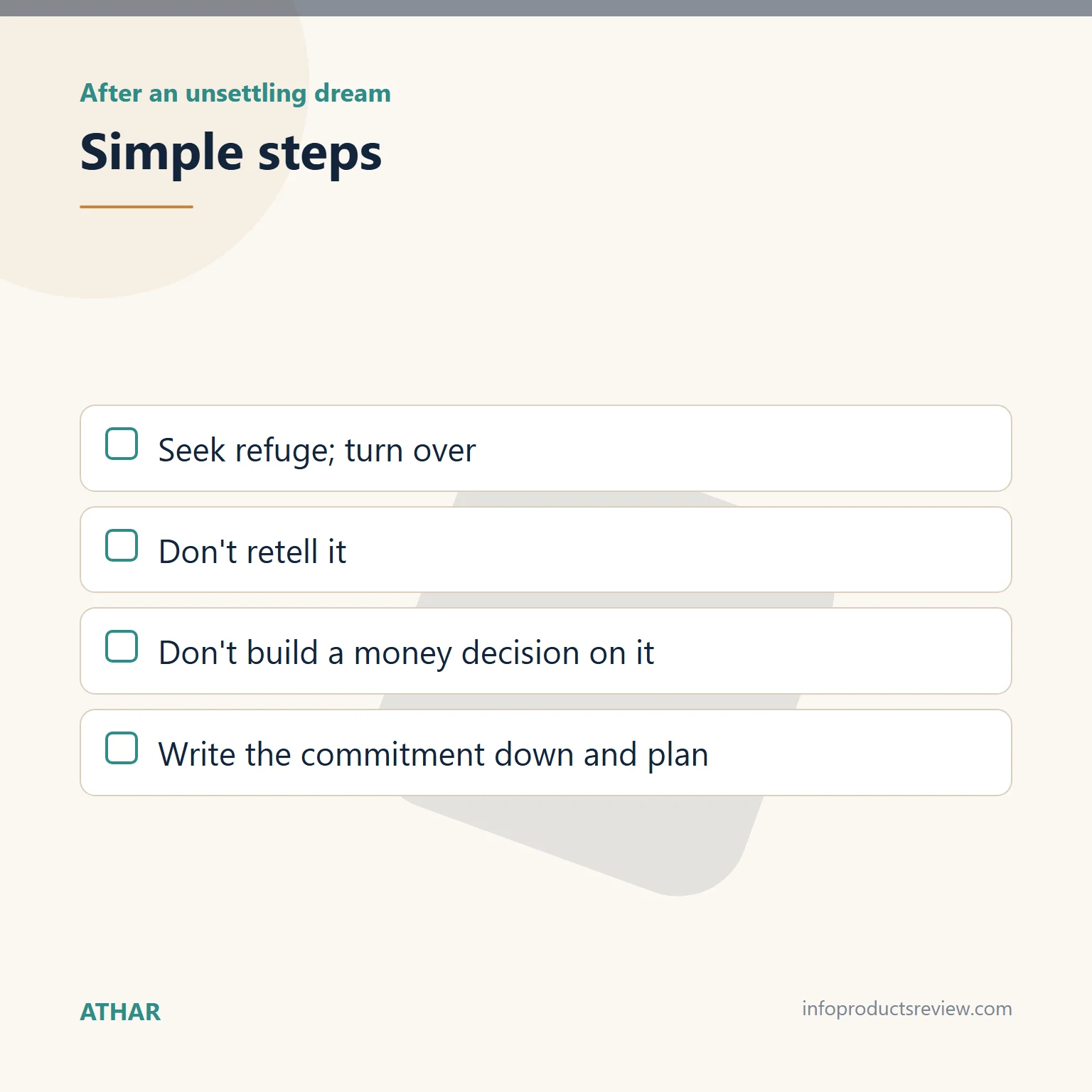
If the dream was good, thank God and don’t turn it into waiting. If it was unsettling, in Bukhari:
And in Muslim, with more detail:
- Seek refuge in God from the harm of what you saw, and turn onto your other side.
- Don’t retell an unsettling dream, and don’t ask about it where fear travels fast.
- Don’t build a financial decision on a dream.
- If your worry is a real debt or commitment, write it down and make a plan; that helps more than an interpretation.
How to describe your dream so it can be read
- What kind of money: metal or paper? Little or much?
- Its condition: sound, poor, counterfeit?
- Was it concealed: in a bundle or an envelope, or out in the open?
- The action: counted, given, taken, found, lost?
- Who was with you?
- How you felt, and what’s on your mind financially.
What you can take away with confidence
First: this chapter promises no money. Anyone who reads your dream as glad tidings of wealth has added to the texts, and anyone who frightens you with loss has done the same.
Second: the four keys are all in the text: the quality of the coinage, its number, whether it was concealed or exposed, and the action performed with it. With those you can read your own dream even if the book never mentions it.
Third: for most people, most money dreams are the mind talking to itself, because money is more present in daily thought than almost any other symbol. That’s a sufficient and a comforting explanation.
Examples
Composite examples built from common scenarios, not readings of any real person’s dream.
Sound coins counted out for him
In the report, sound coins are good speech. Closest to kind words or good news, not a sum arriving.
Torn or debased money
Closest to bad speech or untrue news. No particular person is accused.
Handed a sealed envelope of cash
The text reads coins in a bundle as a secret entrusted. Closest to a trust or a secret, and it asks to be kept.
A mass of small change scattering noisily
Small change in the text is poor speech and clamour. Close to noise or small repeated quarrels.
Counting money that never finishes
No text on counting. Close to waking arithmetic anxiety: a review with no end.
Finding a wallet in the street
No text on finding. The question is what he did with it: looking for the owner describes one stance, keeping it another.
His money stolen while he watched
No text on theft. He seeks refuge, accuses no one, and asks what he’s afraid of losing.
Gold dinars set before him
Dinars in the report are documents or deeds. Closest to a paper or piece of news he’s waiting on, not wealth.
A money dream after a day of accounts
Most likely the mind talking to itself; no symbolic reading needed.
Seeing himself give charity
No text on the act of giving here. The accompanying feeling is the truest thing to read it by.
A locked safe whose contents he doesn’t know
No text for it. Concealment in this chapter points to secrets and trusts more than to money.
Money turning into worthless paper
No text for it; the nearest comfort is the reading of poor coinage as bad speech: a promise or a piece of news that turned out to be worth nothing.
A colleague counting money while he watches
No text for it. His position in the scene describes his state: waiting or comparison. It’s no news about that colleague’s income.
A great deal of money, and he woke uneasy
Abundance in the text was read as treasures, something stored. The unease describes his sense of responsibility, not a forecast of riches.
His brother demanding money from him
No text on demands. The reading of coins in the open as words and disputes describes the atmosphere rather than predicting it. A dream is never cited in a family dispute.
His salary handed over in a sealed envelope
Concealment in the text points to trust and secrecy. Closest to something he’s waiting for while awake, with no news of its amount.
Quick table: the detail and the closest reading
| Detail | What verified sources say | How to read it |
|---|---|---|
| Sound dirhams | Good speech (p. 163) | Kind words or good news |
| Poor dirhams | Bad speech (p. 163) | Adulterated words; no one is accused |
| Dinars | Documents that arrive, or deeds (p. 163) | Papers and rights |
| Coins in the open | Words and a dispute (p. 163) | Speech that became public |
| Coins in a bundle | A secret entrusted (p. 163) | A trust to be kept |
| Small change | Poor speech and clamour (p. 163) | Noise and small quarrels |
| A single coin | “May” be a child (p. 163) | A possibility, not glad tidings |
| Many ingots | Treasures (p. 164) | What is stored and hidden |
| Counting, finding or losing | No verified text | Through context and feeling |
Related dreams
- Silver in a Dream: Raw Silver, Mirrors, Fetters and Where the Texts Stop
- Pearls and Gems in a Dream: Strung, Scattered, Rubies and What the Texts Don’t Say
- Dreaming of Gold as a Man
- Dreaming of Gold as a Married Woman
- A Gold Ring in a Man’s Dream
- ATHAR’s guide to dream interpretation
Frequently asked questions
What does seeing money in a dream mean?
In the report Ibn Qutayba carries with his chain to Muhammad ibn Sirin, dirhams are read as speech, dinars as documents or deeds, and small change as poor speech and clamour. The chapter is closer to words and paperwork than to wealth.
Is seeing money glad tidings of income?
No text guarantees that. The verified readings turn on speech, trust and disputes, not on money arriving.
What does finding money in a dream mean?
We found no verified text on finding. Read it through what you did with it and what’s on your mind; don’t wait on money because of it.
What does losing money or having it stolen mean?
No verified text. Read it through what was lost and how you felt, and don’t accuse anyone.
What do sound and poor coins mean?
Sound ones are good speech and poor ones bad speech, as in the reported saying carried by Ibn Qutayba.
What do dinars mean in a dream?
In the report they are documents that arrive or deeds received: paperwork or rights recorded.
I was given money in a bag. What does that mean?
The text says whoever is given coins in a bag or bundle has been entrusted with a secret. Closest to a trust to be kept.
Does a single dirham indicate a child?
The text says “may be a child”, which marks possibility. It isn’t glad tidings of a pregnancy or news of one.
What do banknotes mean in a dream?
They didn’t exist when these books were written, so there’s no text. Read them by the chapter’s method: quality, number, concealment and action.
Does the dream mean there’s something unlawful in my income?
No. A dream creates no ruling and establishes no accusation. A genuine doubt about a transaction goes to qualified scholars.
I dreamed of money after a day of accounts. Does it mean anything?
Most likely it’s the mind replaying your day, and it needs no symbolic reading.
Is this interpretation definitive?
No. These are possible meanings from texts we checked on the page, and interpretation is conjecture you can take comfort from, not certainty.
In summary
- In the dream books, coinage is read as speech, documents and trusts, not as wealth.
- Quality, number, concealment and action are the keys to the reading.
- “Dirhams are better than dinars” is a preference inside the interpretation, not financial advice.
- Counting, finding, losing and paper money have no text, and are read through context.
- No financial decision, accusation or expectation should be built on a dream.
If you take one thing away: a money dream in these books speaks about what is said, written and entrusted, far more than about what is received.
Written and reviewed by: the ATHAR editorial team. Classical and hadith passages were checked against scans of the original printed pages of the editions cited. Translations from Arabic are our own.
Please note: this page sets out possible meanings, not certainties. It is not financial advice and not a religious ruling.