


You woke up with your heart pounding, reached for your phone, and typed the dream into a search box. Most of what came back probably started with the worst possible answer: your husband, another woman, a betrayal on the way. None of that comes from the old dream books. This guide starts with what one classical interpreter actually wrote about scorpions, separates that from the questions that help you read your own dream, and is blunt about what a dream cannot tell you.
The short answer
If you only read one section, read this one:
- What the classical source says. Ibn Qutayba described the scorpion as a weak enemy whose harm does not go beyond his tongue, and who treats friend and enemy exactly the same. The symbol is about someone who does damage by talking — not about danger, and not about disaster coming for you.
- The one detail that flips the reading. If the scorpion is in your own hand, stinging other people, Ibn Qutayba wrote that this is a person who backbites others. The harm is traveling outward from you, not toward you.
- Two common versions, side by side. One woman sees a scorpion, freezes, and backs away. Another sees it and kills it or sweeps it out. No source assigns a separate fixed meaning to either one — but what you did in the dream, and how you felt when you woke, is the part worth your attention.
- What it can’t establish. Nothing changes the meaning simply because you’re married. The scorpion is not a stand-in for your husband, and the dream is not evidence of cheating, divorce, another woman, sorcery, envy, or illness.
- What to do when you wake. Settle yourself before you search. The prophetic guidance for a distressing dream is to seek refuge in God, spit lightly to your left three times, turn onto your other side, and not tell people about it. Then read the scene against your own life — as a possibility, never as news about your future.
What this page covers
- The short answer
- What Ibn Qutayba actually wrote
- Why the scorpion isn’t your husband
- Where the scorpion appeared: questions, not a lookup table
- In your home
- At your own family’s house
- At your in-laws’ house
- At work
- The daily load
- In the bed or among your clothes
- What the scorpion did
- What you did in the dream
- Freezing or backing away
- Killing the scorpion
- Sweeping it out or driving it away
- A scorpion in your hand, stinging people
- Being stung
- Does it matter where you were stung?
- Who stung you?
- A painless sting, or one that hit someone else
- How you felt when you woke — and what to do first
- What this dream cannot establish
- What health references say about distressing dreams
- When the dream keeps coming back
- What to do after the dream
- How to spot a fear page
- About what gets attributed to Ibn Sirin
- Color and size
- Reading your dream, step by step
- Three worked examples
- True dreams, self-talk, and jumbled dreams
- When there’s no entry for your dream
- When someone else has the dream, or your children are in it
- Asking an interpreter
- Why it frightens more than it signifies
- Don’t let the dream damage your household
- When a dream takes up too much room
- Before you close this page
- Common questions
- Does a scorpion in a married woman’s dream mean her husband?
- Does this dream mean my husband is cheating?
- I saw a scorpion inside my house. Is there an enemy in my home?
- What does killing a scorpion mean for a married woman?
- Does it matter where the scorpion stung me?
- I woke up terrified. Does that mean the dream was bad?
- Is a scorpion dream a sign of sorcery or envy?
- I saw many scorpions. Is it more serious?
- Does this dream indicate illness or death?
- It happened at my in-laws’ house. Is it about my mother-in-law?
- It repeats almost weekly. What does repetition mean?
- Should I tell my husband or my family?
- Could this just be anxiety?
- The scorpion was tiny. Is the meaning milder?
- We just moved. Does that change anything?
- Should I give charity or pray because of this dream?
- I woke up still feeling it where I was stung. Does that mean something?
- What should I do right now?
- The bottom line
What Ibn Qutayba actually wrote
The classical material on this symbol is short. That’s a feature, not a flaw: a brief line is hard to stretch into a hundred confident claims, which is exactly what most pages do.
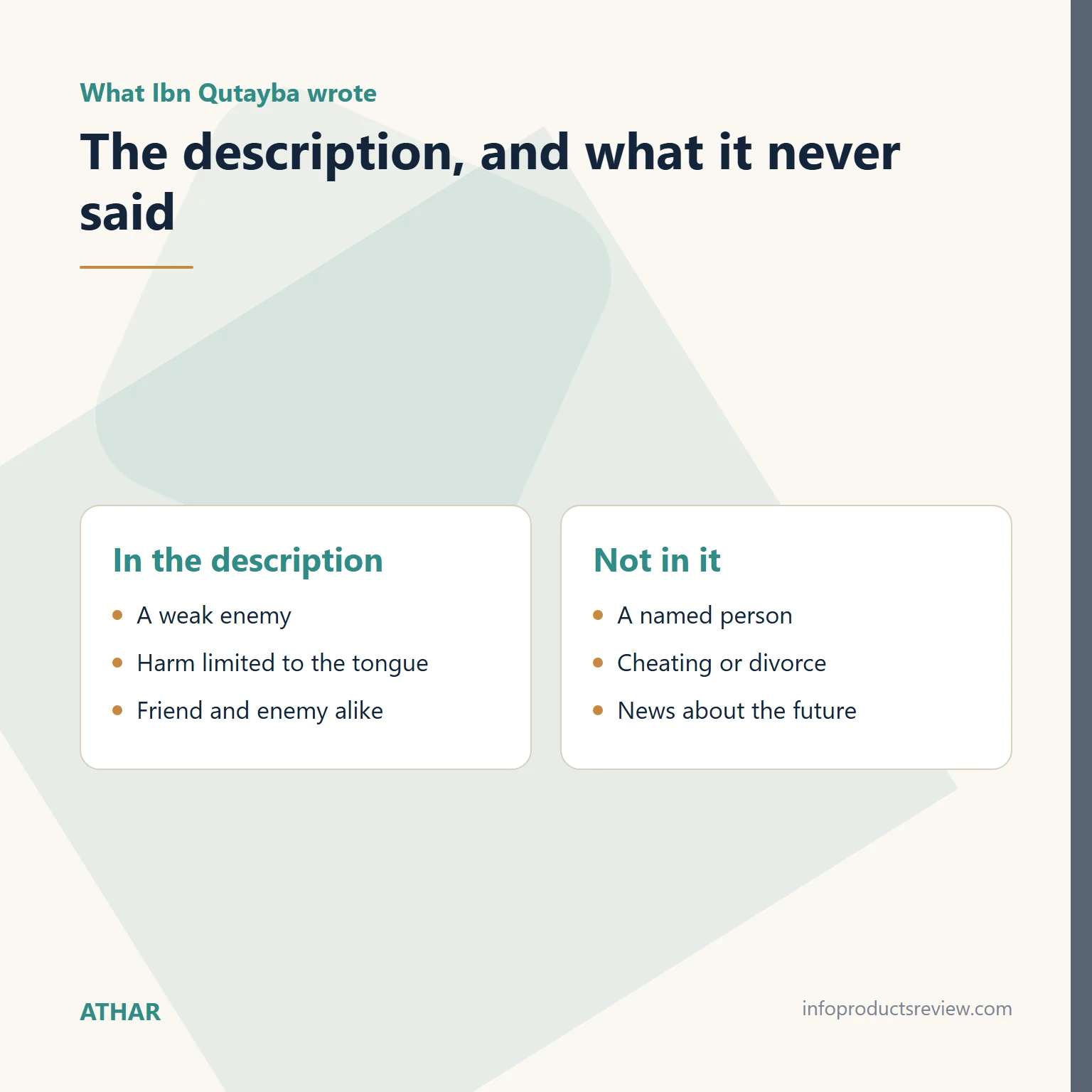
Ibn Qutayba wrote that the scorpion is a weak enemy, that his scheming goes no further than his tongue, and that friend and enemy are one and the same to him. Three parts of that are worth slowing down for.
- “Weak.” The symbol was never about serious danger. The fear the dream leaves behind is bigger than what the symbol was said to represent.
- “No further than his tongue.” The harm described is verbal: gossip, talk carried between people, a remark that cuts. Not money, not the house, not the body.
- “Friend and enemy are one to him.” This is the sharpest part. It describes a habit, not a person who has singled you out — someone who says the same thing about the close and the distant alike.
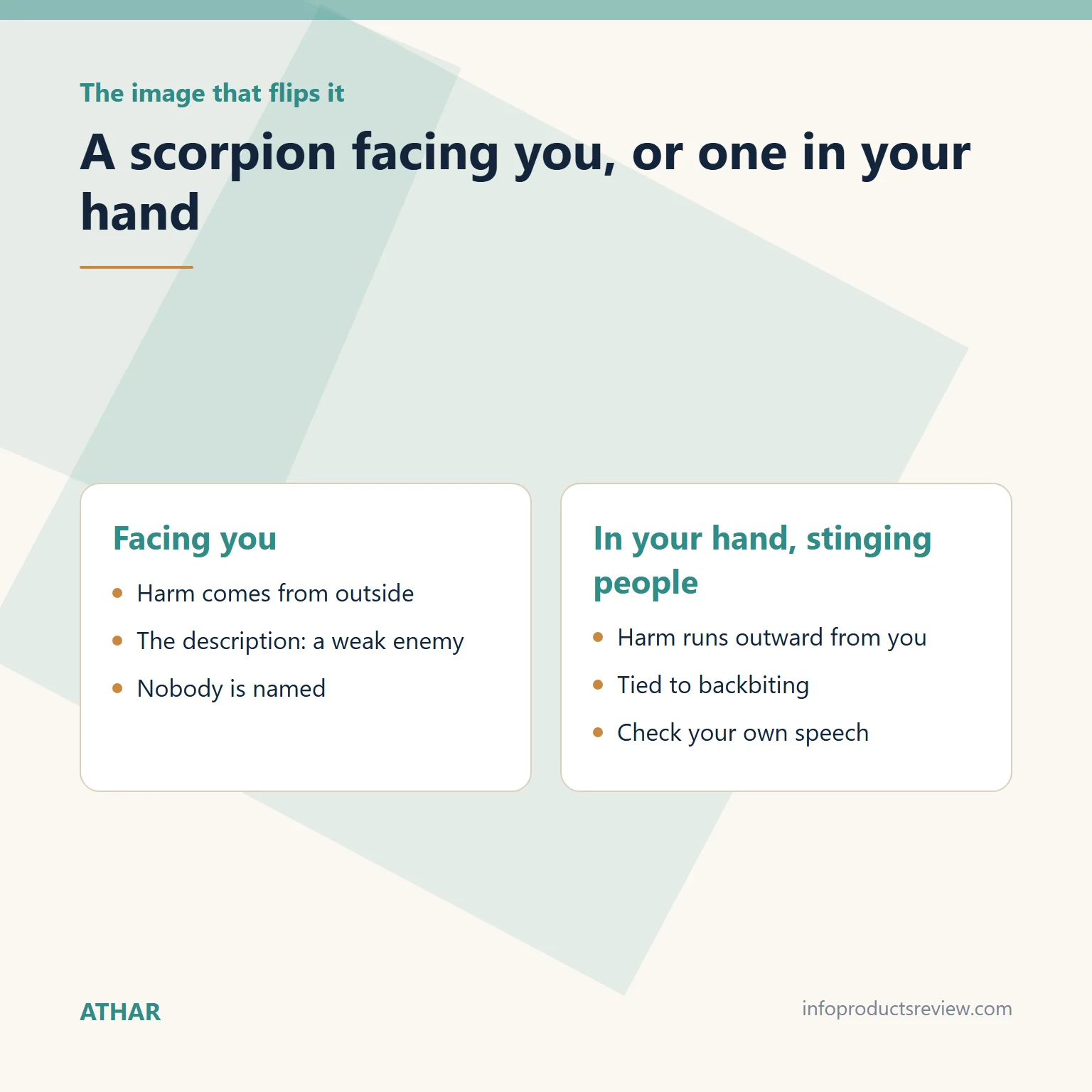
He also recorded a second image: a person who sees a scorpion in his hand stinging people is a person who backbites people. The scorpion there isn’t arriving from outside. It’s already in the dreamer’s hand.
Those two lines are the only transmitted meanings in this guide. Everything after them is either a question to help you read your own situation, a limit on what interpretation can do, or general health information about sleep — clearly labeled as such.
Why the scorpion isn’t your husband
This is the question that arrives most often, and the answer is simple: no classical interpreter said that.
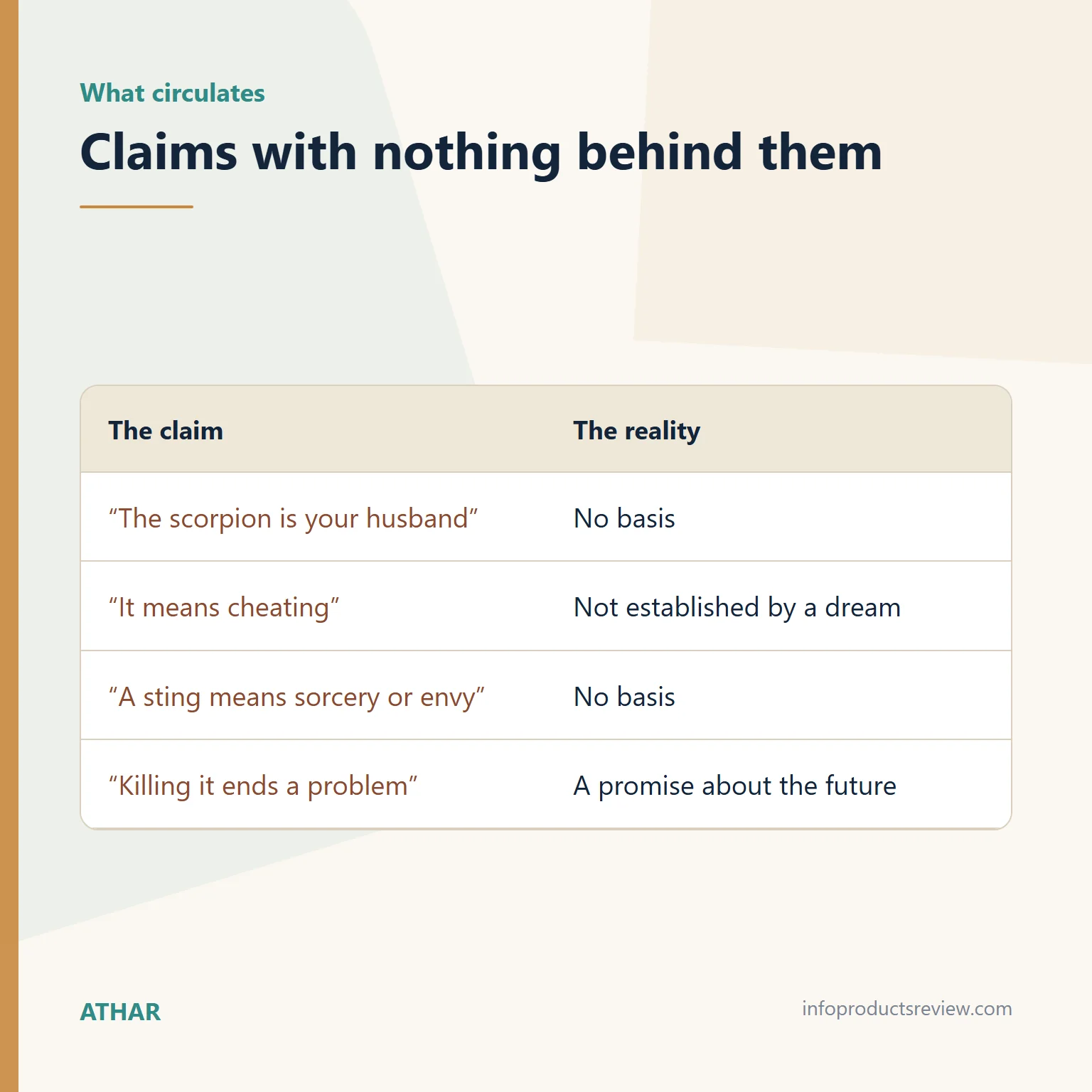
Here’s how the claim gets manufactured. A page takes “weak enemy,” asks who is closest to a married woman, answers “her husband,” and prints it as interpretation. That’s an addition, not a reading. And the description itself argues against it — an enemy to whom friend and foe are identical is precisely someone not defined by a relationship.
There’s a practical consequence. When a page tells you your dream points to your husband, it has turned a dream into an accusation against a specific human being. That alone is reason enough to close the tab, no matter how popular the account.
The same applies to your mother-in-law, your neighbor, your coworker. A dream does not name anyone. If a name jumped into your head the second you woke, that suspicion existed before the dream — and the dream added no evidence to it.
Where the scorpion appeared: questions, not a lookup table
There’s no fixed meaning attached to the room a scorpion shows up in. So instead of a table of locations, here are questions that get you closer to why this scene surfaced in your sleep.
In your home
Home is the closest circle and the one with the most friction. The strain there is rarely one dramatic argument; it’s the small things said in passing that stay with you afterward.
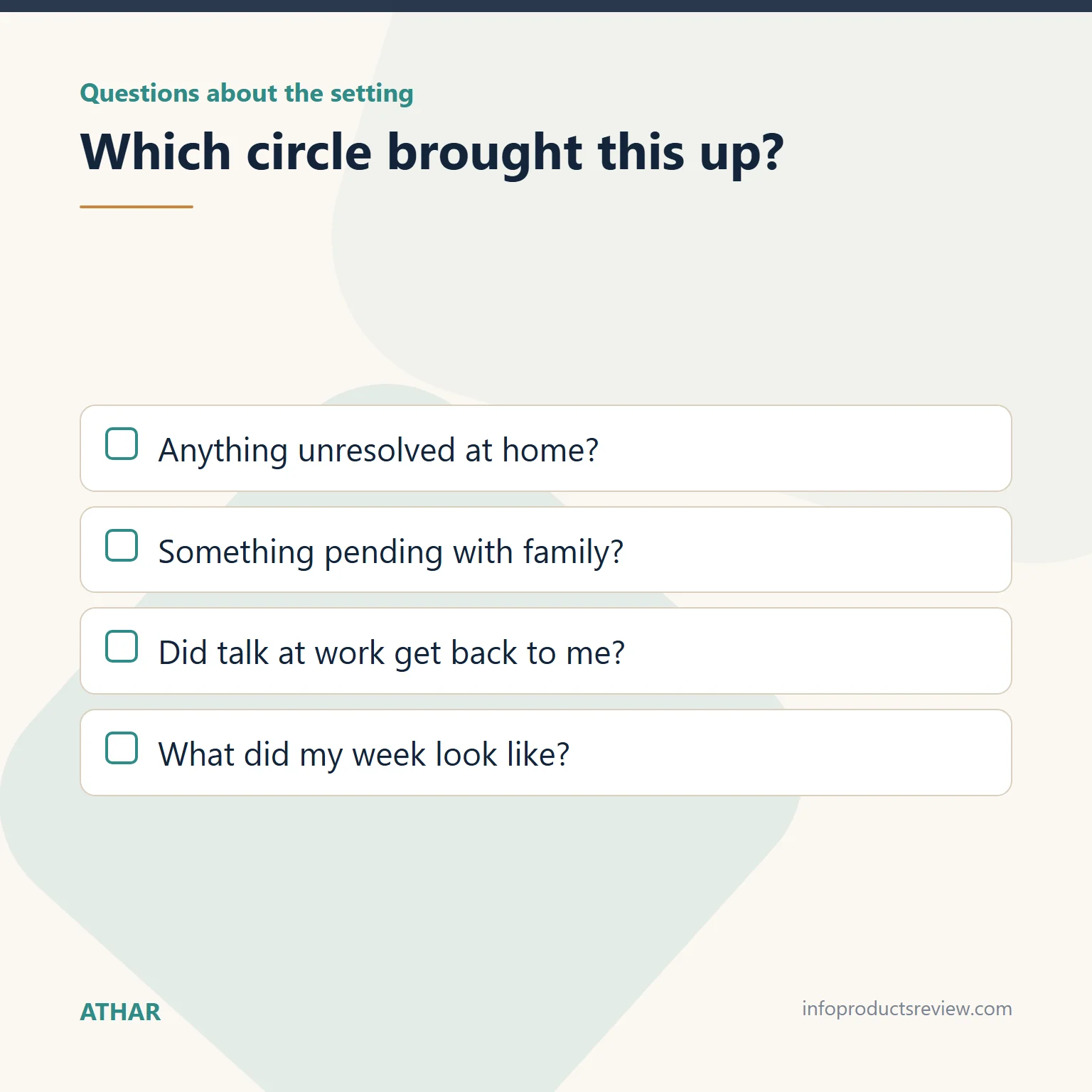
The useful question: is there something said to me, or by me, that never got resolved?
At your own family’s house
Your parents and siblings. Conversations in this circle carry long history, and after marriage many women find themselves standing between two households.
The question: is something unfinished in that circle occupying me? A scene set in your family’s house doesn’t mean anyone there wishes you harm.
At your in-laws’ house
This is where the questions cluster and where the unfairness is worst. A great deal of what gets published turns any frightening symbol in that house into a verdict on a mother-in-law or a sister-in-law. That’s an accusation without evidence.
The limit holds: a scorpion appearing in someone’s house does not make that person the subject of the dream.
At work
Talk moves fast in this circle, and it follows you home. Plenty of questions from working women describe a scene at the office or among colleagues.
The question: did I hear a comment, or did something said about me get back to me? Even if the answer is yes, the dream is not grounds for accusing a specific colleague or making a work decision.
The daily load
The circle almost nobody counts, and the one that drains the most: running the house, the kids, appointments, money, the tiredness nobody hears about.
The question: what did my week actually look like? There’s a separate section below on what health references say about stress and sleep.
In the bed or among your clothes
This version lands harder, because bedding and clothing are about as close to a person as objects get.
There’s no fixed meaning for it in the dream books, so it’s read in the context of the dream and the dreamer. A warning specific to this scene: many pages jump straight from it to the marriage or to “another woman.” That’s an accusation a dream can’t carry.
What the scorpion did
The scenes people describe are close cousins: far away, coming closer, hiding, more than one. None of them carries its own fixed meaning in the dream books.
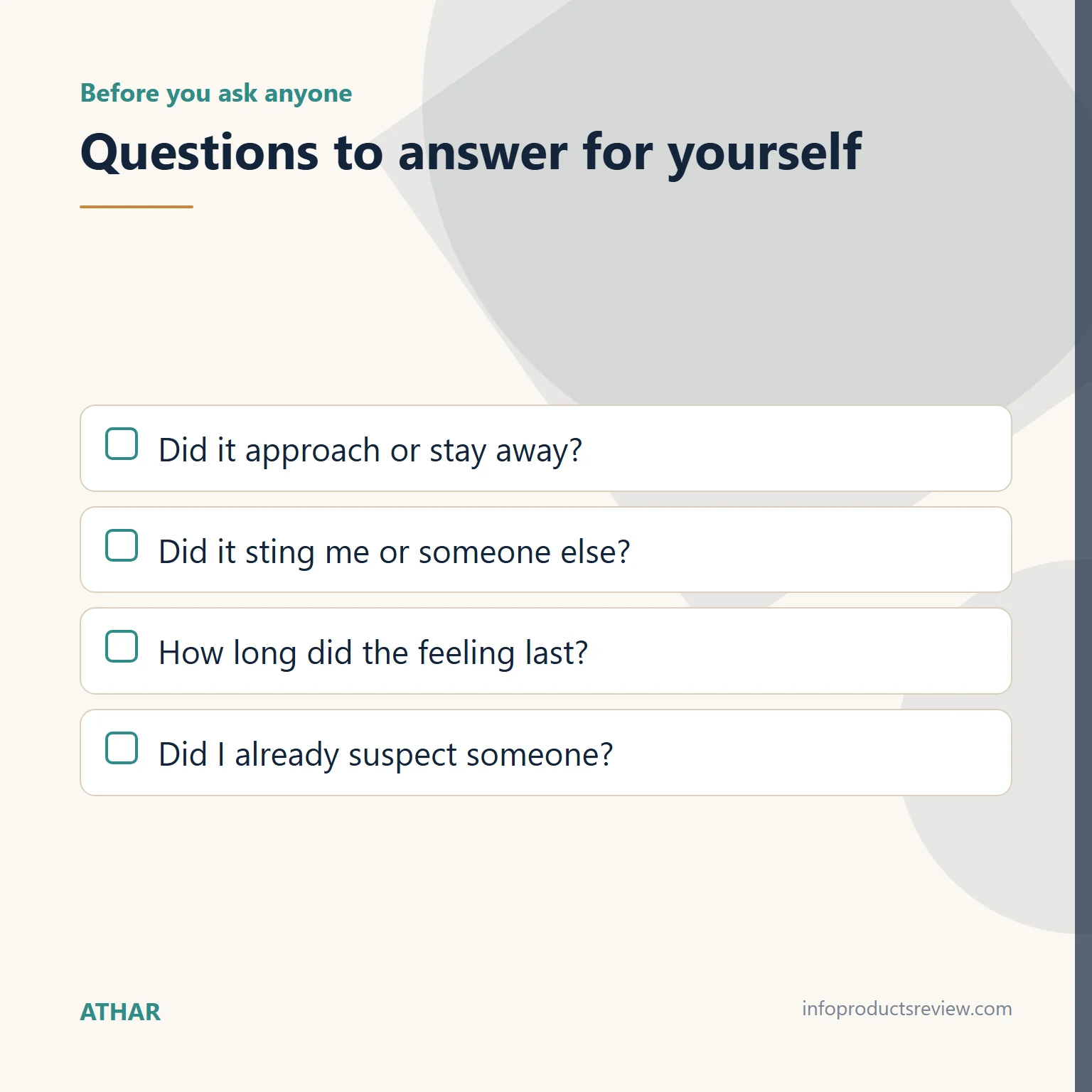
What’s useful is telling them apart in your experience, because that’s what a reading is measured against:
- Far away, never approaching. Did you wake up largely untroubled? Calm scenes leave a different residue than frightening ones.
- Coming toward you. What did you feel as it closed the distance? That feeling is worth noting — and it isn’t a verdict.
- Hiding, then gone. Did you wake with a sense that something is unclear? That describes your state, not a transmitted meaning.
- Several scorpions. Was your week crowded with small, scattered problems? A larger number doesn’t make the symbol more dangerous; the description is about weakness, not severity.
- A dead scorpion, or one you didn’t kill. No fixed meaning. The most that can be said is that it usually leaves a milder impression.
To be clear: these are questions for reading your own state. They are not interpretations handed down from Ibn Qutayba or anyone else.
What you did in the dream
This is the part most pages skip, even though it’s the clearest difference between two otherwise identical dreams.
Freezing or backing away
Extremely common. What can be said is that you woke with something unsettled still in you, which is why the feeling can last for hours.
Killing the scorpion
One of the most-asked scenes, and the one most loaded with invented meaning.
Accurately stated: the dream books give killing a scorpion no separate fixed meaning. What’s observable is that a woman who kills it usually wakes differently than one who runs from it, and that feeling is part of her state.
Nobody should tell you it means victory over a specific enemy, or that a problem ends on a schedule. That’s a promise about the future, and dreams don’t issue those.
Sweeping it out or driving it away
A quieter version, and likewise without a separate fixed meaning. Many women wake from it relieved — worth noting, not worth building a verdict on.
A scorpion in your hand, stinging people
This is the specific image Ibn Qutayba tied to backbiting.
The direction reverses here: the harm runs from the dreamer outward. Taken seriously, it’s an invitation to check your own speech — what do I say about people when they aren’t in the room?
And a limit: the line describes that particular scene, a scorpion in the hand stinging others. Not every scorpion dream makes the dreamer guilty of gossip, and no dream should be turned into a reason to punish yourself.
Being stung
The sting is the version that frightens people most, which is why it lives here inside the guide rather than on a page of its own. It isn’t a separate topic; it’s part of the same symbol.
What was transmitted is that the scorpion is a weak enemy whose harm goes no further than his tongue. The whole description sits in the territory of speech — not injury, not money.
Women describe something consistent afterward: the pain in these dreams registers emotionally rather than physically, and they wake up embarrassed or deflated rather than hurt. That’s a description of a common experience, not an extra layer of meaning.
A related question comes up constantly: does the feeling linger? Often, yes — for hours, sometimes as tightness in the chest. That’s what a frightening scene does to a nervous system. It doesn’t make the dream stronger or weaker.
Does it matter where you were stung?
Plenty of pages assign a different meaning to the hand, the foot, the face, the back. There’s no fixed meaning for that detail in the dream books, so it’s understood from the context of the dream.
What may genuinely help is that these body parts carry familiar associations in ordinary speech: hands with work and giving, feet with travel and moving on, the face with what you show in public. If that association clarifies something about your own week, use it as context — not as a rule.
Who stung you?
Sometimes the scene is specific: a scorpion in the hand of someone you recognize, or a sting that happened in front of a particular person.
The limit here is strict. A dream does not name anyone and is not evidence about a person. Someone who damages you with talk is identified from waking life or not at all. Building a grievance against a relative, a husband, or a neighbor on a sleeping image is an injustice none of us would accept if it were aimed at us.
A painless sting, or one that hit someone else
Many questions describe a sting with no pain, or a scorpion stinging someone else while you watched. Neither has a separate fixed meaning.
The difference worth noticing is that both usually leave a lighter impression than a painful sting, and that in the second you were a bystander. Neither is news of a disaster.
How you felt when you woke — and what to do first
Your feeling on waking isn’t a minor detail. It’s the most reliable thing you have, because it’s the only part that doesn’t change in the retelling.

A woman who woke calm is in a different position from one whose heart was racing. If you woke up in tears, our guide to crying in a dream may help. The second should settle herself before she searches, because searching while frightened means accepting the first frightening answer you find.
The prophetic guidance for someone who sees a dream they dislike is practical and short: seek refuge in God from Satan, spit lightly to your left three times, turn onto your other side, tell no one about it — and it will not harm you. That addresses the effect on your heart directly, which is why it comes before any interpretation. Our dream interpretation guides all start there.
إذا رأى أحدكم الرؤيا يكرهها، فليبصق على يساره ثلاثًا، وليستعذ بالله من الشيطان ثلاثًا، وليتحوّل عن جنبه الذي كان عليه
What this dream cannot establish
This list is deliberate, because most of the damage in this topic comes from asking a dream to carry what it cannot.
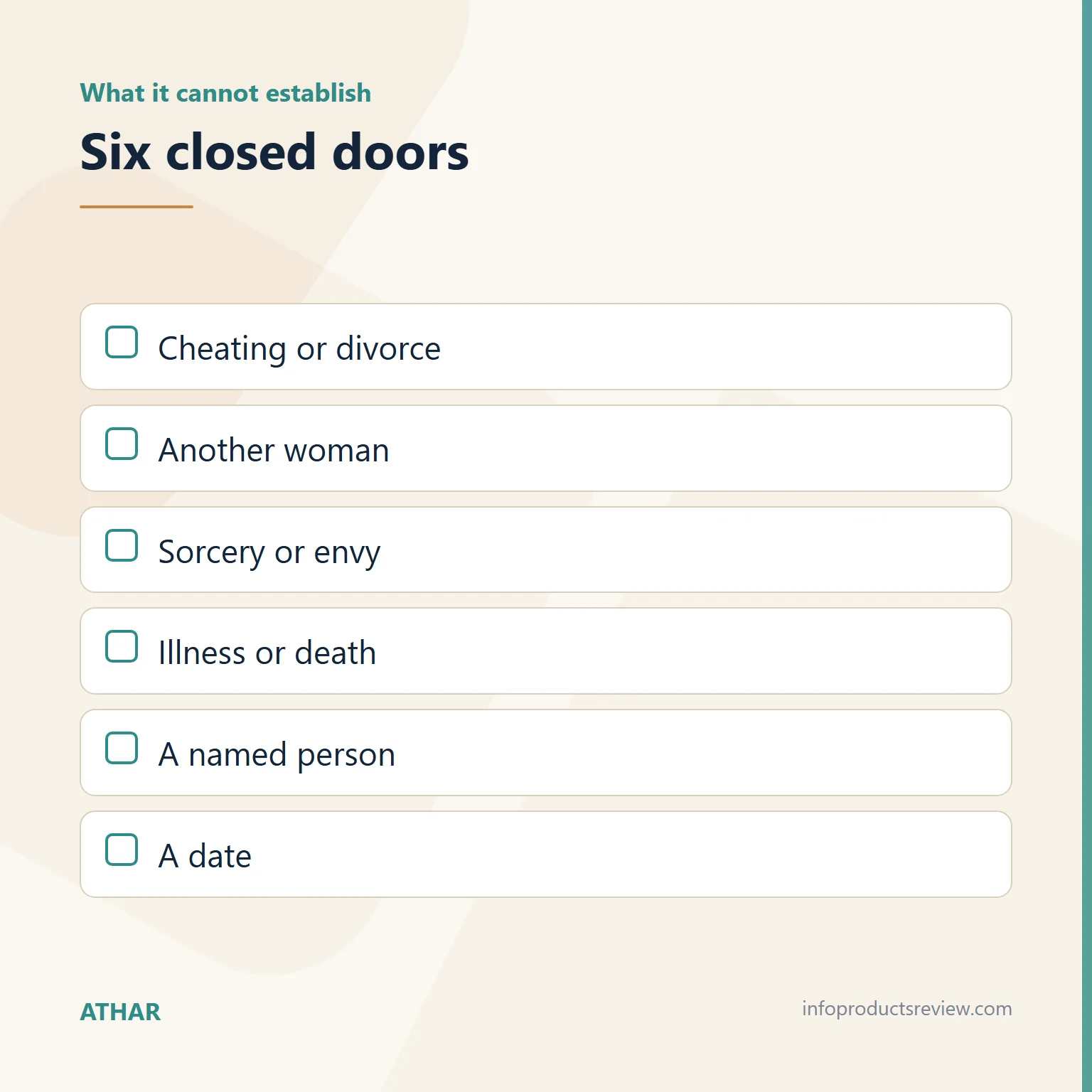
- It is not evidence of cheating. Nothing in the classical material connects this symbol to it.
- It does not predict divorce or the end of a relationship.
- It does not point to “another woman.” This is among the most common things said to married women, and it has no basis.
- It does not establish sorcery or envy. That route produces heavy, useless anxiety.
- It does not diagnose illness for you or your family, and it does not indicate death.
- It does not name a person. Even a familiar face in a dream is an image, not testimony.
- It does not set a date. Nobody can tell you something will happen within days or weeks.
What health references say about distressing dreams
This section isn’t interpretation and has nothing to do with scorpions. It comes from general health references about sleep, and it’s kept separate on purpose so it never gets mixed up with what the interpreters wrote.
These references note that events from the day often work their way into your thoughts during sleep, and that people dealing with stress or anxiety are more likely to have frightening dreams. They also note that sad, traumatic, or worrying situations can provoke nightmares, and that after a stretch of insufficient sleep a person often experiences a REM rebound that can bring vivid dreams and nightmares.
They also describe REM periods growing longer and deeper as the night goes on, which is part of why dreams cluster in the last hours before you wake.
All of that is a general description of sleep. It isn’t a verdict on your dream, and it doesn’t rule out the dream having meaning. If distressing dreams are frequent and they’re affecting your days, a doctor or a sleep specialist is a better use of your time than another interpretation page.
Sources cited on this page
- Primary religious source Muslim ibn al-Hajjaj, Sahih Muslim, p. 1003
- Primary religious source Muhammad ibn Isma'il al-Bukhari, Sahih al-Bukhari, vol. 9, p. 43
- Classical interpretive opinion Ibn Qutayba al-Dinawari, Ta'bir al-Ru'ya, ed. Ibrahim Salih, p. 198
- General health reference — does not interpret the dream symbol National Institute of Neurological Disorders and Stroke (NINDS), Brain Basics: Understanding Sleep
- General health reference — does not interpret the dream symbol Sleep Foundation — Eric Suni; medically reviewed by Abhinav Singh, MD, Why We Have Nightmares (And How to Prevent Them)
When the dream keeps coming back
Nothing in the dream books makes repetition a sign of a stronger meaning or a confirmation that something is coming.
The more useful question is practical: what in my days keeps bringing this image back? That beats asking how many times you have to see it before it “comes true.”
And the sleep section above is worth rereading here, since stress and short sleep both bear on how often unpleasant dreams show up.
What to do after the dream
- Settle first, search second. The guidance for a distressing dream comes before any interpretation.
- Don’t broadcast it. Public groups especially — most of what comes back is guesswork, and some of it wounds. We make the same point about embarrassing dreams.
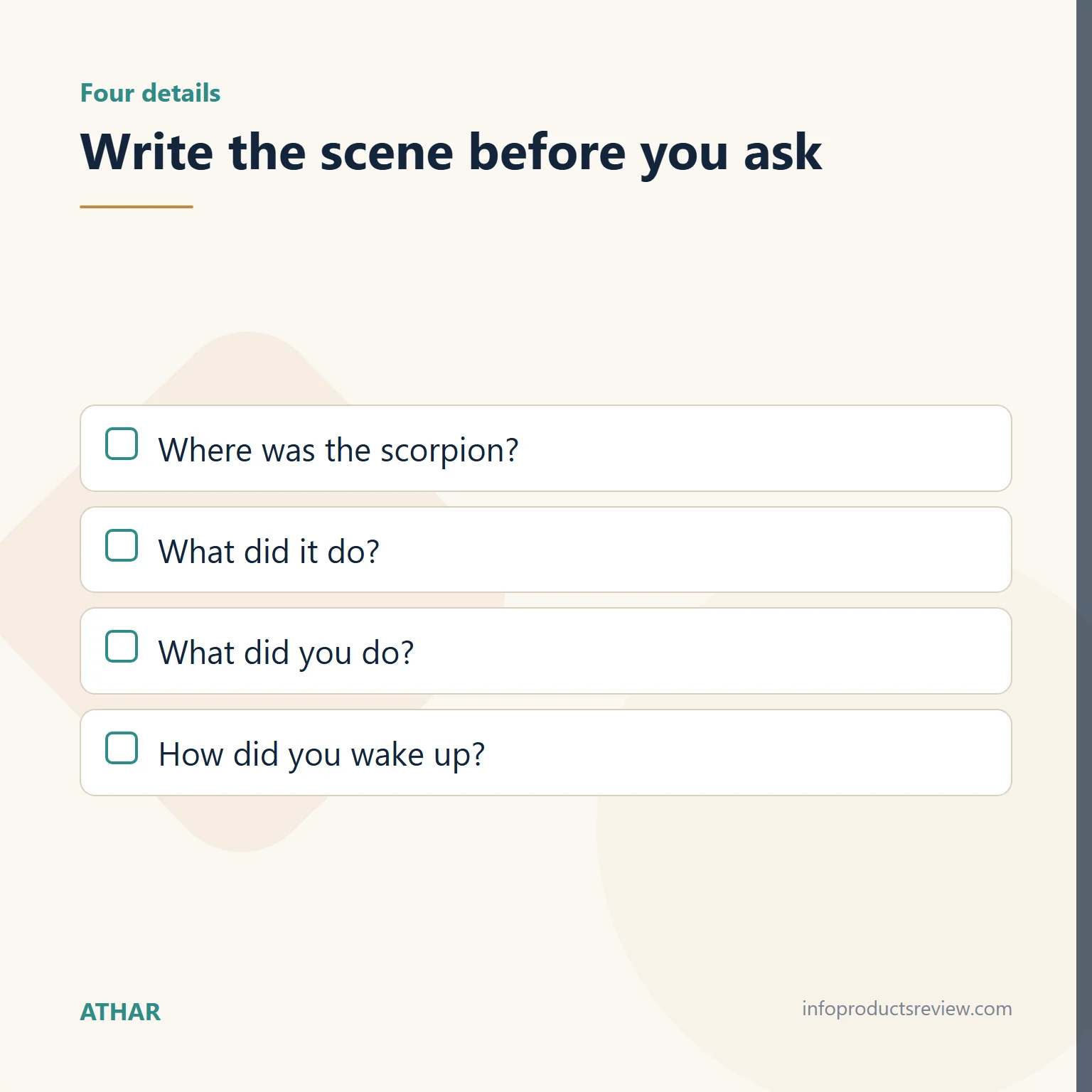
- Write the scene down plainly: where the scorpion was, what it did, what you did, how you woke.
- Separate your suspicion from the dream. If a name appeared instantly, ask whether you have evidence from waking life. If not, the dream hasn’t supplied any.
- Check your own speech if the scene was a scorpion in your hand stinging people — that’s the image tied to backbiting.
- Look at your sleep. If bad dreams are piling up alongside short nights and steady pressure, tending to your sleep will do more than another search.
- If you want to ask someone, ask privately, choose someone whose knowledge you trust, and stop at one steady answer.
How to spot a fear page
You’ll pass dozens of pages on this symbol, and most repeat the same failures. Quick tells:
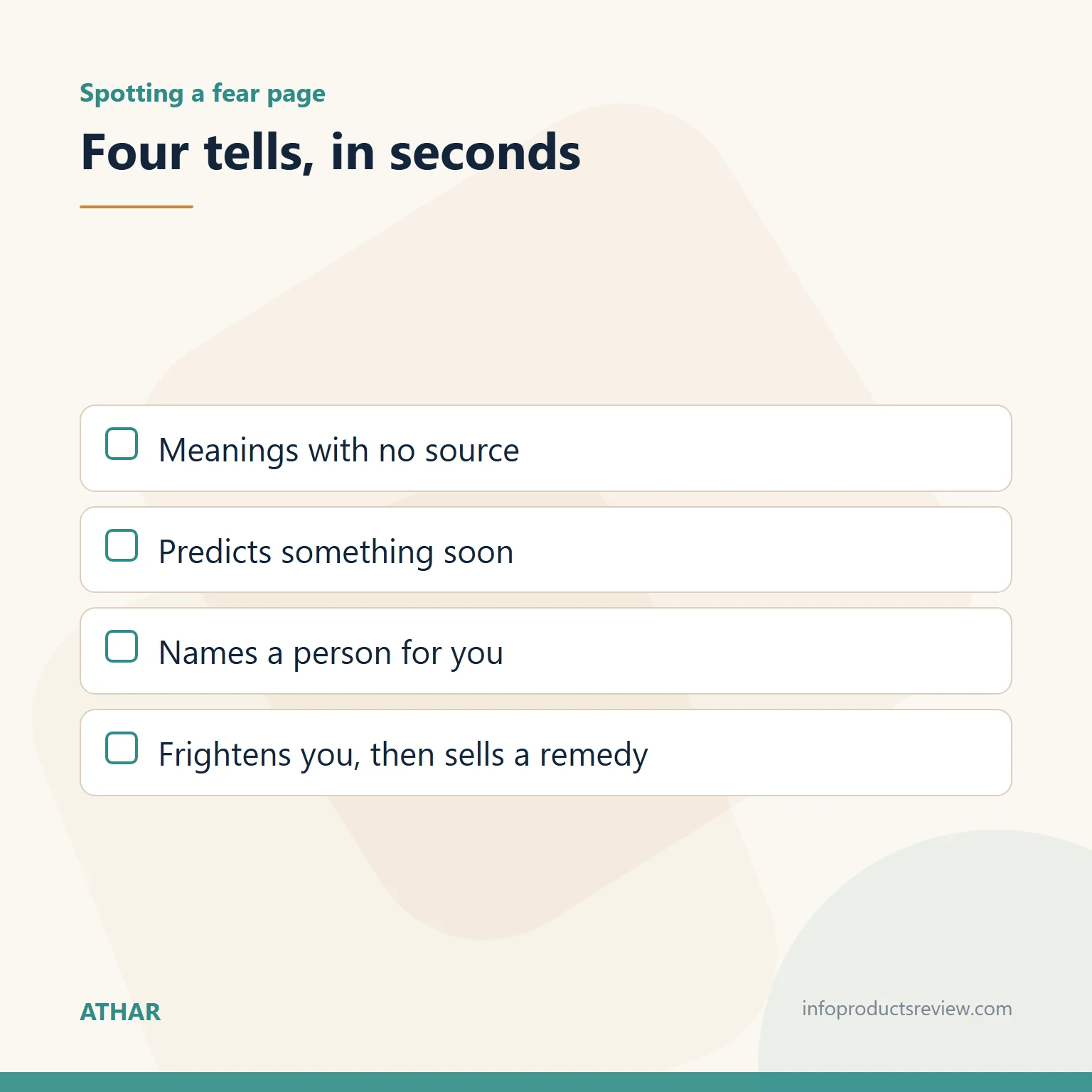
- Does it say where its material came from? A page listing ten meanings with no source is writing them itself.
- Does it predict? “Soon,” “within days,” “this will happen” — that’s invention.
- Does it name people? Any page telling you the symbol is your husband or your mother-in-law has left what this field can actually do.
- Does every detail have a meaning? A full chart of colors, body parts, and times of night is filler.
- Does it reach for sorcery and envy? That’s fear, not interpretation.
- Does it frighten you and then offer a remedy? That’s a sales funnel.
- Does it admit a limit? An honest page sometimes says there’s no fixed meaning for this. A page that knows everything knows nothing.
About what gets attributed to Ibn Sirin
Search results fill up with pages that hang this symbol on Ibn Sirin’s name and then list confident meanings with no clear source.
Statements are not attributed to Ibn Sirin without an established source. What circulates comes from a book attributed to him whose attribution specialists do not consider established, so no meaning in this guide rests on it.
There’s a fuller account on our page about what is actually established from Ibn Sirin. Muhammad ibn Sirin was a well-known early scholar, and most of what reached us about his readings comes as scattered reports narrated by others, not a book he wrote. The difference between attributed and established is the whole point.
Color and size
Black, yellow, red; huge or tiny. There’s no fixed meaning for these details in the dream books, so they’re read in context.
What’s observable is that color and size change how strong an impression the dream leaves, and that impression is part of your state. “Black means X, yellow means Y” has nothing behind it.
A rule that serves you across every symbol: the more granular a page gets without a source, the less it’s worth.
Reading your dream, step by step
Instead of hunting for a sentence that matches your night, work through it in this order:
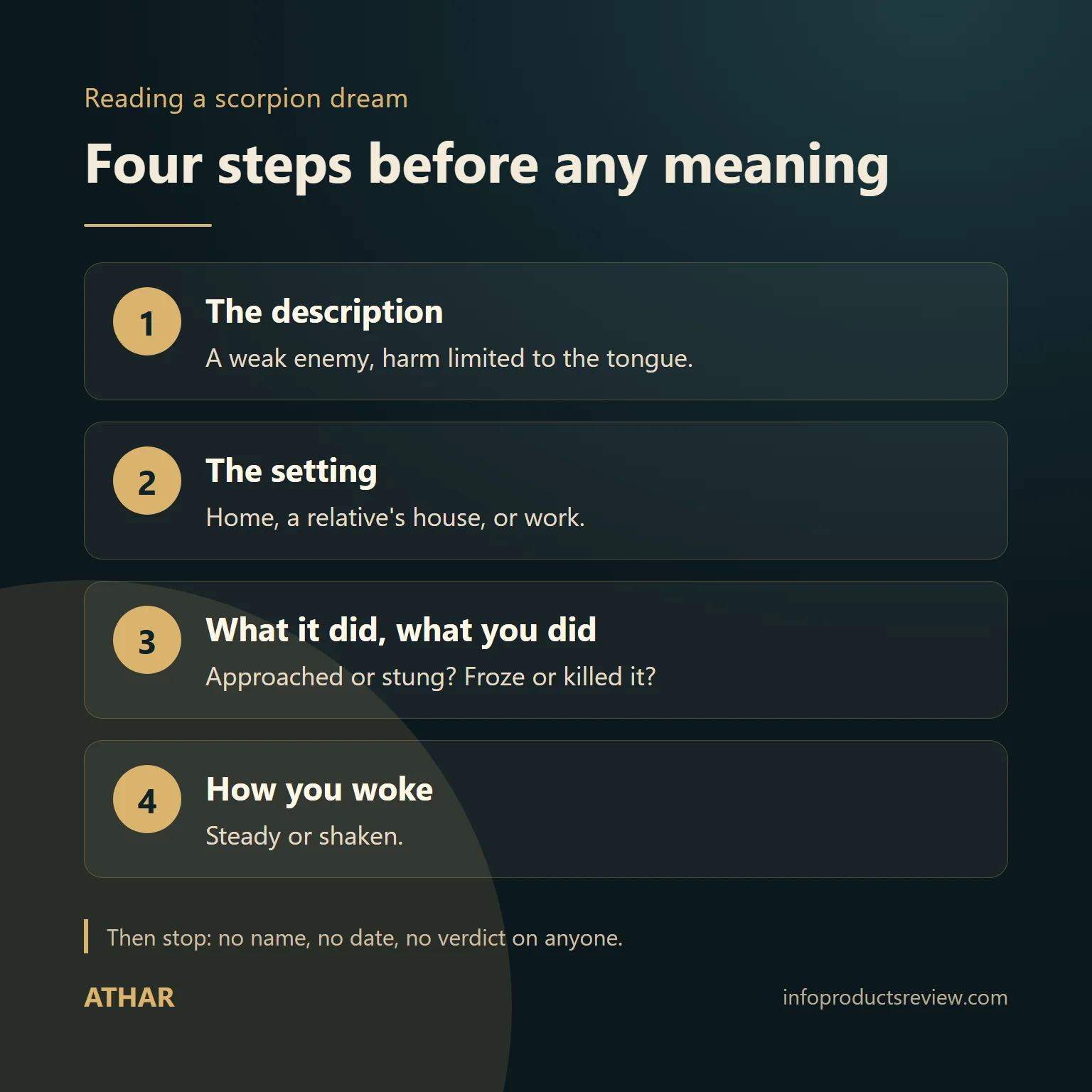
- Start with what was transmitted: a weak enemy, harm limited to the tongue, no distinction between close and distant.
- Ask about the setting: your home, a relative’s house, work. What in that circle is occupying you?
- Then what the scorpion did: distant, approaching, hidden, stinging.
- Then what you did: froze, backed away, killed it, held it.
- Then how you woke: steady or shaken.
- Then stop. No name, no date, no verdict on anyone.
That order protects you from the common failures, because it starts from the source and ends at its limit instead of starting from fear.
Three worked examples
These are illustrations written for this guide. They aren’t dreams reported by anyone, and they aren’t statements from the interpreters.
One. A woman sees a scorpion crossing her living room, backs away, shuts the door, and wakes up calm. The useful question for her: is there a remark sitting unresolved in this house? What nobody should tell her: there’s an enemy under your roof.
Two. A woman dreams a scorpion stings her hand and wakes embarrassed. That same day she’d heard that something she said had been passed around. The transmitted description centers on harm through speech, and her waking week explains the sting of it. What nobody should tell her: it was your sister-in-law.
Three. A woman sees a scorpion in her own hand, stinging people, while she watches. That’s the specific image Ibn Qutayba connected to backbiting — so the honest move is reviewing her own speech, not hunting for whoever is out to get her.
True dreams, self-talk, and jumbled dreams
One of the most calming things to know is that what happens in sleep isn’t all one category.
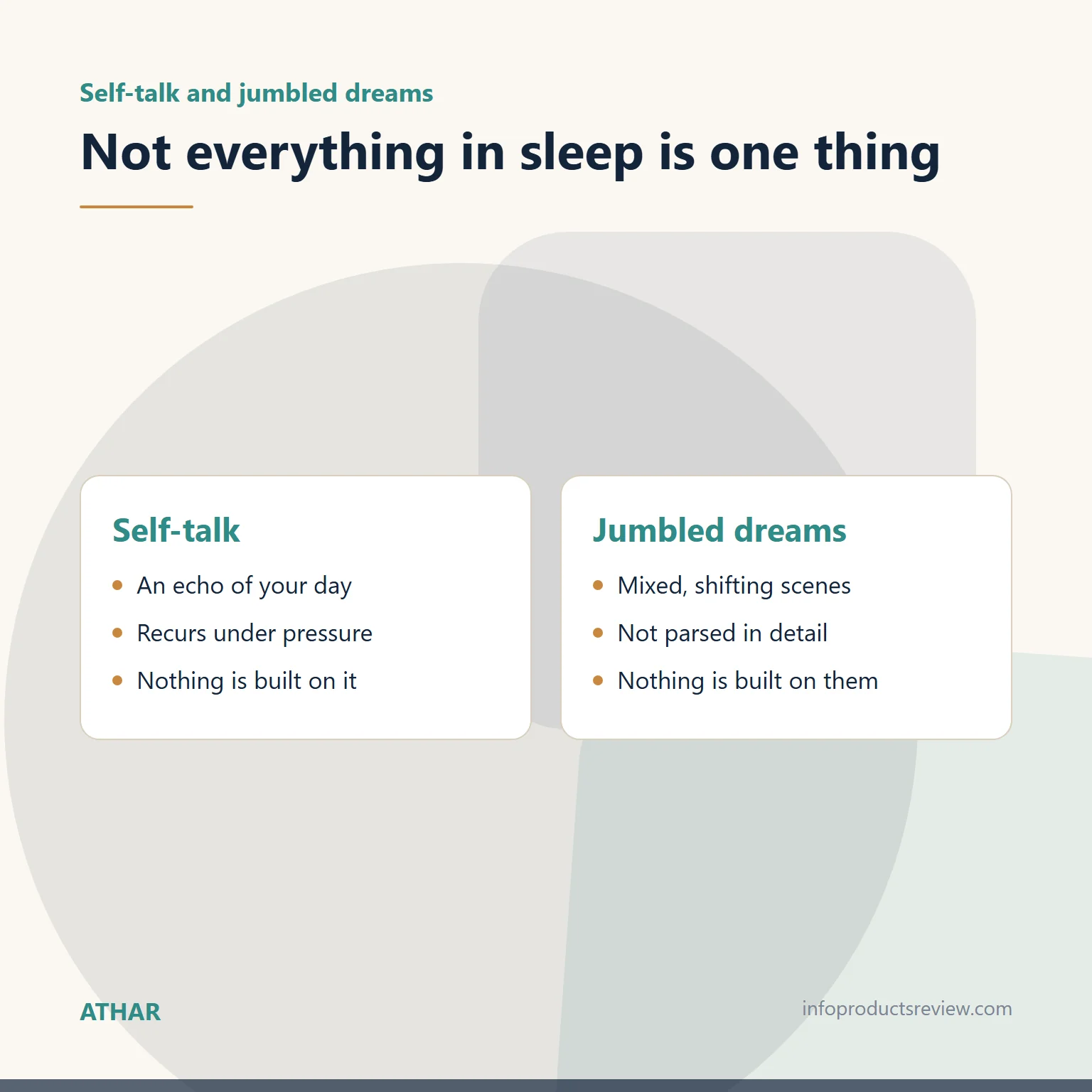
Some of it is your own mind replaying what occupied you — we cover that split in dreams versus visions. Some of it is a jumble that nothing should be built on. And some of it is the good dream.
Nobody holds a reliable instrument for sorting a specific dream into one of those boxes. That’s why the people who knew this field asked the dreamer about their circumstances before answering — circumstances are what tilt the reading.
Practically: if your week was crowded, you heard something that stung, and then you dreamed of a scorpion, it’s entirely reasonable that the dream is an echo of the week. Saying so doesn’t diminish dreams.
When there’s no entry for your dream
Many of the scenes people ask about have no fixed meaning anywhere: a particular color, an unusual place, behavior that makes no sense.

The honest answer is that there’s no fixed meaning for that detail in the dream books, so it’s understood in context. That answer is useful, because it stops you from grabbing an invented meaning to fill the gap.
What you’re left with is the transmitted description, your waking circumstances, and how you felt. Enough for a calm reading; not enough for a verdict. That’s the actual boundary of this field.
When someone else has the dream, or your children are in it
A steady stream of questions starts with “my husband saw a scorpion in our house” or “my mother saw one sting me.”
A dream is read against the circumstances of the person who had it, not the person mentioned in it. Someone who dreams something frightening about a relative is most plausibly showing their own worry about someone they love. One person’s dream never becomes a verdict on another person, and it shouldn’t turn into an accusation passed around the family.
Children appearing in a scene with a scorpion frightens mothers more than anything else here, and fear pages exploit it. Nothing makes that scene evidence of a child’s illness, of harm coming to them, or of envy directed at them.
A mother’s fear for her children is near-constant in waking life, so seeing it take shape in sleep is understandable. If something still sits in your chest afterward, the remedy is the one above: seek refuge, don’t retell it, and get on with your day.
Asking an interpreter
Asking is fine when it’s done well: privately, and with someone whose knowledge and character you trust.
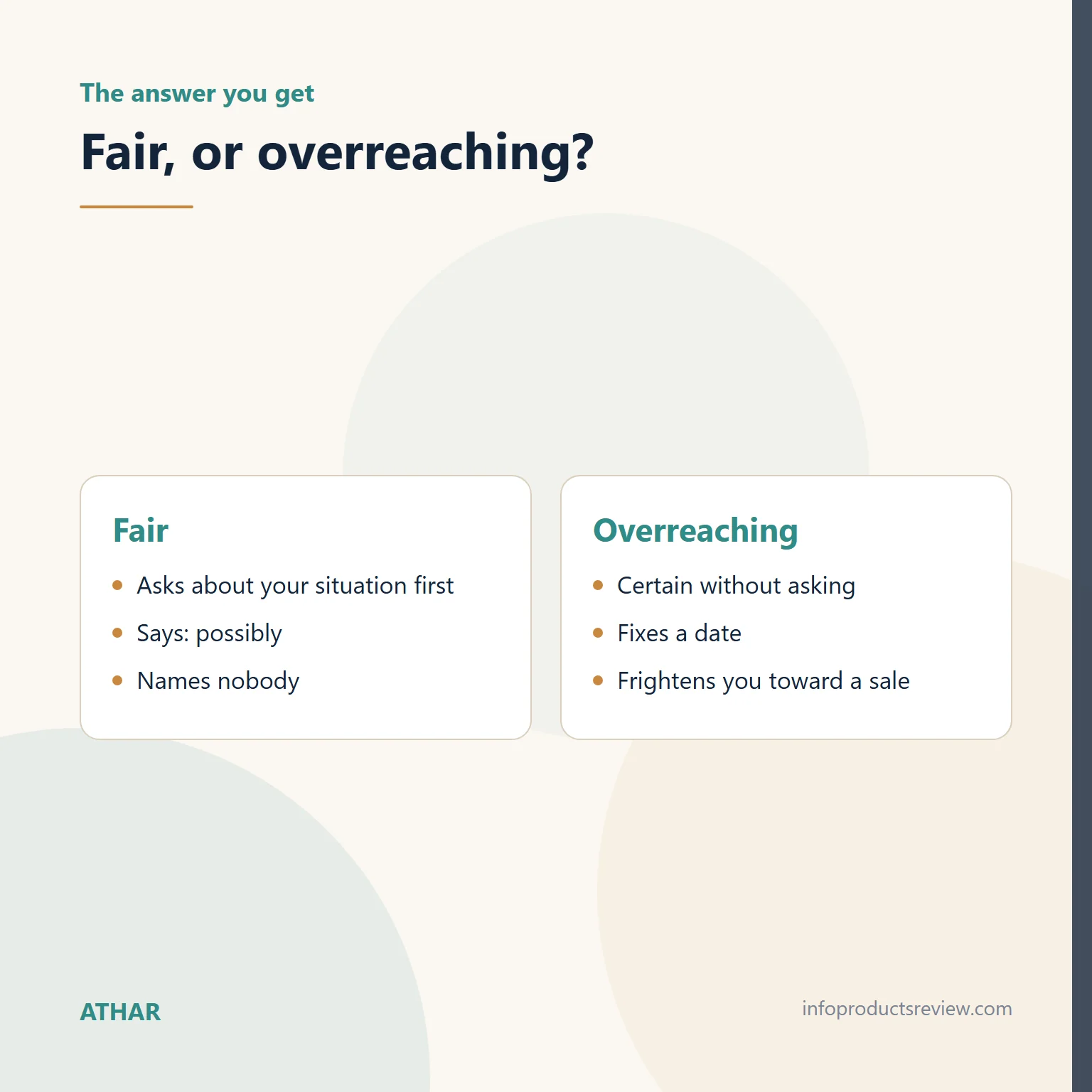
A fair interpreter asks about your circumstances before answering, says “possibly” and “God knows best,” refuses to name anyone, and neither sets a date nor frightens you toward a purchase.
If you get a categorical answer that names a person or fixes a timeline, the problem is the answer, not your dream. Take one steady response and stop there — asking repeatedly in this field multiplies anxiety without adding knowledge.
Why it frightens more than it signifies
There’s a real gap between how badly this dream rattles you and what was actually transmitted: a weak enemy whose harm is limited to talk.
Part of that is the scorpion itself. Most of us carry an association with venom and sudden pain — the same dynamic runs through snake dreams, including the version written for married women, built from childhood warnings long before anyone thought about dream interpretation. When the image shows up at night it drags all of that with it.
And in sleep you don’t have the tools you’d use awake to talk yourself down, so you surface with an impression far larger than the symbol’s weight.
Knowing that helps on its own. It explains your reaction without making the dream carry something it can’t — and it’s exactly the gap fear pages exploit, building a meaning sized to your panic rather than to the source.
Don’t let the dream damage your household
Practically, this matters more than anything else on the page, because the harm in this topic rarely comes from the dream. It comes from what people do next.
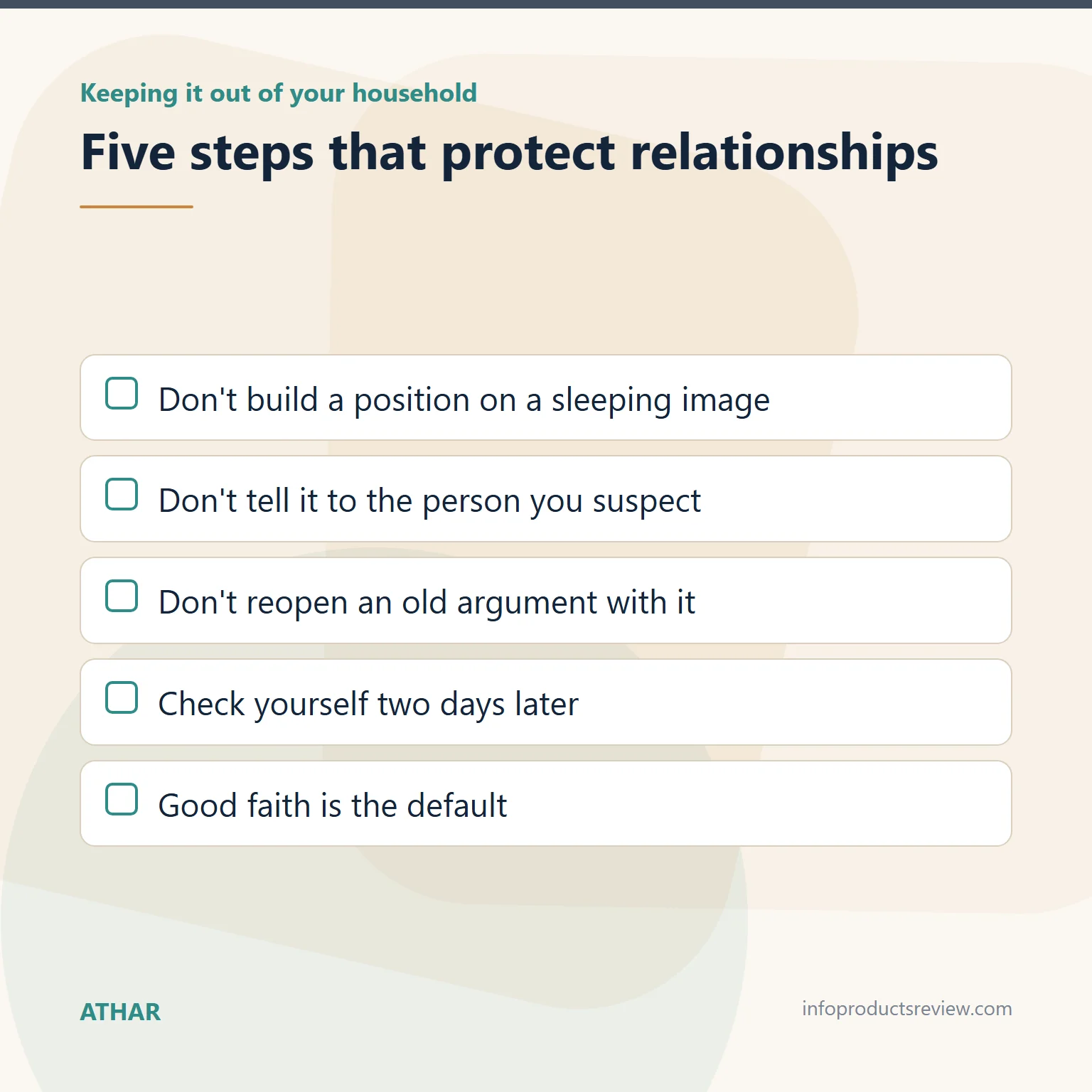
A woman wakes up shaken, reads that the scorpion is her husband or her mother-in-law, and starts carrying something against a person who did nothing. It can last for weeks — in cooler conversation, in reading every gesture the worst way. A dream ends up manufacturing a problem that didn’t exist.
- Don’t build a position on a sleeping image. No evidence while awake means no evidence.
- Don’t tell the dream to the person you suspect. They’ll hear an accusation even if you didn’t intend one.
- Be careful with interpreters who know your family. The answer starts bending toward what they already know about your relationships.
- Don’t use the dream to reopen an old argument. If something is unresolved, handle it the way waking problems get handled — a calm conversation at the right time.
- Check yourself two days later. If your view of someone has shifted with no new reason, the dream did that, and good faith is the default to return to.
Plenty of long family rifts started with a sentence said right after a dream, then grew until nobody remembered where it began.
When a dream takes up too much room
There’s a difference between asking about a dream once and moving on, and a dream that moves in.
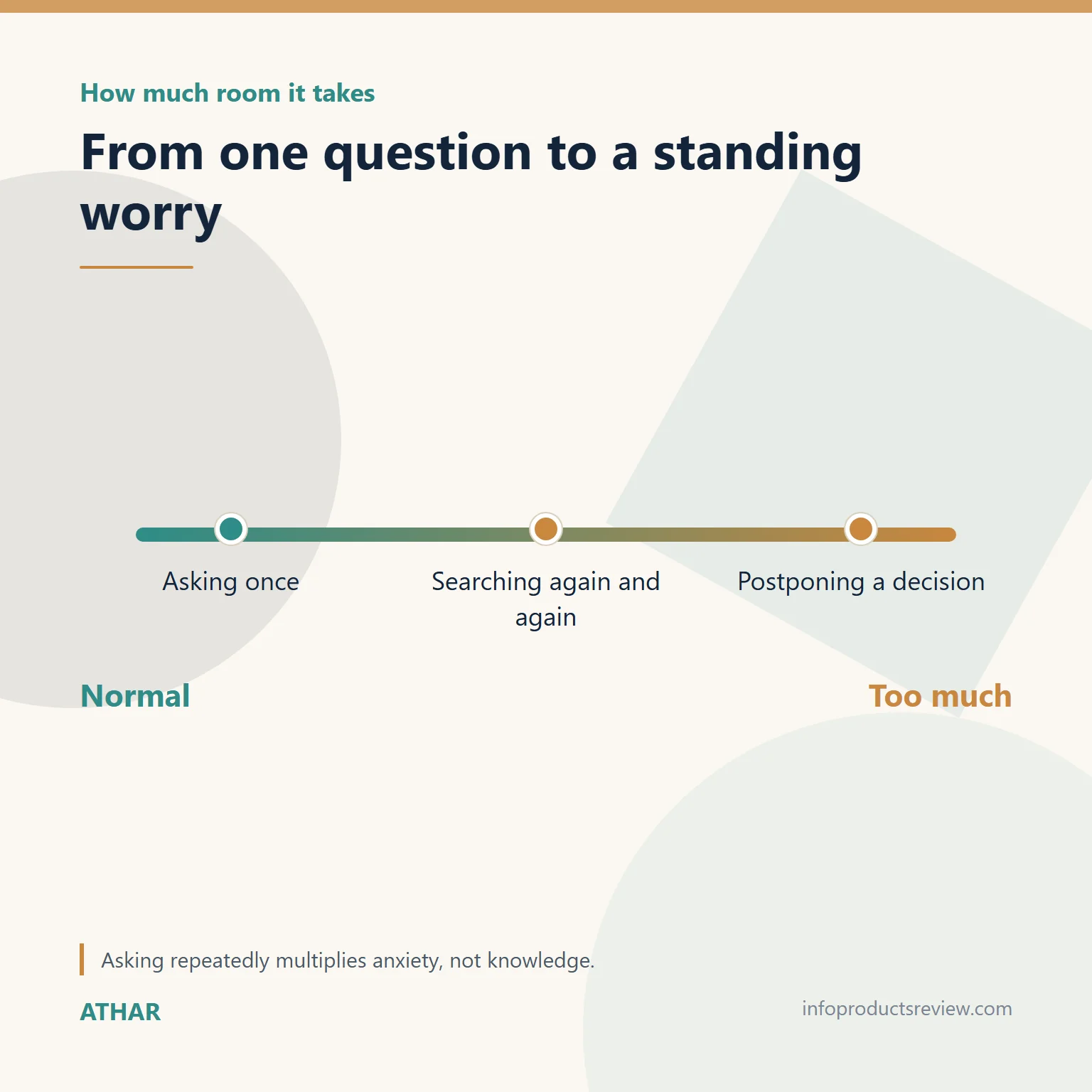
The signs are recognizable: rereading page after page on the same symbol, asking several people hoping for a comforting answer, postponing a real decision to see what the next dream reveals, or feeling your view of people shift with nothing in waking life to justify it.
That does double damage — it feeds anxiety, and it hands dreams an authority they were never meant to have.
Dreams don’t outrank your work, your good opinion of people, or taking practical steps. The guidance for a distressing dream is short for a reason: seek refuge, don’t retell it, get on with your day.
And if the distress is severe or persistent, or bad dreams are damaging your sleep and your days, that belongs with a specialist — it’s a sleep and wellbeing question, not a symbol question.
Before you close this page
- The transmitted description: a weak enemy, harm limited to the tongue, no distinction between friend and enemy.
- The image that flips it: a scorpion in your own hand, stinging people.
- What helps you read it: the setting, what the scorpion did, what you did, how you woke.
- What being married doesn’t change: the description itself.
- What’s never said: a person’s name, a date, or a verdict of betrayal, illness, or sorcery.
- What comes first: settling yourself, not hunting for the scariest interpretation.
Common questions
Does a scorpion in a married woman’s dream mean her husband?
No. No classical interpreter made the scorpion a sign of a husband. The transmitted description says friend and enemy are alike to this character, which means it isn’t tied to any particular relationship.
Does this dream mean my husband is cheating?
No. Cheating is not established by a dream, and nothing links this symbol to it. The description centers on harm through speech.
I saw a scorpion inside my house. Is there an enemy in my home?
There’s no fixed meaning for where a scorpion appears. The better question is whether something in that circle is unresolved. A scene in your house doesn’t make anyone in it an enemy.
What does killing a scorpion mean for a married woman?
The dream books give it no separate fixed meaning. What’s observable is that killing it leaves a different feeling than fleeing, and that feeling is part of your state. It isn’t a promise that a problem ends on a schedule.
Does it matter where the scorpion stung me?
There’s no fixed meaning for the location, so it’s read in context. Familiar associations — hands with work, feet with travel — can be used as context, not as a rule.
I woke up terrified. Does that mean the dream was bad?
Fear describes your state, not the dream’s status. For a dream you dislike, the guidance is to seek refuge in God, spit lightly to your left three times, turn onto your other side, tell no one — and it will not harm you.
Is a scorpion dream a sign of sorcery or envy?
No. That connection rests on nothing, and it’s one of the fastest routes into heavy, pointless anxiety.
I saw many scorpions. Is it more serious?
There’s no fixed meaning for the number, and the transmitted description is about a weak enemy. A higher count doesn’t change that.
Does this dream indicate illness or death?
No. A dream doesn’t diagnose anyone and doesn’t indicate a lifespan. Health worries belong with a doctor.
It happened at my in-laws’ house. Is it about my mother-in-law?
No. A scorpion appearing in someone’s house doesn’t make them the subject, and a dream names no one.
It repeats almost weekly. What does repetition mean?
Nothing makes repetition a confirmation of something coming. Ask what in your days keeps returning the image. Health references also note that stress and insufficient sleep both increase distressing dreams.
Should I tell my husband or my family?
For a dream you dislike, the guidance is not to retell it. And a frightening scene repeated aloud can plant a suspicion in the listener about someone else, so keeping it to yourself is safer.
Could this just be anxiety?
It could. Health references note that events from the day often enter your thoughts during sleep and that people under stress are more prone to frightening dreams. That’s a general description of sleep, not a verdict on your dream, and it doesn’t rule out meaning.
The scorpion was tiny. Is the meaning milder?
Size has no fixed meaning. It affects how strong an impression you’re left with, not the transmitted description, which speaks of a weak enemy in any case.
We just moved. Does that change anything?
Moving is genuinely preoccupying, and it’s reasonable for that to surface in sleep. It doesn’t mean the new home holds something bad or that moving was a mistake.
Should I give charity or pray because of this dream?
Charity and prayer are good in any case and need no dream to prompt them. But no dream obligates a specific act, and skipping one brings no harm. Anyone using a dream to obligate you — especially toward a paid service — has overstepped.
I woke up still feeling it where I was stung. Does that mean something?
Lingering sensation after a distressing dream is widely reported and isn’t specific to this symbol, and there’s no fixed meaning for it. If real pain or insomnia keeps recurring, that’s a question for a doctor.
What should I do right now?
Settle yourself, don’t broadcast the dream, and write down the four details: the setting, what the scorpion did, what you did, and how you woke. Then read it against your own circumstances and stop at the limit — no names, no dates.
The bottom line
Ibn Qutayba described the scorpion as a weak enemy whose harm doesn’t go past his tongue and who treats friend and enemy alike, and said that a person holding a scorpion that stings others is someone who backbites people. Those are the transmitted meanings. Everything else is read from the context of your dream and your life.
Being married changes none of it. The dream doesn’t point to your husband, and it isn’t evidence of betrayal, divorce, illness, sorcery, or envy. What you’ve read here are possibilities measured against your own circumstances — not news about tomorrow.