


You dreamed about feces, woke up embarrassed, and want to know one thing: does this dream mean something different because you’re a woman? The short answer is no. In the books of dream interpretation the closest meaning of this symbol is money — relieving yourself is money leaving your hands, the feces itself is money, and an amount so large it floods the place like a downpour is worry rather than money.
That reading is general. It wasn’t written for women, and it draws no line between single, married and pregnant women. What differs for you is what you’re living through, not what the symbol means. For the full reading by place, amount and what happened, see our complete guide to dreaming about feces.
The bottom line
- The closest meaning: feces in a dream is money, and relieving yourself is money leaving your hands. It’s one meaning for men and women alike, and it doesn’t change because the dreamer is a woman.
- What changes it: the amount, and whether it touched you. An overwhelming amount, like a flood, is worry and fear rather than money. Being smeared with it is read as unlawful money — an interpreter’s view that accuses nobody.
- Two common cases: relieving yourself in front of people sits closer to a fear of something private being exposed, or of plain embarrassment. Changing a baby’s diaper is an echo of daily care, with no link to a coming pregnancy.
- A possibility, not a promise: these are possible meanings, not news about the future. Nothing about marriage, pregnancy, a baby’s sex, a birth, betrayal, divorce, illness, magic or envy can be read out of this dream.
- Single, married, pregnant: the books give no meaning specific to any of them for this symbol. The meanings passed around for each situation usually come with no book and no author.
- If your case isn’t listed: many versions of this dream have no fixed meaning in the books at all. Read yours by how you felt and by what’s on your mind in waking life, and leave it at that.
If you’ve read elsewhere that the dream means something specific for someone in your situation, ask where that comes from. If no book and no author is named, it isn’t something to build on.
What this page covers
- The bottom line
- Why every woman looks for a meaning specific to her
- What the books of dream interpretation say about feces
- Does the meaning change for single, married and pregnant women?
- Single women: what does the dream mean for you?
- Married women: what does the dream mean for you?
- Pregnant women: what does the dream mean for you?
- Divorced and widowed women: context without overreach
- In a toilet or the usual place
- Relieving yourself in front of people: fear of exposure
- Feces on your clothes or body
- A child’s diaper
- Cleaning it up
- So much it floods the place
- Relieving yourself in bed
- Reading the dream by how you felt, not by your status
- How do you choose between the possible meanings?
- Privacy first: don’t post an embarrassing dream
- Where the “for single, married, pregnant” split comes from
- Modesty and embarrassing dreams: is something wrong with me?
- Should I tell my husband or my mother?
- When an interpreter tells you something frightening
- What’s actually established in Islam about dreams
- Common claims that need correcting
- What can’t be read out of this dream
- What to do after the dream
- Examples
- Quick table: the picture, the context, and what it can’t tell you
- Related dreams
- Frequently asked questions
- What does dreaming about feces mean for a woman?
- Does the meaning differ for single, married and pregnant women?
- Does it mean marriage soon for a single woman?
- Does it mean betrayal or divorce for a married woman?
- Does it show the baby’s sex for a pregnant woman?
- I dreamed I was changing a baby’s diaper. Am I pregnant?
- What does relieving yourself in public mean in a woman’s dream?
- Does feces on my clothes mean there’s unlawful money at home?
- Is the dream a sign of magic or envy?
- Is the dream a warning of illness?
- What should I do after an embarrassing dream like this?
- Is this interpretation definitive?
- In summary
Why every woman looks for a meaning specific to her

It’s natural to ask, “But what does it mean for me?” Dream sites split every symbol into “for a single woman,” “for a married woman,” “for a pregnant woman” and “for a divorced woman.” Seen often enough, that split makes readers assume each situation must have its own separate meaning.
On many of those pages, though, the split rests on no book at all. It’s a template filled with predictable phrases: single women are told “marriage,” married women “marital problems” or “money,” pregnant women “birth” or “the baby’s sex.” Ask where those phrases come from and you won’t be given a book or an author.
You may have landed here after an embarrassing dream you hesitated to even search for: feces on your clothes, in a toilet with no door, or in your child’s room. Then page after page told you what it “means” for you — marriage soon, betrayal, a boy or a girl, an easy birth.
This is simpler than it looks. The page explains why none of that should be relied on, and what’s left of the dream once it’s set aside. It’s written for any woman who has had this dream: single, married, pregnant, divorced or widowed.
The US National Institute of Neurological Disorders and Stroke says in its guide to sleep that events from the day often invade our thoughts during sleep, and that people under stress or anxiety are more likely to have frightening dreams.
That’s about sleep in general, not this symbol. But it explains why women’s dreams vary with what they’re going through, without the symbol itself changing meaning.
A student waiting to give a presentation, a mother who spent the day on diapers and laundry, and a pregnant woman who wakes several times a night could each have a dream close to this one. The reason is usually what her day held, not her marital status.
Before the details, it helps to know how this site reads any symbol. Our guide to dream interpretation sets out the approach: what the sources actually say first, then the limits. Many embarrassing dreams are simply the mind replaying the day’s concerns while you sleep.
What the books of dream interpretation say about feces
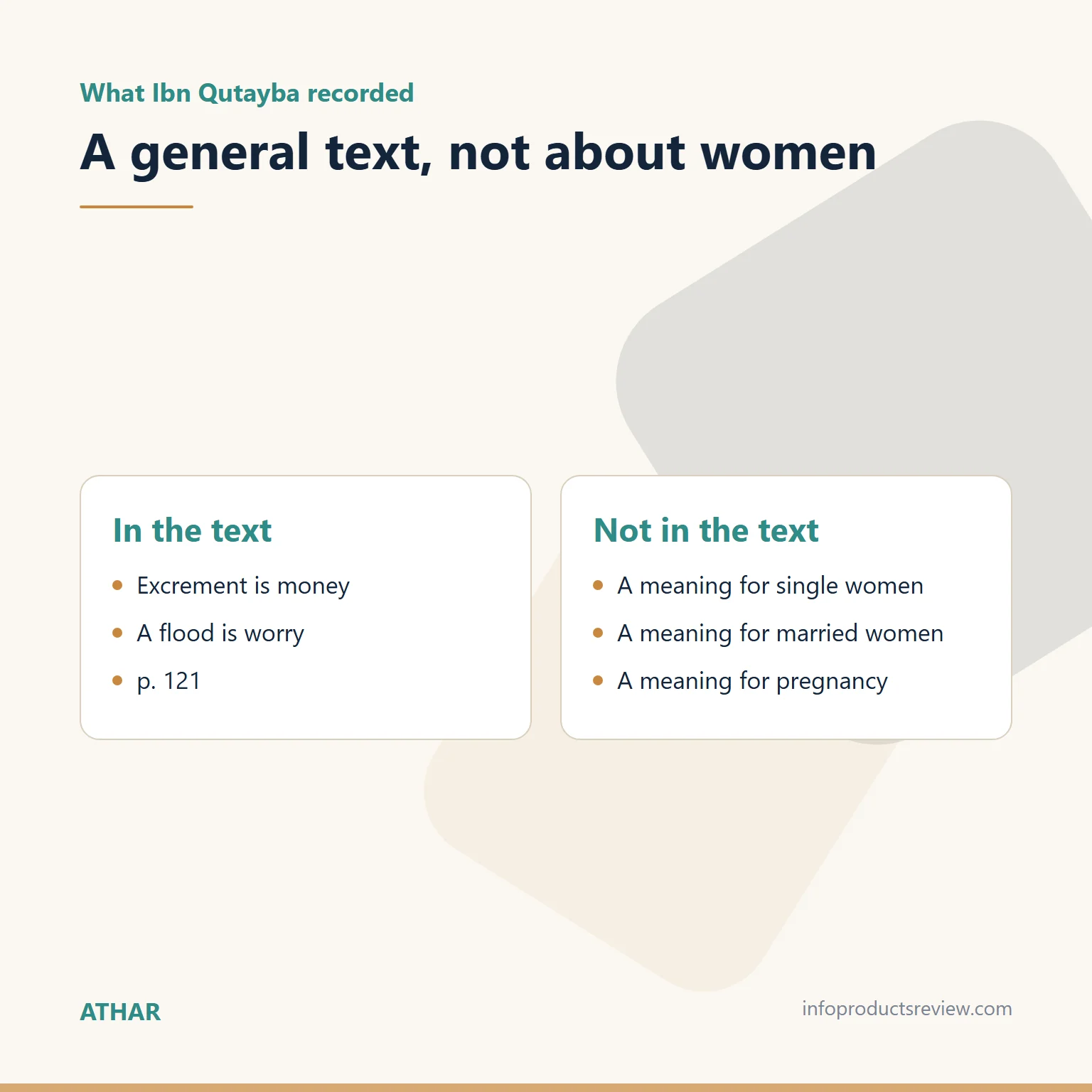
In the old books of dream interpretation this symbol is discussed alongside the body and what leaves it. The passage is short and clear, and it holds three meanings, no more.
First: whoever sees himself relieving himself loses money — money goes out of his hands. Second: feces and dung in a dream are money. Third: when the amount is overwhelming, like heavy rain or a flood, it’s worry and fear rather than money.
A fourth, closely related meaning sits in the same place: feces is unlawful money when the dreamer touches it or smears his body with it. We come back to that picture, and its limits, in the section on clothes and the body.
What matters most for you is that the passage is general. Its wording is “if he sees” — no man, no woman, and no mention of single, married or pregnant women. For this symbol it draws no line between one woman’s situation and another’s.
In short, as possible readings rather than certainties:
- Relieving yourself in a dream may be read as money leaving your hands.
- Feces and dung may be read as money.
- An overwhelming amount, like a flood, may be read as worry and fear rather than money.
- Being smeared with it may be read as unlawful money — an interpreter’s reading, not a judgement on anyone.
The reading is the same for men and women. Where your dream looks different, the difference lies in the context of your life, not in what the symbol means.
Notice too how much weight the amount carries: a little is money, a flood is worry. So the useful questions after the dream are how much there was, where it was, and whether it touched you. Not whether you’re single or married.
Does the meaning change for single, married and pregnant women?
No, it doesn’t. That can seem odd if you’re used to the familiar split, so here are the three reasons.
First, honesty about the books. The passage on this symbol is general, as you’ve just seen. Adding a meaning for single or pregnant women would mean putting words into the books, or inventing a meaning and presenting it as established.
Second, a principle of interpretation itself. Those who work in this field hold that when a dream comes with fear and dread, the default is to read it gently and hopefully, and that interpretation as a whole is analogy, comparison and conjecture. It can reassure you; it can’t be sworn to.
Reading gently means an interpreter doesn’t reach first for the worst possibility when someone brings a frightening dream. It isn’t a promise of some particular good. It means a disturbing dream shouldn’t be made to carry more than it can.
And if interpretation is conjecture to begin with, adding confident meanings for each marital status piles conjecture on conjecture, then hands it to the reader as though it were settled news.
Third, real harm. Telling a pregnant woman her dream reveals her baby’s sex or a difficult birth, or telling a married woman it means betrayal, can plant worry or suspicion with no basis in a real pregnancy or a real relationship.
So the page follows one approach throughout: the general possible meaning of the symbol, then how the context differs for different women, and then it’s over to you to understand your dream in light of your own life.
Single women: what does the dream mean for you?
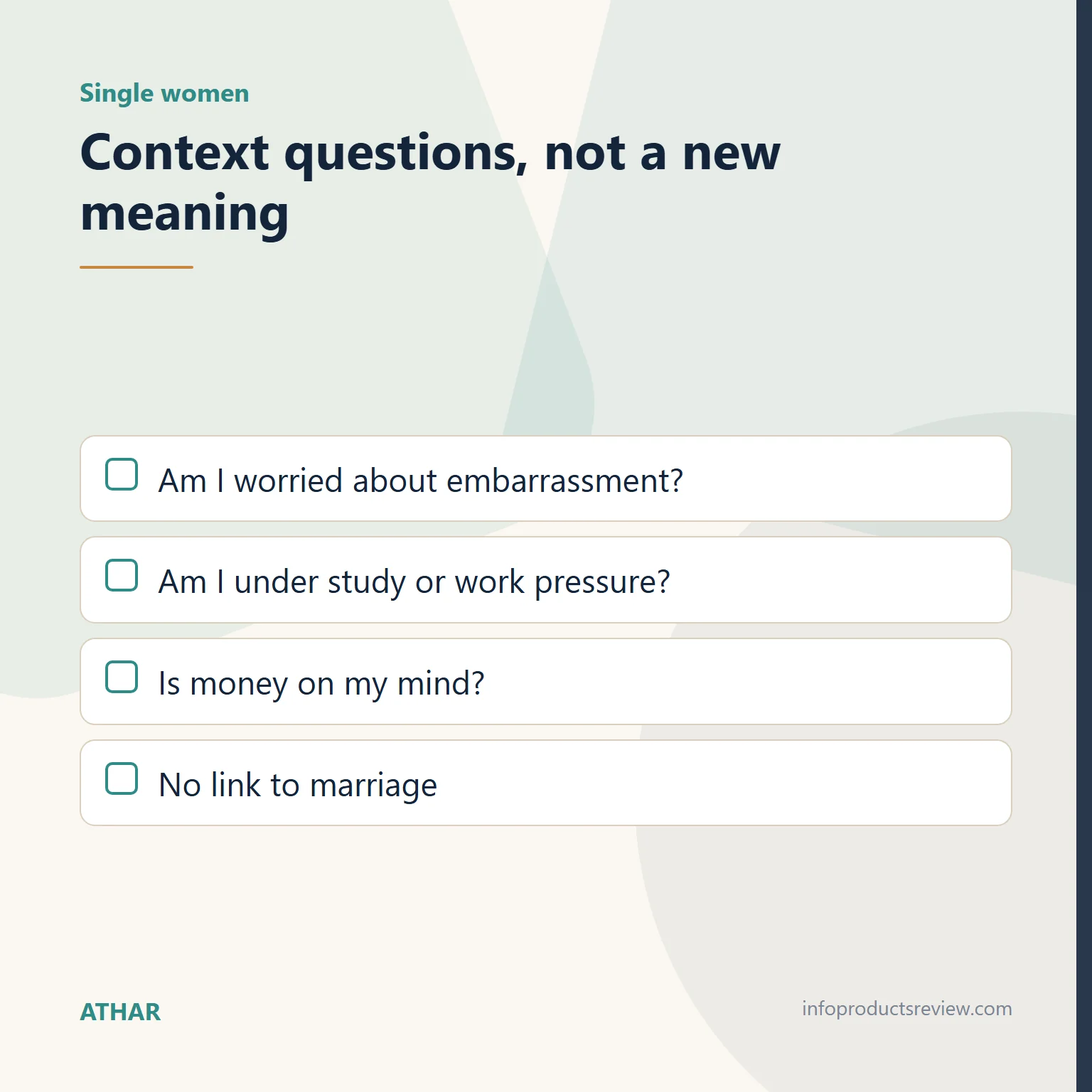
Start from the general meaning: money going out or coming in, or worry if the amount was overwhelming. The books give single women no separate meaning here, but what tends to be on an unmarried woman’s mind helps a great deal in making sense of it.
Fear of embarrassment in front of others. Many young women care a lot about how they come across to friends, relatives and colleagues. If you dreamed you were relieving yourself somewhere exposed, the likelier reading is that the dream reflects that concern, or a social situation coming up that you’re nervous about.
Pressure from study or a first job. Exams, interviews and deadlines bring stress that can surface at night in unpleasant pictures, this one included.
Money. If you’re saving for something, worried about your spending, or regret something you paid for, reading the symbol as money may connect to that — as a possibility rather than news.
A few short questions will help you more than any ready-made template: Is there something coming up where I’m worried about how people will see me? Is money on my mind, something I’ve spent or am afraid to spend? Did I go to sleep tired or anxious?
If the answer to any of them is yes, it’s likely to explain your dream better than anything written “for single women.”
For example, a young woman dreamed she couldn’t find a clean toilet on the day of her graduation. The likelier reading is her nerves about a long day in front of people, and her wish for it to pass without embarrassment. It has nothing to do with an engagement or a marriage.
What can’t be read out of it for a single woman: the books draw no link between this symbol and marriage coming soon or being delayed, a particular suitor, or a relationship. The pages that make that link name no book and no author.
The same approach to reading symbols for single women is used in our guides to lice dreams for a single woman and teeth falling out as a single woman.
Married women: what does the dream mean for you?
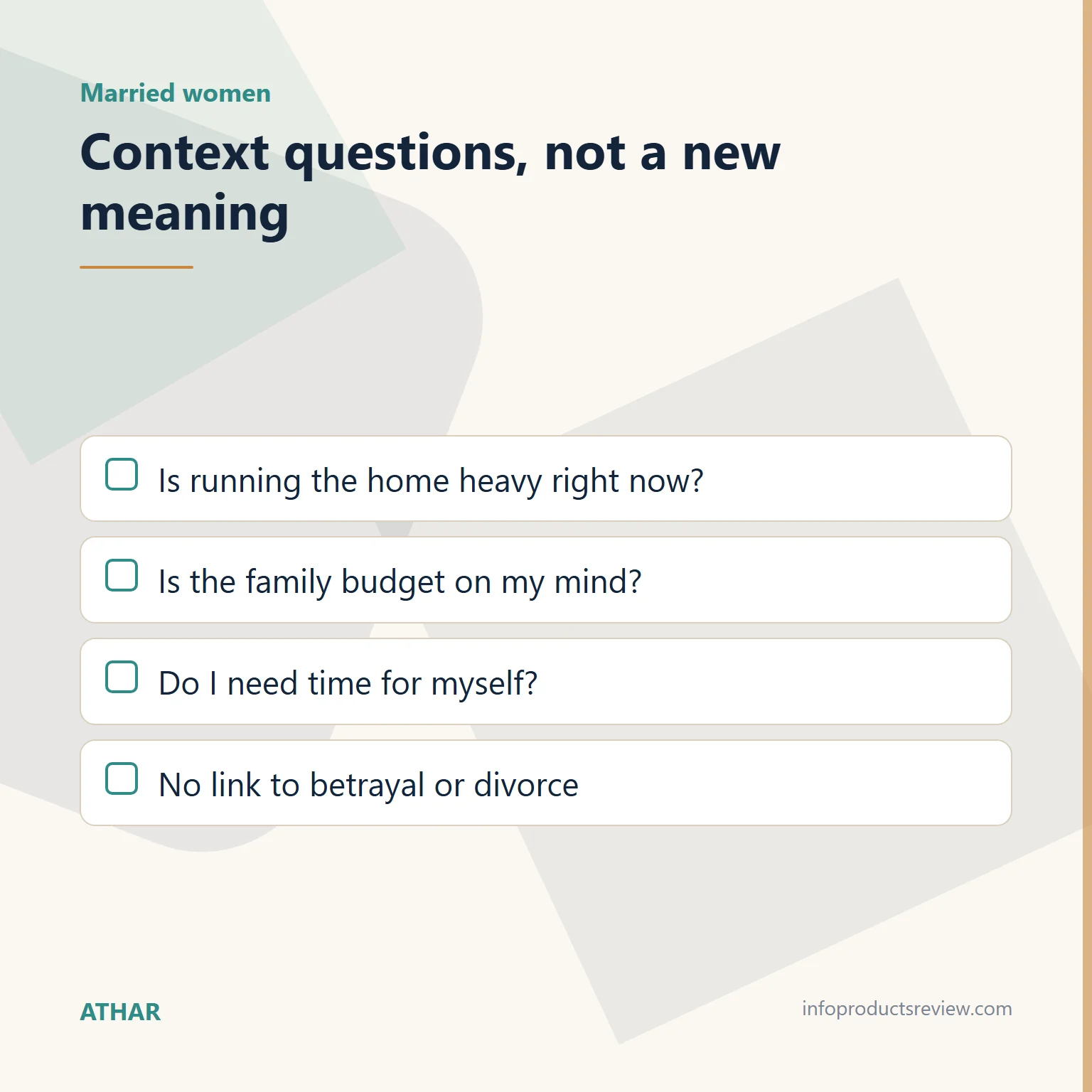
The general meaning is the same: money going out, or worry if the amount was overwhelming. The books give married women no separate meaning here either. But married life brings concerns that help explain the dream.
Everyday household responsibilities. Cleaning, looking after children, changing diapers, keeping the home running. It’s natural for related images to turn up in your dreams without any hidden meaning at all.
Household money. If you’re busy with the family budget, a debt or a big purchase, reading the symbol as money may connect to that, as a possibility.
Exhaustion and the need for time of your own. Dreaming that you can’t find a clean or private toilet may picture a feeling that you have no time and no space for yourself.
Questions worth asking yourself: Is something at home weighing on me that I haven’t talked about? Is there a money decision I keep putting off? When did I last have an hour to myself? Questions like these bring you closer to the dream without opening the door to suspicion.
For example, a woman dreamed she was cleaning a bathroom that never got clean. The likelier reading is tiredness that has built up at home, or work she feels nobody sees. It may be a nudge to ask for help or take some rest.
What can’t be read out of it for a married woman: the books draw no link between this symbol and a husband’s betrayal, divorce, particular marital problems, or a coming pregnancy.
This point matters. No woman should let a dream plant suspicion about her husband or anyone in her family. A dream testifies against nobody, and it reveals nobody’s intentions.
The same calm, accusation-free approach is used in our guide to lice dreams for a married woman.
Pregnant women: what does the dream mean for you?
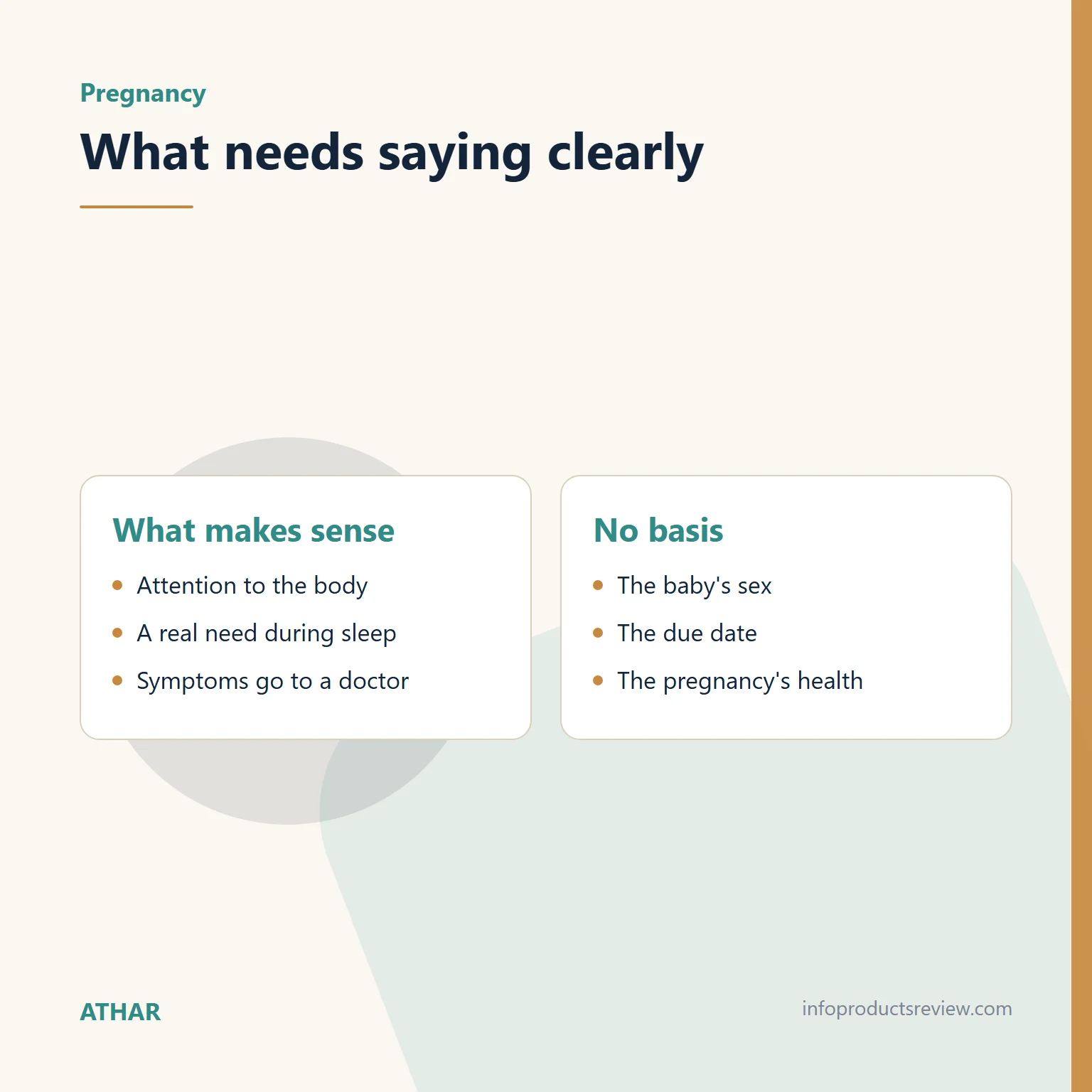
Start with the clearest thing in this section: the books draw no link at all between this symbol and pregnancy. Not to the baby’s sex, the due date, whether the birth will be easy or hard, or your health or your baby’s. Anything said along those lines has no source.
The general meaning for you is the same as for anyone else: money going out, or worry if the amount was overwhelming. This is the most important section on the page, because pregnant women are the ones most affected by confident interpretations.
The context that might explain the dream for you is entirely ordinary: attention to a changing body, needing the toilet more often in real life, and the general worry that comes with this stage. None of that gives the dream a medical or a hidden meaning.
What helps is clear:
- If you have any symptom, or any question about your body or your pregnancy, it belongs with your doctor or midwife, not with dream interpretation.
- Don’t build any expectation about the baby’s sex, the day of the birth, or your child’s health on a dream.
- If it upset you, seek refuge in God from it and don’t retell it; Sahih al-Bukhari (hadith 7045) says a dream the sleeper dislikes won’t harm him.
If the worry itself is weighing on you during pregnancy, and it’s spoiling your sleep or your days, tell your doctor or midwife about it. Anxiety in pregnancy is something to ask about, there’s no shame in it, and professionals have ways to ease it.
For example, a woman late in her pregnancy dreamed she was relieving herself somewhere public with nothing to cover her. The likelier reading is attention to her body, or a fear of an embarrassing moment before the birth or in hospital.
We follow the same approach in our guide to lice dreams during pregnancy: the dream tells you nothing about the pregnancy.
Divorced and widowed women: context without overreach
A woman who has been through divorce or the loss of her husband is living through a heavy time, and may have many disturbing dreams, this one among them.
The books give her no separate meaning for this symbol. Context that might help: the pressure of paperwork, managing money after the change, fear of what people say, and the wish to close a painful chapter.
If she dreams she’s cleaning something or clearing away a mess, the likelier reading is a wish to start afresh, as a possibility rather than news. And reading the symbol as money may connect, for her, to worries about support and her financial rights.
That’s a direction for reflection, not news that money is about to go or arrive. Nothing about going back to a former husband, a new marriage, or harm coming to her can be read out of the dream.
In a toilet or the usual place
Dreaming that you go to the toilet in the normal way, privately and with relief, is one of the lightest versions of this dream.
The books don’t distinguish the usual place from anywhere else: relieving yourself is money leaving your hands. When the dream happens in the right place, privately and with relief, it can also be understood by analogy as setting down a burden.
That’s a reading by analogy with no text behind it, and it’s the same for single, married and pregnant women. Sometimes the dream is just your body’s need showing up in sleep, which carries no symbolic meaning at all.
Relieving yourself in front of people: fear of exposure
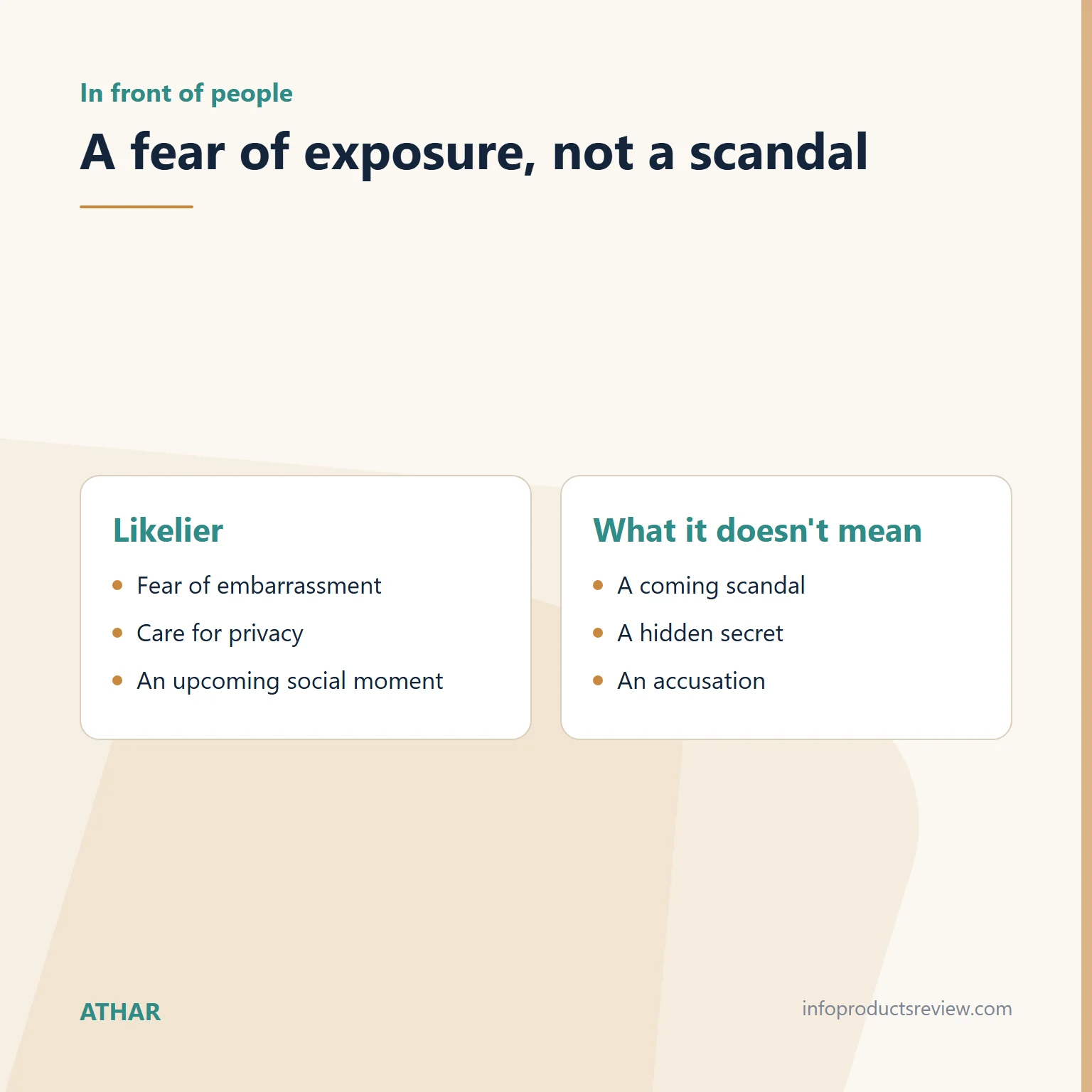
One of the most embarrassing versions for many women is dreaming you’re relieving yourself somewhere open, with people watching. That exact picture isn’t in the books, but another meaning close by is useful here.
The books of dream interpretation hold that a person’s skin in a dream is his covering, and that private parts exposed are “something shameful that shows from him” — something hidden coming into view.
Put that alongside the picture of relieving yourself in public, and the likelier reading is a fear of something private being exposed, or of embarrassment in front of others. That’s two meanings read together, not a comment on this picture itself.
That fear may be sharper for many women because of how much they value privacy and their standing. But it doesn’t mean a scandal is coming, or that the dreamer is hiding anything.
Here’s a rule we hold to across the site: an embarrassing dream isn’t an accusation. Anyone who tells a woman with an embarrassing dream that it reveals a hidden sin has claimed knowledge nobody has.
Feces on your clothes or body
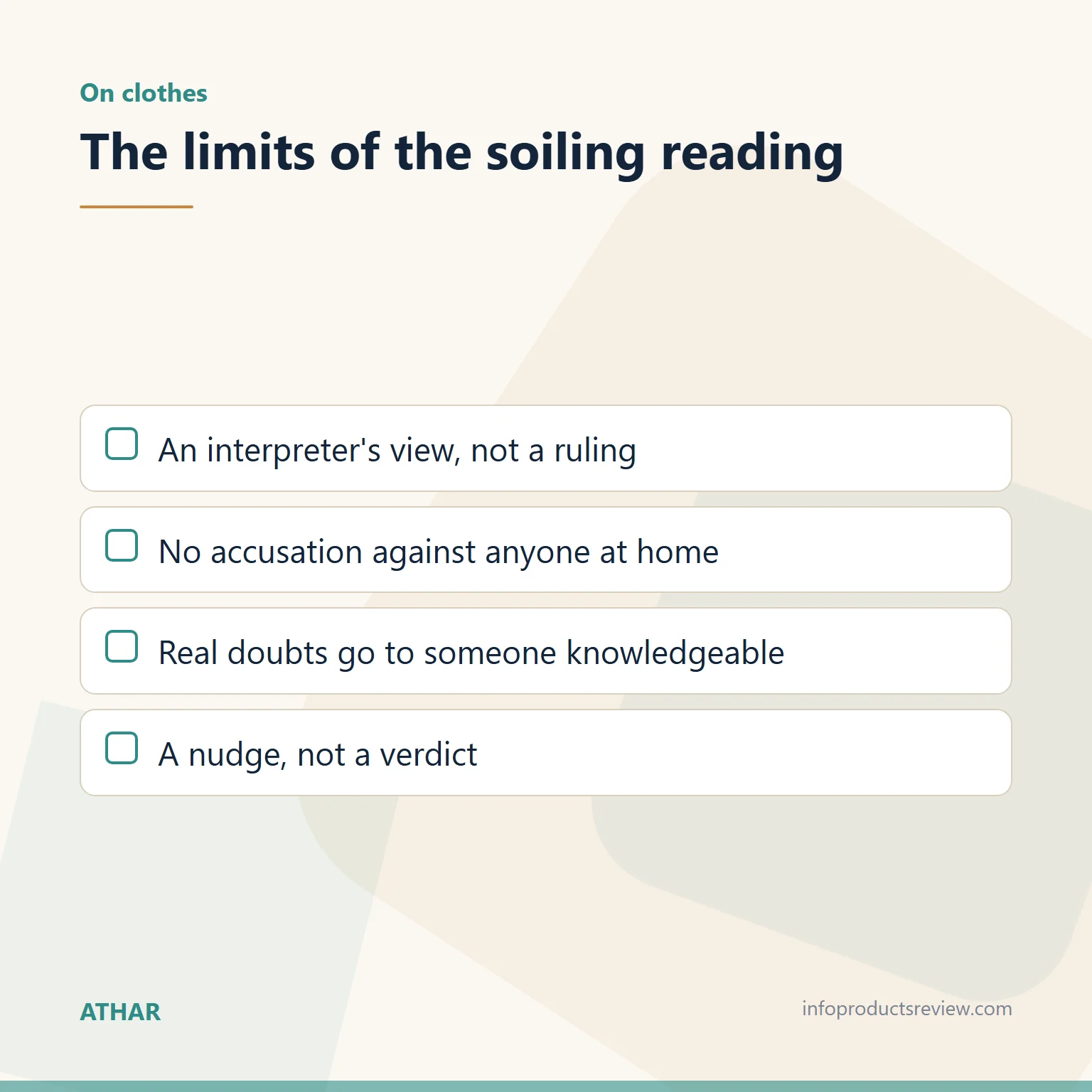
Finding feces on your clothes or body is a picture of disgust and embarrassment. As you saw above, being smeared with it is read in the books as unlawful money.
We give that as it stands, and within its limits:
- It’s an interpreter’s reading, not a judgement on your money, your husband’s or your family’s.
- It can’t be the basis for accusing anyone at home, or for a question that starts a quarrel.
- If you genuinely doubt where some money came from, the way forward is to ask someone with religious knowledge, not a dream.
By the symbol’s logic, being smeared with something repulsive can also picture feeling caught up in a situation you don’t accept: a draining conflict, a harmful relationship, or things said about you.
That’s a reading by analogy, and the dream in it is a nudge, not a verdict. The meaning shifts a little here, because the picture itself carries an obvious feeling — and how you felt in a dream is real evidence about it.
A child’s diaper
Many mothers dream they’re changing or cleaning a child’s diaper. That’s a completely different picture from adult feces, because it’s a normal part of caring for children.
The books don’t mention it. The likelier reading is an echo of daily care and responsibility, especially for a mother who spent her day doing exactly that.
One point needs stating plainly: dreaming of a child’s diaper doesn’t say a pregnancy is coming, that you’ll have a baby, or anything about the health of a child you already have. A dream can’t tell you those things.
If you have a question about your child’s health, it belongs with a paediatrician — and one appointment there is worth a month of reading interpretations.
Cleaning it up
A reassuring version is dreaming that you’re cleaning up: washing a floor, getting it off clothing, cleaning a toilet.
The books don’t mention cleaning for this symbol. By analogy, the likelier reading is putting things right and clearing away harm: sorting out a money matter, ending a disagreement, or bringing order back to part of your life.
That reading applies to every woman, whatever her situation, and nothing about divorce or a reconciliation can be built on it.
So much it floods the place
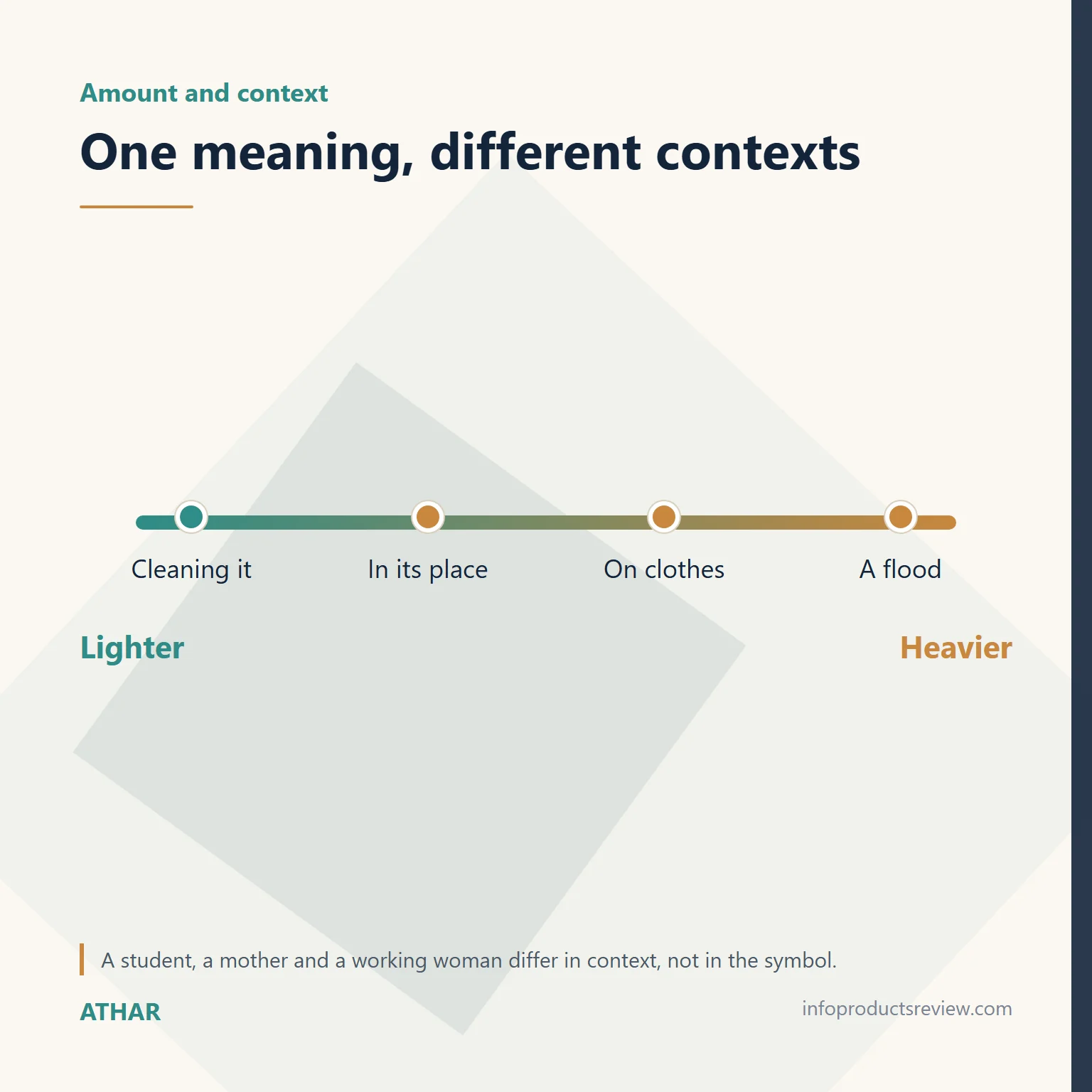
Dreaming that your home or room is full of feces is the case the books carve out from the money reading: an overwhelming amount, like a flood, is worry and fear.
The likelier reading is pressure closing in on the dreamer: burdens piling up or problems tangling together. For a mother it might picture the load at home, for a student the pressure of study, for a working woman the strain of work.
The general meaning is the same; only the context differs. Even so, the worry here is a possibility, not news.
The dream doesn’t say a disaster is coming. If anything, it may point you to a heavy load you’re carrying now, so you can lighten it where you can — and that’s the most useful thing to take from this picture.
Relieving yourself in bed
Dreaming that you relieved yourself in your bed is a picture of shame and loss of control.
That exact picture isn’t in the books. By the symbol’s logic, the likelier reading is something getting out of control in a private place like home.
If you have a real health issue, in pregnancy or otherwise, the dream may be picking up on what your body is going through. That’s a question for a doctor, not for an interpreter.
Reading the dream by how you felt, not by your status
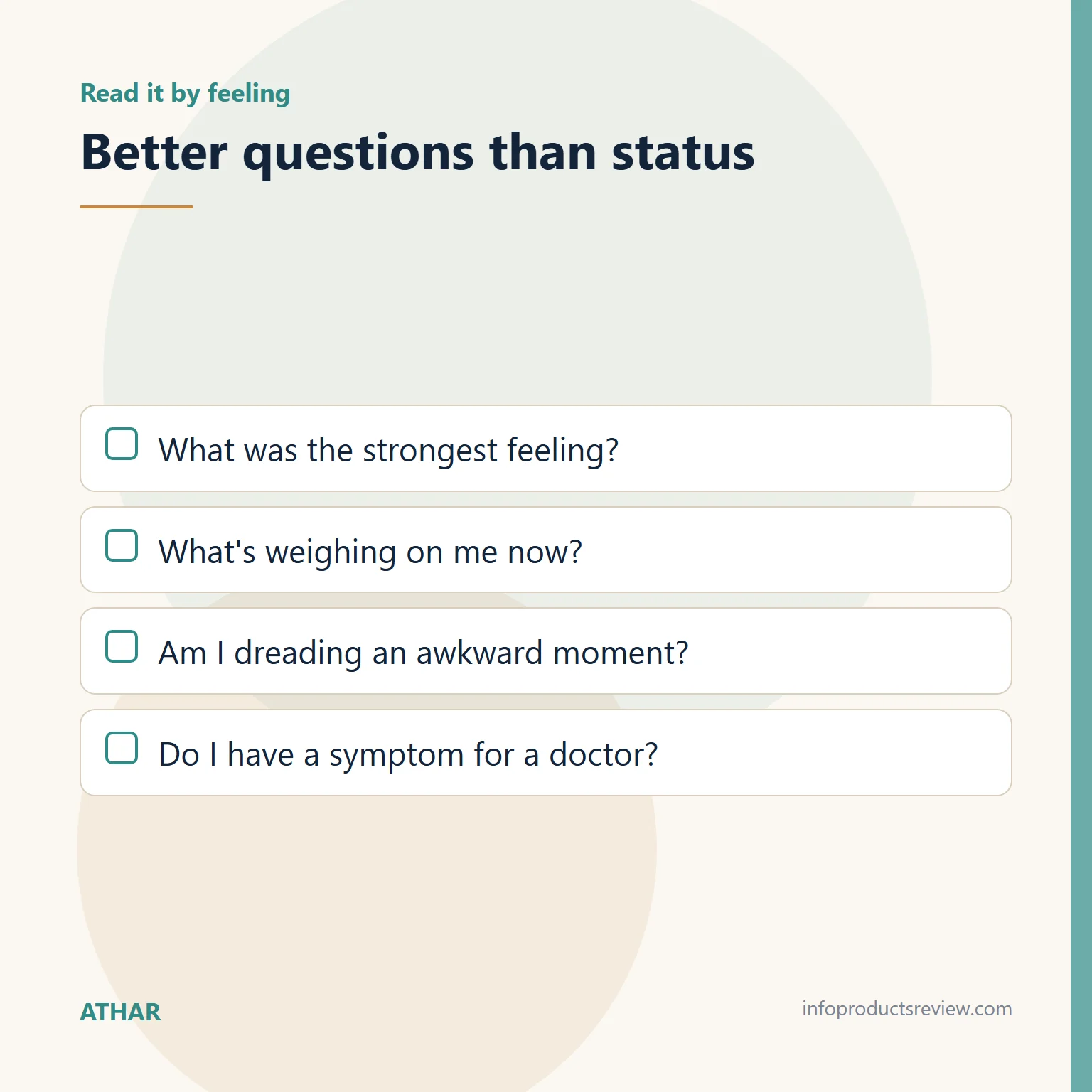
Instead of asking “what does it mean for a single woman?” or “for a pregnant woman?”, try these questions, which help far more:
- What was the strongest feeling? Relief, embarrassment, disgust, or fear of being seen?
- What’s weighing on me right now? Money, work, study, home, or my body?
- Is there a situation coming up where I’m afraid of being embarrassed?
- Do I have a real symptom that needs a doctor?
You’ll often find that answering these explains your dream better than any split by marital status.
Relief in the dream brings it closer to setting down a burden, embarrassment brings it closer to a fear of being shamed, and an overwhelming amount brings it closer to worry, as the books have it. Your feeling is the truest evidence you have, because you’re the only one who lived it.

How do you choose between the possible meanings?
A single symbol can carry many possible meanings, and a capable interpreter settles on one only after putting all the dream’s symbols together and asking about the dreamer’s situation. That’s a general principle of reading dreams, not something specific to this symbol.
“The dreamer’s situation” here means what she’s actually living through, not simply whether she’s single or married. Two married women could have the same dream, one under money pressure and one at ease.
The context would differ between them more than between a single and a married woman in the same circumstances. That’s why a woman shouldn’t be handed a ready-made meaning for her marital status; she should be asked about her life.
This excerpt from a published interview explains that general principle. What’s in it is the speaker’s personal view rather than religious text, and it isn’t about this symbol or about women specifically:
A general principle of interpretation, not a statement about this symbol: the speaker holds that one symbol can carry many possible meanings, weighed by the dream's context and the dreamer's situation. A paraphrase of an interview opinion, not a religious ruling or a definitive interpretation.
Certainty in interpretation is a problem in itself. An interpreter is a human being who can be right or wrong, with no knowledge of the unseen. Anyone who tells you “this definitely means X” has gone past what they actually have.
But note this: none of that makes interpretation worthless. The general meaning recorded in the books stays useful. The mistake is turning it into firm news about your future.
In a second excerpt on the same method, another speaker criticises certainty in dream interpretation and reminds listeners that an interpreter can be right or wrong. It’s an interview opinion and a general principle of reading dreams, not a statement about this symbol or about women:
A general principle of interpretation, not a statement about this symbol or about women: the speaker criticises interpreters who speak with certainty or expose a dreamer's private matters. A paraphrase of an interview opinion, not a religious ruling or a definitive interpretation.
Privacy first: don’t post an embarrassing dream

Many women share dreams in public groups or on live interpretation pages, hoping for a quick answer.
With embarrassing dreams especially, that can expose the dreamer to hurtful comments, or to interpretations that accuse her or someone in her family. There’s a fair question for anyone who broadcasts other people’s embarrassing dreams: what became of protecting people’s privacy?
Sahih al-Bukhari (hadith 7045) points the same way: a dream you dislike is mentioned to no one. That’s guidance enough.
If you need to ask, ask privately, someone whose knowledge and faith you trust, and settle for one calm answer. One calm answer beats ten contradictory ones.
Where the “for single, married, pregnant” split comes from
It helps to know why this split became so common, so its absence here doesn’t feel like something missing.
In the books of dream interpretation, symbols are usually given in general terms: “whoever sees this, it means that.” An interpreter sometimes distinguishes between situations for particular symbols, but not for every symbol. For this one the wording is general.
Websites then noticed that people search with phrases like “for a single woman” or “when pregnant,” and many started writing a paragraph for each phrase, whether or not they had anything grounded to say.
Repeated often enough, readers came to assume each situation has a fixed meaning in the books. We understand why people search that way, which is exactly why this page exists.
But we’d rather tell you plainly what the books say and don’t say than write an invented meaning for each situation that sounds convincing and has no basis.
Modesty and embarrassing dreams: is something wrong with me?
Many women feel doubly embarrassed after this dream, because modesty is part of how they were raised and who they are. The image lingers, and a woman may ask herself: why did I see this? Is something wrong with me?
The reassuring answer is no. An embarrassing dream isn’t a sign of a flaw in you, or of any weakness in your modesty or your faith.
Sleepers don’t choose what they dream, and many images come from disturbed sleep, the day’s events or worry. Sahih al-Bukhari (hadith 7045) treats what a sleeper dislikes as something to seek refuge in God from, which won’t harm him; it isn’t something you’re answerable for.
If anything, the embarrassment you feel afterwards reflects your modesty rather than a lack of it. Seek refuge in God, then let the image go without replaying it.
Should I tell my husband or my mother?
Some women ask whether to tell their husband, their mother or a close friend about this dream.
The default for a dream the sleeper dislikes is not to retell it, as in Sahih al-Bukhari (hadith 7045), and that includes embarrassing dreams. If there’s no real need, it’s better not to tell anyone.
If the dream is worrying you a lot and you need reassurance, choose one trusted person who keeps confidences. Ask for comfort rather than an interpretation.
Try not to let the conversation turn into a search for a meaning about your marriage or your pregnancy. That can open the door to worry with no basis, and it can easily be misheard as suspicion of someone.
When an interpreter tells you something frightening
A woman may share her dream with an interpreter who tells her confidently, “it’s envy,” “your husband is cheating,” or “your pregnancy is at risk.” What then?
- Ask for the source: who said this, and in which book? If there’s no answer, it’s an opinion and nothing more.
- Remember the principle: interpretation is analogy and conjecture, never certainty, and nobody should swear to what a dream foretells.
- Don’t act on it: don’t accuse a husband, end a relationship, or skip medical care because of an interpreter’s words.
- If you have a real health worry: it belongs with a doctor, or with your doctor or midwife in pregnancy.
The right way to handle a dream that disturbed you is established in the Sunnah, and it helps more than any frightening interpretation: seek refuge in God, don’t retell it, and trust that it won’t harm you, as in Sahih al-Bukhari (hadith 7045).
What’s actually established in Islam about dreams
Two things need to stay separate: reading the symbol, which is interpretation and can be right or wrong; and the Prophet’s guidance on handling dreams, which is established and applies equally to men and women.
In Sahih al-Bukhari, in the Book of Dream Interpretation (hadith 7045), Abu Sa’id al-Khudri reports that the Prophet ﷺ said:
If one of you sees a dream he likes, it is from God, so let him praise God for it and speak of it; if he sees otherwise, something he dislikes, it is from Satan, so let him seek refuge from its harm and mention it to no one, for it will not harm him.
The hadith has two halves. A dream you like is from God: you praise Him for it and may talk about it. A dream you dislike is something you seek refuge in God from, mention to no one, and then rest assured it won’t harm you.
An embarrassing dream usually belongs to the second half. Sahih Muslim (hadith 2262), from the hadith of Jabir, adds to the same etiquette:
If one of you sees a dream he dislikes, let him spit to his left three times, seek refuge in God from Satan three times, and turn over from the side he was lying on
So the hadith gives three simple actions to anyone who sees something they dislike: spit lightly to the left three times, seek refuge in God from Satan three times, and turn over from the side you were sleeping on. None of them needs an interpreter or anyone else.
So if this dream embarrassed or upset you, seek refuge in God from its harm, don’t retell it, and be reassured, as the Bukhari hadith says, that it won’t harm you.
A dream establishes no ruling, accuses no one, and is no basis for decisions about marriage, pregnancy or a relationship.
Common claims that need correcting
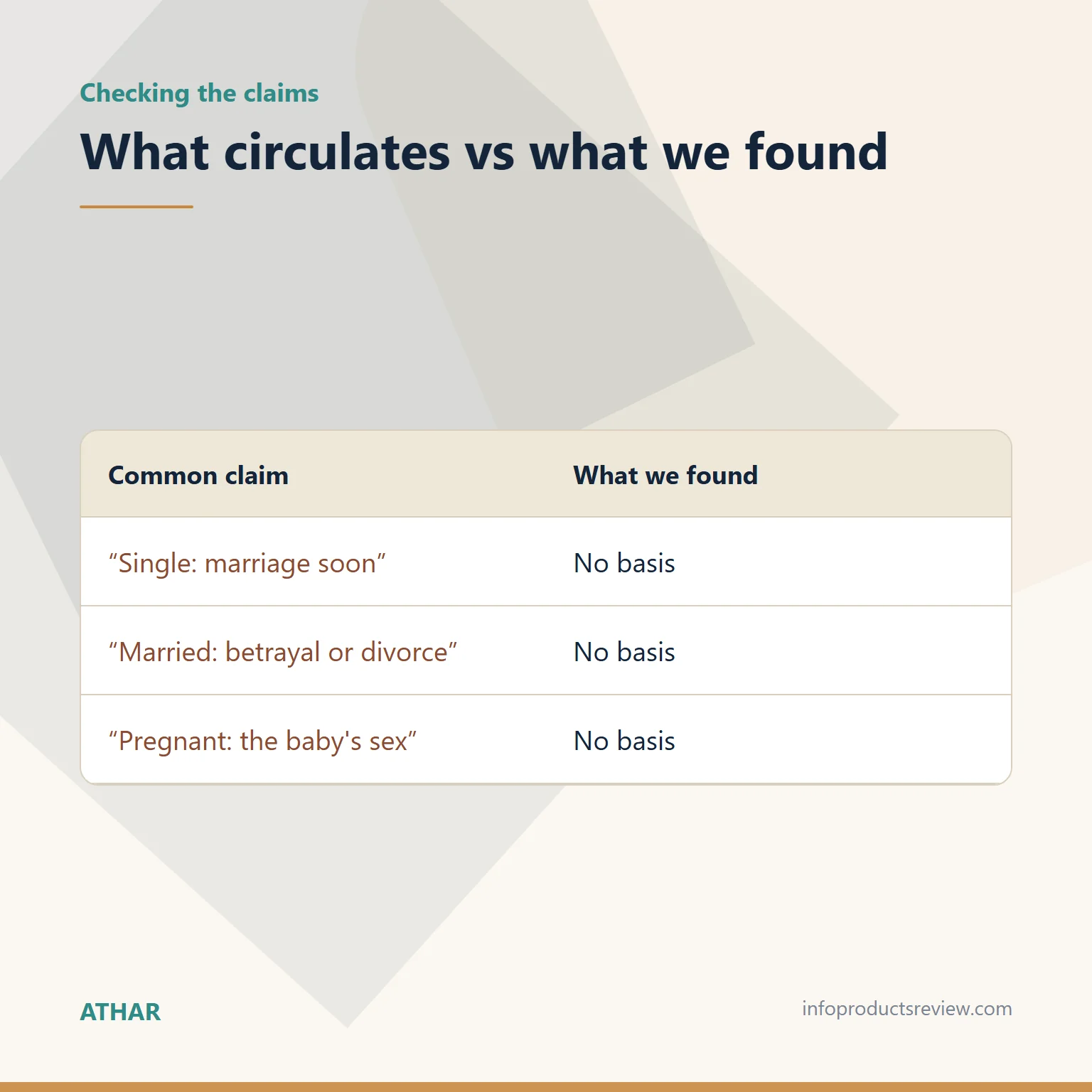
“For a single woman, it means marriage soon.” That isn’t in the books of interpretation, and the claim has no source anyone can point to.
“For a married woman, it means betrayal or divorce.” No basis, and it should never become grounds for suspecting a husband.
“For a pregnant woman, it shows the baby’s sex or an easy birth.” No basis. The dream tells you nothing about the pregnancy.
“The dream is a sign of magic or envy.” A dream isn’t evidence of that.
“It warns of illness or death.” That isn’t in the books for this symbol, and real symptoms belong with a doctor.
“Each marital status has its own fixed meaning.” The passage on this symbol is general and draws no line between women’s situations.
What can’t be read out of this dream
- Not marriage coming, and not marriage delayed.
- Not a pregnancy, a baby’s sex, a due date, or the health of a pregnancy.
- Not betrayal, and not divorce.
- Not illness, and not death.
- Not magic, and not envy.
- It can’t establish that anyone’s money is unlawful, and it reveals nobody’s secret.

What to do after the dream
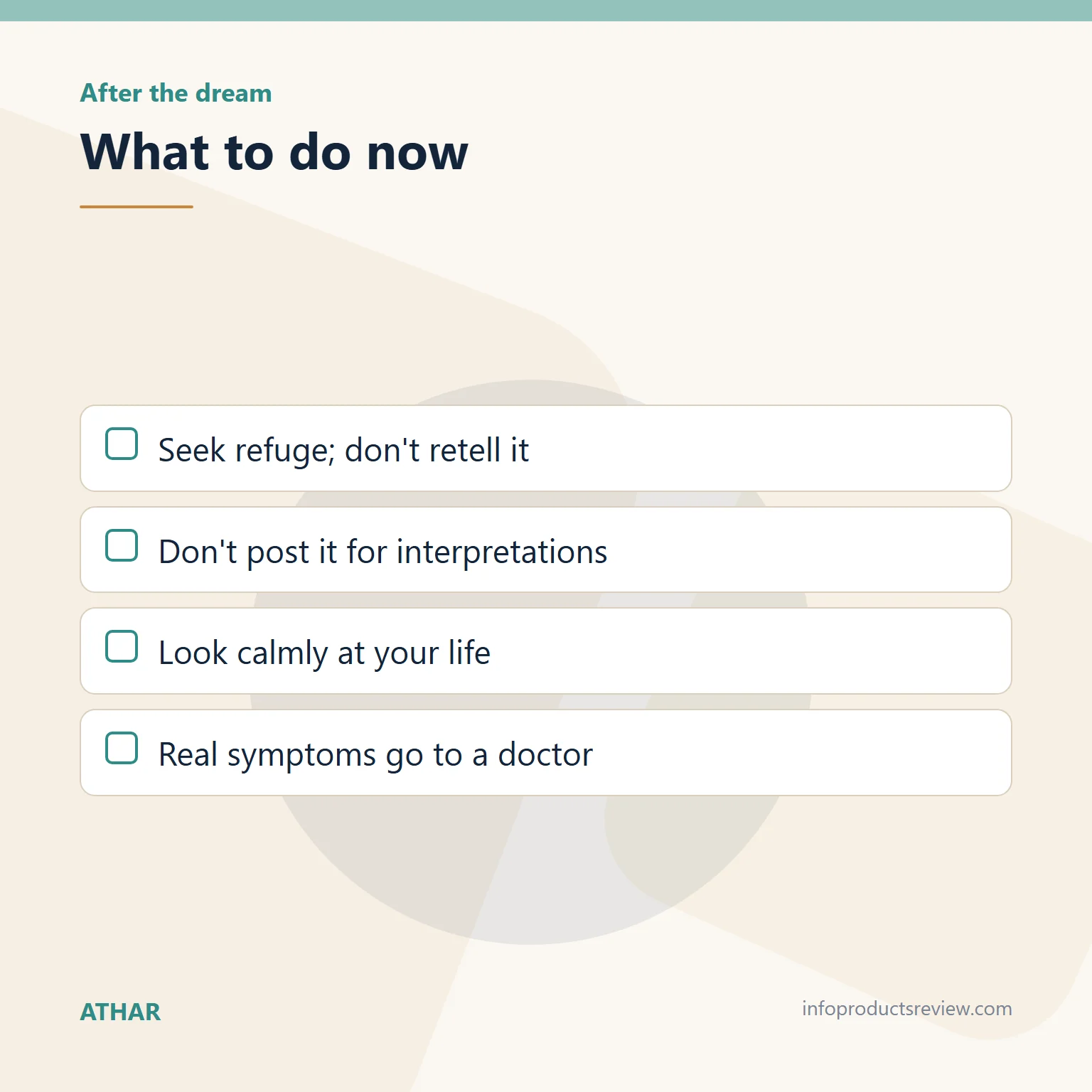
If it was embarrassing or disturbing: seek refuge in God from its harm, spit lightly to your left three times, turn over, and don’t retell it, as in Sahih al-Bukhari (hadith 7045) and Sahih Muslim (hadith 2262).
Don’t post it looking for an interpretation: embarrassing dreams are private matters, and posting them brings hurt rather than answers.
Look calmly at your life: what’s weighing on you right now? Is there a situation where you’re afraid of embarrassment? Is money on your mind?
If you have a real symptom: in pregnancy or otherwise, see your doctor, or your midwife if you’re pregnant.
Don’t base decisions on the dream: about marriage, a relationship or a pregnancy — and don’t let it start an argument at home.
Examples
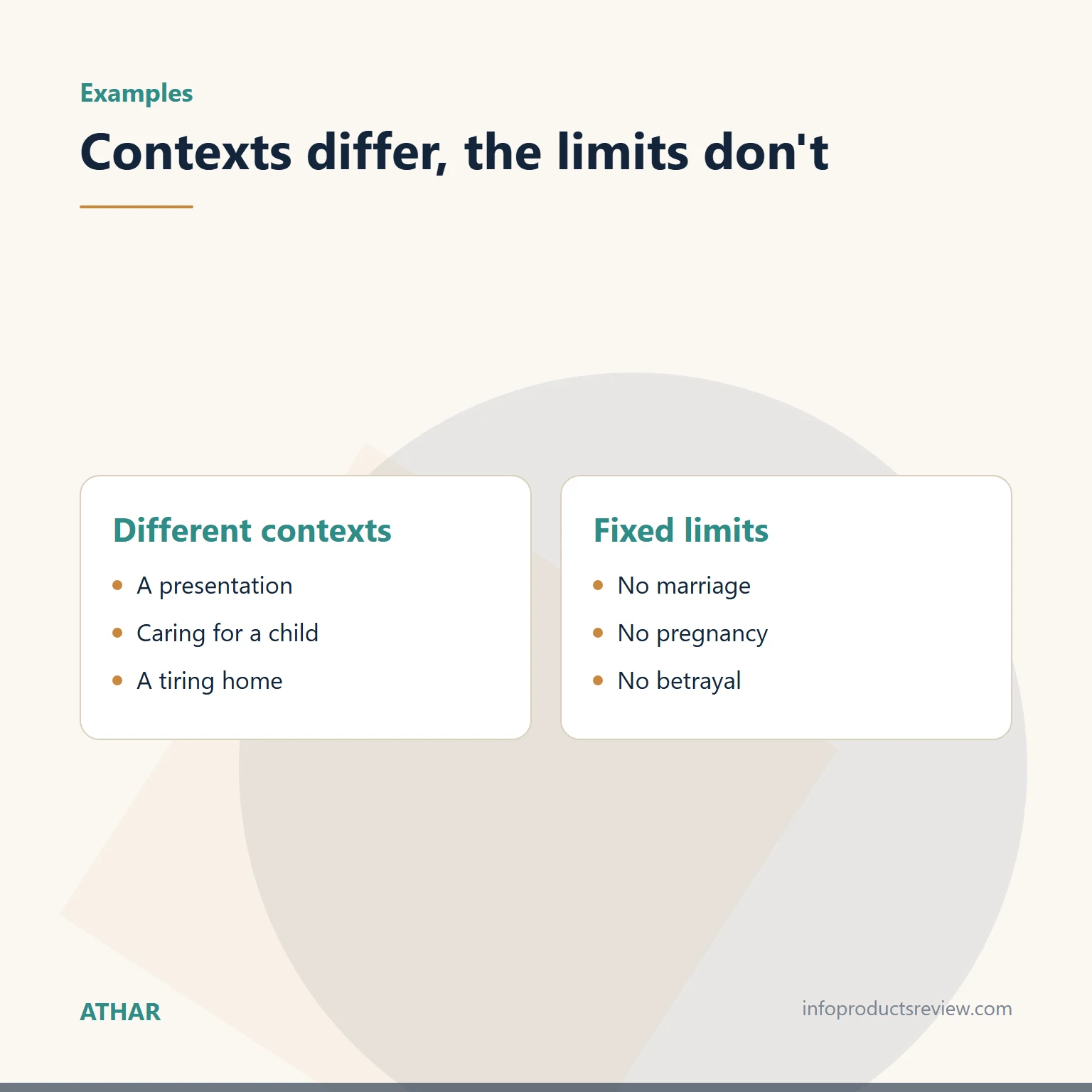
A student dreamed she relieved herself in front of classmates before a presentation. Likeliest reading: fear of embarrassment in an upcoming situation. Nothing to do with marriage.
A mother dreamed she was changing her baby’s diaper. Likeliest reading: an echo of her daily care. It carries no news of another pregnancy.
A married woman dreamed feces flooded her home. Likeliest reading: worry or pressure closing in, the way the books read an overwhelming amount. It carries no news of betrayal or divorce.
A pregnant woman dreamed she couldn’t find a clean toilet. Likeliest reading: attention to her body, or a real need during sleep. It says nothing about the baby’s sex or the birth.
A divorced woman dreamed she was cleaning a dirty room. Likeliest reading: a wish to put her life in order and start again, as a possibility rather than news.
A woman dreamed feces was on her clothes. The books read being smeared as unlawful money, but that’s an interpreter’s view that accuses no one in her home.
An office worker dreamed she relieved herself somewhere ordinary and felt relieved. Likeliest reading: money leaving her hands, perhaps an expense she’s been expecting, or, by analogy, setting down a burden. It doesn’t mean a certain loss.
Quick table: the picture, the context, and what it can’t tell you
| What you saw | General possible reading | What it can’t tell you |
|---|---|---|
| Relieving yourself normally | Money going out; by analogy: setting down a burden | Marriage or pregnancy |
| In front of people | Fear of embarrassment or exposure | A coming scandal |
| On your clothes | Unlawful money, an interpreter’s view | An accusation against anyone at home |
| An overwhelming amount | Worry and fear | Illness or death |
| A child’s diaper | Care and responsibility | A coming pregnancy |
| Cleaning it up | Putting things right | Divorce or reconciliation |
| If you’re pregnant | The same context, no special meaning | The baby’s sex or the birth |
Related dreams
- Dreaming about feces: the complete guide to the symbol by place, amount and what happened.
- Lice dreams during pregnancy: reading a symbol for a pregnant woman without tying it to the pregnancy.
- Teeth falling out in a dream: another body symbol read calmly.
- Athar in English
- National Institute of Neurological Disorders and Stroke: Brain Basics, Understanding Sleep
Frequently asked questions
What does dreaming about feces mean for a woman?
The closest meaning in the books is money: relieving yourself is money going out, feces is money, and an overwhelming amount is worry and fear. It’s a general possible reading, and it doesn’t change because the dreamer is a woman.
Does the meaning differ for single, married and pregnant women?
The books give no meaning for this symbol that changes with marital status. What changes is the context, and what’s on the dreamer’s mind.
Does it mean marriage soon for a single woman?
No. That isn’t in the books of interpretation, and the claim has no source anyone can point to.
Does it mean betrayal or divorce for a married woman?
No basis. A dream should never become grounds for suspecting a husband or doubting a marriage.
Does it show the baby’s sex for a pregnant woman?
No. The books draw no link between this symbol and the baby’s sex, the birth or the pregnancy’s health. Any question about your pregnancy belongs with your doctor or midwife.
I dreamed I was changing a baby’s diaper. Am I pregnant?
The dream doesn’t indicate pregnancy. It’s more likely an echo of care or responsibility in your life.
What does relieving yourself in public mean in a woman’s dream?
Most likely a fear of embarrassment or of something private being exposed. It carries no news of a coming scandal.
Does feces on my clothes mean there’s unlawful money at home?
The books read being smeared with feces as unlawful money in a general passage, but that’s an interpreter’s view that accuses no one and passes no judgement on anyone’s money.
Is the dream a sign of magic or envy?
A dream isn’t evidence of magic or envy.
Is the dream a warning of illness?
The books draw no link between this symbol and illness. If you have a real symptom, see a doctor.
What should I do after an embarrassing dream like this?
Seek refuge in God from its harm and tell no one, as in Sahih al-Bukhari (7045); Sahih Muslim (2262) adds spitting lightly to the left three times and turning over.
Is this interpretation definitive?
No, and deliberately so. These are possible meanings that change with the details, and none of them predicts the future.
In summary

- The books give no meaning for this symbol that changes with marital status; what changes is the context and what’s on the dreamer’s mind.
- The general reading: feces is money, relieving yourself is money going out, an overwhelming amount is worry, being smeared is unlawful money — all an interpreter’s judgement.
- The dream carries no news of marriage, pregnancy, a baby’s sex, a birth, betrayal or divorce.
- Nor of illness, death, magic or envy.
- Embarrassing dreams are kept private, not posted.
- After a disturbing dream: seek refuge in God, turn over, and don’t retell it.
If you take one thing from this page, let it be this: your marital status doesn’t write the meaning of your dream. Look calmly at your life, keep the dream private, and don’t let an unsourced interpretation plant worry about a marriage, a pregnancy or a relationship.
Written and reviewed by: the ATHAR editorial team. Quoted classical and hadith texts come from the editions listed in the sources; translations from Arabic are our own.
Last comprehensive update: 15 September 2026.
Note: the meanings on this page are possibilities, not established facts. Nothing here predicts the future, tells you anything about marriage, pregnancy or birth, diagnoses a health problem, or gives a religious ruling.