When a married woman sees a black snake in her home, the first thing most of her search results will offer her is not an interpretation but an accusation: buried magic in the house, a woman who envies her, a husband hiding something. Search for the black snake dream meaning for a married woman and that is what you will be handed. So this page starts where the source stops, rather than where imagination does.
The serpent chapter in the reference copy runs from p. 329 to p. 333, and we read it page by page. It contains no word linking the colour black with sorcery, with envy, with betrayal, or with evil in any absolute sense. The only sentence about colour in the entire chapter is: “the white of them are the most difficult of enemies, and the black of them the strongest” (p. 330).
And on the same page, blackness appears in an entirely favourable setting: whoever saw that he possessed a group of great black serpents “led armies and attained a great kingdom” (p. 330).
This page works through the black snake dream meaning for a married woman according to where it appeared, how it moved and how you felt — the elements the text actually builds on. Interpretation here is a matter of informed opinion; it settles no religious question, no decision inside a marriage, and no suspicion of any person.
The Bottom Line
In short: the black snake dream meaning for a married woman turns on three questions, and colour is not the first of them — where did it appear, did it come closer or stay away, and how did you feel? Colour in this chapter marks intensity, and it is the element that occupies the least of the text.
What is worth knowing right away:
- Black is a degree, not a kind. “The black of them the strongest” (p. 330) — a comparative within one category, not a separate category.
- White sits in the same register. The sentence calls white “the most difficult of enemies”, dismantling any table that treats white as auspicious.
- Blackness has an explicitly favourable passage on the same page: leading armies and attaining a kingdom (p. 330).
- The house narrows the circle without naming a person. “They are enemies from among his household and his relatives” (p. 331) — a circle, not a pointing finger.
- And the dropped qualifier changes everything. The text itself says: “entering his house, and leaving without harm“. A passage that does no damage, not an intrusion.
The general reading of the snake, colour aside, is set out on the page for snake dreams and a married woman, and the same colour question for an unmarried woman is covered here. As for what the source never says: nothing about magic in a house, nothing about an unfaithful husband, nothing about a second wife, nothing about a particular woman’s envy. All of it was added after the book, and it is a real harm laid on a home that held no suspicion before the interpretation arrived.
What this page covers
- The Bottom Line
- The colour sentence: five observations, five claims dismantled
- The passage nobody quotes
- The “magic in the house” myth: where did it come from?
- What this reading costs inside a home
- A black snake inside the house
- Doorways and bedrooms
- What outranks colour in this chapter
- Why there is no chapter for black snakes
- Size
- Number, and a house full of black snakes
- The favourable passages that never get quoted
- Approaching and circling inside the house
- Moving away
- Being bitten, killing, driving it out
- When a husband or children appear in the scene
- The passages, with their locations
- What al-Nabulsi adds: five meanings in one line
- How to tell a quotation from an addition
- Why a black snake feels more frightening
- What to do after a distressing dream
- Colour between the text and memory
- Before you pay for anything, or do anything
- When the dream is an echo of your day
- Frequently asked questions
- Does a black snake in the house indicate buried magic?
- Does it mean my husband is hiding something or being unfaithful?
- Does it mean a woman envies me?
- A black snake in my bedroom — is there a specific interpretation?
- The black snake circled me without coming closer. What does that mean?
- I saw many black snakes at home. Is that worse?
- A black snake bit me — is the effect worse because of the colour?
- I killed the black snake inside my house. Is that good?
- The snake was black but never moved. Should I worry?
- Is there a difference between seeing it inside the house and outside?
- I am not certain it was fully black. Does that matter?
- Where can I read the general interpretation rather than the colour alone?
- A practical summary
- Sources
The colour sentence: five observations, five claims dismantled

When a whole chapter holds one sentence about colour, reading it closely deserves a section:
“The white of them are the most difficult of enemies, and the black of them the strongest.”
Section headed “Ibn Sirin said” in the reference copy, p. 330.
First: it speaks of enmity, not of evil in general. The sentence describes “enemies” — a detail inside a meaning already established at the chapter’s opening, “Serpents are enemies” (p. 329), rather than a new and independent meaning.
Second: “strongest” is a comparative, not a description of a kind. A comparative requires shared ground: black is stronger than the other serpents, not different from them in nature.
Third: white leads the sentence, and is called “the most difficult of enemies”. That alone dismantles half the circulating colour table.
Fourth: no cause is given. The sentence links colour to no sorcery, evil eye, spirit or possession. Every such explanation you encounter was added from outside the book.
Fifth: the sentence is short, and something follows it on the same page — which is the next section.
The passage nobody quotes
On the same page:
“Whoever saw that he possessed a group of great black serpents led armies and attained a great kingdom.”
Section “Ibn Sirin said”, p. 330.
Three of the most alarming elements combine in that dream: blackness, size and number. And the ending is wholly favourable: leadership and a great kingdom.
What inverted the meaning was none of the three. It was a single word: “possessed” — the dreamer was in command rather than in a panic.
This is the strongest argument in the chapter that colour is not the deciding factor. If blackness were evil in itself, it could never appear in this setting. The deciding factor is your position in the scene, not the colour of what you saw.
The “magic in the house” myth: where did it come from?
This myth attaches to married women more than to anyone else, because their dreams usually happen at home, and the home holds a wide door in popular imagination.
We answer honestly, limits included.
What we can confirm: the link does not appear in the serpent chapter (pp. 329–333) or in the thu’ban entry (p. 208). We read those passages, and they contain no mention of sorcery, of burying it, or of its location in a house — neither with colour nor without.
What we cannot confirm: who added it first, or when. We hold no evidence, so we construct no story. Anyone giving you a precise history of the myth without a source is doing to you what the myth itself does.
What can be observed: three things combine to produce this reading — that the dream happened in a house, that the colour was black, and that associating blackness with evil is a broad cultural pattern with nothing to do with dream manuals. The text is then read through that pattern, and “magic” gets written where the interpreter wrote “strongest”.
What this reading costs inside a home
This is not a theoretical argument. A woman persuaded that her dream is evidence of magic in her home usually leaves with one of three things, all of them losses:
- Suspicion of a specific person — a husband, a mother-in-law, a relative, a neighbour. A real harm in waking life, exchanged for a conjectural meaning in a dream.
- Money paid to someone claiming a cure — a well-known avenue for exploitation, usually beginning with one session and not ending.
- Anxiety that takes up residence — every passing argument and every passing illness read as confirmation, so that something always looks like proof.
None of it rests on a text. Which is why this page cites a page number at every point, so you can distinguish for yourself what is transmitted from what is added.
A black snake inside the house
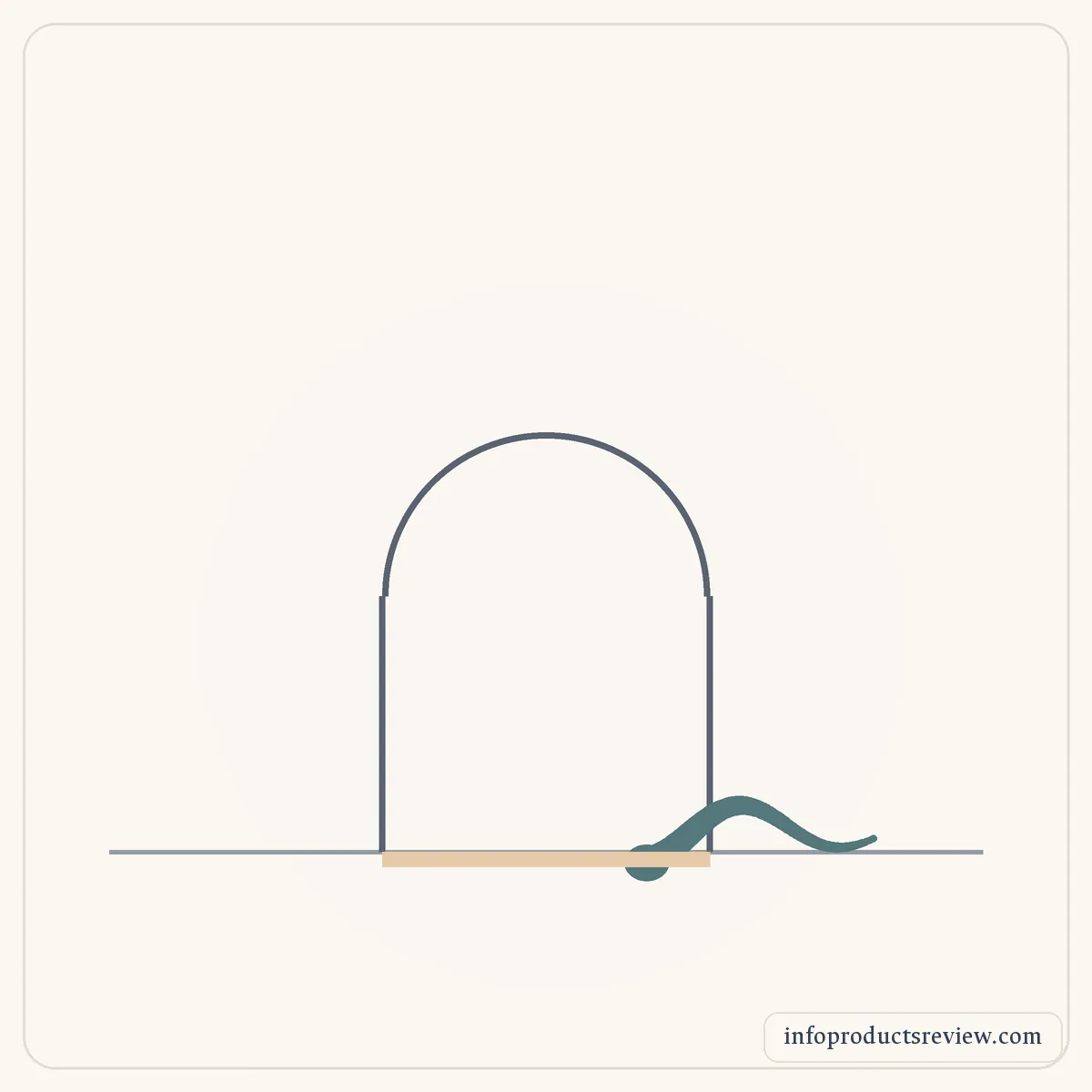
Most married women’s dreams happen at home, so the passage about place is the most important thing on this page:
“If he saw serpents entering his house and leaving without harm, they are enemies from among his household and his relatives; and if he saw them somewhere other than his house, the enemies are strangers.”
Section “Ibn Sirin said”, p. 331.
Three things in it must be dwelt on.
First: the text identifies a circle, not a person. “His household and his relatives” is a circle holding dozens of possibilities; it is not a pointing finger. Turning it into a name adds to the book what is not in it.
Second: “without harm” is part of the sentence. What is described is entering and leaving without injury — a passage, not an intrusion. Removing that clause is what turns a calm line into a threat, and it is the most common form of distortion-by-omission in this chapter.
Third: the same book reads a serpent as “a wife” and “a child” elsewhere (p. 330), citing “Indeed, among your spouses and your children are enemies to you, so beware of them” (al-Taghabun 64:14). The verse’s setting in the exegetical tradition is well known: preoccupation with family can distract from religious duty — not that one’s family are adversaries.
Al-Nabulsi sharpens the division: “the serpents of houses are neighbours, and the serpents of the wilderness are highway robbers” (p. 333). Four circles, not one: family, relatives, neighbours, strangers.
Doorways and bedrooms
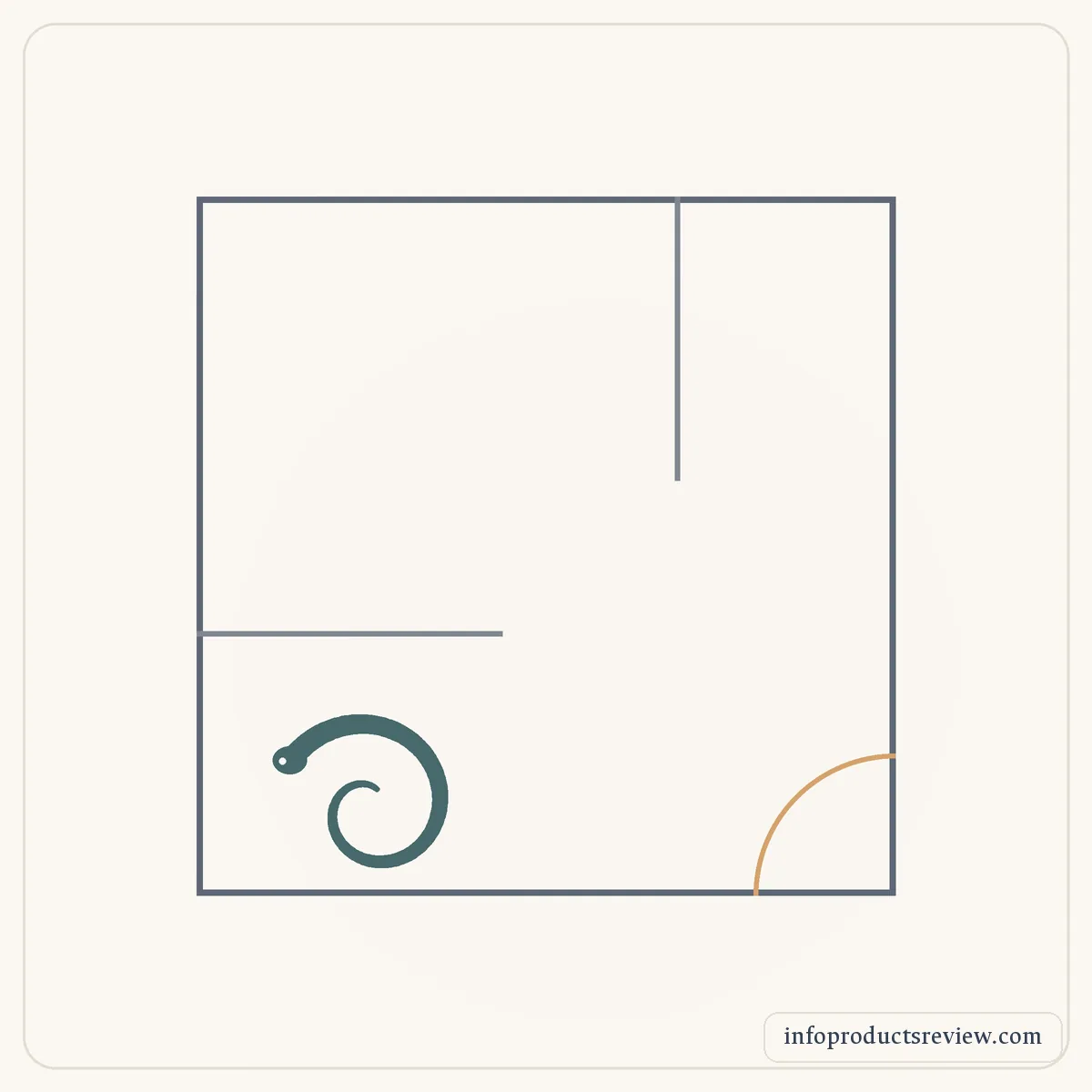
Questions about a black snake at a front door, in a corridor or in a bedroom come up constantly. Start with the truth: those places are not named in the text. There is no sentence about “the bedroom” or “the entrance”, and anyone offering you a bedroom-specific reading attributed to a named interpreter has attributed to them something they did not say.
But absence here begins an inference that must be labelled as one. The rule the text supplies is that the circle narrows as the space narrows: the house is narrower than the road, and a room is narrower than the house. So what is seen in the narrowest space is closest to the narrowest circle — privacy, rest, and the marriage as part of that circle rather than as a suspect within it.
We say it plainly: that is reasoning from a rule, not a text. Conflating the two is the origin of most of what gets written here.
The threshold has a gentler aspect. The text speaks of entering and leaving — movement across a boundary rather than settling inside one. A serpent that entered and left “without harm” is not a serpent in residence. For a woman who woke frightened because something crossed her home, that distinction matters.
What outranks colour in this chapter
The chapter’s elements can be ranked by how much of the text they actually occupy, rather than by what circulates online:
- Place — the house, outside it, a garden, a height, a marketplace, the wilderness. At least six passages.
- Action — contending, killing, cutting, biting, swallowing, speaking, stillness.
- Direction — behind the dreamer, in front, circling, entering and leaving.
- Feeling and command — fear without sight, sight with fear, possession and obedience.
- Size, venom and capacity to harm — one comprehensive line (p. 329).
- Colour — one sentence (p. 330).
Colour comes last, not first. Yet on the pages in circulation it is the first thing asked about.
That inversion is the source of a great deal of worry inside homes. A woman who wakes and asks “it was black — what does black mean?” begins from the weakest element and leaves five stronger ones untouched. Starting from “where was it, what did it do, was I afraid?” leads to text that is both clearer and more reassuring.
Why there is no chapter for black snakes
The question deserves a straight answer, because answering it exposes how most pages on this subject are made.
The classical books are organised by symbol, not by a symbol’s attributes. There is a chapter on the serpent and an entry for thu’ban — there is no chapter called “the black serpent” or “the white serpent”. Colour is a detail inside a chapter, not a chapter of its own. That is not a gap; it is the book’s method.
So when you see a heading reading “Ibn Sirin on the black snake”, you can be confident no such thing exists in that form. What exists is one sentence about colour inside the serpent chapter. Anyone building a whole page on it owes you the sentence: this is my application.
That is what this page does. It separates three things in every section:
- A quoted line, with its section and page.
- A declared application to a married woman’s circumstances, stated as an application.
- A modern psychological reading, with sources, as a supporting layer rather than a ruling.
A page that blends the three leaves the reader believing everything came from a great interpreter, when most of it was written last week by someone anonymous — and then a suspicion gets built on it inside a home.
Size

Size is stated, and it follows the same logic as colour — both mark intensity rather than kind.
From the opening: “the enmity of each serpent is according to its harm, its size and its venom” (p. 329). Elsewhere: “the small serpent is a child … and the serpent’s limbs and fangs are the strength of the enemy and the severity of his scheming” (p. 331).
If your dream combined blackness with smallness, it combined a marker of intensity with a marker of slightness, and the text ranks neither above the other — leaving the matter in the middle range of possibility.
And if it combined blackness with size, remember the other passage: blackness, size and number all combined in the dream of possession and leading armies (p. 330). Markers stacking does not entail something bad.
Number, and a house full of black snakes

This is a delicate spot, because two passages here are badly misapplied to married women.
The first is a story: a man saw his house full of serpents and told the dream to Ibn Sirin, who said, “Fear God, and do not shelter an enemy of the Muslims!” (p. 330). The second says the same in other words: whoever sees his house full of serpents he does not fear “is sheltering in his house the enemies of the Muslims, and the people of caprice” (p. 331).
What they are needs saying: they address a householder in a specific historical setting, and they are not a rule to drop on a woman who saw more than one snake at home. We quote them because they are in the source, and qualify them because releasing them unqualified is injustice rather than interpretation.
Meanwhile a large number is explicitly favourable elsewhere: “the garden grows, and the plants in it increase and thrive” (p. 331).
And the decisive passage here: a large number of black serpents appears in the chapter’s most favourable setting of all — possession, leadership and a kingdom (p. 330). “Many black snakes is ominous” cannot stand when the book places that exact image at its most auspicious.
The favourable passages that never get quoted

Anyone reading the chapter through is struck by how much of it is positive. We gather those passages because they are so rarely gathered, and because anyone reading while anxious deserves the whole picture:
- The garden: “the garden grows, and the plants in it increase and thrive” (p. 331).
- Ascent: a serpent climbing to a height brings “ease, gladness and joy” (p. 331).
- A dead serpent: “an enemy whose harm God spares him without any effort of his own” (p. 330).
- Gentle speech: good “that people marvel at” (p. 330).
- Mastery: a smooth serpent that obeys brings “a treasure from the treasures of kings” (p. 330); al-Nabulsi: “ingots of silver or gold” (p. 332).
- Fear without sight: “he is safe from his enemy” (p. 330).
- Water and life: “the serpent indicates the flood, and the state, and life” (p. 333).
Seven favourable or reassuring passages — and not one of them specifies a colour. The favourable passages operate entirely independently of it.
Approaching and circling inside the house

Nothing exhausts a sleeper more than a black snake approaching or circling her inside her own home. The text here is among the clearest in the chapter:
“If he saw a serpent walking behind him, his enemy wants to scheme against him; and if it walked in front of him or circled around him, they are enemies who mix with him, and they cannot harm him.”
Section “Ibn Sirin said”, p. 331.
- Behind you: “wants to scheme” — an intention, not an act. The text chose “wants” and did not say “does”.
- In front of you: open contact with nothing concealed.
- Circling you: contact with an explicit denial of any capacity to harm.
The third image is the most terrifying to live through and the most reassuring in the text: “they cannot harm him”. When the snake is black the image intensifies in the mind and nothing changes in the text — because the text reads movement, not colour.
Moving away
There is no passage under the heading of escape. We say so rather than invent one. But the source illuminates it from two directions.
First, the outcome hangs on contention rather than on sight. Al-Nabulsi: whoever contends with a serpent “is fighting a strong enemy, and he is in fear and apprehension of him until they separate, and the victory belongs to whichever of them prevailed” (p. 332). Where there was no contest, no outcome awaits.
Second, fear is a meaning in itself: whoever feared a serpent without seeing it is safe from an enemy, “and if he saw it and feared it, that is fear” (p. 330).
So a woman who saw herself moving away from a black snake in her home without anything reaching her has, by the text, seen fear. Nothing more is claimed, and fear in a dream does not entail an event in waking life.
Being bitten, killing, driving it out
The bite. From the Ibn Sirin section: “and if it bit him, harm reaches him from his enemy to the extent of the bite” (p. 330). That final clause is the sentence: the effect is measured by the bite rather than asserted absolutely. Al-Nabulsi’s wording is heavier: “he meets with an adversity he does not escape” (p. 332) — an interpreter’s judgement rather than a report about the unseen, specifying no event, no time and no person. And the text mentions no colour in this ruling at all.
A caution: if you dreamt of a bite and then noticed a physical symptom while awake, the destination is a doctor, not an interpreter.
Killing. “If he killed it, he prevailed over his enemy” (p. 330), and “if he cut it in two, he got the better of an enemy” — among the clearest favourable passages, and colour does not enter it. The line pairing killing with marriage (p. 333) has a male dreamer as its setting and should not be applied to a married woman.
Driving it out without killing. No passage under that name. The nearest useful rule is entering and leaving without harm — an image of passage rather than of residence.
When a husband or children appear in the scene
Many of these dreams are not only about a snake: a husband appears, or children. These are recurring questions with an honest answer.
First: this chapter has no passage treating “a husband with a serpent” as a scene. Anyone offering a detailed interpretation of it attributed to a named interpreter has added it themselves.
Second: what can honestly be said is that the presence of people we love changes the dreamer’s own position. A woman who saw herself shielding her children did not see herself as a victim; she saw herself acting. And the source treats the dreamer’s position as an interpretive element: whoever mastered the serpent without fear has one reading, and whoever saw it and feared it another (p. 330).
Third, from the psychological side: children appearing in mothers’ distressing dreams is a familiar pattern tied to what occupies the mind during the day, and reads more like an expression of care than a warning. A general observation, not a diagnosis.
What is never acceptable is reading these images in a way that touches a real person: saying the husband is the serpent, or that the dream discloses someone’s intentions. None of that is in the text.
The passages, with their locations

The passages used above, with a note on the copy.
The reference copy is a printed book of dream interpretation attributed to Muhammad ibn Sirin, and is in fact a compilation placing its material under explicit headings: “Ibn Sirin said” and “Abd al-Ghani al-Nabulsi said”. We keep that separation.
And a caution we do not soften: the attribution of the widely circulated Tafsir al-Ahlam to Ibn Sirin is famous but is not established by a continuous chain of transmission in the judgement of specialists. Hence “the section headed ‘Ibn Sirin said’ in the reference copy”, with the page.
- p. 329 (Ibn Sirin section): “Serpents are enemies … and the enmity of each serpent is according to its harm, its size and its venom.”
- p. 330 (Ibn Sirin section): the colour sentence, and the great black serpents; the range of possibilities; killing, cutting and biting; fear and sight; the dead serpent; gentle speech; the smooth serpent.
- p. 331 (Ibn Sirin section): direction of movement; entering and leaving the house without harm; size and fangs; ascent; the garden.
- p. 331 (al-Nabulsi section): “an enemy, or a state, or a treasure, or a woman, or a child”.
- p. 332 (al-Nabulsi section): contending and biting; smooth serpents that obey; a serpent on the head; being swallowed; walking among serpents.
- p. 333 (al-Nabulsi section): “the serpent indicates the flood, and the state, and life”; “the serpents of houses are neighbours”.
- p. 208 (al-Nabulsi section, the thu’ban entry): “whoever sees that he possessed a serpent attains a great authority”.
And we state our search result plainly: across all these passages we found no mention of sorcery, envy or betrayal in connection with a serpent’s colour or with a house. That is a search result reported as such, not a claim asserted.
What al-Nabulsi adds: five meanings in one line
Most of what we have quoted comes from the Ibn Sirin section. Al-Nabulsi’s additions deserve their own treatment, because they widen the range considerably.
His entry opens with a comprehensive line: “A serpent in a dream: an enemy, or a state, or a treasure, or a woman, or a child; and the serpent, if a man does not fear it, is his strength and his standing; and the serpent is an enemy with wealth, because venom is interpreted as wealth” (p. 331).
- Five meanings in one line: an enemy, a state, a treasure, a woman, a child. Enmity is one of five, not all five.
- “A state” and “a treasure” are wholly favourable, and almost never mentioned online.
- The absence of fear is a sign of strength, not of exposure.
- A neat justification: “because venom is interpreted as wealth” — an interpreter reasoning rather than asserting.
Then at p. 332 he records images that contradict the general impression of this chapter entirely: “whoever sees a serpent on his head — his standing rises with kings”; “whoever sees that a serpent swallowed him attains an authority”; “whoever sees that he steps over serpents and walks among them — his dream indicates great rain from which the valleys flow”.
Look at the second in particular: being swallowed by a serpent — about as alarming an image as a person can have — reads as “an authority”. If that image reads that way, what justifies certainty that a black snake crossing your home means magic?
Two qualifications: these lines sit in a historical setting of kings and authority, and they are an interpreter’s judgements rather than reports about the unseen. But they are enough to show that this chapter runs far wider than intimidation.
How to tell a quotation from an addition
This may be the most useful skill to take from the page, because it applies to every symbol. Five signs mark an addition:
- No source and no page. A quoted line can be traced. No book and no number means a writer’s opinion.
- Certainty without “perhaps”. The interpreters’ language is full of “perhaps”, “it is said” and “if it was”.
- A named person. The texts speak in circles, not names. “Your husband” or “a woman you know” is not in the book.
- A tidy table. The classical chapters are continuous prose. A colour table is a modern construction.
- A timeframe. “Within days”, “soon” — none of this appears in the classical books.
Apply those to what gets written about “a black snake in the house” and most of it fails on the first sign alone.
Why a black snake feels more frightening
A psychological question rather than a classical one, offered as a supporting layer rather than a ruling or a diagnosis.
First, nightmares are common and do not in themselves indicate illness. The National Institute of Neurological Disorders and Stroke notes that brain activity in REM sleep approaches waking levels, and that most remembered dreaming occurs in that stage — which lengthens through the last third of the night, which is why people wake from these dreams near dawn, when the mind is least equipped to settle itself.
Second, the most frightening dreams are the most remembered. You do not remember your calm dreams and go looking them up, so what reaches an interpretation page is only the sharpest thing you saw.
Third, stress and short sleep are among the factors most consistently associated with distressing dreams, as reviewed by the Sleep Foundation. The American Academy of Sleep Medicine classifies nightmare disorder with a criterion of recurrence causing genuine distress or impairment — not a particular image and certainly not a particular colour.
Fourth, and specific to a household: family tension can surface in sleep as distressing imagery. Said correctly, that is a general psychological possibility — not a diagnosis, not proof of a conflict, and not an accusation of anyone. The difference between “your dream may reflect a strain you are living with” and “your dream reveals an enemy in your house” is the difference between a description and a charge.
A note on classical psychoanalytic readings: what Freud or Jung wrote about dream symbols belongs to the history of ideas, not to modern scientific consensus, and it is not a diagnostic tool.
What to do after a distressing dream
Islamic practice offers a known response to seeing something one dislikes in sleep: seeking refuge in God from its harm, spitting lightly to the left three times, turning onto the other side, and not relating the dream to anyone. These are reported in Sahih al-Bukhari and Sahih Muslim.
“Do not relate it to anyone” carries an obvious practical value inside a household: retelling a dream and interpreting it within earshot of whoever is being suspected is usually the source of the harm, not the dream. Plenty of household conflicts did not begin with a dream — they began with an interpretation said out loud.
Colour between the text and memory
A practical point rarely raised, and it concerns colour specifically.
Much of what we remember from dreams is reconstructed after waking rather than recorded during the dream, and details can be added during that reconstruction. The more often a dream is retold, the more its details shift. That is a general observation about memory, not about symbols, and we build no ruling on it.
Which means “black” may not be a detail you saw clearly. It may be an impression of a scene that was dark or indistinct. The difference between “I saw a black snake” and “I saw a snake in a dark place” is real, and it is what gets lost in the retelling.
This is sharper in household dreams, because scenes at home often take place at night or in low light, making it hard to separate the colour of what was seen from the darkness of the scene.
We do not claim the colour you remember is wrong. Only this: if colour is the single thing your worry rests on, it is the weakest support in the scene — in the text and in memory alike. What is firmer is what the snake did, what you did, and where you both were.
Before you pay for anything, or do anything

We add this because it is where this subject does most of its real damage.
Once a woman is persuaded that a black snake in her home indicates magic, the next step is usually one of three: looking for someone to “undo” it, a long programme of sessions, or reinterpreting everything in the house as an effect of what she saw.
What we say: none of those steps is supported by a text in this chapter. There is not one line in the serpent chapter or the thu’ban entry that requires an action, refers you to a practitioner, or makes a dream a reason for an expense. A dream here is a meaning offered for consideration, not an obligation.
What we do not say: we issue no religious ruling on any practice, and we do not deny what is reported in the Sunnah about seeking refuge and supplication. That is neither this page’s subject nor its competence.
What we flag: anyone who reads your dream and then asks you for money to “treat” what you saw in your sleep is building a financial transaction on a foundation they cannot point you to a page of. That alone is reason enough to pause and ask: where is this written?
The reported responses to an unwelcome dream cost nothing, need no intermediary, and open no door onto your money or your home.
When the dream is an echo of your day
Before hunting for a symbol, rule out what is not one. This is not belittling dreams; it is part of the discipline.
- The image was already in your day: a clip, a conversation, something seen before bed.
- The dream tracks an existing worry: a recent argument, a financial strain, illness in the house, a deferred decision.
- There is no structure: fragmentary imagery is a different category from a dream with a scene and an ending.
- Your sleep changed: broken nights with a child, or shifting bedtimes, raise recall and make dreams feel worse.
If a real question survives that, ask it in full: where the scene was, what the snake did, what you did, and how you felt. Note that colour is not one of those four.
One small practice helps more than people expect: keep a note where you write a single line each morning after a dream that unsettled you — the place, the action, the feeling, and the time you woke. After a fortnight a clear relationship usually emerges between broken nights and distressing dreams — one you see for yourself rather than one anybody has to persuade you of. That alone often settles the colour question, because what you describe as black tends to recur on the nights you slept late or badly rather than on other nights.
Frequently asked questions
Does a black snake in the house indicate buried magic?
No. We read the serpent chapter in full (pp. 329–333) and the thu’ban entry (p. 208), and none of them mentions sorcery — neither with colour nor with a house. The only colour sentence is “the black of them the strongest” (p. 330), which concerns degree rather than kind.
Does it mean my husband is hiding something or being unfaithful?
No. There is not one letter about infidelity in this chapter. What exists is that what is seen at home reads in the circle of “his household and his relatives” (p. 331) — a circle, not a person, and not an act. Anyone attributing that to Ibn Sirin or al-Nabulsi has attributed something they did not say.
Does it mean a woman envies me?
The text names nobody, indicates no gender, and grants nobody the right to accuse. Leaving a dream suspicious of a mother-in-law, a neighbour or a relative is a real harm in waking life exchanged for a conjectural meaning in sleep.
A black snake in my bedroom — is there a specific interpretation?
The bedroom is not named in this chapter. The rule that can be drawn is that the circle narrows as the space narrows, and we state openly that this is an inference rather than a text. Anyone giving you a bedroom-specific reading attributed to a named interpreter has added it themselves.
The black snake circled me without coming closer. What does that mean?
Among the most reassuring images in the chapter: “they are enemies who mix with him, and they cannot harm him” (p. 331). Harm is denied outright however frightening the scene felt, and colour does not change that ruling.
I saw many black snakes at home. Is that worse?
Number is read through place rather than count. In a house, two passages are tied to their historical setting (pp. 330 and 331); in a garden a large number is explicitly favourable (p. 331). And a great number of black serpents appears in the chapter’s most favourable passage of all (p. 330).
A black snake bit me — is the effect worse because of the colour?
The text mentions no colour in its ruling on bites. What it says is: “harm reaches him from his enemy to the extent of the bite” (p. 330) — measured by the bite. If you have a physical symptom while awake, see a doctor.
I killed the black snake inside my house. Is that good?
Killing is favourable: “if he killed it, he prevailed over his enemy” (p. 330), and “if he cut it in two, he got the better of an enemy”. Colour does not enter this ruling. The line pairing killing with marriage (p. 333) has a male dreamer as its setting and does not apply here.
The snake was black but never moved. Should I worry?
The text measures the symbol by what it does rather than by its presence. Stillness and the absence of injury are favourable in several passages: the dead serpent, the smooth serpent that obeys, the one that speaks gently (p. 330). Presence without action is nowhere a place of warning.
Is there a difference between seeing it inside the house and outside?
Yes, and it is among the clearest distinctions in the chapter. What is seen inside reads in a close circle; what is seen outside — “the enemies are strangers” (p. 331). Al-Nabulsi: “the serpents of houses are neighbours, and the serpents of the wilderness are highway robbers” (p. 333). These are circles, not people.
I am not certain it was fully black. Does that matter?
A fair question. Much of what we recall is reconstructed after waking, and “black” may be an impression of a dark scene rather than a colour clearly seen — especially in household dreams, which often take place in low light. We build no ruling on it, but it does mean colour is the weakest support in the scene.
Where can I read the general interpretation rather than the colour alone?
You can browse the rest of ATHAR in English, where every entry names the book, the section and the page it came from, and where the snake is covered in all its versions rather than by colour alone.
A practical summary
Compressing the black snake dream meaning for a married woman into usable lines:
- Black in this chapter means “strongest”. It does not mean magic, envy or betrayal — the result of reading the whole chapter.
- White in the same sentence is “the most difficult of enemies”, so the circulating colour table has no basis.
- The house narrows the circle without naming a person, and the text itself qualifies the image with “without harm”.
- Start with place, then movement, then how you felt. Colour is the element the chapter occupies least, not most.
- Build no suspicion of a husband or a relative on a dream, no payment to anyone claiming a cure, and no confrontation inside a home.
- If the dream recurs and wears you down, look first at your sleep and your load.
We add entries to this reference one symbol at a time, after reading its page in the source and recording the number. What we cannot cite, we do not publish.
Editorial note: dream interpretation in this tradition is a matter of informed opinion. It changes with the dreamer’s circumstances and the details of the dream, it establishes no religious ruling, it settles no decision inside a marriage, and it never justifies accusing anyone. Nothing on this page predicts the future, diagnoses a medical or psychological condition, or establishes magic, envy or betrayal.